
An Interview with Imagineering Field Guide Author Alex Wright
Page 1 of 1
 Alex
Wright is the author of the very popular Imagineering Field Guide series of
books on the Disney theme parks. The books - which now include the Magic
Kingdom, Epcot, Animal Kingdom and Disneyland - give a perspective on the parks
that can only be achieved by an inside source with access to materials most of
us never see. Using concept art, photography, and insider details and stories
the Imagineering Field Guide series show you a side of the parks you probably
weren't aware of, even if you're a devoted fan like myself. The books are pocket
sized so they can be easily carried in the parks, and that's exactly how they're
meant to be used.
Alex
Wright is the author of the very popular Imagineering Field Guide series of
books on the Disney theme parks. The books - which now include the Magic
Kingdom, Epcot, Animal Kingdom and Disneyland - give a perspective on the parks
that can only be achieved by an inside source with access to materials most of
us never see. Using concept art, photography, and insider details and stories
the Imagineering Field Guide series show you a side of the parks you probably
weren't aware of, even if you're a devoted fan like myself. The books are pocket
sized so they can be easily carried in the parks, and that's exactly how they're
meant to be used.
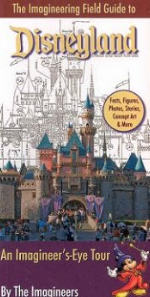
Recently I had the opportunity to conduct an email interview with Alex about the most recent addition to the series, The Imagineering Field Guide to Disneyland.
LaughingPlace.com: Tell me about the Imagineering Field Guide series
Alex Wright: The idea behind the books is to share with our Guests the
enthusiasm, the anecdotes, and the point of view of the Imagineers in the form
of a companion piece to the parks---augmenting and enriching the experience by
offering insight into the greater depth contained throughout our parks. They are
intended to be read, ideally, in the Park itself, with stories chosen for
inclusion based on the fact that they will benefit from being told in close
proximity to the subject at hand.
LP: This is the 4th of the Imagineering Field Guides and I know
Disneyland fans have been eagerly anticipating it. Why the decision to do it
this late in the series?
AW: I happen to be Florida-based, so when Disney Editions indicated
that they wanted to start on the East Coast, it just made sense. We always
intended to do Disneyland (it was one of the two I was most excited about when
the whole series started), and in the end we actually moved Disneyland up in the
order as a result of the enthusiasm on the part of the Park.
LP: With more than 50 years of history and change to work with, was the
Disneyland book much more difficult to do?
AW: Well, it's both easier and more difficult, actually. Easier in that there
is so much to draw from and so many great stories to tell. But harder in that
there's been so much more written about Disneyland that it's harder to bring
something new to the reader. The books are aimed at a broad cross-section of
Guests, from those who've devoured every piece of information that's out there
to those who are only starting to get a sense of the depth of the parks and want
to look into it, so there's a fine line to walk. There are some stories that
just have to be told in a book about the origins of Disneyland even if those
avid fans have heard time and again. That's when we have to rely on the point of
view of the book giving a slightly different spin, even on some stories that may
have been told before.
LP: In researching and putting together the book, are there one or two
things you came across that surprised you or really stand out in your mind?
AW: The books give me a great excuse to dig through the artwork that
WDI keeps in its archives, so one of my discoveries was just the volume of work
that has been generated over the years. I've known that this was the case, but
it's still staggering when you actually sit down to dig through image by image.
It shows the number of concepts that have come and gone along with the many
iterations that have been required to get from the earliest ideas to the
finished attractions and elements that we see in the Park today. It's also
interesting how many ideas were explored, set aside, explored again, and
eventually re-worked so that they finally found their way into Disneyland.
That was a general observation, but a more specific example would be the idea
that someone would ever think, as Bill Evans did, to plant orange trees
upside-down to get the landscaping effect he was looking for on Jungle Cruise.
That one still amazes me.
LP: While there are many photos in the book, there's even more concept
art. Can you talk about the importance of concept art in relation to the book's
stated goal of showing us the Disney parks "the way we see them."
AW: One of the primary intentions is to give readers a peek behind the
curtain and reveal something about the process by which the Park is created. The
concept art is an important part of this process---it's where the whole thing
starts. I also try to include images from various stages of the development and
production, so that all the disciplines and the complexity of the projects are
recognized in some way. We also feel that there is greater value in putting the
concept art in the book, as a Guest/reader in the Park would be able to look up
and see the same thing they'd see in a picture. We'd rather show them where that
piece of the Park came from. The photos are mostly used to denote details that
wouldn't show up in the artwork.
LP: I just noticed on Amazon.com Hollywood Studios and Magic Kingdom,
Updated have release dates listed. What else is in store for the Field Guide
series?
AW: I take them one book at a time...
The Imagineering Field Guide to Disneyland and the rest of the series can be purchased in The Laughing Place Store, in the Disney theme parks and at most online booksellers.
Discuss It
-- Posted December 18, 2008
-- Interview by Doobie Moseley