
Film Review: "The Dog Stars" — Ridley Scott Finds Startling Tenderness at the End of the World


Ridley Scott has been circling the apocalypse for most of his career, whether it's the corporate horror of Alien, the dystopian sprawl of Blade Runner, or the fall of empires in Gladiator. But The Dog Stars, his adaptation of Peter Heller's 2012 bestseller, is something new for the 87-year-old director: an end-of-the-world story that isn't interested in ash and rubble. Following on the heels of Napoleon and Gladiator II, it's a change of pace for the prolific filmmaker. Where most post-apocalyptic fare reaches for gray skies and scorched earth, The Dog Stars is green, quiet, and achingly beautiful, and that helps set it apart.
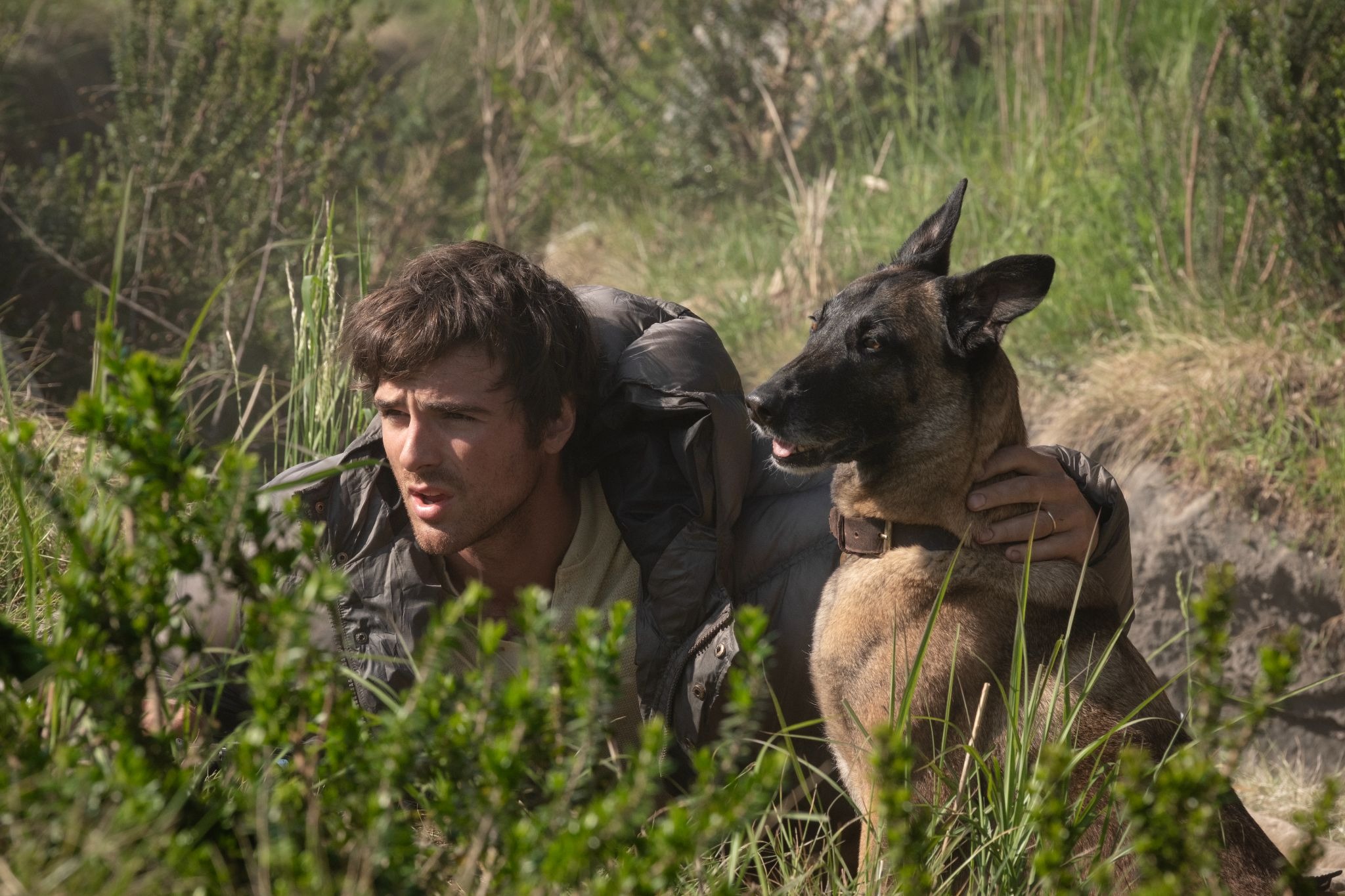
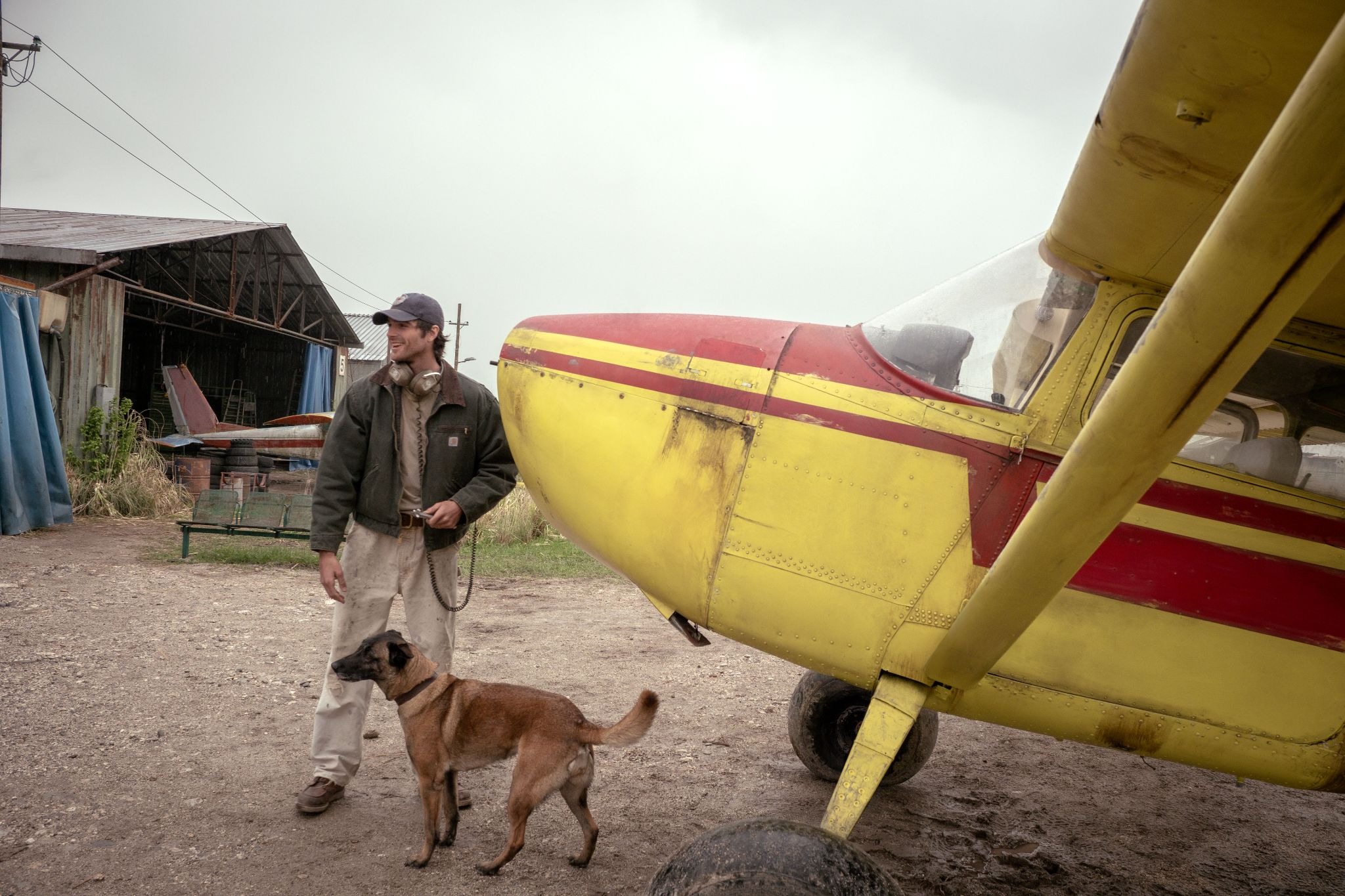
Set nearly a decade after a flu pandemic and a lingering blood disease wiped out most of the population, former mechanic Hig (Jacob Elordi) lives on an abandoned airstrip outside Denver with his dog, Jasper, and his heavily armed neighbor, Bangley (Josh Brolin). Hig takes to the skies in his battered Cessna, running supplies to a nearby Mennonite settlement and searching for any sign that the world hasn't entirely lost its humanity. A mysterious radio transmission and a forced landing lead him to Pops (Guy Pearce), a fiercely guarded survivor holed up in a canyon home, and Pops' daughter, Cima (Margaret Qualley), the first real connection Hig has felt since he lost everything.
Everything about this production is firing on all cylinders. Elordi and Qualley anchor the film with performances that sneak up on you; Elordi plays Hig's grief as something worn quietly under the skin, only surfacing in small moments, while Qualley gives Cima a watchfulness that never turns cold. She's guarded because she has to be, not because she's given up. Brolin, meanwhile, gets to have some real fun as Bangley, mining an odd-couple dynamic with Elordi that supplies most of the film's dark comic relief.
Shot in Italy's Dolomites and around Rome's Cinecittà Studios (with an assist from cinematographer Erik Messerschmidt's aerial photography), the film convincingly stands in for the Colorado Front Range; lush, sun-dappled, and about as far from typical post-apocalyptic gray as you can get. There's a fair amount of violence along the way, but Scott tends to leaven it with dark humor rather than dwell on it; a standout sequence in which Bangley dispatches a group of invaders is shot almost entirely through the green haze of his night-vision goggles, keeping the tension high without tipping into gratuitous gore.
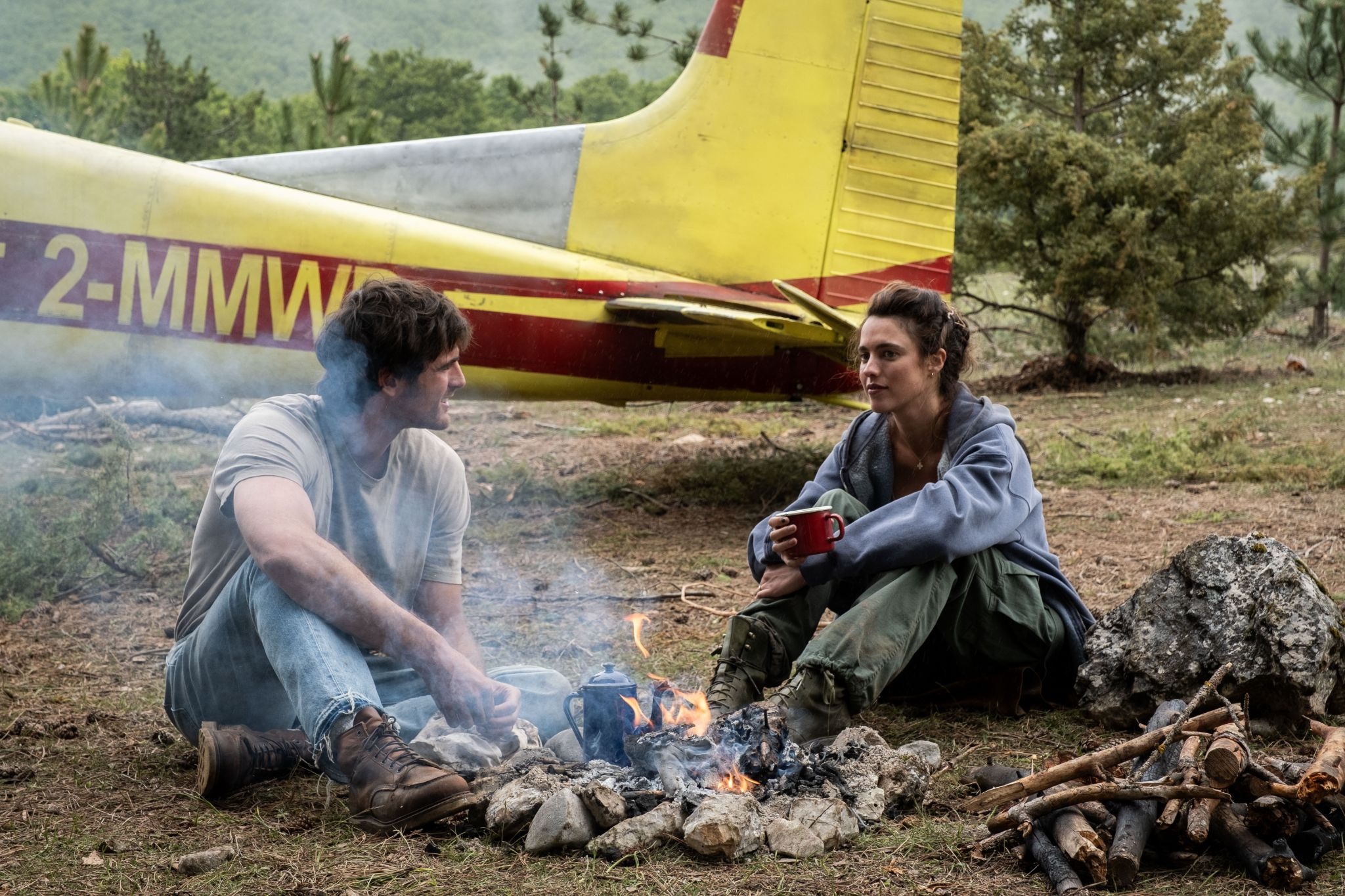
The film isn't flawless. A handful of the animal effects work pull you out of an otherwise immersive world. And the title, lifted straight from Heller's novel, plays a bit more naturally on the page than it does as a marquee. On screen, though, it earns itself back: Hig's habit of sleeping under the open sky with Jasper, inventing constellations as he goes, gives the film a Where the Red Fern Grows quality that pays off in the closing scene.
Harry Gregson-Williams, scoring his eighth Ridley Scott film, gives The Dog Stars a warm, mostly acoustic sound that fits the mountain setting like a glove, only reaching for something more electronic and unsettling when the film's threats close in. It's a lovely companion to the soundtrack's handful of song needle-drops, bookended by Hozier's "Like Real People." Between the score, the flying sequences, and visual effects that mostly disappear into the landscape, this is a film built for the biggest screen you can find.
The Dog Stars could have been just another grim survival story. Instead, Scott and screenwriter Mark L. Smith use the end of the world to ask what's worth rebuilding: community, trust, a reason to keep looking up. It's a hopeful, heartfelt adaptation that trusts its performances and its scenery in equal measure, and it's exactly the kind of big-screen experience IMAX was made for.
I give The Dog Stars 4.5 out of 5 stars.
The Dog Stars opens in theaters everywhere, including IMAX, on Friday, August 28th.