
Interview: Bertie Gregory on Returning to Hudson Bay for "Wolves Up Close"


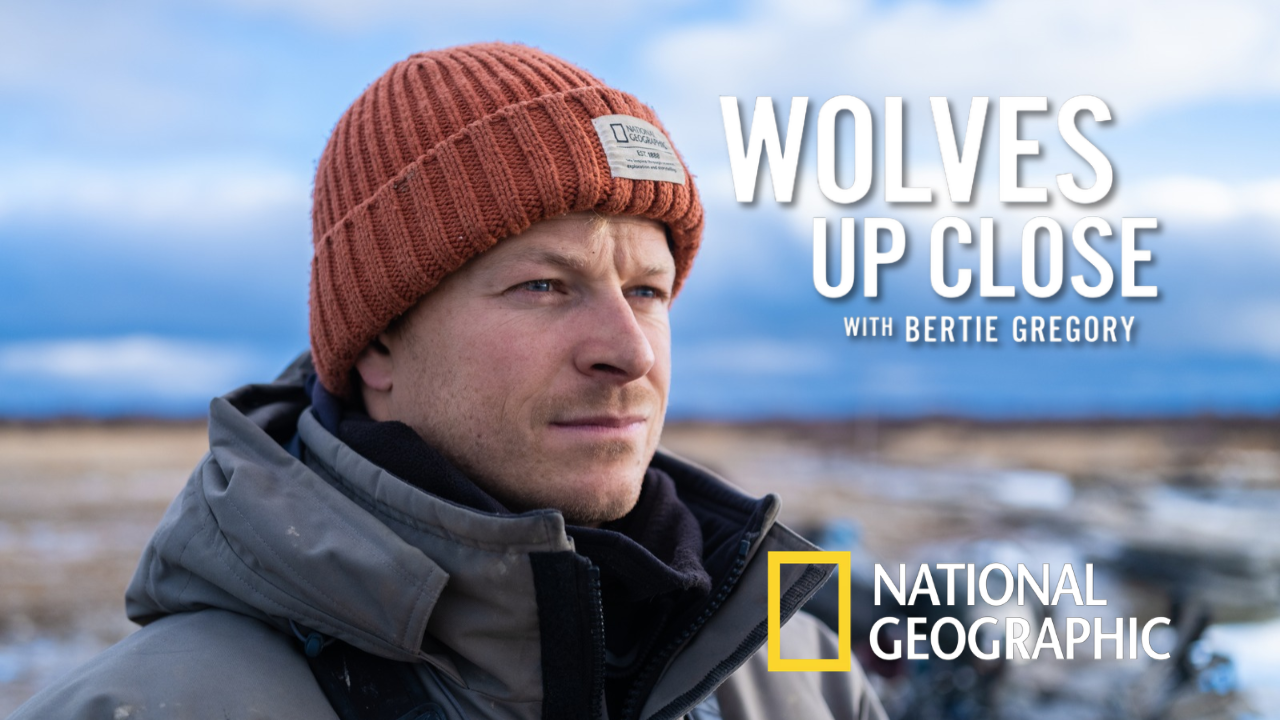
Wolves Up Close with Bertie Gregory premieres Friday, November 6th, at 9/8c on National Geographic and streams the same day on Disney+ and Hulu. In the special, the National Geographic Explorer returns to Hudson Bay in Arctic Canada to check in on a wolf pack he has followed for seven years, led by a white wolf named Kona. Winter is the pack's hardest season, and with food scarce, the wolves have to take on moose, an animal roughly 10 times their size. Ahead of the premiere, I spoke with Bertie about his longtime guides, an unusually warm winter, the outsider life of a lone wolf, and the reputation he hopes the film can help repair.
Bertie didn't name the pack leader himself. "Kona was named by Butch [Saunders], one of our guides, and Kona is a Swampy Cree First Nation word for snowflake," he explained. "Because he is white. Butch thought that was a cool name, and it stuck."
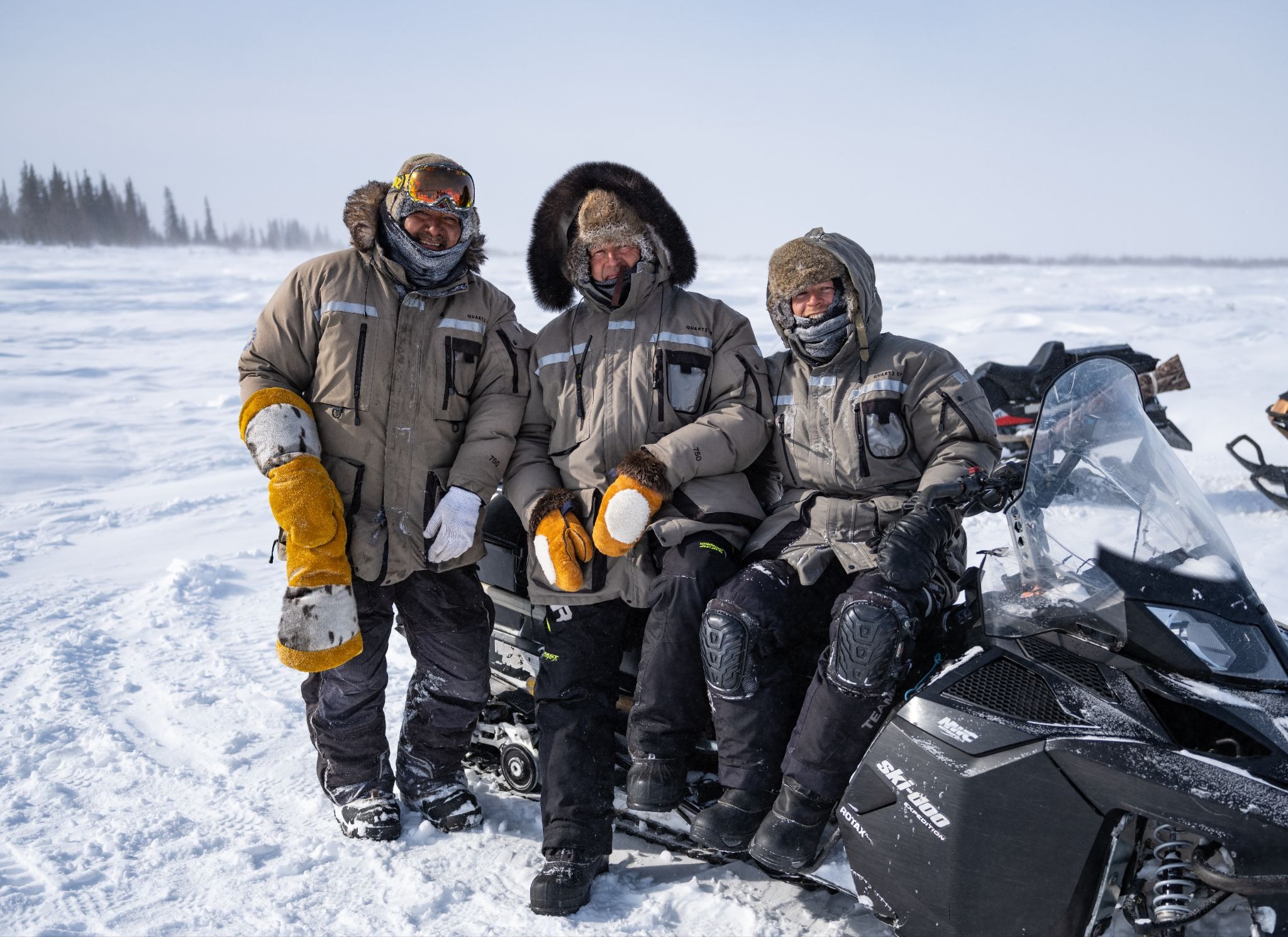
Butch and Mike Reimer, the two local guides who led Bertie through the expedition, came into his life at different times. "I met Mike in 2016, so I've known him for 10 years, and I was working on a BBC David Attenborough documentary," he said. "We were trying to film polar bears and belugas, and Mike was our guide."
"He and his cousin, Quint, and we just got on really well," Bertie continued. "He runs an awesome logistics organization. They're just great at getting you into difficult-to-get places. So I've just kept going back and filming various things with them, from online series with Nat Geo to more stuff with BBC."
Butch was a newer addition to the team. "I'd met Butch a couple years before, but never worked with him," Bertie revealed. "It was great to be able to combine all of their collective knowledge, decades of experience."
The special shows that the region wasn't nearly as cold as it should have been for that time of year, leaving the team repeatedly bogged down in unfrozen creeks. Asked whether that struggle brought the crew closer, Bertie agreed. "Whenever you're getting stuck, it's really annoying, but you know it's gonna make good TV, so you just put up with it."
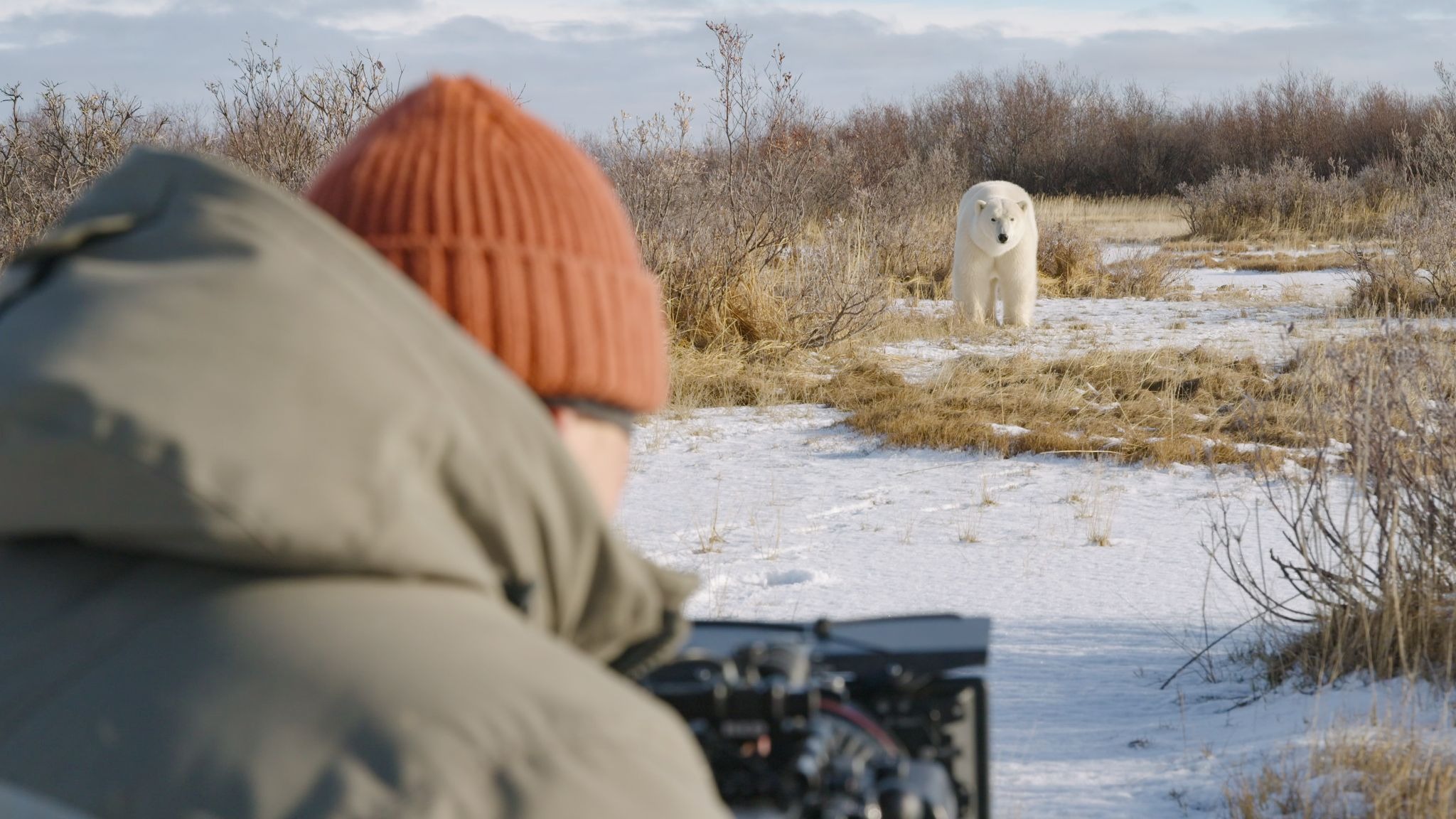
One thing viewers won't experience at home is the smell, though Bertie said the cold keeps things in check. "When it gets cold, it's just not that stinky," he said. "I think if you're close enough to smell a polar bear, you've probably screwed up.”
The moose carcass the team eventually reached wasn't much worse. "By the time we'd got on it, most of the flesh had been stripped, and everything's so frozen that it didn't smell too bad," Bertie said. "I think we smelled a lot worse, to be honest."
"We did two shoots for this, one at the end of 2024 and one at the start of 2025," Bertie revealed. In between, he filmed Cheetahs Up Close, with Hudson Bay never far from his mind. "The whole time I was on Cheetahs, I knew I was going pretty soon after, straight onto Wolves. And the whole time I was texting Mike, being like, 'Do you know anything? Have you seen anything?'"
As it turned out, Mike hadn't made it out before Bertie arrived either. "We both kind of went in blind to see what had happened," he said. "That's sort of the magic of the place. It's so wild and remote that you never know what's gonna happen."
"I love Canada. Canadian people are so lovely," Bertie shared, pointing to the country's outdoor culture as part of the appeal. "In the UK, I'm friends with outdoorsy people, and there are other people that I'm also friends with that aren't as outdoorsy, whereas it just feels like the baseline level of outdoorsiness, if that's a word, is incredibly high there. I think that just breeds really good fieldcraft for finding and following animals."
Hudson Bay itself holds a special place for him. "It's this big inland sea surrounded by these amazing, kind of weird beach ridges with ancient trees on them. A landscape where you can see polar bears on land, amongst trees, overlapping territory with wolves and moose. That's a pretty special, unique kind of overlap of biomes."
Alongside Kona's pack, the special follows a lone black wolf who runs into trouble both on his own and when he crosses paths with the pack. "A wolf pack is made up of a breeding male and female, the mum and dad. They have pups, and then the aunties and uncles help the parents raise the newest litter of pups, so they're kind of a family structure. A wolf pack can accept non-related individuals, but it's not very common. So he's seen as kind of an outsider, and young wolves will spend huge chunks of their lives just roaming around by themselves, trying to find a lone member of the opposite sex that they can mate with and start a new pack."
More than anything, Bertie hopes Wolves Up Close changes how people see wolves. "I hope that this helps reframe how we think of wolves, because I think as a society, we've been very misled," he said. "We grow up with our children's book stories of the Big Bad Wolf, and Hollywood movies of wolves just running around eating people, which is just so not true."
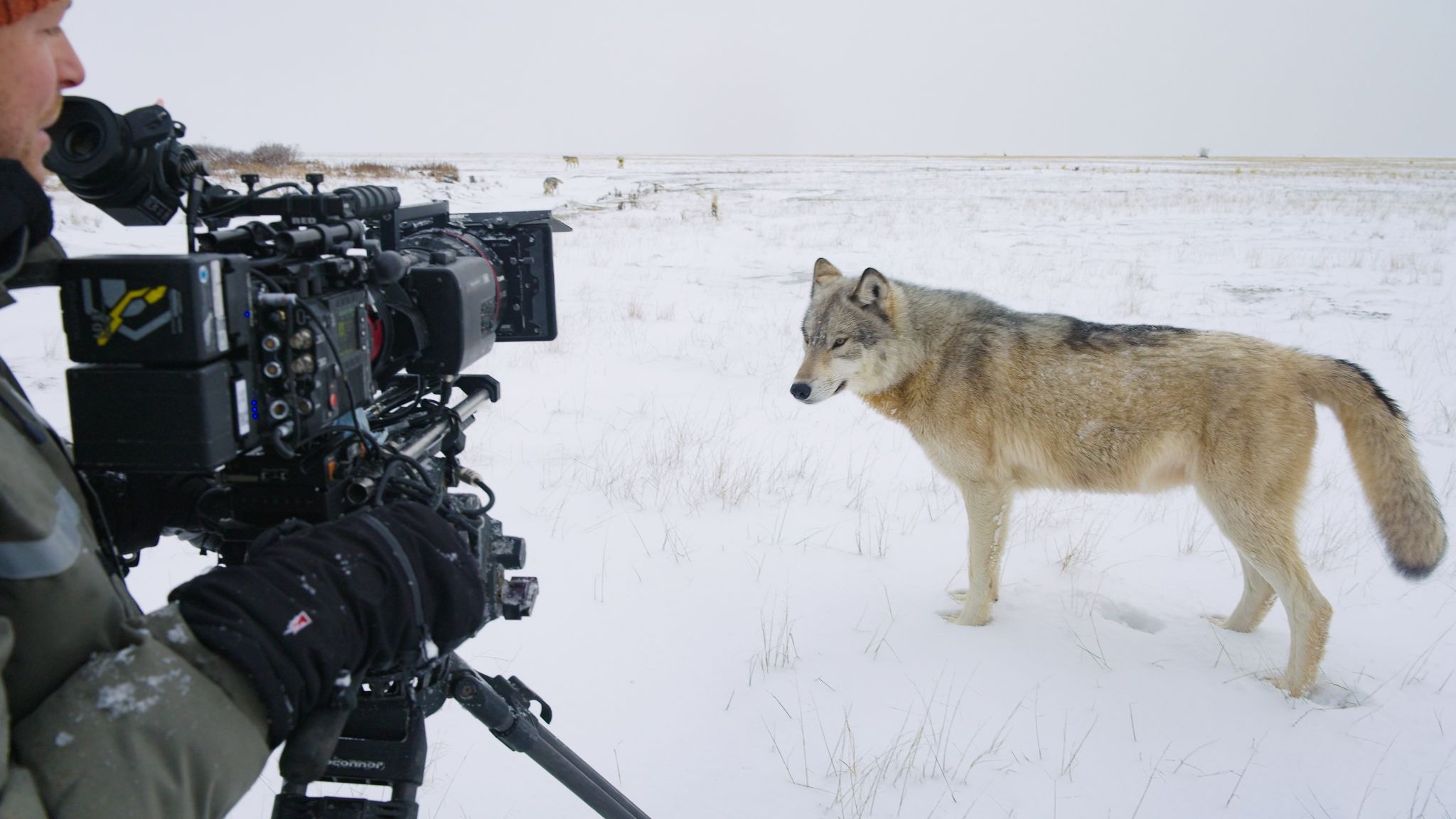
To make his point, he turned the question around on me: how many people have been killed by wolves in North America in the last 200 years? I guessed one. "Two. In 200 years," he said. "But you watch movies and the Big Bad Wolf, you think it's just all the time."
"What I hope the film shows is, in their wildest state, they can be bold and curious, but they are just so far from aggressive," Bertie said. "They are givers of life to whole ecosystems, and they're such an important part of wild landscapes. We should want to look after them."
Wolves Up Close with Bertie Gregory premieres Friday, November 6th, at 9/8c on National Geographic and streams the same day on Disney+ and Hulu.