
This Year's Astronaut Hall of Fame Inductees Revealed, To Join Exhibit at Kennedy Space Center Visitor Complex
The U.S. Astronaut Hall of Fame can be seen in an attraction at the Space Coast landmark.


This year’s annual inductees into the U.S. Astronaut Hall of Fame have been revealed, joining the ranks of an experience that guests visiting the Kennedy Space Center Visitor Complex can see.
What’s Happening:
- The U.S. Astronaut Hall of Fame, located at the Kennedy Space Center Visitor Complex in Cape Canaveral, Florida, will soon be receiving two new members in its ranks.
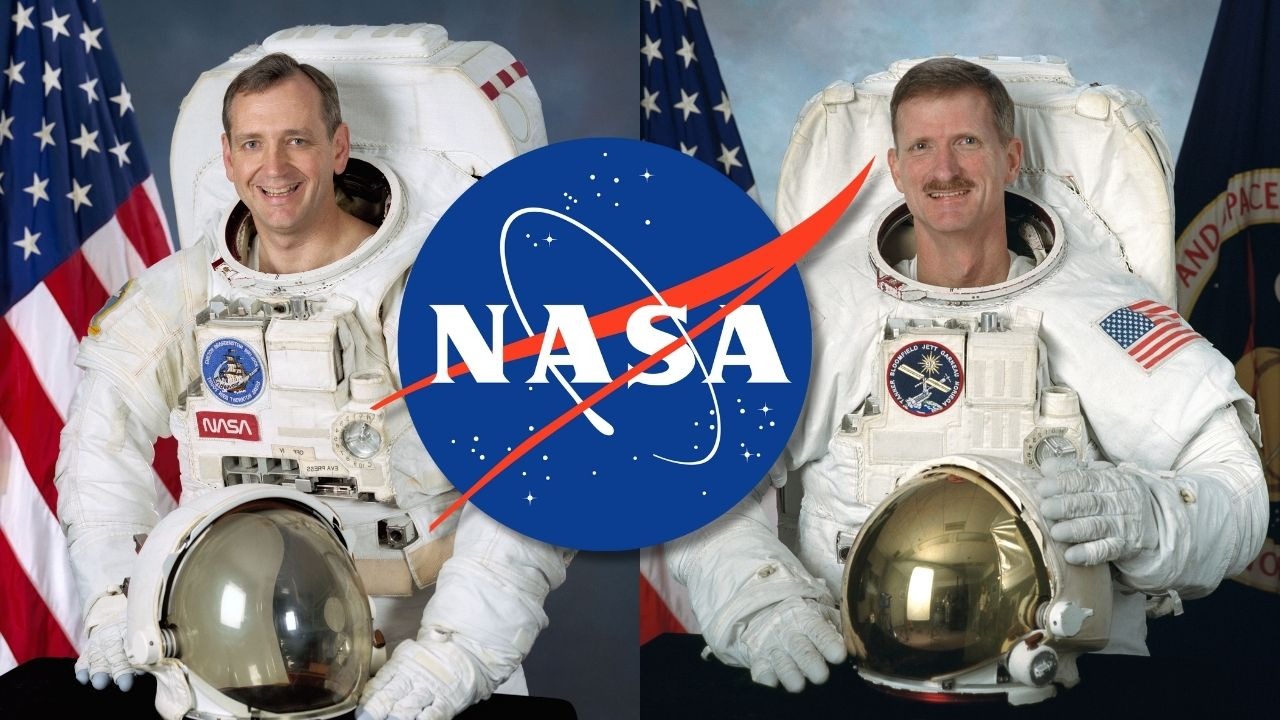
- Veteran NASA Astronauts Tom Akers and Joe Tanner will be inducted into the U.S. Astronaut Hall of Fame, joining a distinguished group of American space pioneers whose careers helped shape the Space Shuttle Program, International Space Station assembly, and some of NASA’s most complex and historic missions.
- The official induction ceremony and gala will take place at Kennedy Space Center Visitor Complex on May 16th, 2026, set against the iconic backdrop of Space Shuttle Atlantis, and hosted by the Astronaut Scholarship Foundation.
- Both Akers and Tanner served NASA in critical leadership and operational roles beyond their spaceflights, helping to shape mission success, astronaut training, and future exploration initiatives. .
- Following their NASA careers, both have remained deeply committed to education, mentorship, and STEM advocacy. The event will bring together astronaut legends, scholars, industry leaders, and space enthusiasts to celebrate the newest Hall of Fame inductees.
What They’re Saying:
- Curt Brown, chairman of the Astronaut Scholarship Foundation: “The U.S. Astronaut Hall of Fame welcomes two distinguished astronauts whose careers exemplify excellence, leadership, and service to human spaceflight. Joe Tanner and Tom Akers made lasting contributions to NASA and the advancement of our nation’s space program, and both have continued to extend their impact beyond NASA as educators and mentors. Their dedication and commitment reflect the very best of the astronaut corps, and we are honored to induct them into the U.S. Astronaut Hall of Fame at Kennedy Space Center Visitor Complex.”
More About The Inductees:
- Tom Akers, STS-41, STS-49, STS-61, STS-79
- Raised in Eminence, Missouri, Tom Akers earned bachelor’s and master’s degrees in applied mathematics from the University of Missouri–Rolla. During college, he worked summers as a national park ranger and, following graduation, served as a high school principal before joining the U.S. Air Force in 1979.
- Tom served as an air-to-air missile data analyst at Eglin Air Force Base before being selected for the USAF Test Pilot School flight test engineer program. After graduating in 1983, he spent four years as a flight test engineer on multiple weapon system development programs, flying in aircraft including the T-38, F-4, and F-15. A private pilot, Tom accumulated more than 2,500 flight hours in 25 different aircraft.
- Selected by NASA as a mission specialist in 1987, Tom served in numerous leadership and operational roles, including shuttle software development, EVA procedures and tool development, and as a “Cape Crusader” supporting Shuttle launches at Kennedy Space Center. He also served as Acting Deputy Director of Flight Crew Operations, Deputy Director of Mission Operations, and Technical Assistant to the Johnson Space Center Director.
- Tom flew four Space Shuttle missions between 1990 and 1996. On STS-41 (October 1990), he was responsible for deploying the Ulysses spacecraft. During STS-49 (May 1992), the first flight of Space Shuttle Endeavour, he participated in the historic and unplanned first-ever three-person spacewalk, successfully capturing and repairing the stranded Intelsat VI satellite and installing a new rocket motor.
- On STS-61 (December 1993), the first Hubble Space Telescope repair mission, he performed two EVAs and served as the IV crewmember for three more that resulted in the successful repair of the Hubble Space Telescope. His final mission, STS-79 (September 1996), was a resupply and crew exchange flight to the Russian space station Mir, where he served as Flight Engineer overseeing the transfer of more than 3.5 tons of supplies.
- Across his spaceflight career, Tom logged more than 800 hours in space and 29 hours of spacewalk time.
- Tom left NASA in 1997 to return to the USAF as the AFROTC commander at the University of MO-Rolla (now Missouri University of Science and Technology). He retired from the Air Force in 1999 after a 20-year career with the rank of Colonel and took a position as Instructor of Mathematics at UMR, teaching and advising for the next eleven years. He retired in 2010 and he and his wife Kaye now live on their small farm near Eminence. In retirement, he has stayed busy. He has served on six different NASA independent review teams for HST servicing missions and NASA development programs. He worked summers for over 20 years as a trail boss for the Cross Country Trail Ride in Eminence. He also is a member of a group that raises money for scholarships and projects for the students of the Eminence R-1 schools. He enjoys horseback riding, hunting, fishing, land surveying, square baling hay and spending time with his son David and daughter Jessica, and his and Kaye’s five grandchildren.
- Tom continues to volunteer his time speaking at schools to encourage students to continue their education, especially in the areas of science and technology.
- Joe Tanner, STS-66 (Atlantis), STS-82 (Discovery), STS-97 (Endeavour), STS-115 (Atlantis)
- Born January 21, 1950, in Danville, Illinois, Joe Tanner earned a degree in mechanical engineering from the University of Illinois before joining the U.S. Navy to pursue his passion for flying.
- After earning his Naval Aviator Wings in 1975, he trained in the A-7E Corsair II and cruised the Pacific aboard the USS Coral Sea. Flying high-performance jets fueled his long-held interest in human spaceflight, leading him to join NASA in 1984 as a research pilot and flight instructor at Johnson Space Center.
- While he has logged more than 9,000 flight hours in a variety of aircraft, one of his favorites will always be the Shuttle Training Aircraft in which he taught astronaut pilots how to land the Space Shuttle. After eight years supporting NASA missions, he was selected as a member of NASA’s 1992 astronaut class, Group 14.
- During his 16-year astronaut career, Joe flew four Space Shuttle missions. His first flight, ATLAS-3, STS-66 (Atlantis), studied Earth’s atmosphere and the ozone layer. His second mission, STS-82 (Discovery), was the second servicing mission to the Hubble Space Telescope, during which he performed two spacewalks to upgrade and repair critical components. His final two missions, STS-97 (Endeavour) and STS-115 (Atlantis), focused on International Space Station assembly, where he led EVA teams that installed two major truss segments containing half of the solar arrays currently powering the station.
- Over the course of his career, Joe performed seven spacewalks totaling more than 46 hours and logged 1,069 hours in space. Between flights, he performed two tours supporting crew activities and launches and landings at the Kennedy Space Center. He also served as the EVA Branch Chief and worked on several special projects to include the Altair Lunar Lander. When not in training for his own flights, he supported nearly every Shuttle mission as an Office representative to the Mission Management Team and was a member of several problem resolution teams, especially if an EVA was required.
- After retiring from NASA, Joe chose to give back to future generations as a Teaching Professor in the Aerospace Engineering Sciences Department of the University of Colorado Boulder. He taught a two-semester engineering projects course to Master’s and PhD students for eight years and served as a team advisor and grader in the senior design capstone course for three of those years. He found great fulfillment teaching and mentoring the students who will be our future leaders. Joe is fully retired now and enjoying mountain living with his wife near Ridgway, Colorado. He enjoys hiking, climbing, skiing, building projects, working on old cars, and helping his friends and neighbors.
- Joe’s current passion is supporting the Astronaut Scholarship Foundation as an award presenter and member of the scholar selection committee. He volunteered to be a mentor as soon as the current program was established and has been immensely rewarded to serve ASF scholars in that capacity for over 10 years. He also frequently gives space-related presentations to local organizations and schools with audiences of all ages. He works closely with a non-profit in Telluride that focuses on encouraging students in southwest Colorado to pursue education and careers in STEM fields
The Astronaut Hall of Fame:
- The U.S. Astronaut Hall of Fame honors American astronauts who have significantly contributed to U.S. human spaceflight.
- It’s a museum-style exhibit celebrating the careers and achievements of astronauts from NASA’s historic space programs — from Mercury and Gemini to Apollo, Shuttle, and International Space Station missions.
- The hall of fame is housed on the bottom floor of the “Heroes & Legends” attraction at the Kennedy Space Center Visitor Complex, serving as part of a larger storytelling area that highlights the early years of space exploration and the personal stories behind America’s space heroes.
- While the Hall of Fame as a facility has existed since 1990, after the concept began with the original seven Mercury astronauts in the 1980s who wanted a place to commemorate space explorers.
- In 2016, the Hall of Fame became part of the aforementioned attraction, modernizing how the achievements are displayed and celebrated.
- Guests who visit the Kennedy Space Center Visitor Complex can experience the attraction and the U.S. Astronaut Hall of Fame during regular operating hours, subject to operational changes.
Laughing Place recommends MouseFanTravel.com for all your Disney travel planning
Fill out the form below for a free, no obligation quote from MouseFanTravel.com