
After Warner Bros. Discovery is Acquired, What Happens to Disney?


Just weeks ago, the conversation around Warner Bros. Discovery centered on potential suitors circling the embattled media giant. Since then, events have accelerated at a remarkable pace.
-(2).png)
Warner Bros. Discovery has agreed to a deal that would see Netflix acquire its studio and streaming businesses, while its linear cable networks spin off into a separate company. Before the dust could settle, Paramount entered the picture with a hostile bid for the entire company — instantly turning industry speculation into a full-blown consolidation showdown.
There has been no shortage of analysis dissecting which proposal might be better for consumers, employees, or shareholders. But there’s another angle worth examining—one that sits just outside the immediate blast radius of this deal: What does all of this mean for Disney?
Barring a surprise twist or an unexpected regulatory intervention, it increasingly feels like Warner Bros. Discovery’s days as an independent studio are coming to an end. That alone isn’t particularly shocking. What is new is just how aggressively both Netflix and Paramount appear to be pushing to expand.
Only one of them will walk away with WBD. Which raises the inevitable follow-up question, what does the loser do next?
Both companies have meaningful technology backing. Netflix has long walked the line between tech company and entertainment studio, while Paramount—despite its legacy media roots—now has Oracle standing firmly behind it. They’re hardly alone. Apple, Amazon, and Google all have businesses that increasingly overlap with entertainment, and Amazon has already crossed the Rubicon by acquiring MGM.
Taken together, it suggests a broader industry anxiety. Do tech-aligned companies feel they need to get bigger—much bigger—in order to compete? If the answer to that question is "yes," the next one is unavoidable: Could any of these companies take a run at The Walt Disney Company?
On paper, the idea isn’t impossible. Disney is more than twice the size of Warner Bros. Discovery, but several Silicon Valley giants operate on an entirely different financial scale. Alphabet and Apple each have market capitalizations more than twenty times larger than Disney’s. From a purely financial standpoint, acquiring Disney is achievable.
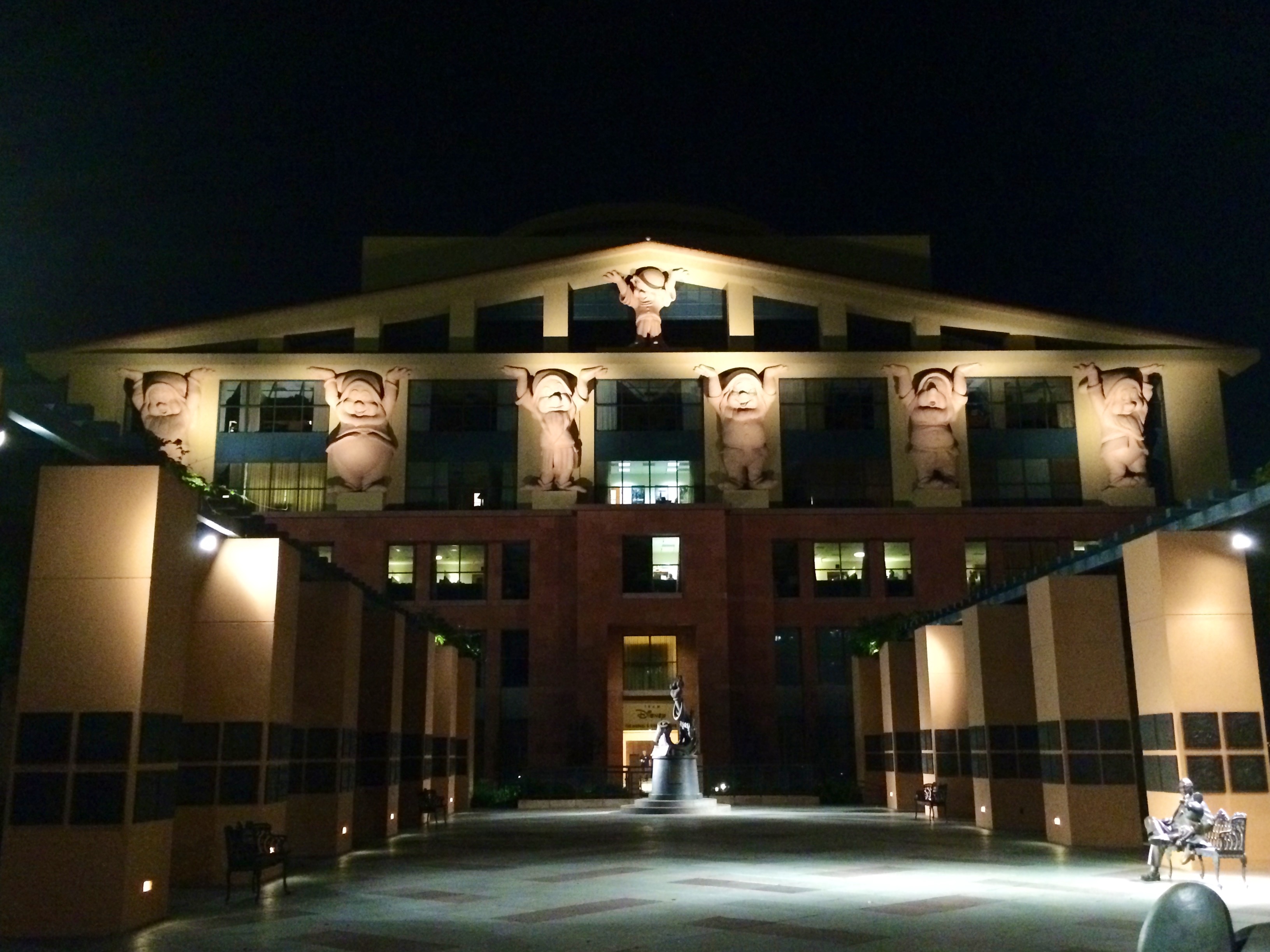
But financially possible does not mean operationally desirable. Disney’s IP library is arguably the strongest in the world—but would a tech company truly want to operate linear television networks? Or manage theme parks? Netflix has shown no interest in owning cable channels. Apple and Google have never signaled a desire to move from digital ecosystems into real-world logistics, labor-intensive operations, and the perpetual challenges of running global destination resorts.
And yet, there are reasons Disney might appear vulnerable at this moment. Bob Iger is once again approaching the exit, and Disney still needs to demonstrate that it can execute a clean leadership succession after its first attempt ended disastrously. Historically, moments like this tend to attract opportunistic interest. Michael Eisner faced a hostile bid from Comcast during his own leadership crisis—an episode that still looms large in Disney history.
A hypothetical suitor could even propose a structure similar to the WBD deal: acquire Disney’s studios, streaming platforms, and IP library, while spinning off theme parks and linear networks into separate entities. But that immediately raises a philosophical (and practical) problem. What are Disney theme parks without Disney stories?
Yes, long-term licensing agreements could theoretically preserve character access. But the emotional and creative synergy—the thing that makes Disney Disney — would be fundamentally fractured. In recent years, the company has done the opposite of preparing for separation. From attraction design to franchise-driven lands to expansive world-building initiatives tied to its Epic Games partnership, Disney has been reinforcing the idea that its businesses are inseparable.
The company is intentionally designing itself not to be broken apart. Still, Disney’s board has fiduciary responsibilities. If a tech giant were to present a truly “too good to refuse” offer, it would have to be considered — no matter how uncomfortable that conversation might be.
Disney remains the only major entertainment company still culturally and spiritually connected to its original creative founder. It has never been absorbed into a telecom company, a cable provider, or a tech conglomerate. Its independence isn’t just corporate structure; it’s part of the company’s identity. And losing that would be more than just a business shift—it would be the end of an era.
For now, Disney isn’t directly involved in the chaos surrounding Warner Bros. Discovery. But it is absolutely paying attention. The company is watching who wins, who loses, and how regulators respond. And behind closed doors, Disney executives are almost certainly asking what this wave of consolidation means for their own future.
Because when the dust settles on the WBD showdown, the next major chess piece on the board might just be Disney itself.
An audio version of this article can be heard in the latest episode of the Laughing Place "On Balance" Podcast