
Bringing Stitch to Life: How Puppetry and VFX Made Disney’s Alien Feel Real in Live-Action Adaptation


In Disney's live-action reimagining of Lilo & Stitch, the mischievous alien Stitch isn't just a ball of chaotic energy; he's a living, breathing character who needed to feel emotionally grounded alongside a human cast. To bring him to life, the filmmakers relied on a blend of cutting-edge visual effects and hands-on puppetry, crafting a performance that felt authentic for the actors on set and believable for the audience.
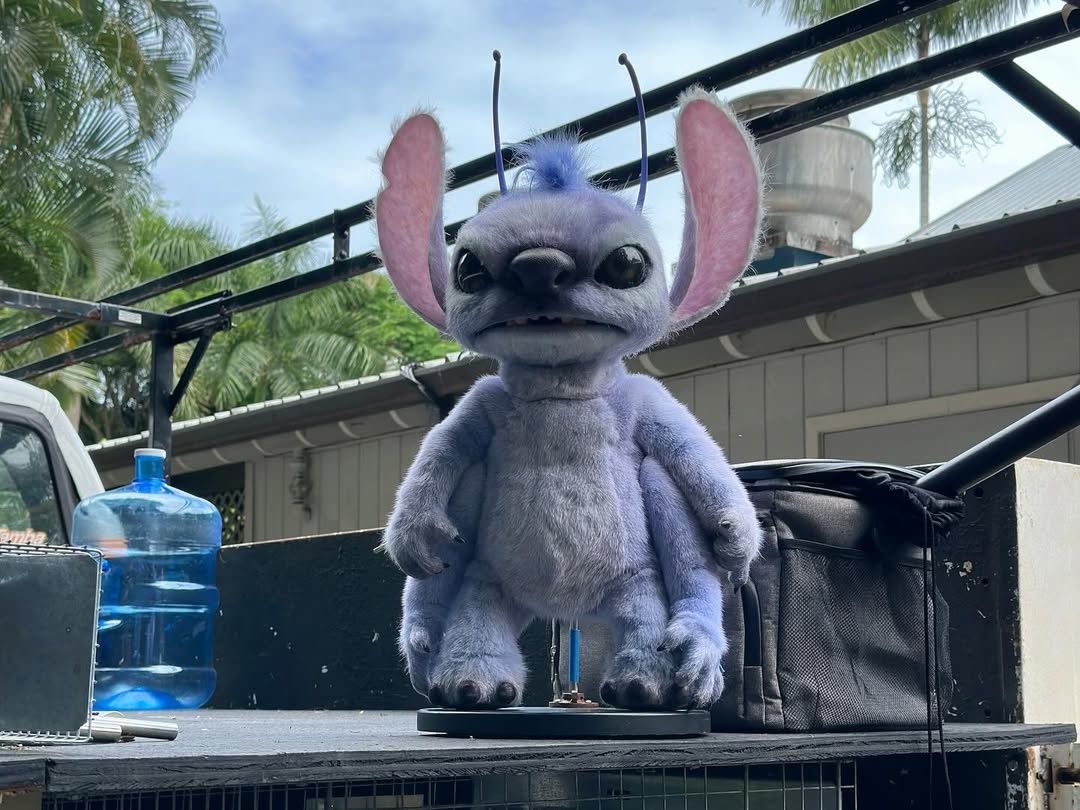
“Stitch is a total CG character," explained producer Jonathan Eirich. “Our director, Dean Fleischer Camp, had a great truism: Cuteness is something evolution has created for thousands of years…we just need to draft off that." The team studied charming animal traits - deer ears, a bulldog’s nose, koala-like textures, and the soulful eyes of a seal - to design a Stitch that would be visually irresistible but grounded in believability.
To help young lead actress Maia Kealoha act opposite a character who wouldn’t be added until post-production, the crew turned to practical stand-ins. Legacy Effects built an on-set maquette and a rod puppet that Stitch suit performer Sara Arrington and puppeteer Seth Hays used throughout the shoot. “We brought in Legacy Effects to build an on-set maquette and puppet, both for lighting and camera reference and for Maia to emotionally connect and interact with," said executive producer Tom Peitzman. “The maquette, combined with the puppeteering skills of Seth Hays, helped bring Stitch to life in a way that felt real for the actors and, ultimately, the audience."
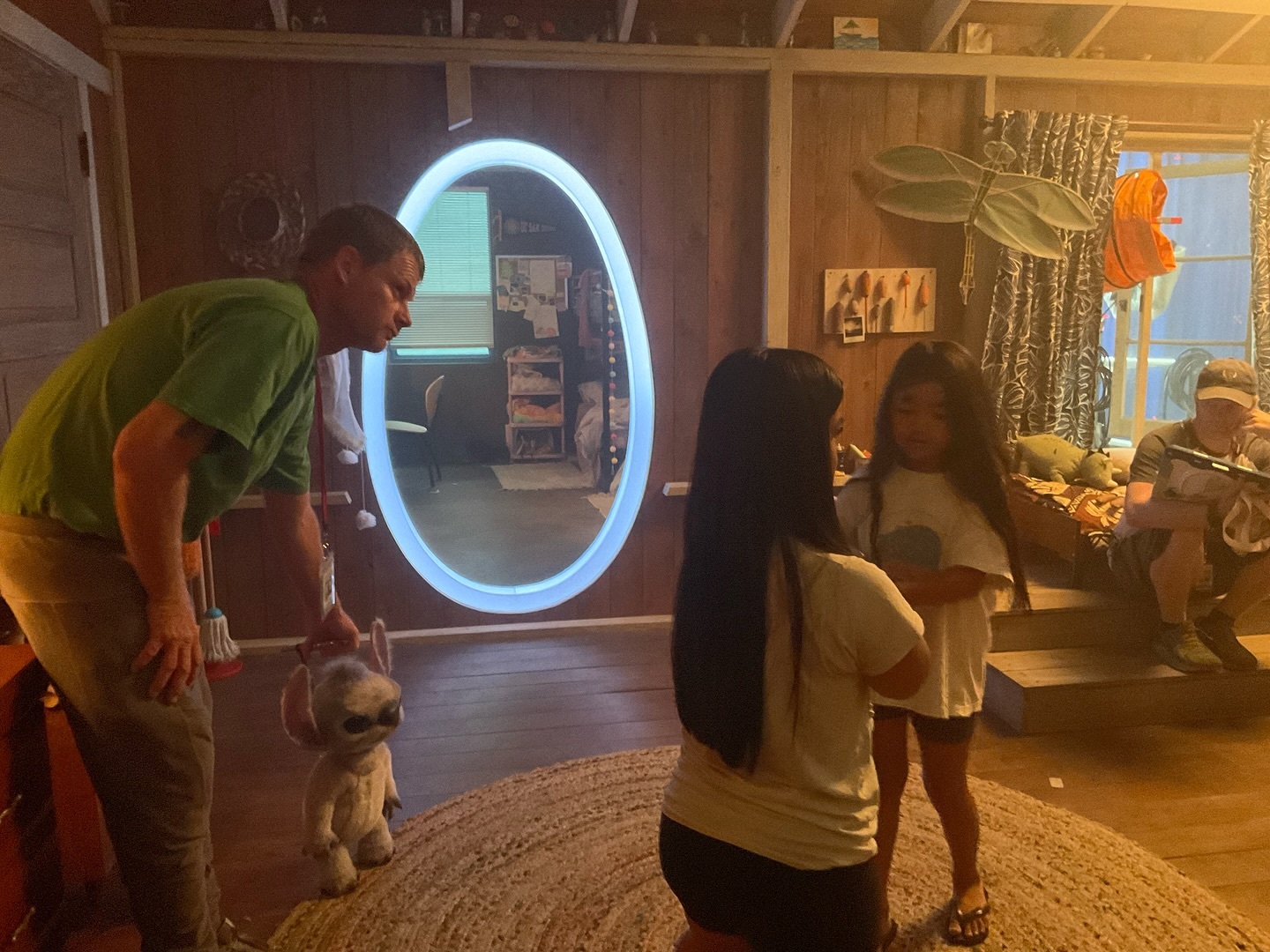
Arrington, who also coached Maia as an acting mentor, often donned a gray suit to physically perform opposite her during rehearsals. For scenes that required more elaborate motion, Hays stepped in. “There is a scene where Lilo is running and she has to be talking to Stitch the entire time, so Seth had a puppet and was running alongside her," Arrington recalled. “If Seth had not been there, it wouldn’t really translate well."
Hays, who previously worked on The Mandalorian as one of Grogu's puppeteers, noted, “I was basically there to give Maia a more realistic scene partner and to give Dean a more accurate idea of how he wants the scene to look, and what would exist in that space where a CG Stitch will eventually appear." Although his rod puppet isn’t visible in the final cut, his emotional connection with Maia was instrumental to the film. “The moment that Maia engaged and saw Stitch, it was pretty magical," Hays said. “She really turned it on every scene we had together, no matter what."
Industrial Light & Magic’s Craig Hammack, the film’s visual effects supervisor, worked closely with Legacy to ensure the final CG Stitch matched the energy and spirit of the puppets. “We wanted to keep it pretty faithful to the original film, especially in terms of Stitch," Hammack explained. “You see Stitch merchandise everywhere, so he’s very well known, but at the same time, he's very unique and has characteristics that are quite subtle." That meant carefully fine-tuning the blending of fur textures, eye shapes, and ear proportions to capture Stitch’s essence without making him look too cartoony or too alien.
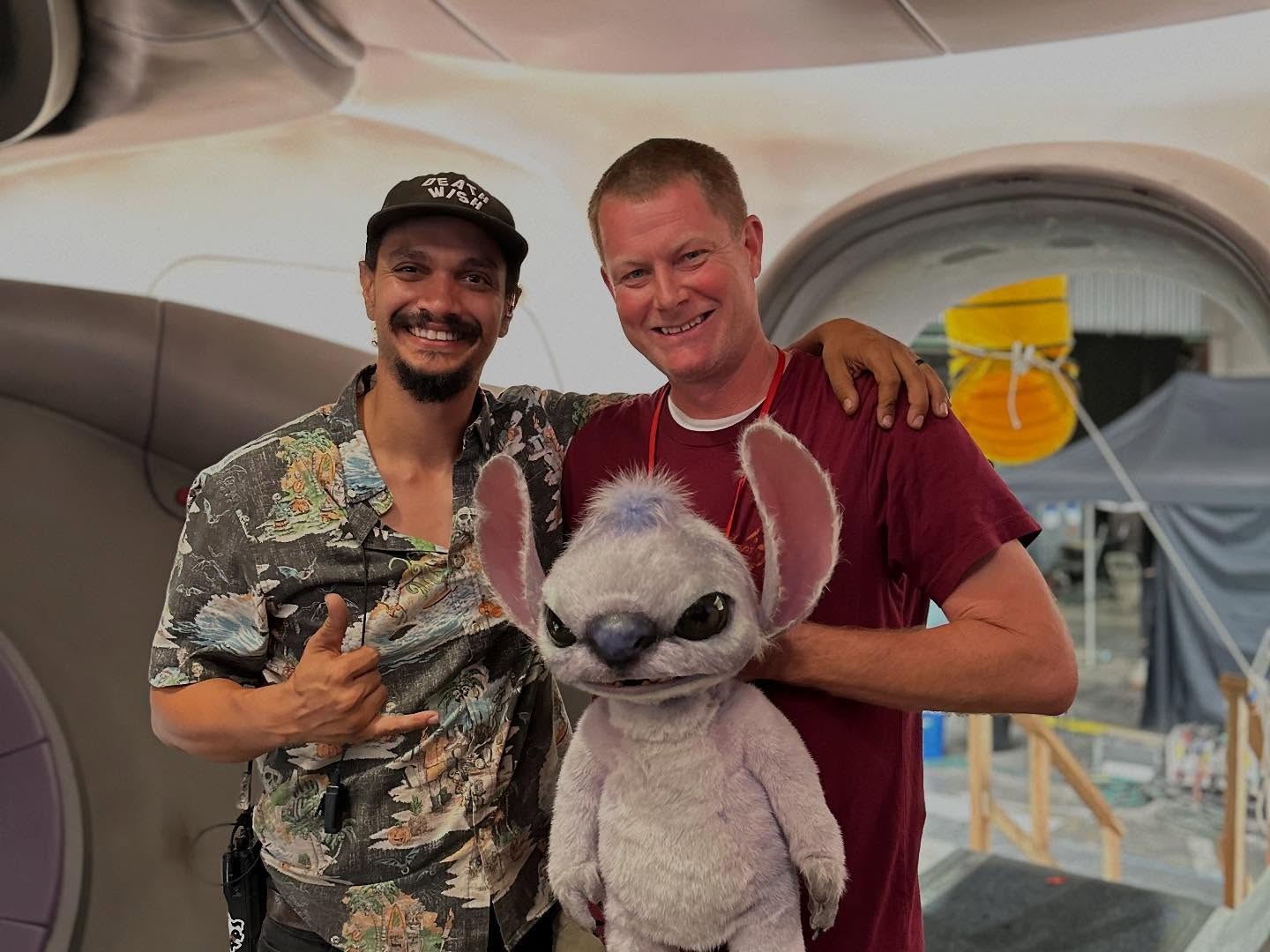
“Dean learned from Marcel the Shell with Shoes On that when there’s no tactile interaction in a practical set, the audience disconnects," Eirich added. That lesson carried into every stage of Stitch’s development, from the rod puppets that scurried across set to the expressive digital character that will charm a new generation of fans. The result is a seamless integration of performance, craft, and technology - the spirit of Stitch, perfectly preserved.
Disney’s Lilo & Stitch is still delighting audiences in theaters and is close to becoming Disney’s 33rd film to gross over $1 billion at the global box office.