
"Dragon Striker" Creators Reveal the Secrets Behind Kal Asterock's Design at Annecy


The creative team behind Disney's Dragon Striker brought the world of Kal Asterock to life at the Annecy Animation Festival this week, with a live drawing session that doubled as a deep dive into the making of the anime series currently streaming on Disney+ and Hulu. While fans and students in attendance got a peek into the layered approach used by the show’s artists, the quartet regaled the crowd with behind-the-scenes stories about the making of the hit new series.
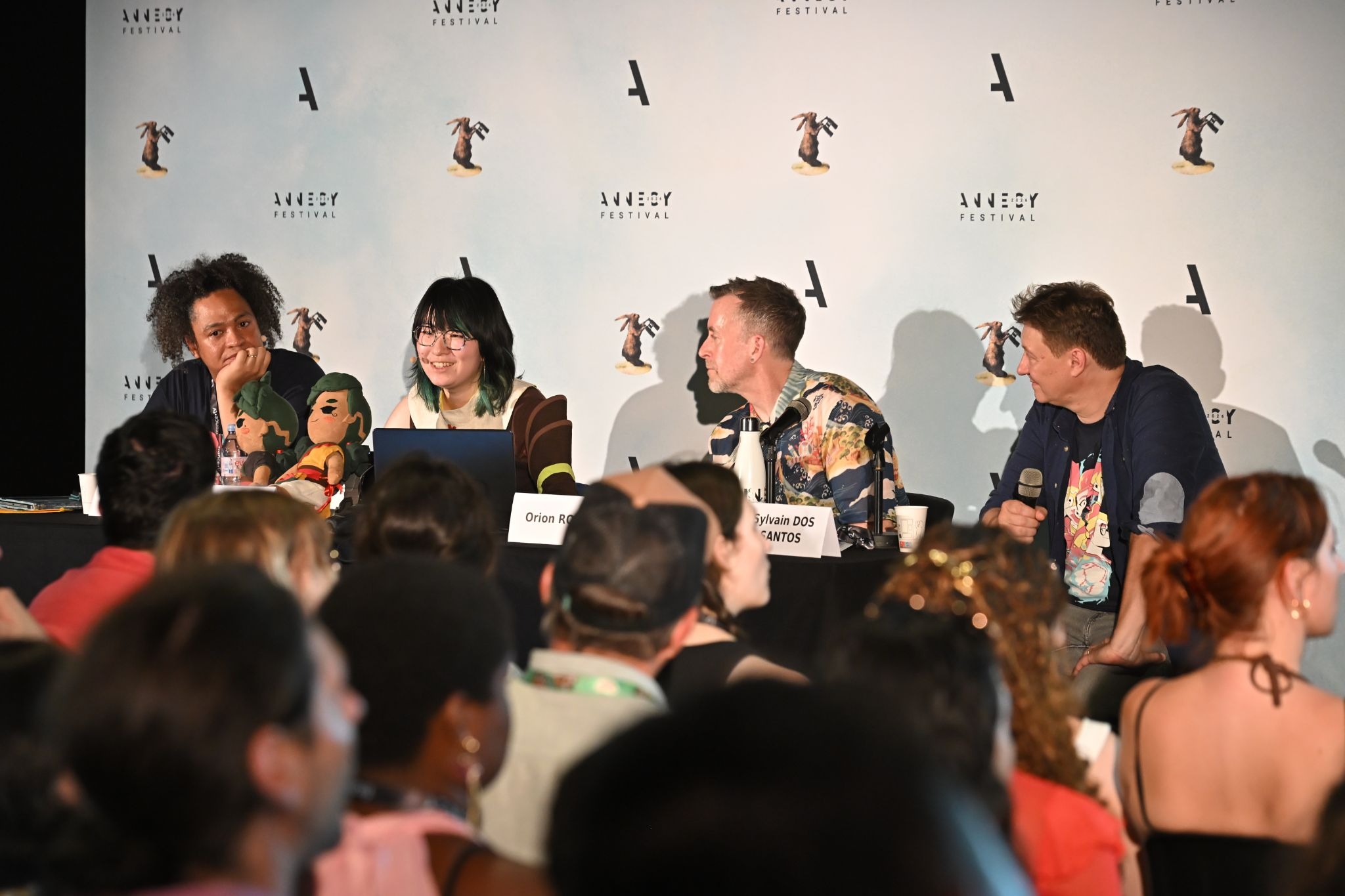
Orion Ross, VP of Animation at Disney Kids & Family, moderated the session alongside co-creator and creative director Sylvain Dos Santos, co-creator and director Charles Lefebvre, and concept artist Claire Sun — the latter two sketching characters from the show in real time as the conversation unfolded. Lefebvre drew Key in an action pose with his dragon tama, while Sun tackled Casper and Odward.
The panel touched on the show's origins, with Dos Santos noting that Dragon Striker has been in development for roughly a decade — beginning as a pitch for a magical rugby series before Disney steered it toward football. "I come from a place in the south of France where rugby is quite huge," he said, "and that was my goal." The pivot, he acknowledged, was ultimately the right call.
Much of the discussion centered on the show's distinctive visual language. Lefebvre explained that the entire design vocabulary of the world is built around two shapes — round and diamond — which appear throughout backgrounds, costumes, and character designs. Costumes themselves blend medieval fantasy with streetwear, a balance the team described as intentional from the start. What they didn't anticipate was the sheer scope of wardrobe variation. "We have winter costumes, summer costumes, uniforms, armor, training costumes," Ross noted, with Lefebvre adding that announcing the show would depict full seasonal changes came as a surprise to the production team.
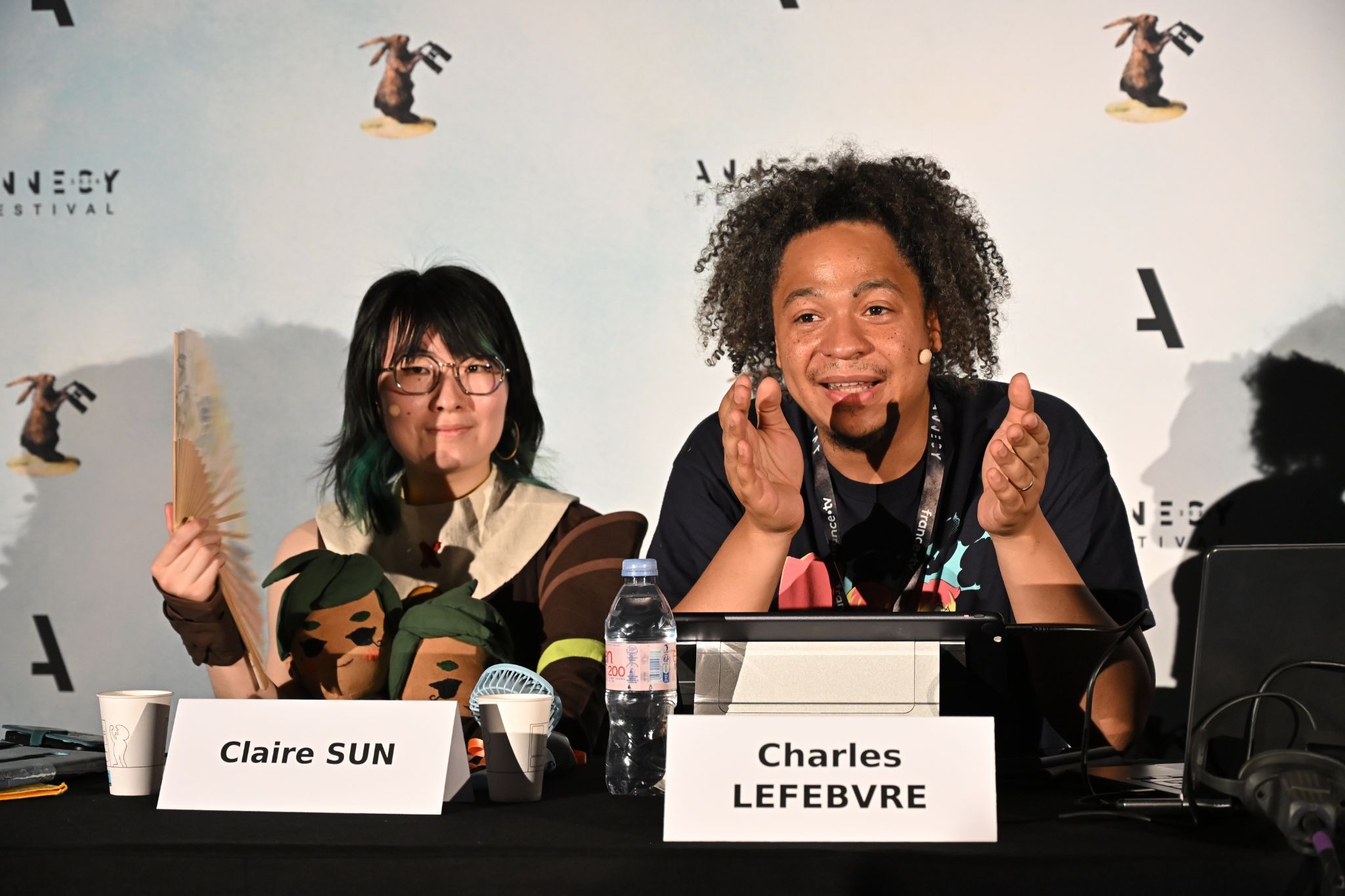
Sun spoke candidly about adapting her naturally soft, rounded drawing style to Lefebvre's more angular design language, describing it as both challenging and creatively rewarding. "It's teamwork," she said. "If you're not great at something, it's not a bad thing — a teammate can cover for you." Lefebvre echoed that sentiment, describing his approach to assembling the concept art team as identifying complementary talents rather than seeking stylistic uniformity.
On character design philosophy, Lefebvre shared his preference for keeping central characters intentionally simple at the outset. "I love the main characters to be kind of vanilla," he said, "because I like them to evolve through the series." Secondary characters, by contrast, are designed to make an immediate visual impact given their limited screen time.
Audience questions covered the animation process — which Dos Santos described as a hybrid approach closely modeled on Japanese production pipelines — as well as the pitching process, career paths into directing, and what tamas the panelists would choose for themselves. Lefebvre said he'd want a time tama, joking that he never had enough of it during production.
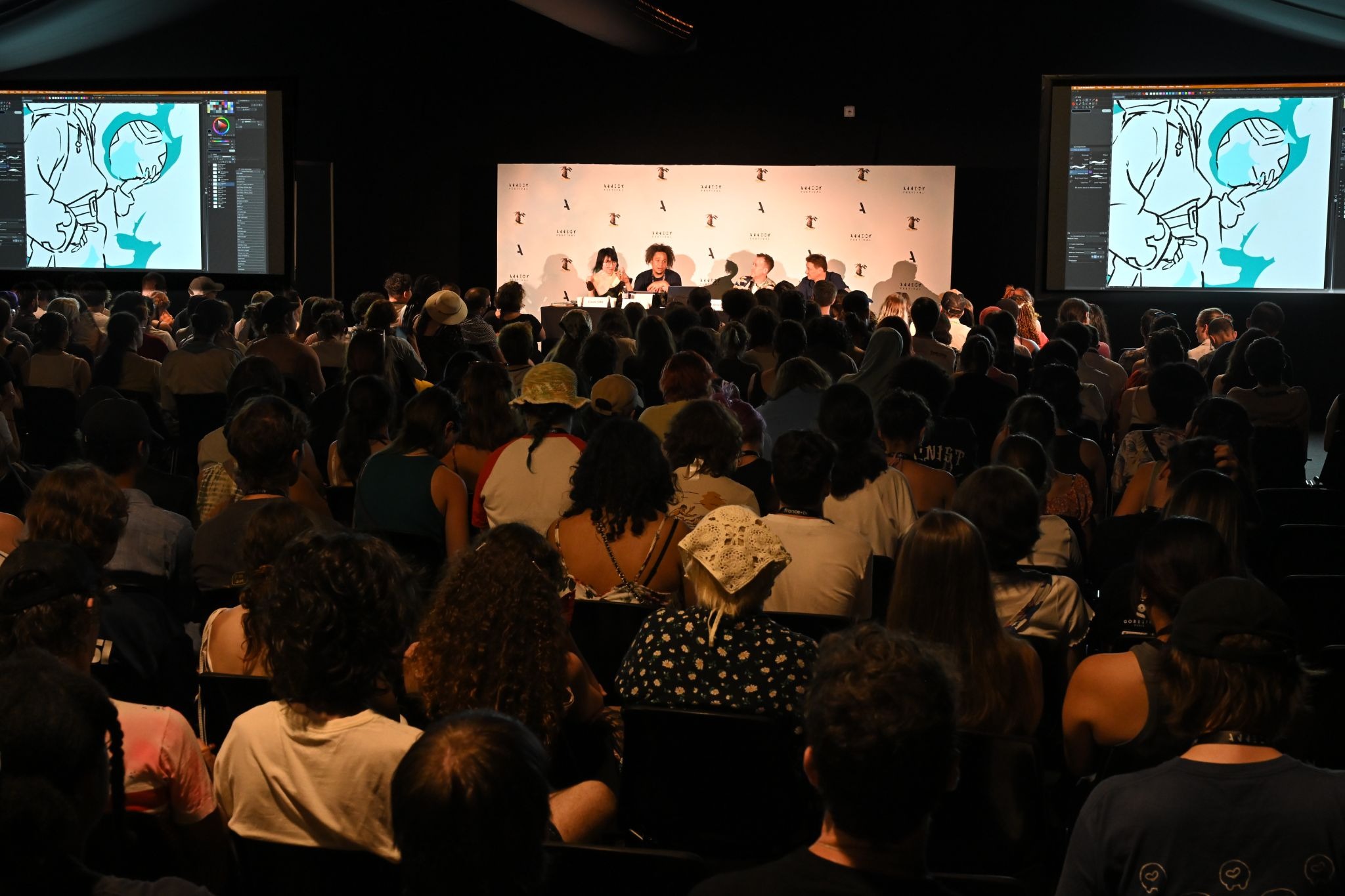
The session closed with Ross encouraging the packed audience to spread the word about the show, and to watch it again if they had already. Dragon Striker is now streaming on Disney+ and Hulu.