
Mick Giacchino on His "VisionQuest" Score: How Human Melodies Met Synthetic Sound


For Mick Giacchino, the key to scoring Marvel’s VisionQuest was not choosing between the character’s synthetic origins and his human emotions. It was finding a way for those two sides to exist together musically. His approach began with an orchestra, but some of its melodies would take a detour through an effects pedal on his desk, emerging as electronic textures that could accompany the very instruments from which they originated.
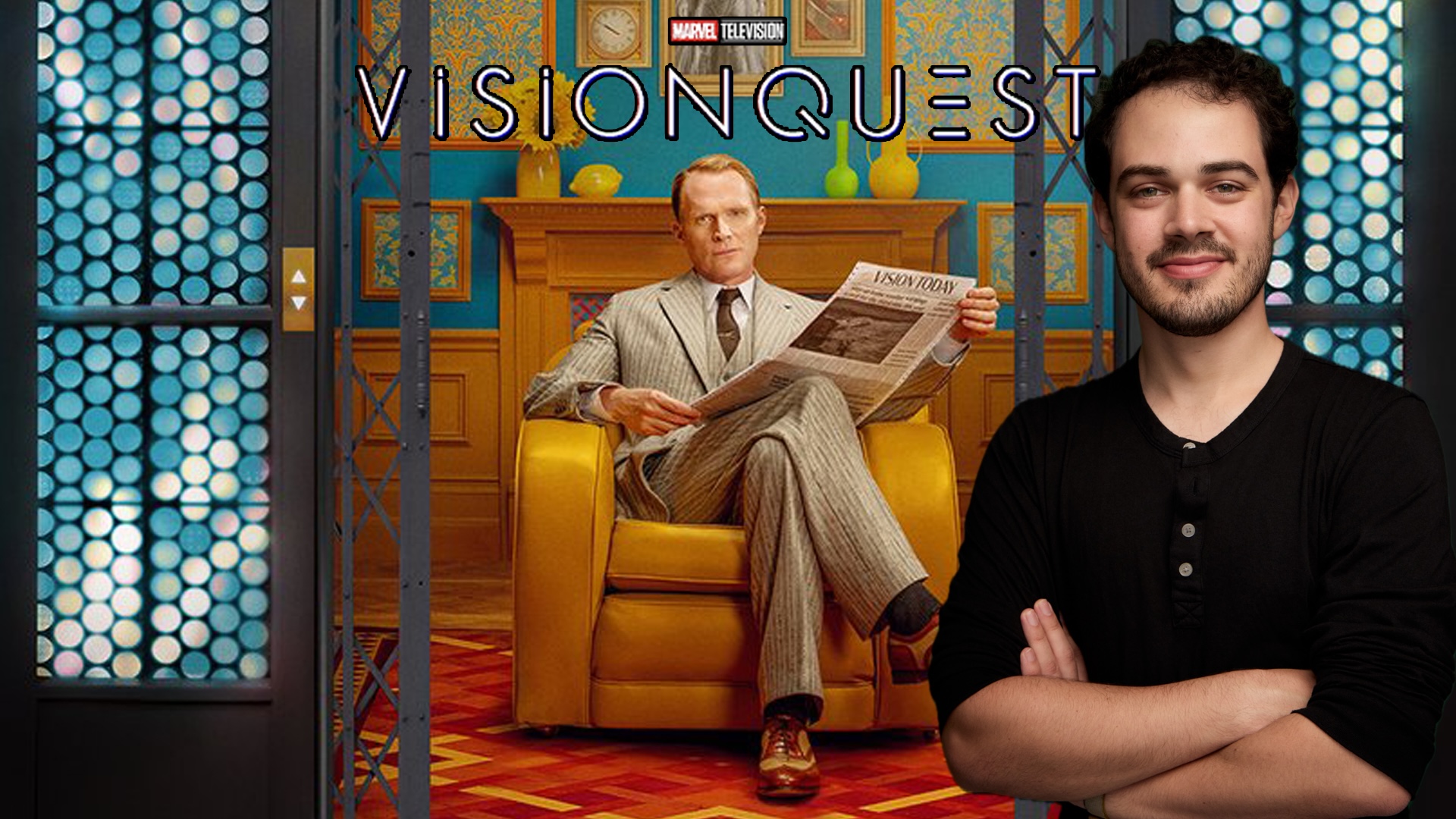
Speaking with Laughing Place, Giacchino described the opportunity to work in the Marvel Cinematic Universe as a combination of things he particularly enjoys. “I mean, it’s so exciting. You know, I love these movies, and they’re such a blast to work on too,” he said. “And, you know, anything that I get to work on that feels larger than life is always exciting, and any chance to get to work with an orchestra, which Marvel provides both of those opportunities, are ones that are my favorite experiences musically.”
On VisionQuest, that orchestra would do more than provide the scale associated with a Marvel adventure. It would establish an emotional foundation for a character whose artificial nature does not prevent his story from being deeply concerned with relationships. As Giacchino explained, “It’s really the story of connection and love. And so to honor that, the core of the score is very much orchestral. It comes from human beings. And then I wanted to blend it with synthetic textures as well.”
To create that blend, Giacchino worked with synthesizers and effects pedals, singling out the Hologram Microcosm as a particularly useful tool. Rather than developing an entirely separate electronic sound to place against the orchestra, he could feed his orchestral melodies and motifs through the pedal and process them. The material remained connected, even as its sound changed.
“And essentially what it does is it takes what you play through it, and it’ll chop it up and spit it out in a different direction and kind of create these spacey, atmospheric textures that felt very cool for Vision and sat behind the orchestra very nicely,” he explained. “So I really wanted to use that as a way to kind of create this human synthetic hybrid.”
There is something especially appropriate about that process for Vision. The human and synthetic elements are not simply competing sounds, with one representing his feelings and the other his construction. They can share the same musical material, allowing technology to reshape an idea without severing its connection to the people who performed it.
Finding that relationship was only part of the assignment, however. VisionQuest also moves between comedy and heartbreak, requiring a score that can accommodate wildly different situations without losing its connection to the characters. For Giacchino, that variety was an attraction rather than an obstacle. “I mean, it was an absolute blast for me. That’s one of my favorite things to do. I love a little bit of everything,” he said.
The challenge was knowing whose perspective the music should follow. Giacchino pointed to the show’s exorcism sequence, which presents the inherently ridiculous image of artificial intelligences attempting a religious ceremony. The audience can recognize the absurdity, but the characters are not approaching it as a joke. His score needed to take their concerns seriously, even while viewers were enjoying the comedy.
“To them it’s very serious, and this is a very serious situation, and there are stakes to this. So I wanted to make sure that I’m respecting them and their viewpoint,” Giacchino explained. “And so the music feels true to them, but you can laugh at it as a viewer and enjoy it while also feeling what the stakes are. So it’s a lot of fun to mix and match that and try to find the right balance between the two.”
That distinction helps explain how a score can support a funny scene without constantly announcing that it is funny. By remaining faithful to the characters, the music allows humor and sincerity to occupy the same space. The circumstances may be strange, but the emotions do not have to become less credible because of them.
A similar balance guided the relationship between VisionQuest and the shows that preceded it. Giacchino needed to help establish a distinct musical identity while recognizing that this story carries connections to both WandaVision and Agatha All Along. He described a creative direction that emphasized the differences among the three series rather than asking their scores to sound interchangeable.
“Each show in this series is so unique. I mean, the first one, again, has all these classic sitcoms as influences, and Agatha is these witch themes and instrumentation,” he explained. For VisionQuest, the emphasis was on making the music feel rooted in science fiction and the nature of a synthoid. That identity would provide the foundation, with musical references to the earlier shows appearing at carefully chosen moments.
One such moment arrives in the second episode, when a reference to love persevering prompts a response in Vision. For Giacchino, the opportunity was not simply to bring back familiar music, but to use it to express the difficult relationship between what Vision remembers and what he feels.
“Like, for example, in episode two, when you hear that ‘Love Persevering’ line, that triggers something in Vision where, again, he’s struggling to connect the memory to the feeling, and it kind of — there’s this flare of feeling right there, and that’s where we bring in Wanda’s love theme,” Giacchino said. Those connections were deliberately placed rather than woven indiscriminately throughout the score. “And so he was very specific about which moments we wanted to be harkening back to WandaVision, which moments we wanted to harken back to Agatha, and how much of it should just be purely Vision.”
In that context, a returning theme has a purpose beyond rewarding viewers for recognizing it. It becomes a way to communicate something that Vision is struggling to understand, allowing the audience’s familiarity with the earlier story to inform his present experience. The score can acknowledge the past while still serving the scene immediately in front of us.
Giacchino joined VisionQuest relatively late in the production process, with the series already well into editing and cuts of several episodes far along. Having substantial versions of the episodes available gave him a relatively stable foundation for his work, even as trims and adjustments continued. It also placed him in the unusual position of being an early viewer of a Marvel story that he could not discuss freely.
“It feels like you’re holding the government secrets here, you know,” he joked. “But so it’s very exciting to be part of, like, the first few to see it, but it’s also, you know, you can’t talk about it with anyone.” The people with whom he could discuss the story, including its creators and editors, already knew the answers, leaving little opportunity for the kind of speculation that accompanies watching a Marvel series as a fan. Nevertheless, he enjoyed following the production’s evolution. “It’s a blast to see this thing in one state and kind of how it arrives over the finish line into its final form.”
That evolution includes the score itself, and Giacchino was particularly candid about how collaboration can change his music for the better. Our discussion grew out of a Werewolf by Night screening we had both attended, where his father had spoken about the ways a director and composer challenge and motivate one another. For Mick, that relationship can be especially valuable when someone questions the very musical passage he is most excited about.
“There are a few moments where I get really excited about a specific musical, like, moment that I spend a lot of time on,” he explained. “And I find that the things that I tend to get most excited about sometimes are the things that are like, ‘Okay, great, this whole cue is working great except for this one moment.’” The attachment is understandable, but his enthusiasm for an idea does not necessarily mean it is the best fit for the scene.
“Then you go back and you do a revision and it hurts, but then you see it in context and you’re like, ‘You know what, it’s right and this is what it’s supposed to be,’” Giacchino continued. “And oftentimes, I mean, there’s very few times I end up preferring what I did originally over what it became.”
It is a revealing description of a process that requires both confidence and a willingness to reconsider. Giacchino wants to be excited about what he writes, but that excitement has to remain in service of the larger production. As he put it, “You have to walk hand in hand with each other to make sure that you’re delivering the tone that is right for the characters and for the project.”
That sense of responsibility also informs how he approaches the established worlds in which he gets to work. When we asked about a career that has already brought opportunities involving the Muppets, Marvel, and a Shanghai Disneyland attraction, Giacchino responded as someone who still appreciates how unusual it is to contribute to the things he grew up loving.
“I mean, it’s insane. You know, I pinch myself each time because it just, you know, all of these things are things that I grew up with and I love,” he said. “And, you know, Star Wars was such a big part of my childhood. I love Marvel. I love DC. And so just the fact that I get to even have an opportunity to contribute anything to these projects and franchises is just the honor of a lifetime.”
Being a fan also means understanding that these stories belong, emotionally, to many other people. “It’s also intimidating too, for sure, because you’re like, you know, you don’t want to screw it up or, you know, ruin it for other people too,” he added. That awareness gives the opportunity weight, but it also reinforces the importance of making choices that serve the characters rather than simply calling attention to the music.
What stands out in Giacchino’s discussion of VisionQuest is how consistently he returns to that idea. An absurd scene still deserves emotional honesty. A familiar theme needs a reason to return. Even a favorite passage must be reconsidered when a different approach would better support the story. His enthusiasm for these worlds is evident, but so is his understanding that contributing to them means helping this particular story find its voice.
For Vision, that voice begins with something human. The electronic textures may transform the melodies, and the musical callbacks may reconnect the character with his past, but the foundation remains the connection and love that first guided Giacchino’s approach. In a story about a synthetic being trying to reconcile memory and feeling, music made by human beings becomes a particularly fitting place to start.