
Disney Imagineering Labs Gives Fans a Role in What Comes Next at Disneyland


Disney Parks fans have seen plenty of interactive experiences come and go. From the 100 Years of Magic interactive pins and Pal Mickey to Glow with the Show and the recently retired Play Disney Parks app, Disney has repeatedly explored ways technology can add another dimension to a park visit. That history makes a little skepticism understandable when another app arrives promising new ways to engage with the parks. How long will it last, and what happens if an experience you enjoy disappears?
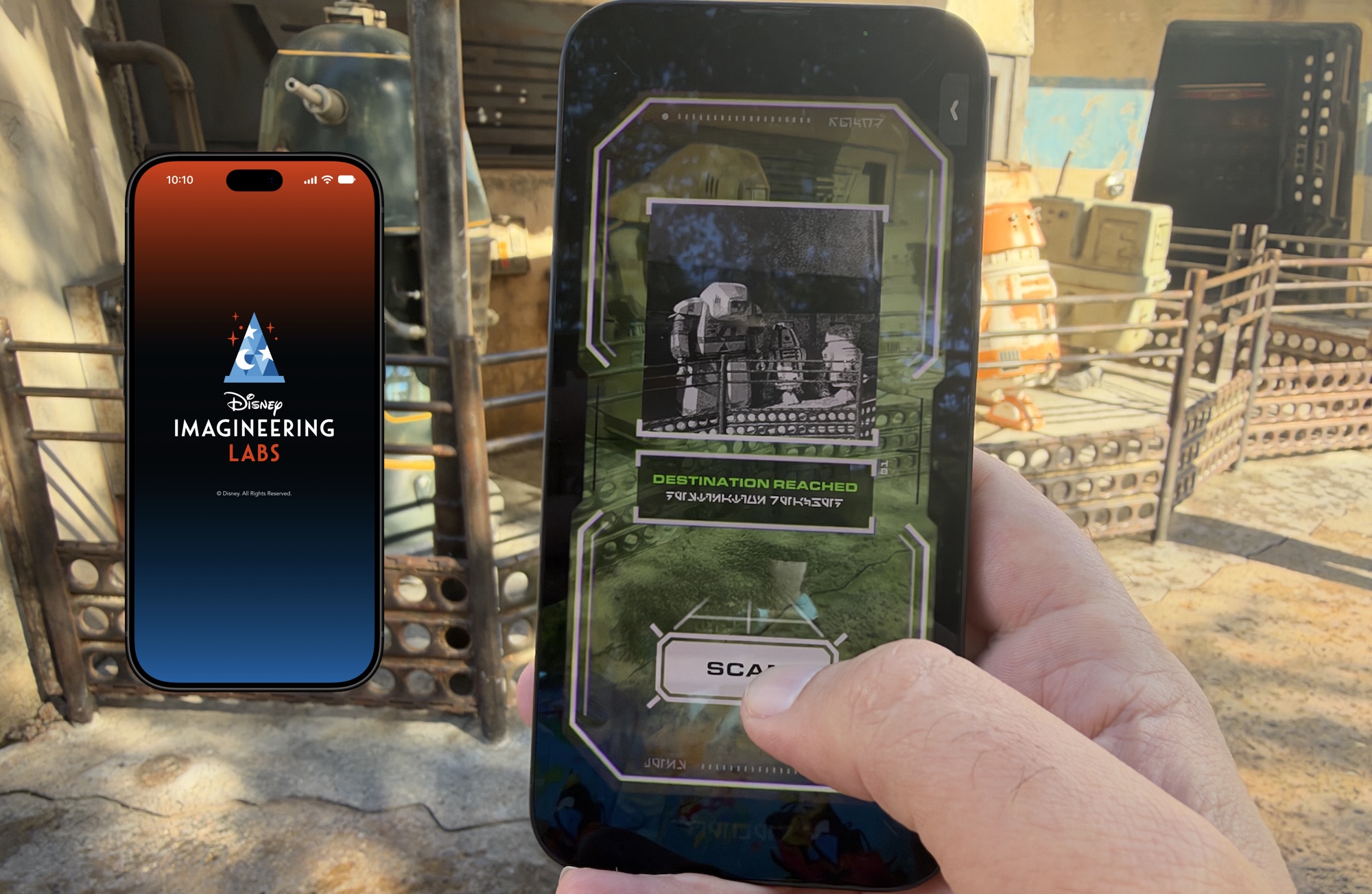
The Disney Imagineering Labs app approaches those questions with an unusually candid premise. Its offerings, which Imagineering calls “experiments,” are still in development, and they may change, leave, or eventually find a home elsewhere. That uncertainty is part of the experience from the beginning. The normally secretive Imagineers are inviting guests into the playtesting process, giving them an opportunity to help determine which ideas deserve further development and how those ideas might become part of a future park visit.
There is something especially appealing about that invitation for Disney fans. Temporary dialogue, unfinished artwork, and concepts still being worked out are usually things we learn about after an attraction opens, perhaps through a presentation or a behind-the-scenes documentary. Imagineering Labs lets guests participate while their reactions can still influence the result. It also offers a chance to see just how differently Imagineers can approach the same broad goal of enhancing a day at Disneyland.
Laughing Place joined Walt Disney Imagineering at Disneyland for a preview of the app and its first two experiments. Secrets of the Spire uses augmented reality to uncover another layer of storytelling in Star Wars: Galaxy’s Edge, while Disneyland Enchanted Guide explores a more conversational way to get information and assistance during a visit. The former feels like a natural evolution of the experiences offered through Play Disney Parks. The latter feels like something that could eventually become a useful part of the main Disneyland app, helping guests spend less time navigating menus and more time enjoying the park.
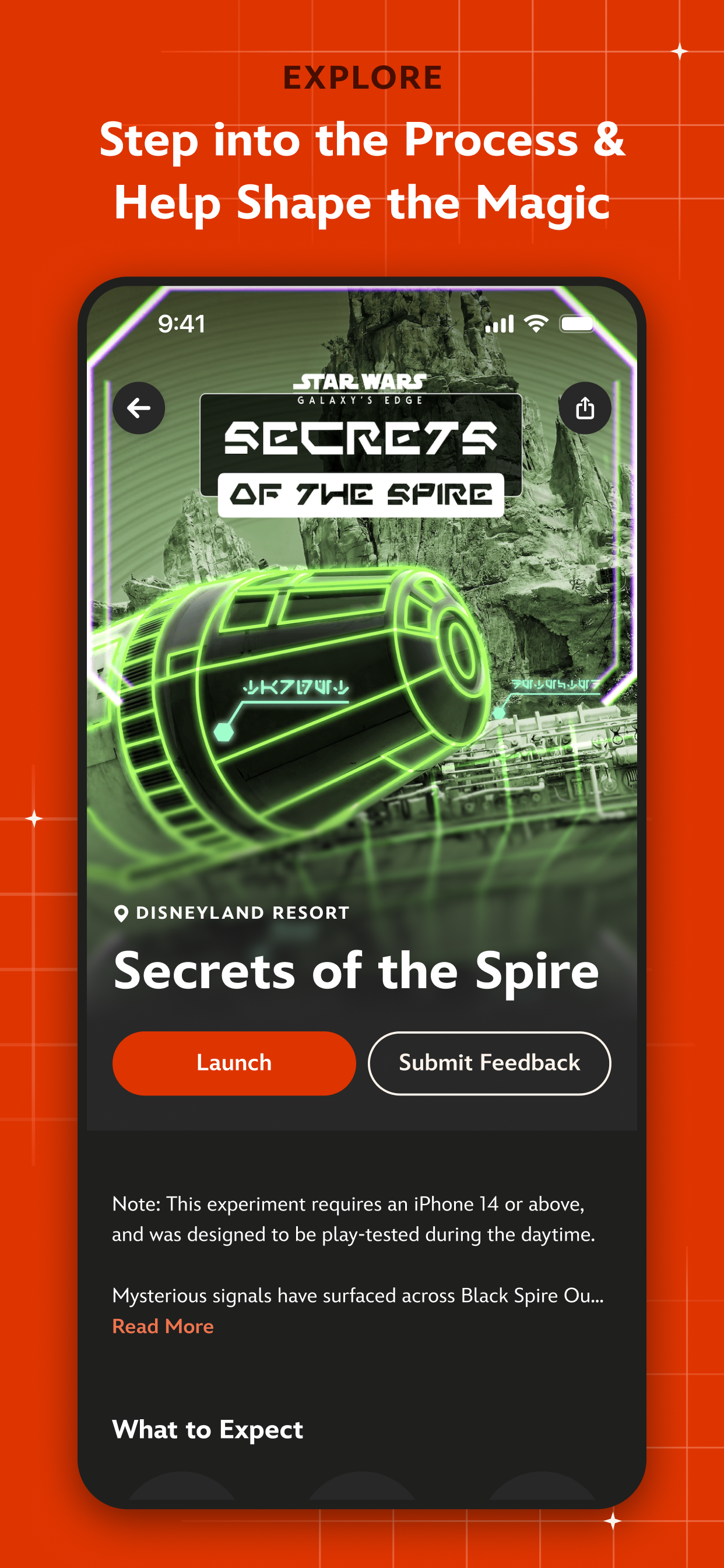
The Disney Imagineering Labs app launches today with Secrets of the Spire, followed by Disneyland Enchanted Guide coming soon. Both experiments will offer special early access for Disneyland Resort Magic Key holders, with broader guest access planned for 2027. For now, the focus is Disneyland, but the lineup itself is intended to evolve. We know the first two experiments; we do not know how long each will remain available or what might follow them. For fans interested in the development process, watching an idea change could become part of the appeal.
For Asa Kalama, Executive, Creative & Interactive Experiences, Walt Disney Imagineering, sharing work at this stage represents a meaningful change. Having spent much of his career in Imagineering’s research and development lab, he described the value of learning where guests connect with an experience and where it needs improvement before deciding its future. “Typically we like to put everything out with a high degree of polish and finish,” he explained. Imagineering Labs allows that conversation to begin earlier, while there is still room to reconsider the experience itself.
That means guests may encounter crashes, temporary graphics, or unfinished audio. The experiments we tried felt surprisingly fleshed out, but they are still being developed, with some of the same need to manage expectations that accompanies an attraction’s soft opening. Each experiment includes an information card describing the experience, the features being explored, and its development status. Those stages are “early development,” “taking shape,” and “nearly complete,” giving guests a sense of what to expect before they begin.
The feedback Imagineers want goes beyond identifying technical problems. They also want to understand whether the storytelling connects and whether the interaction is something guests actually enjoy. “Is this the type of thing that is interesting to them?” Kalama asked. An experience can work exactly as designed and still fail to give someone a compelling reason to use it. Putting these ideas in front of guests, in the environment where they are meant to be enjoyed, helps the team explore that distinction.
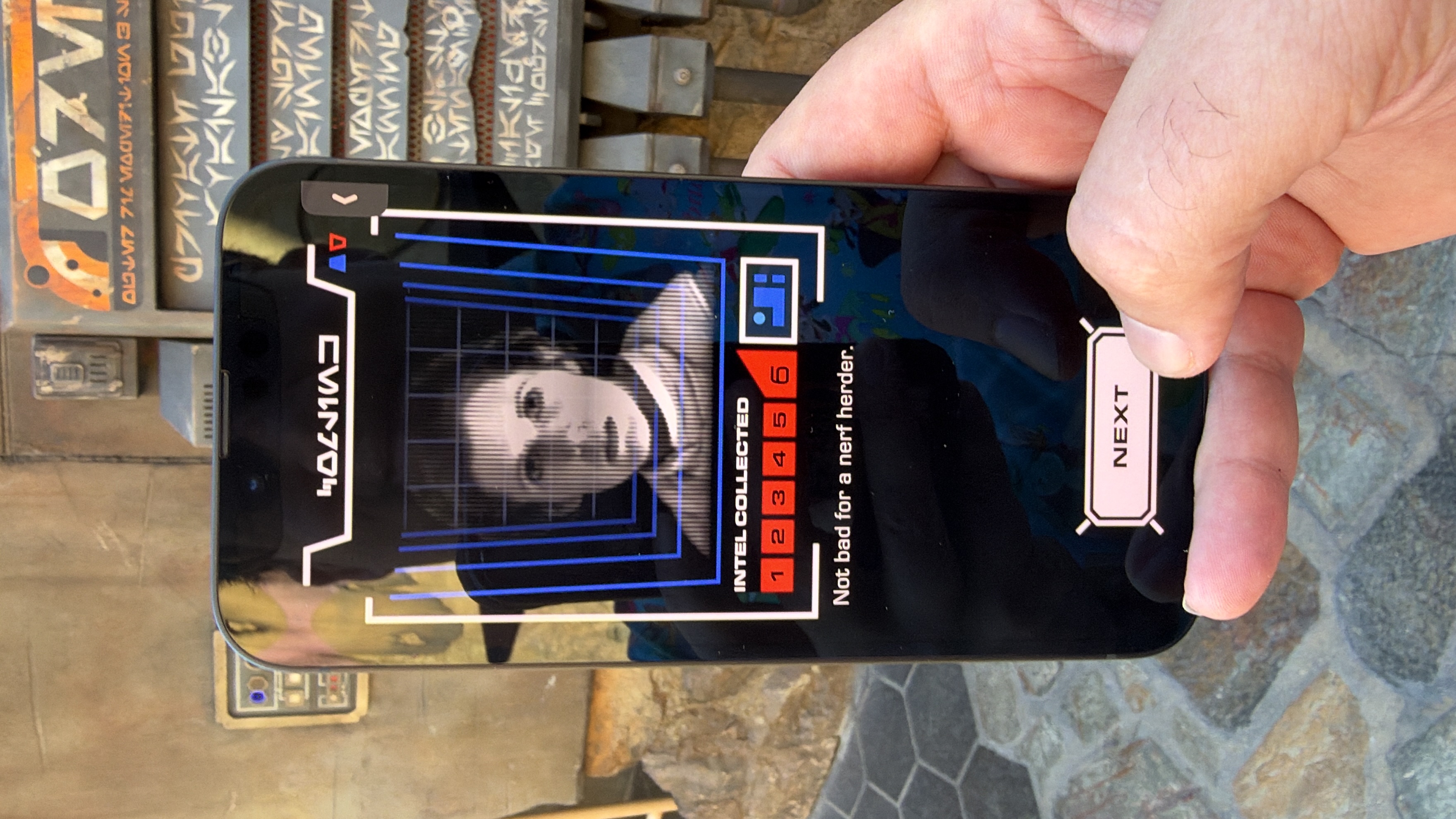
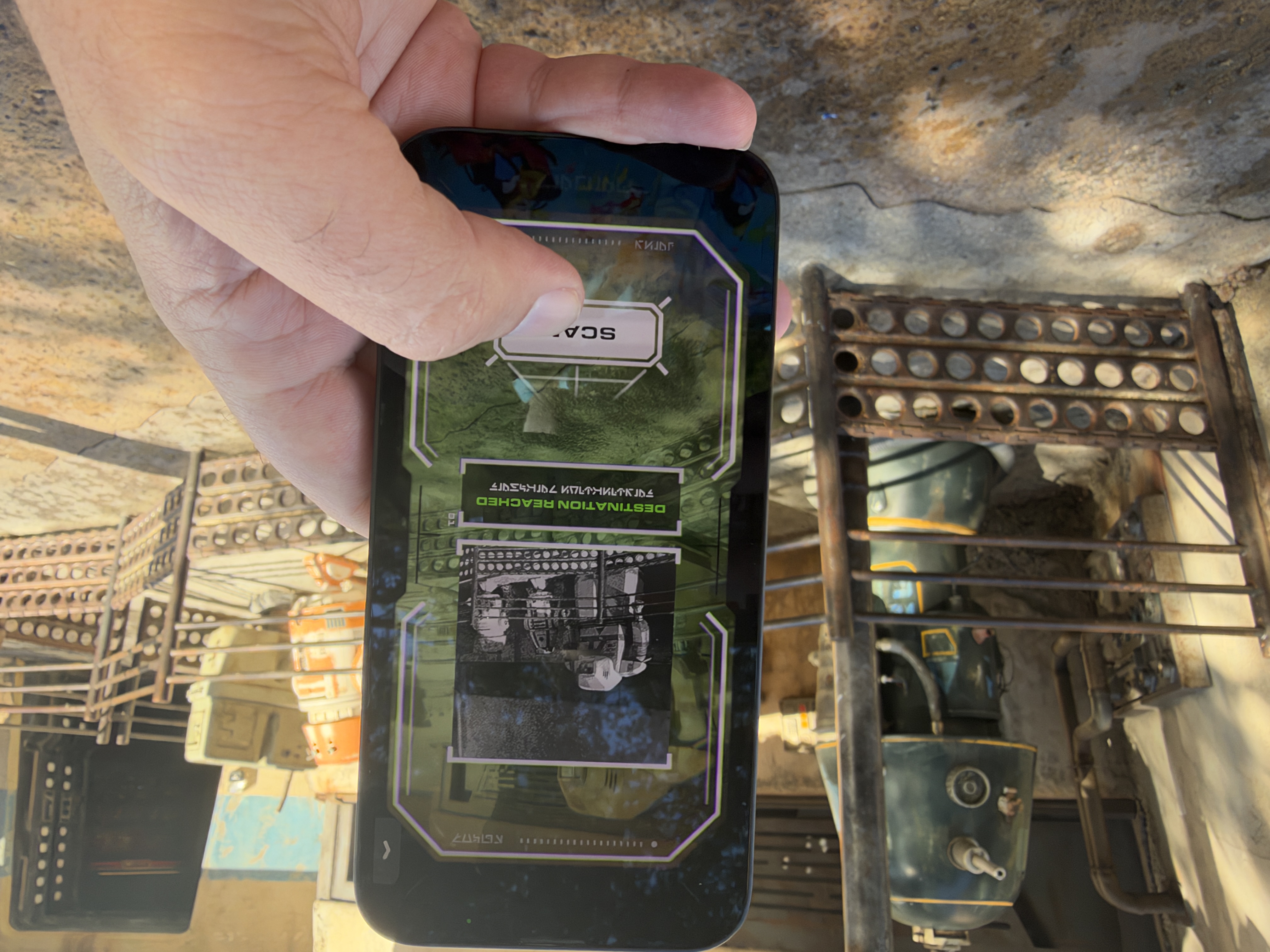
Secrets of the Spire provides a fitting setting for that exploration. Within Star Wars: Galaxy’s Edge, guests use an augmented reality interaction inspired by quadnoculars, the Star Wars universe’s version of binoculars, to discover information hidden in plain sight. Leia Organa serves as the story’s point of contact, guiding guests into the adventure. Giving the technology an identity within the fiction helps the act of looking through a phone feel connected to the world around it.
Our experience involved scanning artifacts throughout the land before choosing a location for a finale moment, a structure that may feel familiar to guests who used the Star Wars: Datapad portion of Play Disney Parks. Although the preview was described as a first chapter, it still felt like a complete experience. In fact, that sense of completeness could make it easy to forget that we were participating in a test until a survey appeared at the end of our quest.
That survey brought the purpose of the app back into focus. The team is particularly interested in how guests respond to the augmented reality interaction, and a self-contained chapter gives them a way to explore that question before building out a much larger adventure. What felt like a complete outing to us could still be an early step in the development process. Guest reactions can help determine whether the mechanic should be expanded, refined, or reconsidered.
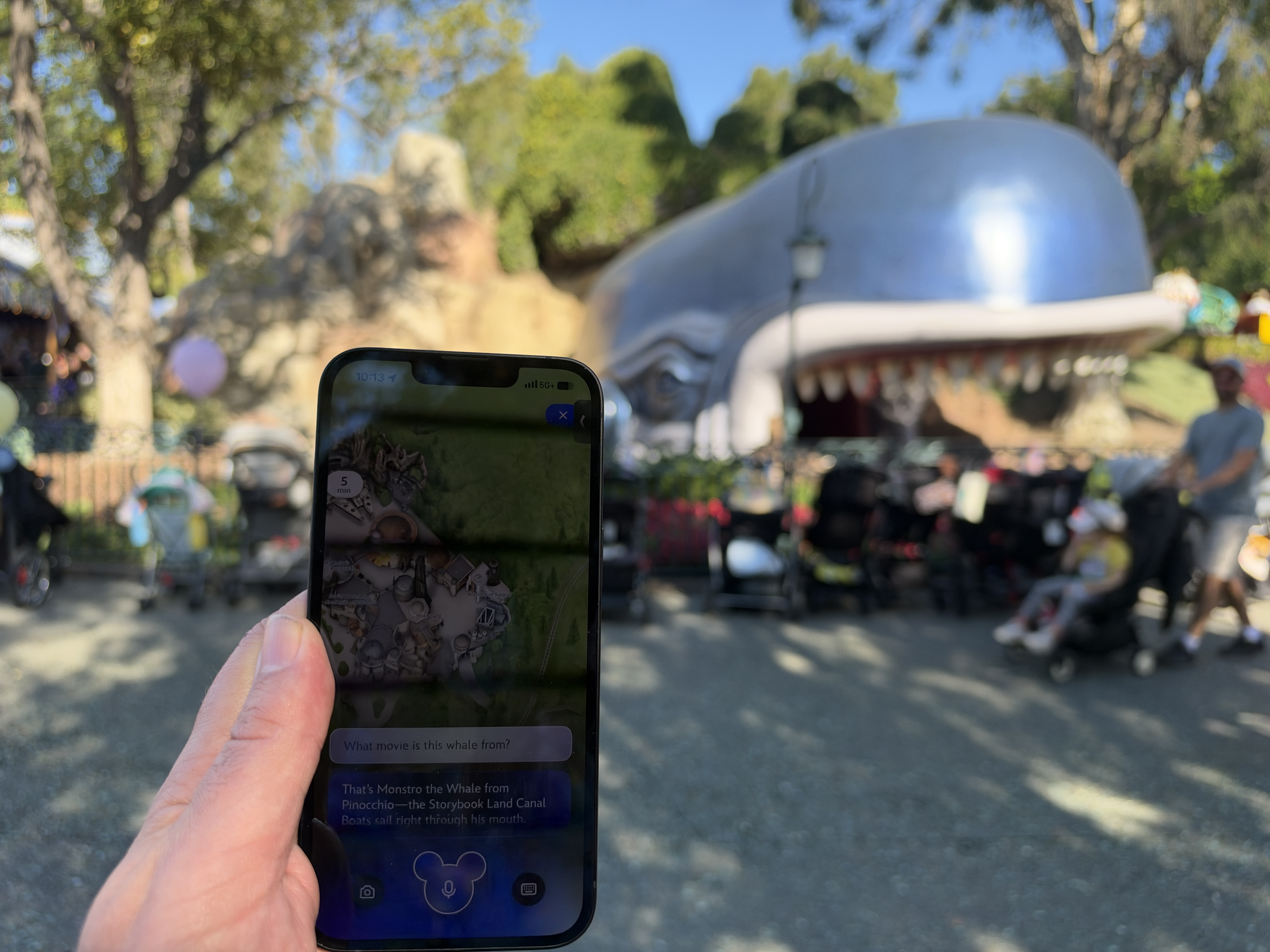
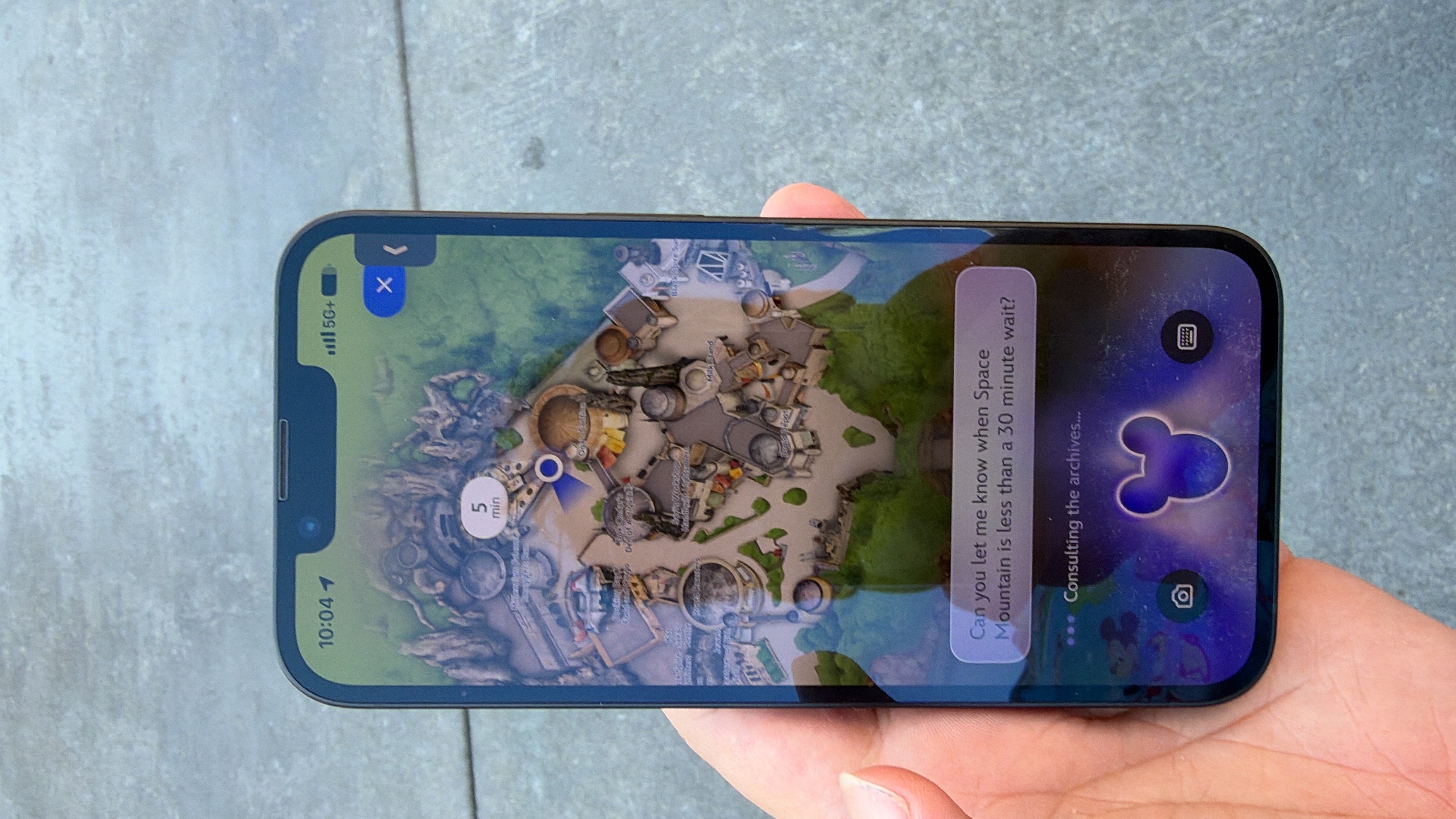
Disneyland Enchanted Guide tackles a different part of the park experience. Guests can press a button to ask a question or type one, whether they want to find a nearby churro, check an attraction’s wait time, or get help deciding what to do next. The ambition is to make that information available without requiring someone to know where it lives within an app or how Disney’s various systems fit together. That could benefit a first-time visitor navigating an unfamiliar destination just as much as a Magic Key holder looking for a quick answer.
As Kalama put it, “The whole point of being in the park is to be in the park, to not be on your phone.” That is an appealing goal for anyone who has found themselves repeatedly pulling out a device to check the same information throughout the day. The team encouraged us to ask our own questions, acknowledging that the guide would not yet have every answer. Finding out what guests actually want to know is part of the work.
Compatible Meta glasses offer an optional way to take that idea further. With the glasses paired to the app, guests can leave their phone in a pocket, ask a question, and hear the answer through the glasses. At the preview, we were told that the experience could not use the glasses’ camera and that Bluetooth earbuds could provide a similar audio interaction. No matter what technology you use, the appeal is having access to useful information without continually taking out your phone.
I asked all sorts of questions, and the guide was impressive even when its limitations were apparent. It notified me when attractions reopened after downtime and when attractions I had expressed interest in had relatively short waits. Those alerts were actually useful, giving me information I could act on without needing to keep checking for it. That is the kind of practical assistance that could make a difference during a park day, especially when plans inevitably change.
I also tested a more serious hypothetical by telling the guide that I had lost my child. It provided the appropriate guidance and expressed concern in its response, an interesting example of how the team is approaching both the information guests need and the way it is delivered. The guide did not have every answer, and some information was out of date, but those shortcomings also illustrated the value of testing it with real people. Guests will ask questions a development team may not anticipate, and understanding those needs is essential if this is going to become a dependable part of a visit.
The two experiments also demonstrate why Imagineering Labs will not follow a single development timetable. Kalama explained that one team might gather the feedback it needs in a month, then take an extended period to refine its idea. Another might make smaller improvements over time and keep an experiment available for a year or more. These were examples, rather than announced schedules, but they help explain why the app’s offerings may have very different lifespans. An experiment leaving the app would not necessarily tell us whether the idea had succeeded, failed, or simply reached the next stage of its development.
There is a path for promising discoveries to move beyond the laboratory. Imagineering developed the app in close partnership with the Disney Experiences technology team responsible for the destination apps, with the intention of finding a broader home for the best ideas. Some experiences may continue to evolve within Imagineering Labs, while others may need to return to the drawing board. The opportunity for guests is to contribute while those decisions remain open.
That invitation fits an encouraging direction for Disney Experiences. The announced plans to reimagine Disneyland’s Tomorrowland, restore movement to Expedition Everest’s Yeti, and bring Dreamfinder back to EPCOT address subjects fans have discussed for years. Imagineering Labs brings that dialogue into the development process on a smaller, more immediate scale. There are still plenty of aspects of a Disney visit that could use attention, but it is encouraging to see a dedicated place where the company is asking guests to help evaluate what comes next.
For me, the most promising part of Imagineering Labs is the combination of that openness and a practical sense of purpose. Secrets of the Spire asks whether technology can help us engage more deeply with a world Imagineers have created. Disneyland Enchanted Guide asks whether it can make the logistics of a visit easier, leaving more time to enjoy that world. Those are worthwhile questions, and guests have something meaningful to contribute to the answers.
After watching so many interactive offerings come and go, I am less interested in whether every experiment lasts than in whether Disney carries the best lessons forward. If a temporary test leads to a better storytelling experience or a genuinely useful service, its influence can outlast its time in the app. Imagineering Labs gives Disney fans a chance to participate in that process, with a clearer understanding of what they are trying and why their feedback matters. That makes this an experiment worth following.