
How Pixar Built the Plush, Stylized World of Hoppers


Pixar’s Hoppers is built on a production philosophy that prioritizes clarity, tactile appeal, and comedic readability. During the studio’s early press day, filmmakers and department leads traced the film’s journey from story to finished images, revealing a pipeline shaped by stylized design, controlled detail, and a handcrafted aesthetic. The result is a vibrant world where sequences remain visually clean and character-driven humor always stays front and center.
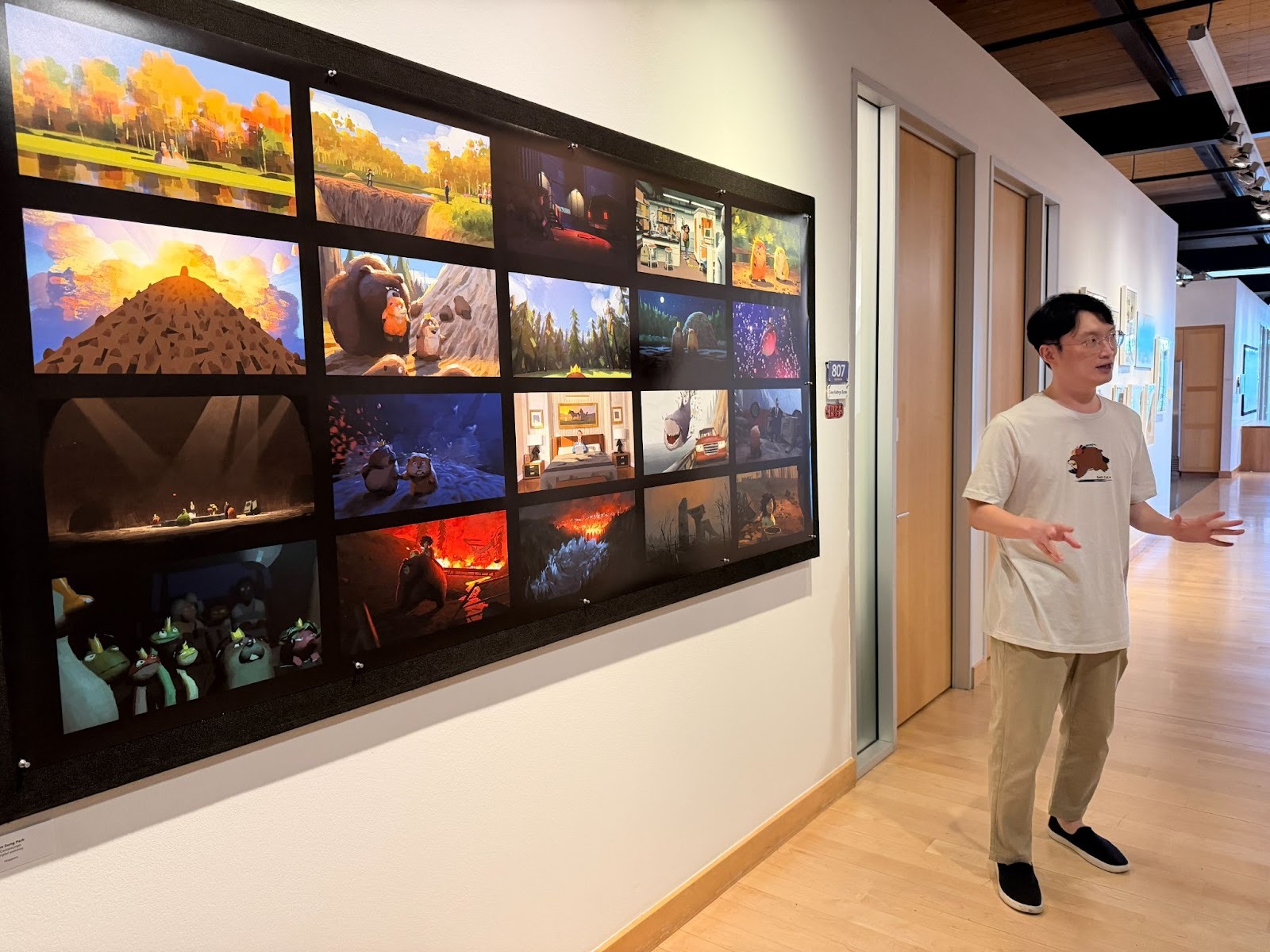
Even before characters were finalized or sets were modeled, the story team and the look development departments established the emotional and comedic tone through early color scripting. Hundreds of painted thumbnails created by the film’s art and lighting teams mapped out sequence-by-sequence mood, ranging from soft forest greens to warmer, high-contrast palettes used for impactful character introductions or story turns.
Shading & Lighting Art Director Hye Sung Park explained how this stage functions almost like “writing with color.” Because Hoppers relies on quick comedic timing and expressive acting, the palette was intentionally restrained. Saturation is carefully managed to keep backgrounds supportive, never overpowering, and tonal shifts are always purposeful — motivated by story beats rather than visual flourish. This early work served as the backbone for how the film’s action would read, ensuring the world never competes with the plush, simplified characters at its center.
Character Art Director Anna Scott guided the design of Hoppers’ cast through a language of simple, readable shapes. She described the film’s heroes as built from “beans and circles,” an intentional departure from hyper-detailed realism. This helped develop the film’s signature plush aesthetic — chunky paws, rounded silhouettes, and soft textures reminiscent of felted toys.
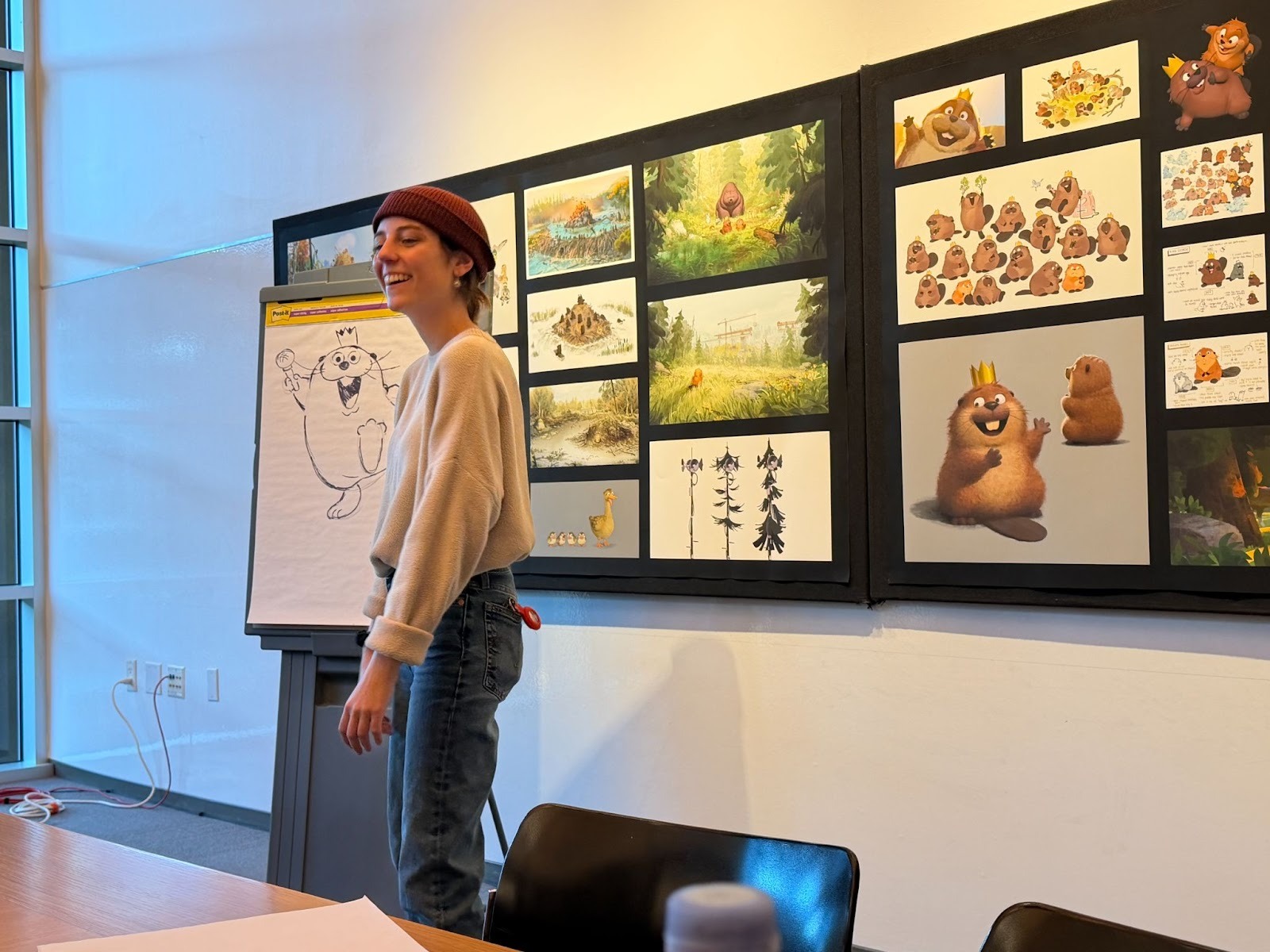
“We were working on this look really early on,” Scott said, noting that the tactile quality was part of the film’s DNA from the start. She emphasized how closely the team collaborated with director Daniel Chong to align design with performance and comedic timing. “He has such a specific sensibility — it took me a second to really tap into it, but once we did, everything clicked.”
Scott also spoke about the iterative sculpting and 3D tests that helped move designs from drawing to animation-ready models. Early explorations experimented with more exaggerated extremes, but each iteration clarified the tonal balance between endearing and comedic. Her favorite character, Tom the lizard, exemplifies the film’s approach: a design that is simple, appealing, and instantly legible on screen.
Once the design language was in place, Production Designer Bryn Imagire and Sets Modeling Lead Mike Altman translated it into an environment that supports both humor and story readability. The team departed from Pixar’s traditional realism, embracing a painterly, graphic look that treats the world almost like a storybook.
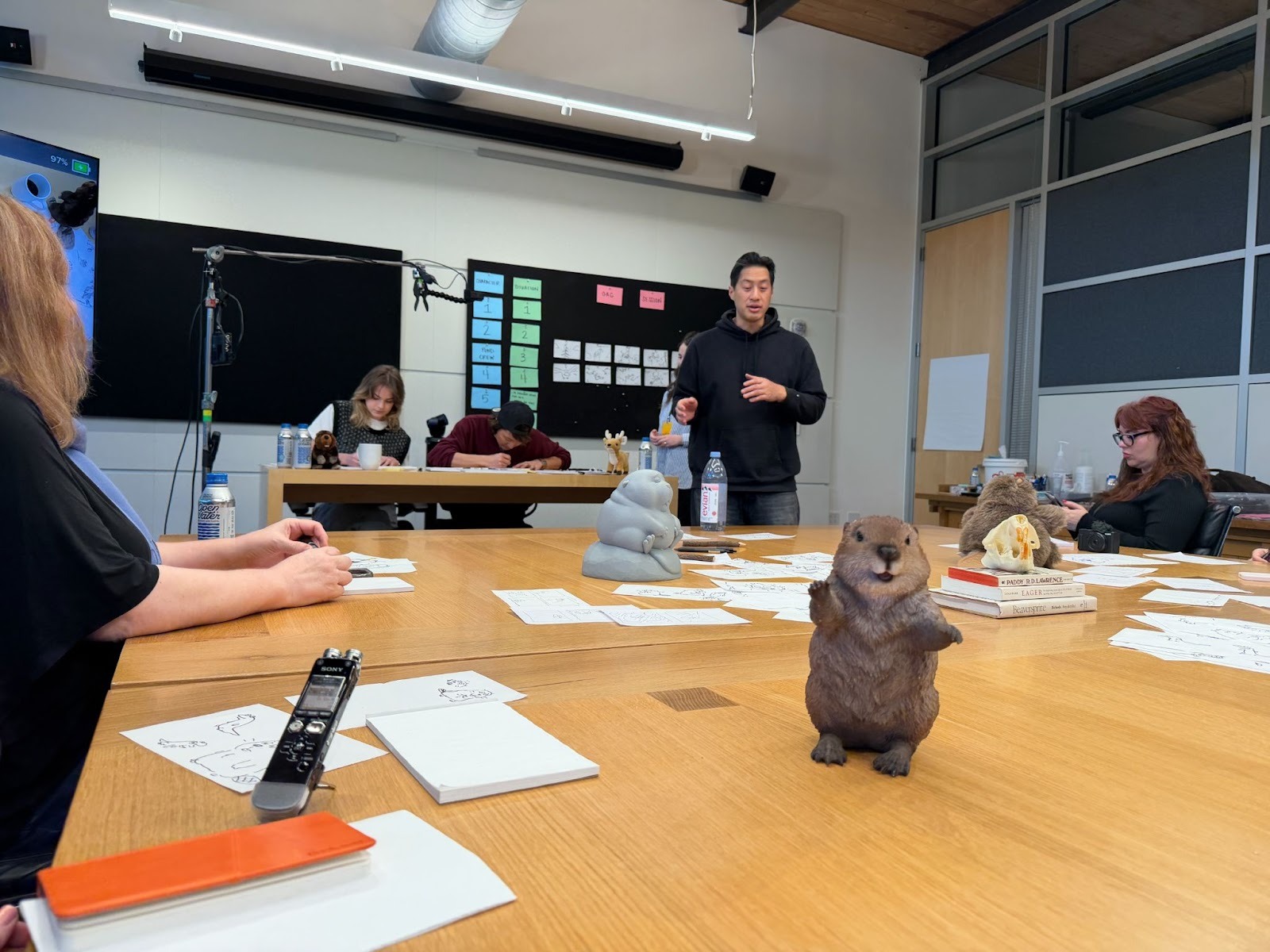
Altman walked through how sets were constructed using an intentionally irregular, handmade feel — asymmetrical shapes, chunky silhouettes, and simplified textures — reinforcing the tactile impression established by the character designs. The film’s massive wooden beaver lodge, composed of more than 60,000 individually placed sticks, exemplifies how natural environments were adapted: researched for accuracy but stylized for clarity.
Because Hoppers features dense forest spaces, wetland areas, and complex wooden structures, the modeling department relied on controlled detail. The goal wasn’t to replicate reality but to give animators and lighters spaces that guide the viewer’s eye toward performances, not background noise.
A major breakthrough in defining Hoppers’ visual identity was the development of what the team informally calls the paintbrush layer — a stylized shading approach that reduces unnecessary detail while maintaining depth and dimensionality. Visual Effects Supervisor Beth Albright and Imagire described how realistic textures often overwhelmed the soft, plush characters, leading to a need for controlled abstraction.
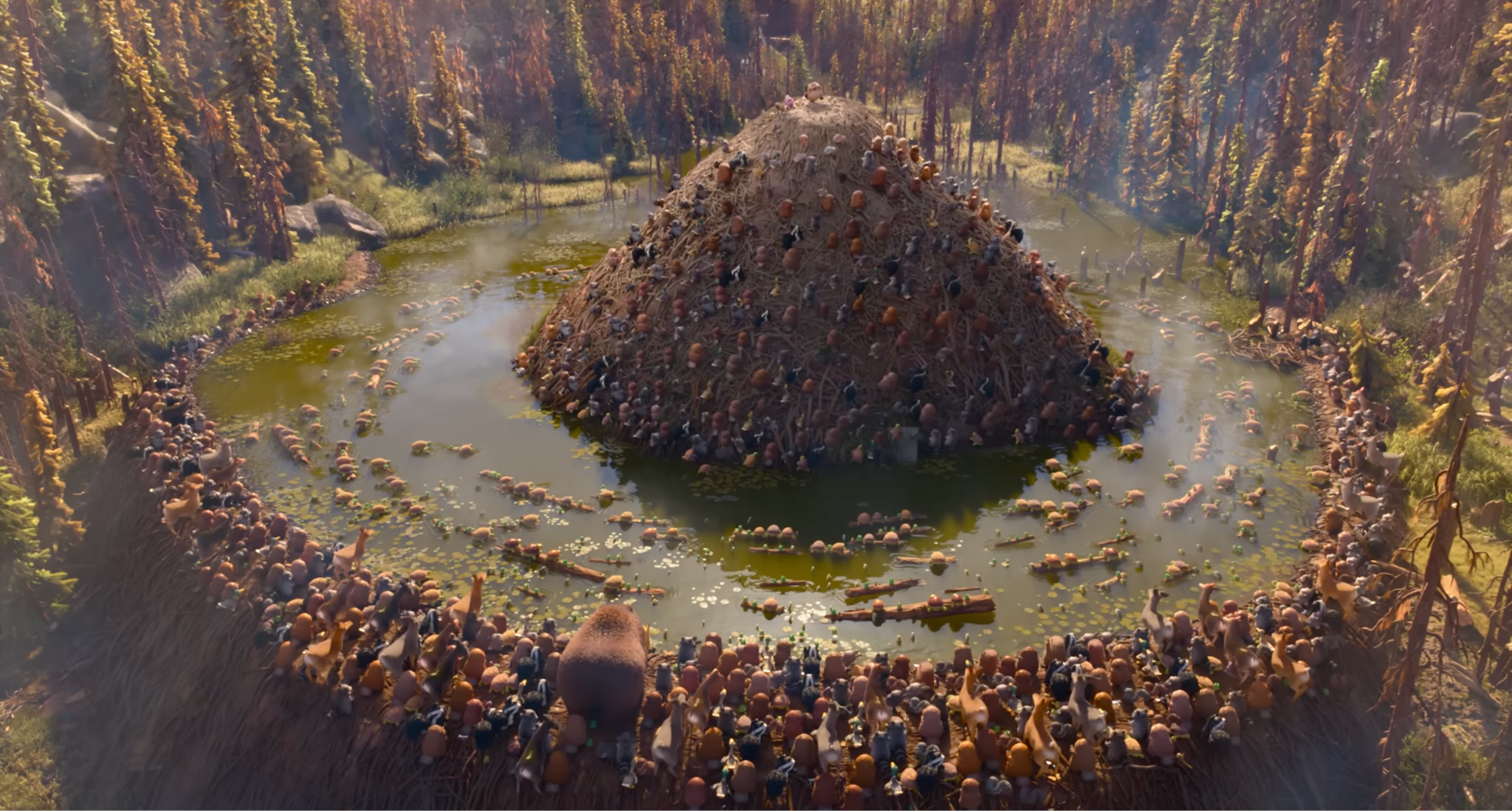
The paintbrush layer applies stylized strokes, subtle tonal variation, and controlled noise to environments, helping “quiet” the image. The innovation required coordination across modeling, shading, lighting, and effects to ensure stability across camera moves. The result is a world that feels handcrafted and inviting, enhancing legibility without flattening the frame.
As Hoppers includes sequences involving ponds, wetlands, and creature movement through water, Effects Lead Amit Baadkar discussed how the effects department approached water as both a story device and a compositional challenge. Realistic water tends to command attention, so the team built tools to modulate it shot by shot.
Large showcase shots use layered simulations — base water bodies, splashes, mist, foam, and fur-interaction passes — to create energy and scale. In dialogue scenes or comedic beats, the water is selectively subdued, ensuring characters remain the primary focal point. This philosophy mirrors the film’s broader production ethos: everything supports the read, never disrupts it.
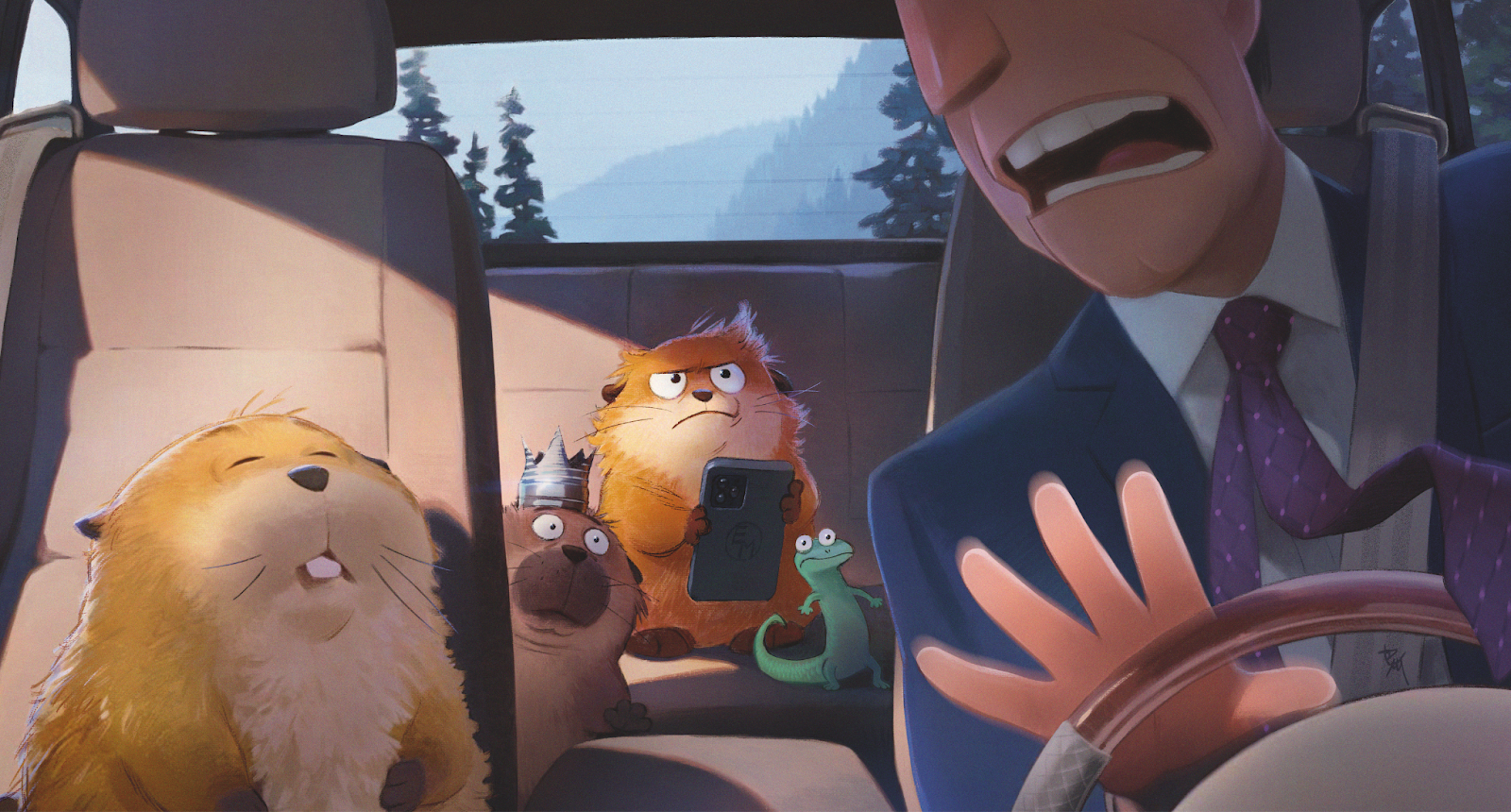
Across departments, Hoppers follows a pipeline where every decision, from early thumbnails to final renders, centers on readability and emotional clarity. Animation, lighting, and camera teams finalize scenes with an eye toward ensuring characters pop, environments feel supportive, and the comedy lands with maximum impact.
With the film ready for its March 6th release, the production reflects a balance of artistry and technical innovation. What may look cuddly and simple on screen is the product of a studio-wide effort to refine style, control detail, and build a world that feels handcrafted while still unmistakably Pixar.