
Interview: Ron Clements on the Magic Behind Disney Animation and the Stories Audiences Take to Heart


For Ron Clements, some of the most meaningful responses to his films have come long after the work of making them was finished. There was the mother who spoke to him through tears about what Tiana meant to her family, and the father who wrote to say that The Little Mermaid had helped him reconnect with his daughter. Those encounters reveal something that can be difficult to measure in opening-weekend grosses or awards, the way an animated story can become part of someone else’s life.
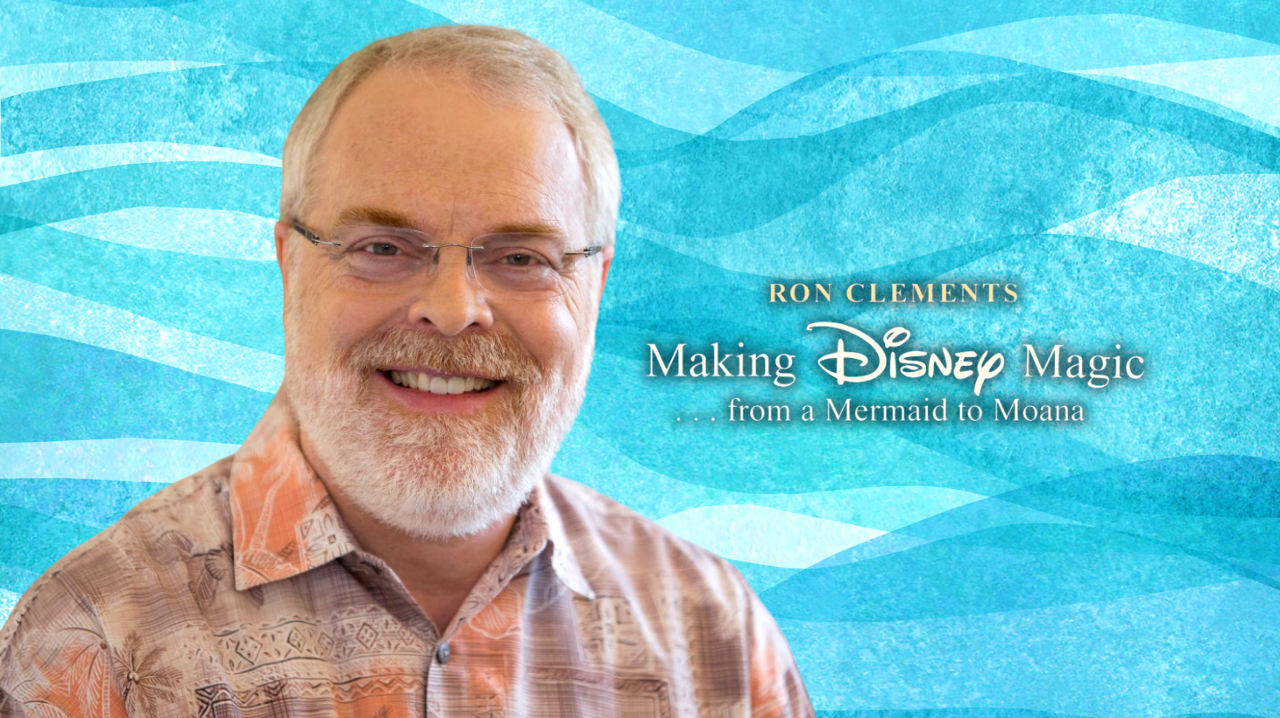
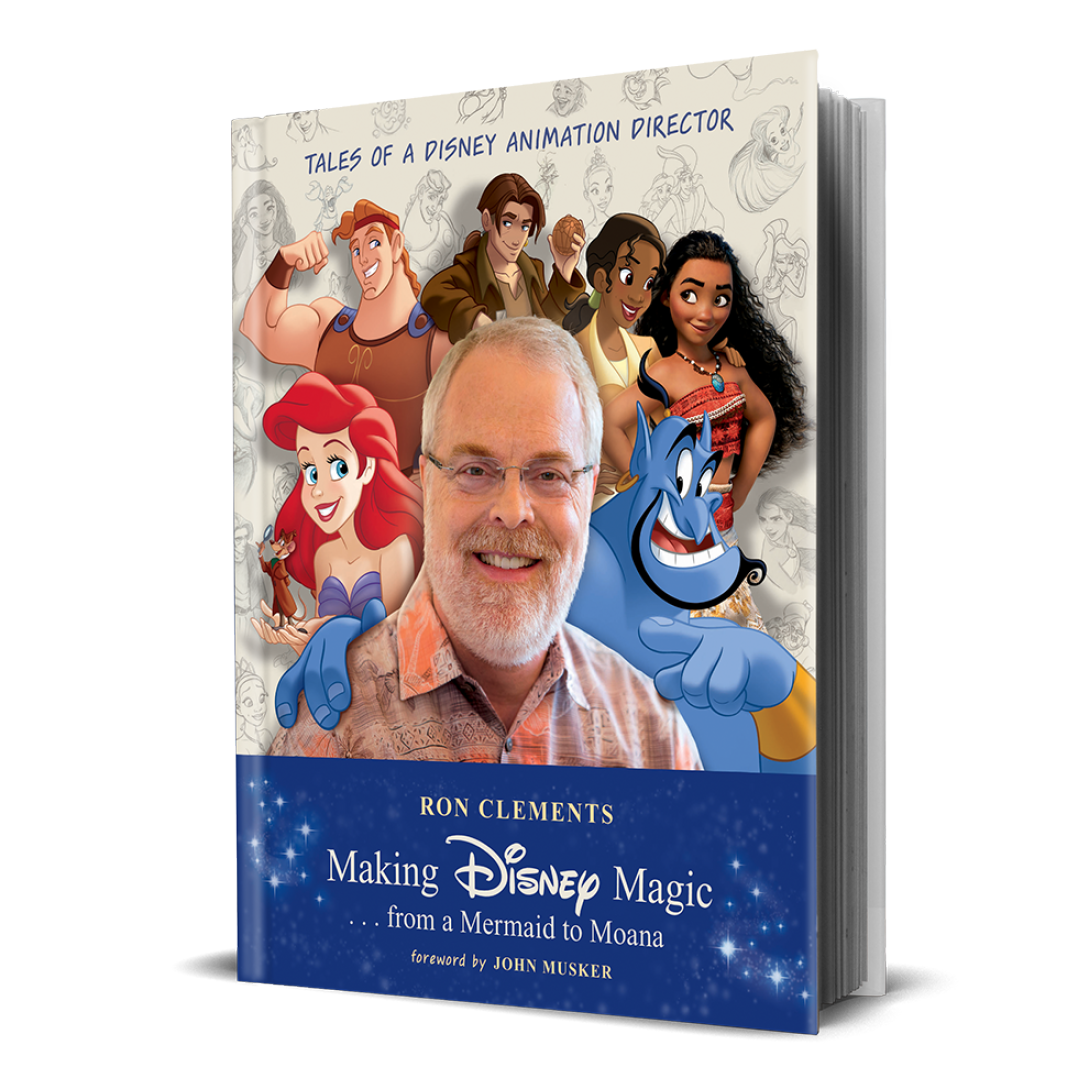
“You don’t think about things like that when you’re making movies like that,” Clements told Laughing Place during a conversation about his memoir, Making Disney Magic . . . from a Mermaid to Moana. Yet those experiences speak to the ambition that first drew him toward animation. Having felt the power of Disney storytelling as a child, he wanted to help create that experience for others, even if he could never anticipate all the ways audiences would respond.
The book gives that pursuit a personal framework, looking back on 45 years at Disney through the experiences of someone who helped make films including The Great Mouse Detective, The Little Mermaid, Aladdin, Hercules, Treasure Planet, The Princess and the Frog, and Moana. In our interview, Clements returned repeatedly to the people behind those productions, from his collaborators and mentors to the family members who helped him through their most stressful stretches. For all the extraordinary characters associated with his career, his account of making Disney magic begins with very human concerns.
The memoir itself grew out of a different project. A few months after Clements and his longtime filmmaking partner John Musker finished Moana, Ed Catmull suggested that they write a history of Disney animation following Walt Disney’s death in 1966, carrying the story through to Moana. As Clements recalled, Catmull felt that the period had not been chronicled extensively enough, and the filmmakers began gathering material.
“We conducted almost 200 interviews with people going all the way back to the ’70s all the way through to present day,” Clements said. Before the writing began, however, Musker decided to retire and pursue his own short films, including "I’m Hip." With the book falling to Clements, conversations with Disney Publishing helped point it toward a memoir, allowing the larger story of the studio to unfold through his own experiences.
That shift gave him room to explore the uncertainty behind accomplishments that can look inevitable in retrospect. To an audience watching a finished film, its songs, characters, and emotional turns can feel as though they always belonged together. Clements remembers the years of work required to make those pieces fit, along with the moments when the filmmakers could not yet see how they would get there.
“Consistently, I would say story is the hardest thing,” he explained. Animated features involve enormous teams working over several years, and Clements noted that even the three years between The Little Mermaid and Aladdin represented an unusually quick turnaround for him and Musker. More typically, he said, one of their films would take at least four or five years to make, with the story demanding sustained attention throughout the process.
Animation does offer filmmakers a valuable opportunity to evaluate their work before the movie is complete. Clements described watching story reels, or versions that combine story material with animation and even finished color, then considering what works, what does not, and what needs to change. That ability to see the film taking shape provides a way forward, but it does not spare the artists from difficult stretches.
“None of them, I would say, were anything close to being easy,” he said. In fact, he recalled a point on virtually every film when the situation felt dire. Knowing how those movies ultimately turned out makes that admission especially revealing, because the confidence audiences feel in a finished Disney classic can conceal how much uncertainty its makers had to work through.
The experience of Treasure Planet brought another kind of challenge. Clements recalled both the film’s disappointing initial performance and the attention that disappointment received, against the backdrop of a difficult period for the studio. He still speaks about the movie with affection, and seeing it develop a devoted following has been particularly rewarding.
“I love the movie and care about it a lot,” he said, describing the satisfaction of watching it find an audience over time. That response matters because the investment in a film extends far beyond its directors. Years of work from many people go into an animated feature, and Clements wants those efforts to reach viewers, whether that connection happens immediately or takes longer to emerge.
“Sometimes they find it immediately, but sometimes it takes a little while,” he said. At autograph signings and other appearances, he encounters fans who bring up films from across his career, rather than only the most obvious hits. For a filmmaker looking back over decades of work, that range of affection offers a broader picture of what those movies have meant than their original reception alone could provide.
Running through that filmography is his partnership with Musker, a collaboration that lasted 35 years within the story covered by the book. Their paths into Disney were different. Clements arrived through the studio’s animation talent development program and worked closely with Frank Thomas and Ollie Johnston, while Musker came from CalArts, where his classmates included Brad Bird and John Lasseter.
Over time, they discovered both shared sensibilities and complementary approaches. Both came from the Midwest, Clements from Sioux City, Iowa, and Musker from Chicago, and both had been raised Catholic and served as altar boys. Those similarities helped form a foundation, but Clements also sees differences in the way they approach the work as an important part of why the partnership succeeded.
“I’m more of a big picture guy. John’s more of a detail guy,” he explained. Clements gravitates toward story structure, while Musker enjoys exploring dialogue and the possibilities within individual moments. Although both had directed on The Great Mouse Detective, Clements identified writing The Little Mermaid together, followed by directing it together, as an especially important point in establishing a process that worked for them.
The partnership was sustained by the practical discovery that they could make a film together, get along in the process, and achieve a result they believed in. It also became a friendship that continues beyond those shared productions. “We’re still friends,” Clements said. “We’re still in contact with each other a lot.”
For all the attention those films receive as creative achievements, the audience encounters that stay with Clements often reach beyond filmmaking itself. At a special screening of The Princess and the Frog at the El Capitan Theatre, he remembered speaking with an older African American woman who was moved to tears. The film meant a great deal to her, particularly because her daughter could see a heroine like Tiana.
“That was very emotional because it just goes a little bit beyond just entertainment,” he said. A different experience followed The Little Mermaid, when a father sent Clements a long letter describing an estrangement from his daughter that had begun when she was a teenager. After seeing the film, the father was deeply affected, and the two reconciled.
These are intensely personal responses to films made for large audiences. They also help explain why Clements places such value on the experience Disney animation can create. The goal is to make something that transports people, but what they take away from that experience belongs to them, shaped by their own relationships, hopes, and circumstances.
Clements’ own connection began with Pinocchio, which he saw at a local theater when he was nine. He credits Walt Disney’s passion for filmmaking, his commitment to quality, and the ambition of the artists around him with creating movies that felt extraordinary. Watching them, both as a child and later as an adult, meant being drawn into a world that could leave a lasting impression after the film ended.
“They’re immersive and they transport you and there is something very magical about it,” he said. That experience became something he wanted to offer audiences through his own work. The desire to make animation grew from being an animation fan, with the hope that he could help someone else feel what those earlier films had made him feel.
Today, that connection also informs his work with younger artists at Walt Disney Animation Studios. Clements said Jared Bush asked him to return part-time, coming in a couple of days a week to help with story and mentoring. He sees that role as an opportunity to pass along something he received when he was just beginning.
Clements was 20 when he started at Disney, and Frank Thomas, his mentor, was 62. Thomas taught him animation, but Clements said the lessons extended into the broader Disney philosophy. “I never met Walt Disney, but I got to work with people who knew him well,” he explained, describing the connection he now hopes to share with a generation whose own inspirations include The Little Mermaid, Aladdin, and Hercules.
That gives his return a particular significance. The young artist who once learned from someone who had worked with Walt now works alongside people who grew up watching his films. The legacy continues through those relationships, as artists share an approach to storytelling and the ambition to create a special experience for an audience.
His memoir also makes room for the relationships outside the studio that sustained him through that work. Clements met his wife, Tammy, just before The Little Mermaid got going, and she has been with him through the experiences that followed. Although making animated films was what he had always wanted to do, he emphasized that fulfilling a dream could still involve considerable stress.
“My family is very important to me and we’ve been through a lot together,” he said. Including that part of his life was essential to the kind of book he wanted to write, one that conveyed what those decades at Disney felt like in terms of both work and family. The personal material gives readers a fuller understanding of the life surrounding the films and the support that helped him keep making them.
“These movies are made by people,” Clements said. It is a straightforward observation with considerable meaning in a conversation about Disney, where the company’s name can loom so large that the individuals behind its work become less visible. His memoir brings those people into focus, including the filmmaker whose professional achievements unfolded alongside the responsibilities and joys of family life.
Clements also hopes his experiences will encourage readers pursuing ambitions of their own. He said he did not grow up in ideal circumstances, and the path toward the goal he chose at nine proved harder than he might have imagined. Talent played a role, but so did dedication, passion, drive, and the willingness to continue through setbacks.
“You have to keep trying and not give up,” he said. That advice carries weight coming from someone whose celebrated films all included moments of doubt. The lesson of his career is not that caring about the work makes it easy, but that the commitment has to survive the periods when the outcome is uncertain.
Looking back, Clements can trace a connection from the boy watching Pinocchio to the audiences who found themselves in Ariel’s family or saw new possibilities in Tiana. He can also see it in the artists now working to create the next generation’s Disney memories. His memoir preserves the personal history behind that connection, while his mentoring helps carry it forward. For Clements, the enduring value of Disney animation lies in that exchange, people putting their experiences and imagination into stories that can inspire someone else to begin.
Making Disney Magic . . . from a Mermaid to Moana is now available wherever books are sold.