
Drawing Beyond the Frame: Ron Husband Discusses Disney Legacy on DVC Member Cruise


Following a screening of HUZ: Drawn to Life as part of the Disney Vacation Club Member Cruise, Ron Husband and Disney Legend Don Hahn took the stage for a conversation that felt less like a formal question-and-answer session and more like two longtime friends reflecting on a remarkable life. Hahn, who directed the documentary, guided Husband through memories of joining Disney Animation, learning from some of the studio’s greatest artists, forming an enduring friendship with Glen Keane and finding strength in faith and family.
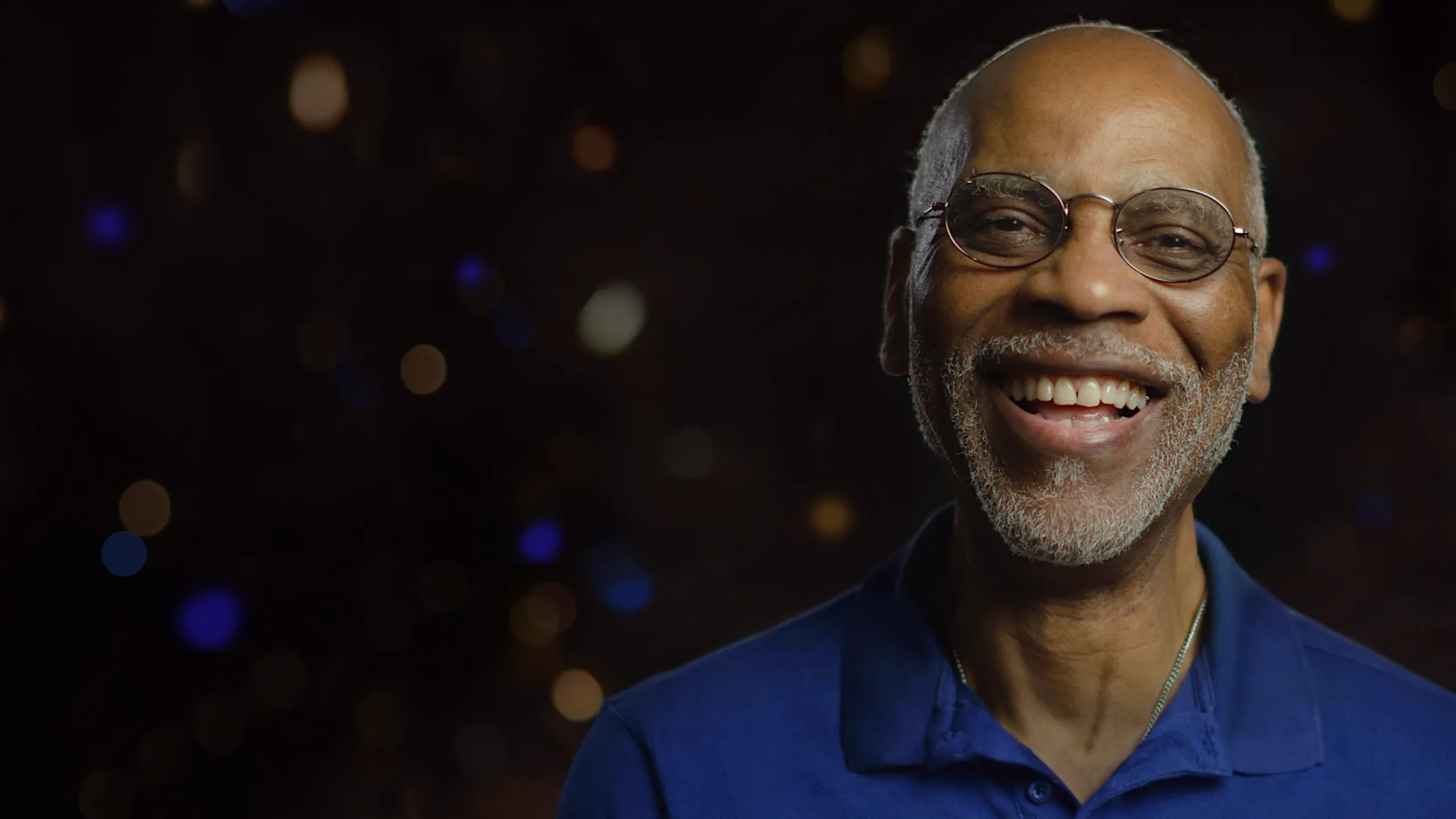
The audience had just watched Husband’s story unfold on screen, but Hahn admitted that seeing the film with a crowd was still a relatively new experience for both of them. The response offered an immediate reminder that Husband’s journey reaches far beyond the animation community. His is a story about breaking barriers, certainly, but also about mastering a craft, accepting mentorship and appreciating the people who make a creative life possible.
One of Hahn’s favorite parts of Husband’s story is the extraordinary group of artists who surrounded him at the beginning of his Disney career. Husband arrived at the studio in the 1970s, as a new generation was preparing to inherit the traditions established by Walt Disney’s legendary animators. Among those still working at the studio were Frank Thomas, Ollie Johnston and Milt Kahl, names that would have been intimidating to almost any aspiring animator.
Husband, however, was too focused on learning his job to be overwhelmed. He compared the experience to playing in the outfield alongside Mickey Mantle and Willie Mays. The stars might be standing on either side of you, but you still have a position to play and a responsibility to the team. “I’m trying to learn how to in-between for Frank Thomas,” Husband recalled. “That was my job.”
At 25, he knew relatively little about animation and had not regularly watched animated features since he was a child. Only after colleagues began showing him the films and identifying the scenes created by particular artists did he fully appreciate the people working around him. Even then, admiration had to take a back seat to survival. If his drawings did not meet Frank Thomas’ standards, Husband knew he could quickly find himself looking for another job.
That pressure was built into Disney’s training process. New artists initially received four weeks to prove themselves. Those who succeeded were given another four weeks, and only after completing that second period did employment become official. For Husband, the stakes extended beyond his own ambitions. He had a wife and children to support, so the possibility of being dismissed carried very real consequences.
Yet Husband said he rarely dwelled on that danger. He was grateful to have income, but he was equally excited to have found a creative outlet. He had not arrived at Disney with a lifelong dream of becoming an animator. What he wanted was the opportunity to do creative work, and animation gave him an entirely new language to learn.
That education could not be completed in eight weeks. Husband estimated that it takes roughly five years to become an animator and a decade to become truly good at the craft. His own growth required patience as he learned the flow, rhythm and subtle changes that allow a series of drawings to come alive. Even a discouraging early assessment that he might never become an animator failed to chase him away. As long as he was creating and learning, he remained satisfied with the journey.
Husband would ultimately become the first Black character animator at Walt Disney Animation Studios, an achievement that now holds an important place in Disney history. At the time, however, he did not experience it as a grand, history-making moment.
He was part of a young generation that included artists such as Randy Cartwright and Glen Keane, all of whom wanted the same opportunity to become animators. They trained together, supported one another and tried to make the best films they could. Husband’s advancement felt like one more member of that group reaching a shared goal. “I was just one of the guys that was made an animator,” Husband said. Only with the benefit of hindsight could he fully see the historic significance of what had happened. His focus then was not on becoming a symbol, but on becoming worthy of the job.
His promotion also came during a serious medical crisis, limiting his ability to enjoy the moment as fully as he otherwise might have. The documentary recounts Husband’s battle with a brain tumor, placing that professional breakthrough alongside the personal vulnerability of the period. The contrast reinforces one of the film’s central ideas: careers are not lived in isolation. Even the greatest triumph can arrive while someone is fighting a challenge invisible to the people around them.
Hahn also asked Husband about his friendship with Disney Legend Glen Keane. After completing the training program, the two young artists were assigned to share a room at the studio. Keane had been the first person Husband met when he arrived, and once they were placed together, the friendship quickly deepened.
Husband described the pairing as being “like an Oreo cookie,” drawing a laugh from Hahn and the audience. Beneath the joke was a meaningful bond formed through animation, faith and the uncertainties of young adulthood. Both men were studying Scripture and searching for a deeper understanding of God, while also trying to find their places within a studio undergoing a generational transition.
Keane became engaged during that period, and Husband, already married for a few years, was ready with advice. He encouraged his friend to give his future wife a diamond and, spotting the money Keane had available, suggested making it twice as large. It was the kind of practical, affectionate counsel that could only come from a close friend.
The two spent long hours together as overtime became a regular part of production. Those sessions gave them time to discuss art, life and whatever else captured Keane’s imagination. Husband remembered Keane arriving at work after reading a National Geographic article about mountain lions and cougars, eager to talk through the details he had absorbed. It was simply another day in a room shared by two artists whose curiosity would help shape decades of Disney animation.
For Hahn, making HUZ: Drawn to Life also meant getting to know the people closest to Husband. He spoke warmly about Husband’s children who were candid about their feelings for their father when the filmmaker asked them to sit down and talk. Their openness helped the documentary present Husband not only as a groundbreaking animator, but as the man his family knows.
No one made a stronger impression on Hahn than Husband’s wife, LaVonne. She initially insisted that there was no reason to interview her and that she had nothing to contribute. Hahn came away believing she was one of the best parts of the entire film. He described her as funny, articulate and essential to understanding her husband. In particular, she found the words to explain what a sketchbook means to an artist who seems almost incapable of allowing a drawing opportunity to pass. Husband agreed that LaVonne has a gift for expressing herself, although he joked that her bluntness also means he sometimes has to sneak his sketching past her.
The teasing only emphasized the affection between them. LaVonne is not merely adjacent to Husband’s story; she is part of its foundation. The security of family and the grounding force of faith allowed him to endure uncertainty, illness and the long process of becoming an accomplished artist.
The conversation eventually returned to an irresistible image from the end of Hahn’s documentary. Husband was seated at Citrus College, receiving a lifetime achievement honor while speaker after speaker paid tribute to him. As all of this praise unfolded, Husband was drawing.“I can’t help it,” he admitted.
Hahn saw the moment as a perfect encapsulation of the man and the film. Even while being celebrated for a lifetime of achievement, Husband remained focused on the act that had defined that life. The applause was welcome, but a pencil and paper still demanded his attention.
Husband described artistic ability as a gift that is meant to be used. Just as a parent hopes to see a child genuinely enjoy a new toy, he believes there is pleasure in watching someone embrace the talent they have been given. Drawing is therefore more than a profession or habit. It is an act of gratitude. “I’m trying to appreciate the pencil until I can’t appreciate it anymore,” Husband said.
That simple thought captured the spirit of HUZ: Drawn to Life and of the conversation that followed it. Husband’s place in Disney history is secure, but the film does not reduce his journey to a milestone. It presents an artist shaped by mentors, sustained by faith, encouraged by friends and supported by a family that understands why he must keep drawing.
As Hahn brought the evening to a close, the audience rose to honor both men. Husband had spent the conversation looking back at a lifetime rendered one drawing at a time. Yet even after decades at Disney and recognition as a Disney Legend, his philosophy remained refreshingly direct: accept the gift, do the work and use the pencil for as long as you possibly can.
After the screening, I caught Ron Husband leaving the theater as several members approached him to express their newfound appreciation for his career. But what struck me was not his graciousness, but what he was carrying in his hand. While his wife had long left the venue, his famous sketchbook was still in his hand.
You can watch HUZ: Drawn to Life on Disney+.