
Interview - "Star Wars: Young Jedi Adventures" Co-Creator Michael Olson Looks Back On the Recently Completed Animated Series


Last week I had the pleasure of talking with Michael Olson, who is the co-creator (along with Shellie Kvilvang and Josh Rimes) and showrunner of the popular animated series Star Wars: Young Jedi Adventures, which just finished its three-season run on Disney+ and Disney Jr.
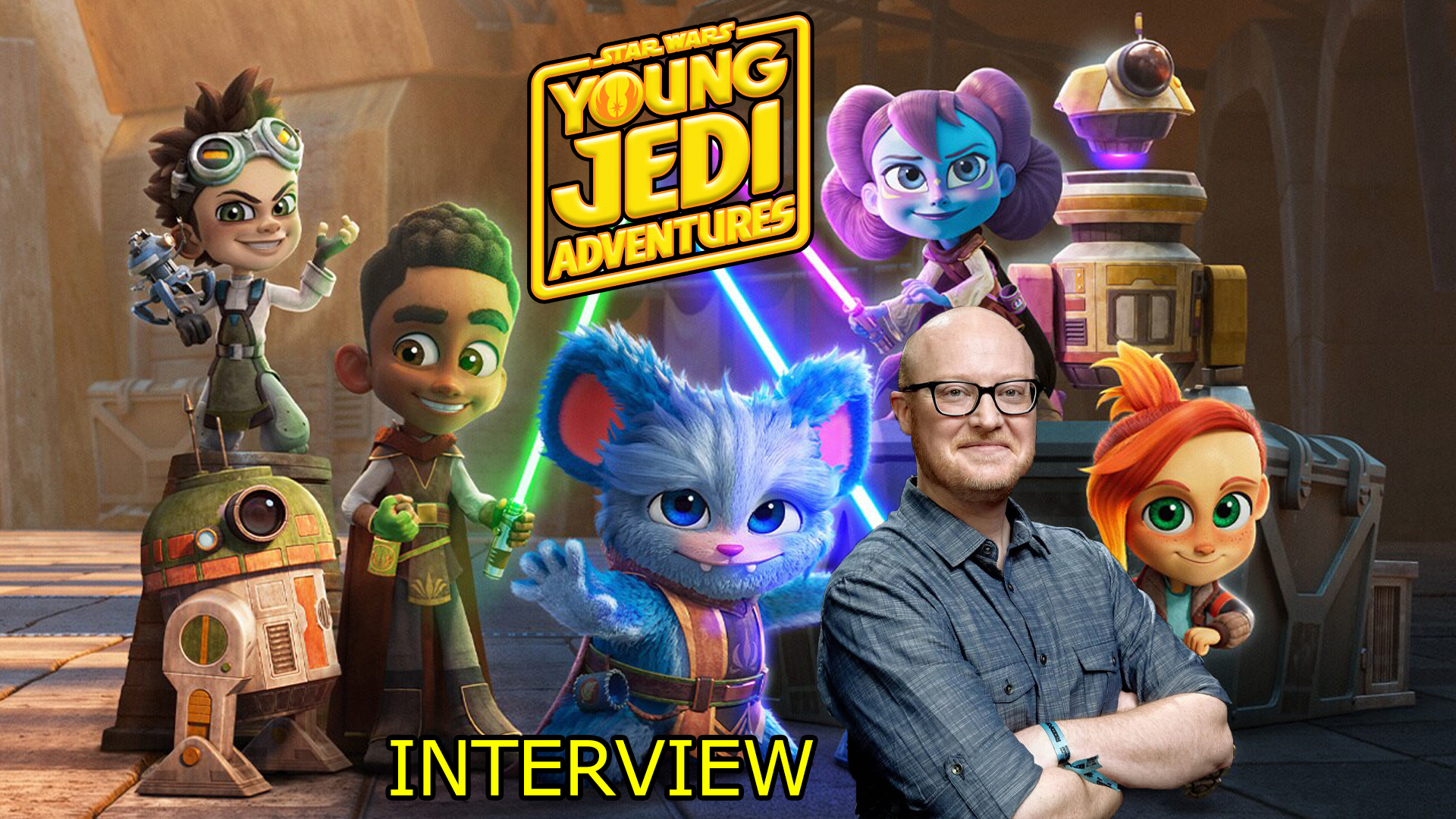
Below you can find an embedded YouTube video of my full 45-minute discussion with Michael Olson, and underneath that is a transcript of highlights from the interview.
Watch Interview: "Star Wars: Young Jedi Adventures" co-creator / showrunner Michael Olson:
Mike Celestino, Laughing Place: First of all, congratulations on wrapping up the show. How does it feel for it to be complete?
Michael Olson: The whole experience, to be honest, was very surreal-- not only because I was getting to work on Star Wars, which is the reason why I came out to Hollywood to be in the business, but also that it encompassed the last six years of my life, which included [the show] but also the birth of two of my three kids, a family move, [and] a death in the family, so just a lot. So this whole show represents this time of my life, as well as all the friends that I've made on the crew, and so it's a very surreal time. I'm kind of just doing my best to soak it in, because it's also been very chaotic. Production on anything, especially in animation, can get pretty crazy, so I've been enjoying a little bit of downtime, connecting with my kids a little bit more, being a [father]-- picking up my kids, dropping them off [at] school, that kind of thing. It's been good.
LP: Going back to the beginning, what was your relationship was with Star Wars growing up? Have you been a fan forever?
Olson: Oh my gosh, yes. Yes. It's always been a part of my life. I was born in the early 80s, so Star Wars was ever-present for me. My dad is a huge nerd and loved Star Wars, so he would talk about it with me and tell me Star Wars bedtime stories. Um, and of Star Wars. Growing up, we didn't have DVDs or streaming like kids do these days, and the only access I had to seeing Star Wars was one of my dad's friends [had] taped the original airing of The Empire Strikes Back on VHS. So we had this old, battered VHS tape of The Empire Strikes Back, and then, remarkably, at the the front of the tape the friend [had] put a short film that my dad and him and their buddies had directed and made in the 70s of them just doing nerdy stuff-- some fun short film. And so in order for me to watch Star Wars, if I didn't want to fast forward, I'd have to watch my dad's short film. So for me, that was an awakening that, 'Oh, people make these things that I'm watching. They make Star Wars. The idea of making films and Star Wars are inextricably linked to me because of that.
So there was that [and] I read the books growing up. One of the big things for my friends and I was we played the original Star Wars roleplaying game, and I was always the the game master. Nice. I have so many memories of five [or] six of us being huddled in my little bedroom late at night trying to whisper so [as] not to wake up my parents, rolling dice and telling crazy stories about our characters running around the galaxy. So it's always been a part of a part of my life for sure.
LP: How did children's animation become your career?
Olson: Well, when I was in grade school, I wanted to be an animator. That was around the time Aladdin was coming out. I just I loved the animation [and] the design of Aladdin. My dad was a very good artist by hobby, and my grandma was an artist., so I grew up around people who loved to paint and draw. unfortunately that gift didn't really get handed down to me in the way that I would have liked [laughs], but I but I did fancy myself an artist for a short period of time, obsessively grabbing all the Art of books from Disney and wanting to do animation-- just loving it. I became that kid that would draw Disney characters at recess for for friends-- they would pay me a quarter and I'd draw the Genie or something like that. I wasn't half bad, but have lost all of that [talent] since that time.
And then as I went to high school, [I] started shooting short films and making live-action things, and I went to film school down here in L.A. [Then] out of film school I got a temp job at Disney in the department called Operations at their television animation department. It was just [a] couple months at a time. My job was cleaning out offices or screwing light bulbs [in] when a when a storyboard artist needed a new light bulb for their desk. Through that I built some friendships and connections and then ended up getting my first job being the assistant to the executive producer on Mickey Mouse Clubhouse. So that began my career path where I was surrounded by all these incredible artists. [I] got to meet the writers and directors and just be in that world, being a nerd with all these people who were my [kind of] people. It was just amazing, and that's how I got my foothold in there, and then the journey continues, of course, but that's how I got into animation.
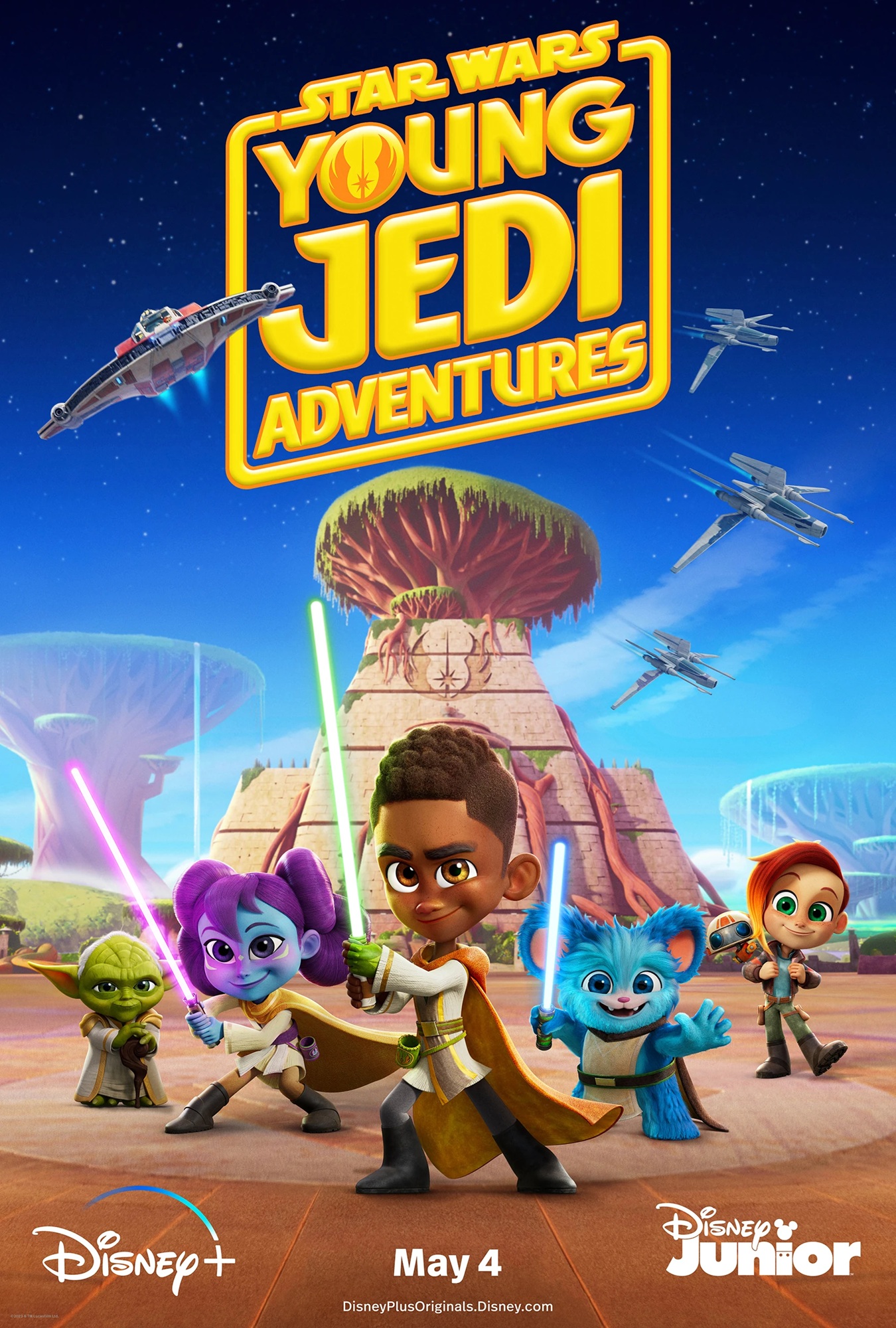
LP: That brings us to Star Wars: Young Jedi Adventures. How did this series come about for you and for Lucasfilm?
Olson: So, when Disney bought Lucasfilm [in 2012], I was actually an executive at Disney Jr. and a frustrated wannabe writer/director. I decorated my office with a ton of Star Wars stuff like, 'Oh, I can finally bust out the nerd.' [That] got a lot of comments from other people in the business or in the company, [and] I became known as that person. I actually had this really interesting experience where I got to meet Kathleen Kennedy. I was a part of a a lunch conversation with her and a couple of people from around the company. This was the year right before The Force Awakens trailer came out [in 2014], and I remember telling her two things: I said, 'When you're ready to make a Disney Jr, show, I would love to be a part of it in one way or another.' I doubt she remembers me [laughs]. And then the other one was I said, 'I just had a daughter and I can't wait for the day that I can take my daughter to a Star Wars movie and see a female Jedi as the lead.' And she kind of looked at me with a twinkle in her eye, because we hadn't seen the trailer yet. and she goes, 'That may happen sooner than you think.'
Then fast forward a couple of years, I thankfully had made the leap to being a writer on Puppy Dog Pals and had put the Star Wars thing out of my mind thinking, 'Maybe they they're never going to do it.' And then I got a call from Lucasfilm and they said, 'Hey, we're possibly thinking about doing something with Disney Jr. We're going to go to you and a couple of other people. Do you have some ideas?' And they gave me this general timeline of the High Republic, 300 years before the prequels and said, 'This is where we'd like to set it. Here's what we're thinking.' And then I came up with the show. That was probably around 2018 [or] 2019.
LP: Do you feel like this was part of a general, intentional outreach toward building a younger audience for Star Wars? Was that part of the plan?
Olson: Very much so, yeah. I mean, I'd even seen it with my daughter. I hesitated to show her the movies when when she was five., [but] we I couldn't wait any longer and I had to sit there with the remote, pausing it or fast forwarding it during certain moments that might [have been] a little too intense for her at the at the time. And I think everyone at Lucasfilm felt the same, that there was an empty space in Star Wars that really needed to welcome the the youngest younglings into the galaxy. So it was definitely something that was on my heart, especially as someone who loves preschool content [and] loves kids' content. I'd been working at Disney Jr. for years, so [it's] definitely something that we had wanted to do and something I was hoping for, for sure.
And you know, as a Star Wars fan, especially when I was a an older teenager, I would have balked at the idea of welcoming the younger kids. I know there [were] a lot of strong feelings about Return of the Jedi when that came out, but I was the kid that grew up on Return of the Jedi, and I loved it. It was the Ewoks that welcomed me into Star Wars and got me excited about it, and I wanted to be able to find a way to to do that for my kids.
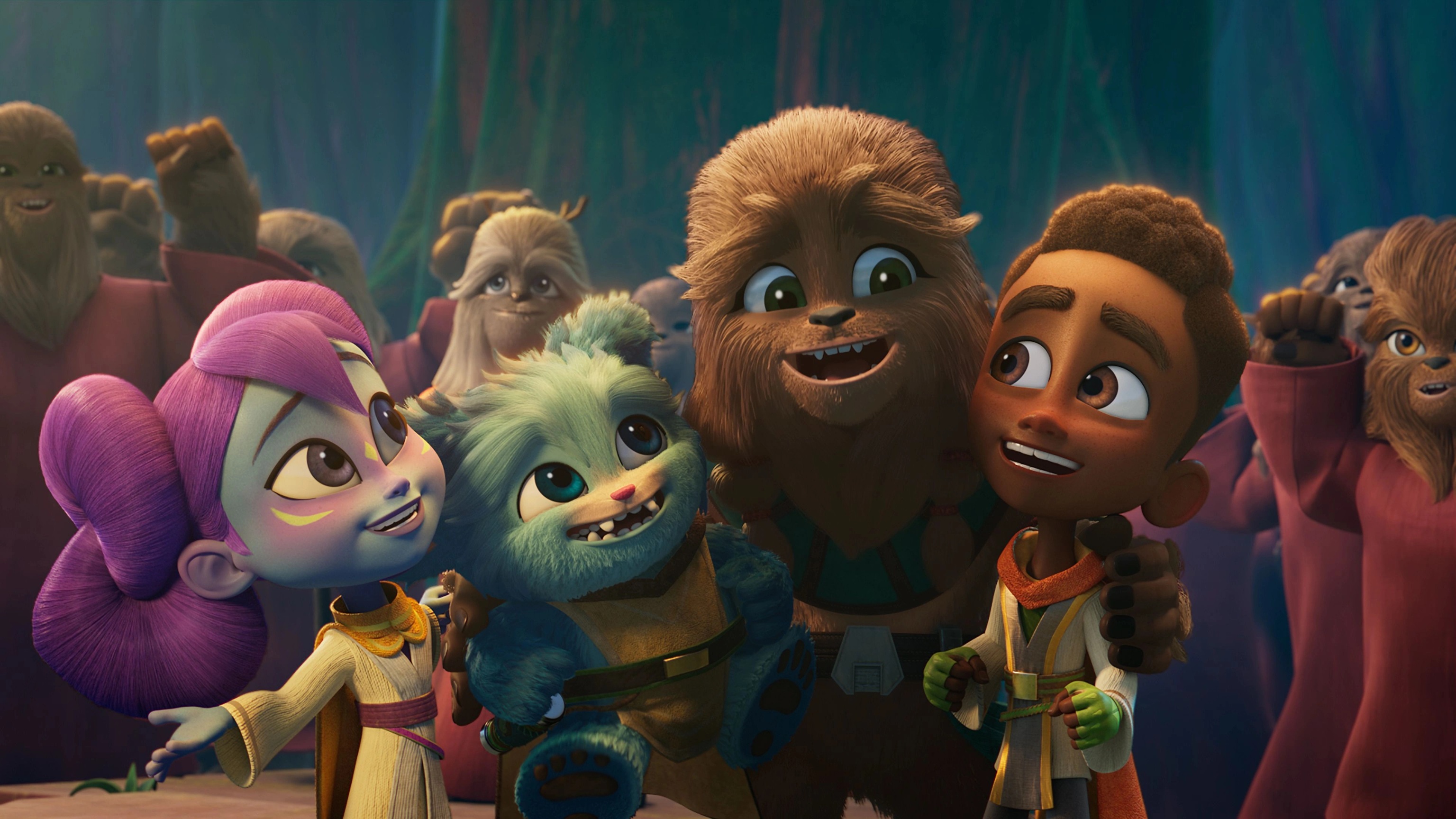
LP: Tell me about uh how you guys came up with the cast of characters for this show.
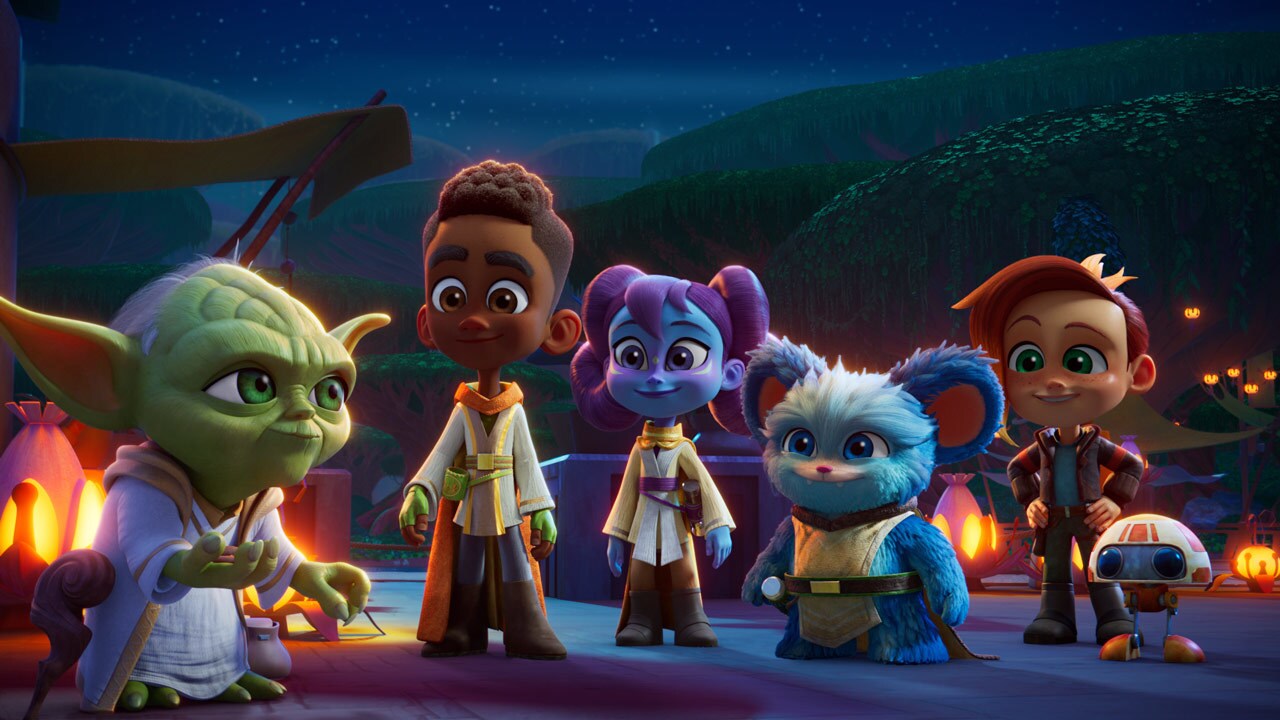
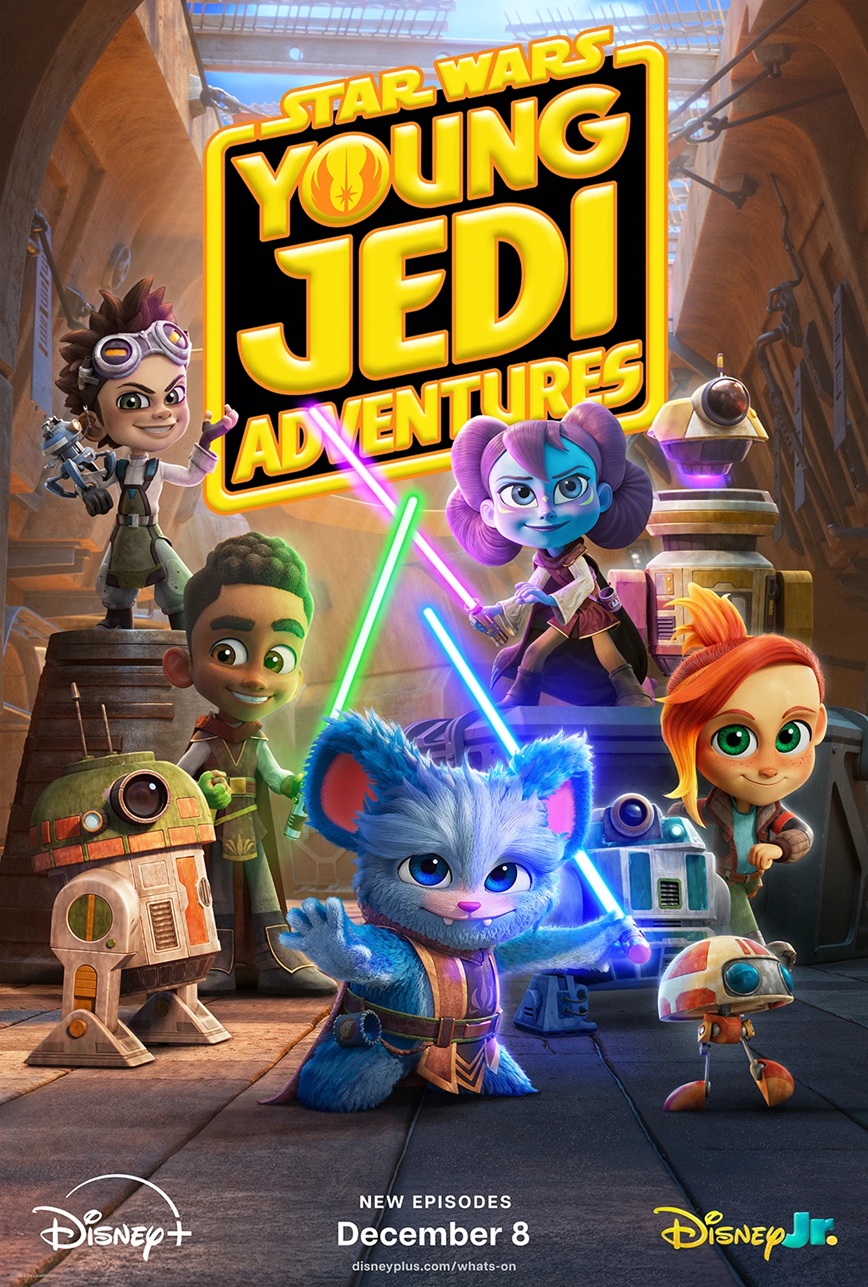
Olson: Well, we we actually developed the characters before the show was greenlit. That was part of my [pitch] going to Lucasfilm [and] saying, 'This is what I would love to see. I want to see a blue furry animal wielding a lightsaber-- basically an Ewok [laughs].
[In creating Kai Brightstar], Finn is one of my favorite characters. I love John Boyega-- he's such an enthusiastic, vibrant actor. I think, he did a phenomenal job in the sequels, but I also feel like there was so much potential there, and obviously we know how he feels about all of that, as well. And my cousin by blood is half Haitian. He's about ten years younger than me, and I was the one that introduced Star Wars to him. Now he's a huge Star Wars nerd: [he] has a Darth Maul tattoo and [the] Death Star and he's just a he's a huge nerd. And during the process of developing [the series]-- he didn't know I was working on this; this was during the pandemic and shortly after the George Floyd incident-- he messaged me out of the blue and just said, 'Hey I don't know what you're doing, if you're working on anything. I know you work at Disney, but if you can do anything where there's a lead who's black who's doesn't turn into a frog for half the movie, that would be amazing [laughs]. And I just texted him back and I said, 'That may happen sooner than you think.'
So that became the inspiration behind Kai. I was making it for my cousin, who's since has had his own daughter, and she's just now getting old enough to be able to start watching the show. But for me, I felt like I wanted to see someone that looked like my cousin as a Jedi. I knew he was such a huge fan, and I got this crazy opportunity now. Why not use it for something like that? So that's been one of the biggest joys for me about this whole process: getting to make Kai, getting to bring in teammates and friends and writers that could could help take him and and really make him feel authentic and real and and inspirational. I hope that he becomes that character for for kids.
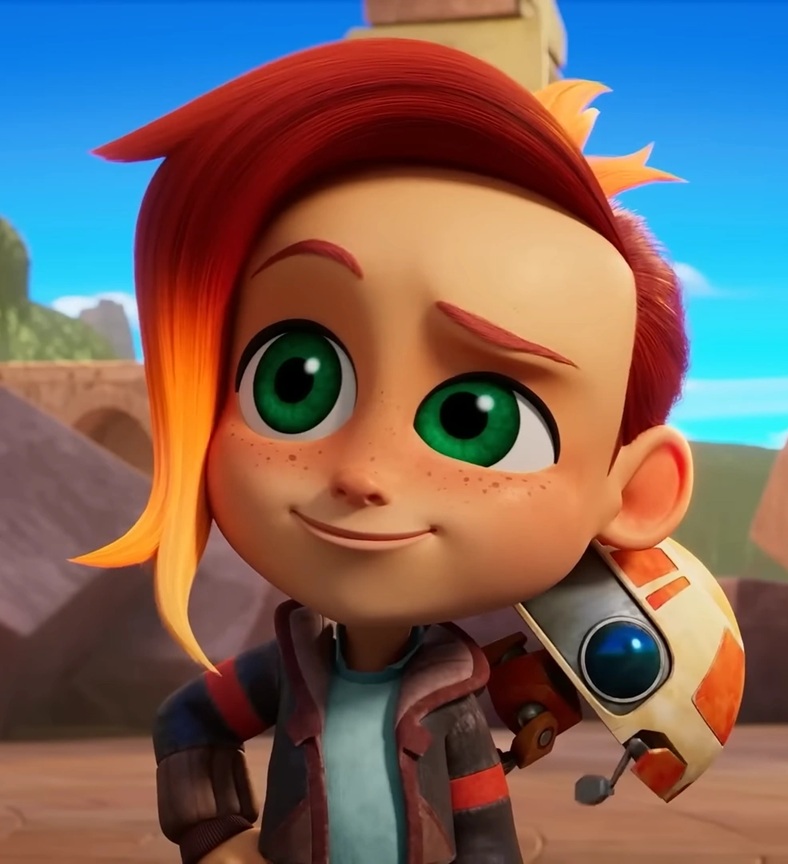
As I was thinking about the cast of characters and thinking who our audience was, but also who the Jedi were, Lucasfilm and I both felt it was important to have a kid that felt like a a normal [non-Force-using] kid. Nash [Durango] pilots a spaceship at eight [or] nine years old, but we wanted someone that could ask the questions that many of our audience [members] would be asking their parents. What are [the Jedi] doing with their hands? How are they able to make something move? What are those glowing swords that they have? So for us, Nash became that way in for so much of our audience to understand what this larger world was. That's how she was developed. I wanted her to be that, and then to find a way to make sure that she could interact with the Jedi, giving her the ship so she could help transport them.
LP: The kids in this show seem to have a bit more autonomy than we see in younglings in other Star Wars media. Was that ever part of the conversation-- 'How far is too far to let these kids have free reign to go off on their own?'
Olson: Yeah, that definitely was a discussion, and a bit of a challenge because we wanted to tell a [story] that was adventurous, that let the let them explore the galaxy with not always having to feel like they needed to have a babysitter with them the whole time. And again, as a child of the 80s, I grew up with movies like The Goonies where kids [have adventures on their own], and I was myself a latchkey kid where I would go home and my parents would be working and I could roam the streets, so to speak. So I, and coincidentally Lucasfilm, also wanted something similar, and that's why they developed this initiative of Yoda sending the younglings out to various outposts and various temples around the galaxy.
The idea was these kids have been cloistered up in the temple on Coruscant and [the older Masters] realizing they needed to broaden their experience. It was a monastery version of the Jedi, where there's some lessons, there's some guidance and leadership, but the kids can get into trouble themselves. They're allowed to go test some boundaries. And again these kids are maybe on the slightly older end of the youngling spectrum. They're not like five [or] six-year-olds. And then some of that was just creative license, just show necessity, being able to show some adventure. But maybe as we get to the prequel [era], Yoda learned his lesson of, 'Maybe that was a little too much. They got into too much trouble. Maybe that is part of the the back and forth of the Jedi Order.' [laughs]
LP: What was the casting process like for all these characters?
Olson: Well for Dee [Bradley Baker as Nubs], I just I knew it was Dee [on] day one. I knew he could do this character. I'd worked with him before on a show called Miles from Tomorrowland. He's all over the place in animation-- you name a cartoon, he's probably in it, and I just knew he could do it. He just took to this character so well, understood the heart of the character and what Nubs was about, and found his own way in. So he was day one.
Finding Kai [Brightstar] was a challenge, because this is a kid who's going to be the anchor of the show. He's got to exhibit real kid sensibilities-- Kai is not like this flawless kid who knows how to do everything. He messes up, he knocks things over, he makes mistakes, he gets upset. But [he] also can be a leader, too, when he needs to kick it into gear. And so finding someone around that age range that could straddle that [line] was really [challenging]. Jamaal [Avery Jr.] came in and just knocked it out of the park. He's just so exuberant and so infectious that you just fall in love with him the moment you see him. So it was a really fun casting process. A challenge, for sure, but a dream come true for someone like me.
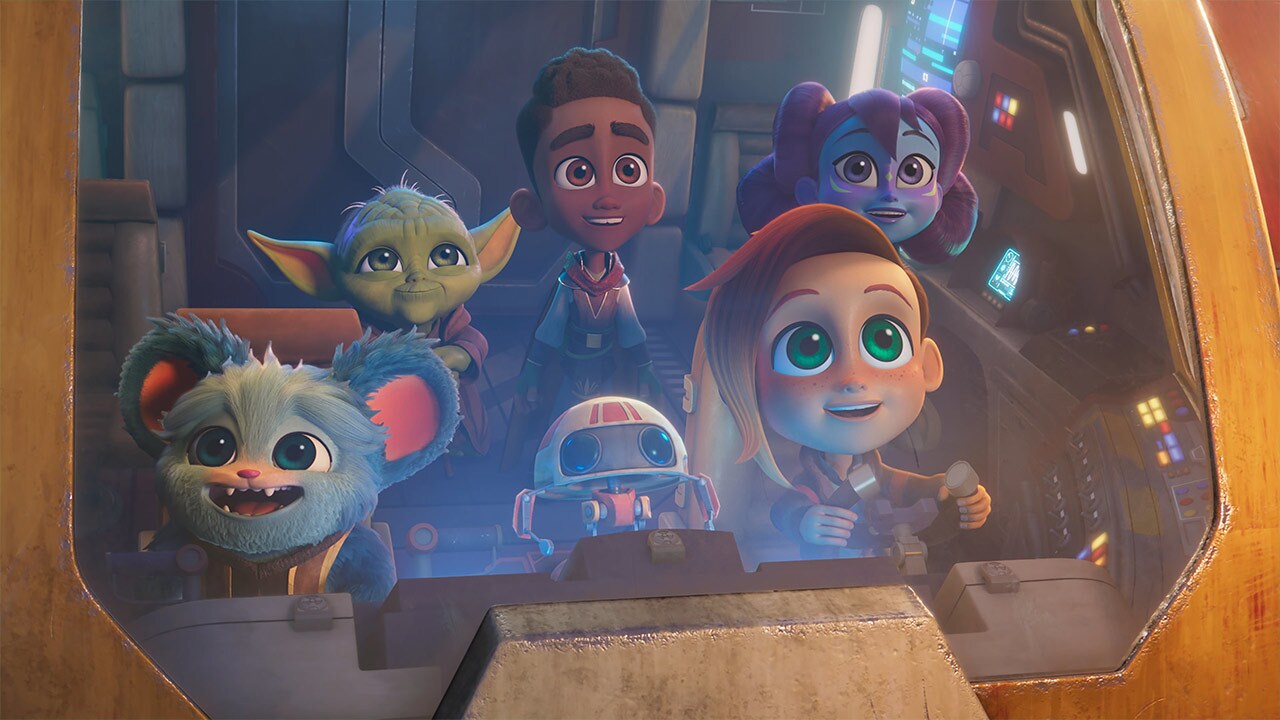
LP: What is the day-to-day process of being a showrunner on an animated series like this?
Olson: It is all-encompassing. It's a huge job for me particularly, because I come from the standpoint of being a writer. I'm in the writing room, I'm writing scripts, talking with the writers, building out the season arc, managing all of that. So my day would be getting up early, and it was also all remote-- this was happening all during COVID, and so we built our production to be remote. It was dealing with the writers, having big long story sessions, while simultaneously working on casting. I would have to hop from the writers' room to a record session. When we had our full crew up with the artists and storyboard artists and our directors, I would be hopping between different meetings or reviewing different pieces of artwork or animatics. It's a job that requires many, many hats. For someone like me, I really thrive in that. I love being able to jump in and out of things, and then also to be able to step back and see the bigger picture and say, 'Okay, this is what we're doing. This works, this doesn't.' It was a lot of fun, but like I said, it was six years of that, and definitely very intense.
LP: The planet Tenoo is the central location for Young Jedi Adventures. How would you compare this world to other locations in the Star Wars galaxy? What function does it serve for the Jedi Order during the High Republic era?
Olson: First off, [Tenoo] was inspired by a piece of Ralph McQuarrie concept art, I think [it was originally for the Wookiee planet of Kashyyyk]. If you look it up, you'll see these giant dragon blood trees, and then if you look really close you'll see what looks like a building on top of one of the trees. When we looked at that I was like, 'How weird to have a building on top of trees, but what if we put a Jedi temple on top of there?' So that was the initial inspiration for the show: taking something core to what was already a part of Star Wars and then building that out, which as a fan was like a dream come true.
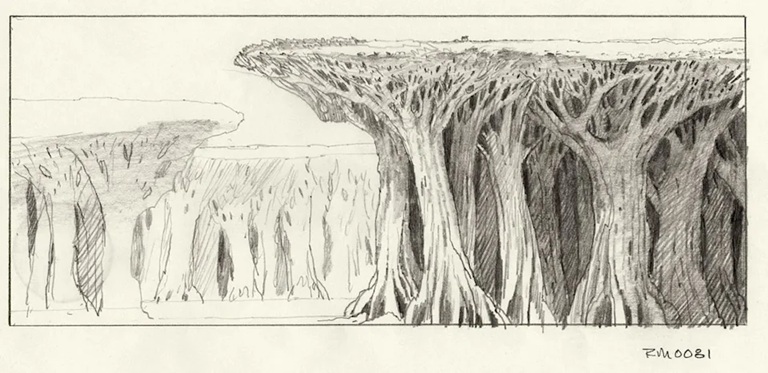
In terms of the function in the galaxy, the galaxy is huge but we also know all the different sectors and quadrants. It was about, 'Well, how can we put this in a place where it's out of the way? The idea was during the High Republic, the Republic is expanding, creating connections, and outreaching to various parts of the galaxy. And so we wanted this to feel more like the the frontier, the American West kind of vibe. My thought was that the temple and Tenoo was sort of a hub of the sector, of commerce, of culture, and Kublop Springs was the capital of that, but that its place in the broader galaxy was still relatively small, like some smaller Midwest city or something like that. So that that allowed us to tell lots of stories and have pirates, but also not have it impact the larger galaxy too much.
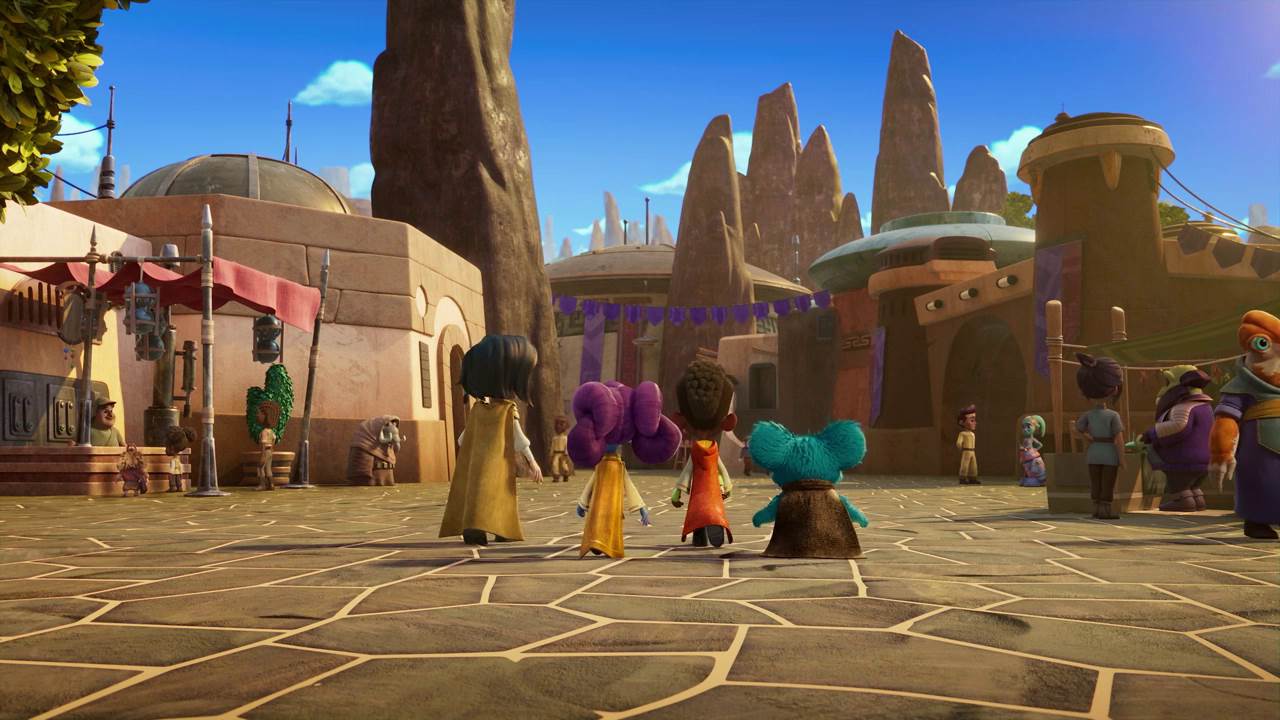
LP: Speaking of the frontier, I have to ask you about Batuu, because we do get several episodes set on the Galaxy's Edge planet. How did it come about that you got to incorporate this world that was created for the theme parks into Young Jedi Adventures?
Olson: Oh man, that was surreal-- a total dream come true. It it was something that in the back of my mind I'd wanted to do but never would have dared to ask. But thankfully Lucasfilm came to us and said, 'This is a perfect opportunity to do a tie-in.' And I was going like, 'Is it an opportunity to maybe bring back some version of Jedi Training Academy [into Disney Parks]? How can we set this up?' And that didn't ultimately materialize as of yet. Who knows? But our hope, as we started to develop it was, 'What would that look like?' And again in the spirit of this era of the High Republic, of Jedi outreaching, we thought, 'How cool would it be if there was some way to establish training that felt like a cultural outreach and a way to bring people together again? Because Batuu itself is its own kind of a hub, and so that was what we were aiming at. You can kind of see that materialize in in in the later episodes. It was a really fun collaboration, and I got to meet the the the team that helped make Batuu. It was it was super fun. For me, just going to the parks was fun. We were looking by the Milk Stand, and looked up and there was this spire that was broken and we were like, 'What if there was a story behind that?' So that was kind of what inspired our first episode [on Batuu]: 'How did that spire break off?'
LP: Was it a similar process in working with the Lucasfilm Story Group to bring in characters from The High Republic like Bell Zettifar and his charhound Ember?
Olson: Well, the Bell story is really fascinating. As we were developing this, the books of The High Republic hadn't come out yet. The publishing team had developed what the High Republic [era] was, generally speaking. We had some material, but not all of it. And [at] Star Wars Celebration 2022 in Anaheim, I ran into [author] Cavan Scott and we started talking and I was like, 'How cool would it be if we did an episode with Bell and Kai [meeting each other?' And then he was like, 'How cool would it be if they ended up being Padawan and Master?' And I was like, 'Is that something that can happen?' So he went back and pitched it to his people and I pitched it to mine and then they all talked, and we finally were able to make that all work together. And that all just came from Cavan and I just having lunch one day and being like, 'What if this crazy thing could happen?' It was surreal and super fun, and those episodes are some of my favorite.
LP: In this most recent and final season of Young Jedi Adventures, there's a new villain named Rek Minuu, who is a droidsmith. Why was it important to have a different adversary in these final seven episodes, and what makes him different from Taborr?
Olson: Well, let me let me talk about Taborr first-- he was always meant to be the villain that arcs through the whole series, because he is basically the opposite of Kai in many, many ways, and they have a lot to teach each other. My intention with the show was always that there might always be other villains that come in, but the beating heart of the show in terms of light and dark, the themes that are so very Star Wars, those would be handled by Kai and Taborr and their discussions, their battles, their disappointments, betrayals, etc. In season two, we got to see some pretty heavy episodes where that happened and Taborr-- or Cyrus, his alternate identity-- takes a real big heel turn. But again, in season two, we had these other villains called the Ganguls, these adult pirate characters, and their arc had pretty much finished. The end of season two was fun, but as a kid, I would want to see more kid villains.
And so I thought, 'How could we realistically bake that into the Star Wars galaxy? How could we make that work?' So my hope was with what we did with Rek was develop this character who wasn't a pirate. We had had Taborr who's a pirate [and] the Ganguls who were pirates. We wanted Rek to be different-- still dastardly, still causing problems, but what would that look like? And so what I wanted to do was pair someone who uses their brain and has no brawn versus the Jedi who are often known for their fighting ability. That gave me an opportunity to have this kid who built droids and repaired droids and manipulated them. Then we started to dig into who he was, why he would do this, and he became a really, really fun character. And Mason [Wetheimer], who does his voice, is just incredible. He's just [got] such good texture and [is] such a fun actor and brought so much life to the character.
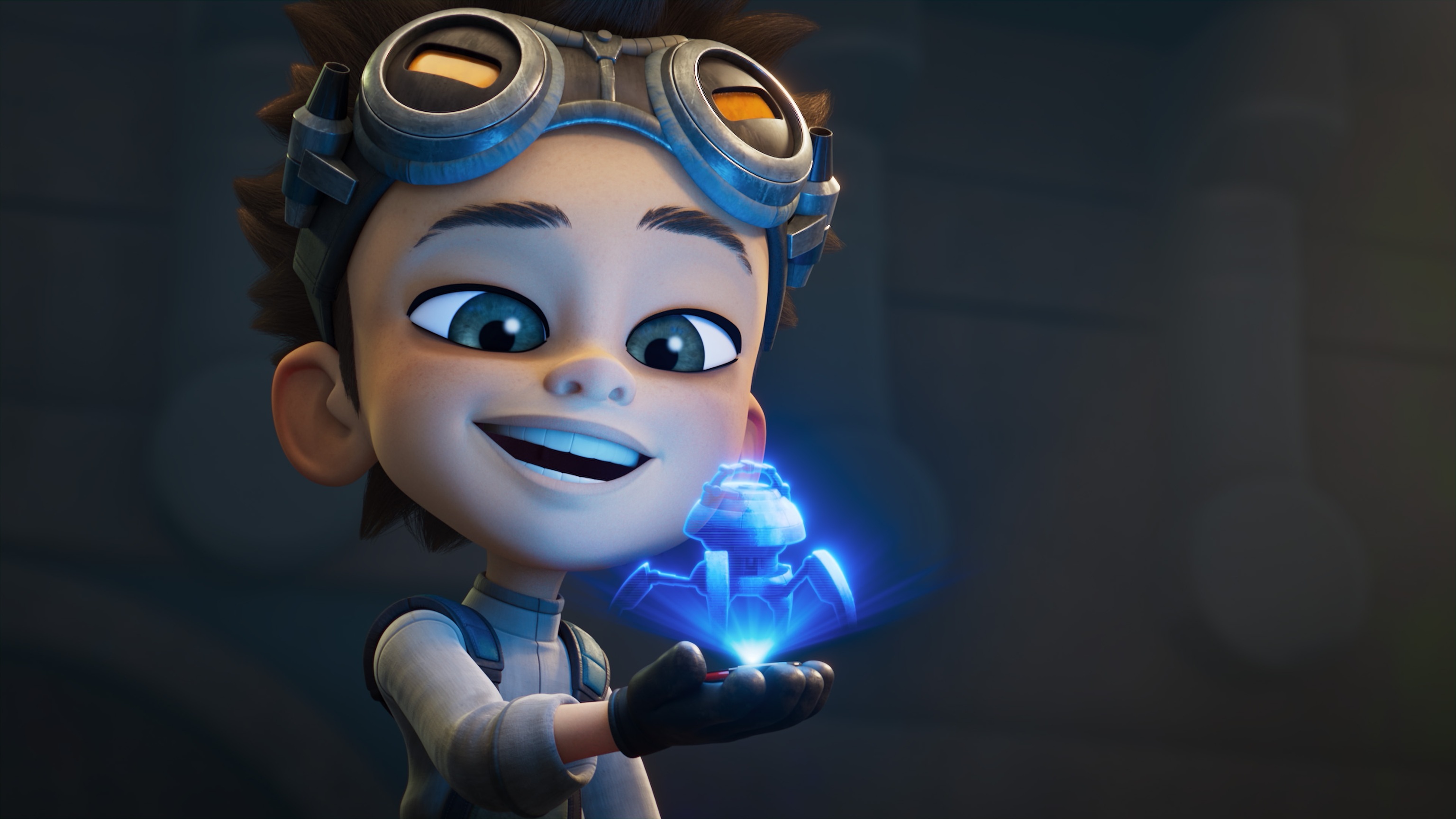
LP: I don't consider this too much of a spoiler since it was in the trailer for the final season, but at the very end of the series finale we get to see the main characters grown up a little bit. How did you come to the decision to do that and how did you develop the look of our heroes as older Padawans?
Olson: In terms of the [final] montage itself, the epilogue, it was always my intention for us to see them become Padawans. From the very beginning, Lucasfilm and I were talking about how we would do our version of the Gathering and what that would look like. Unfortunately, budget issues and scheduling constraints limited us from being able to do that kind of episode, but it was important for me to see-- and I wanted for kids at home to see these kids [growing up and] knowing that they're going to be friends forever, so to speak, but also to see that they're becoming something. As the creator, I wanted to know that my kids were going to be okay. So it was a matter of planning who their Masters would be, how we would seed that in season two and begin those relationships, [and] how those relationships would develop in season three. That way when when we saw it all, it felt inevitable and and lovely. That was something that I just really felt like I needed to do, and thankfully Lucasfilm went to bat [for it]. It it's not easy in animation, for anyone who doesn't know, creating new characters and new models. It's not easy and it's not cheap-- we basically had to redo our entire cast just for two minutes of video-- so I was really grateful to [the folks at] Lucasfilm that allowed us to be able to do that.
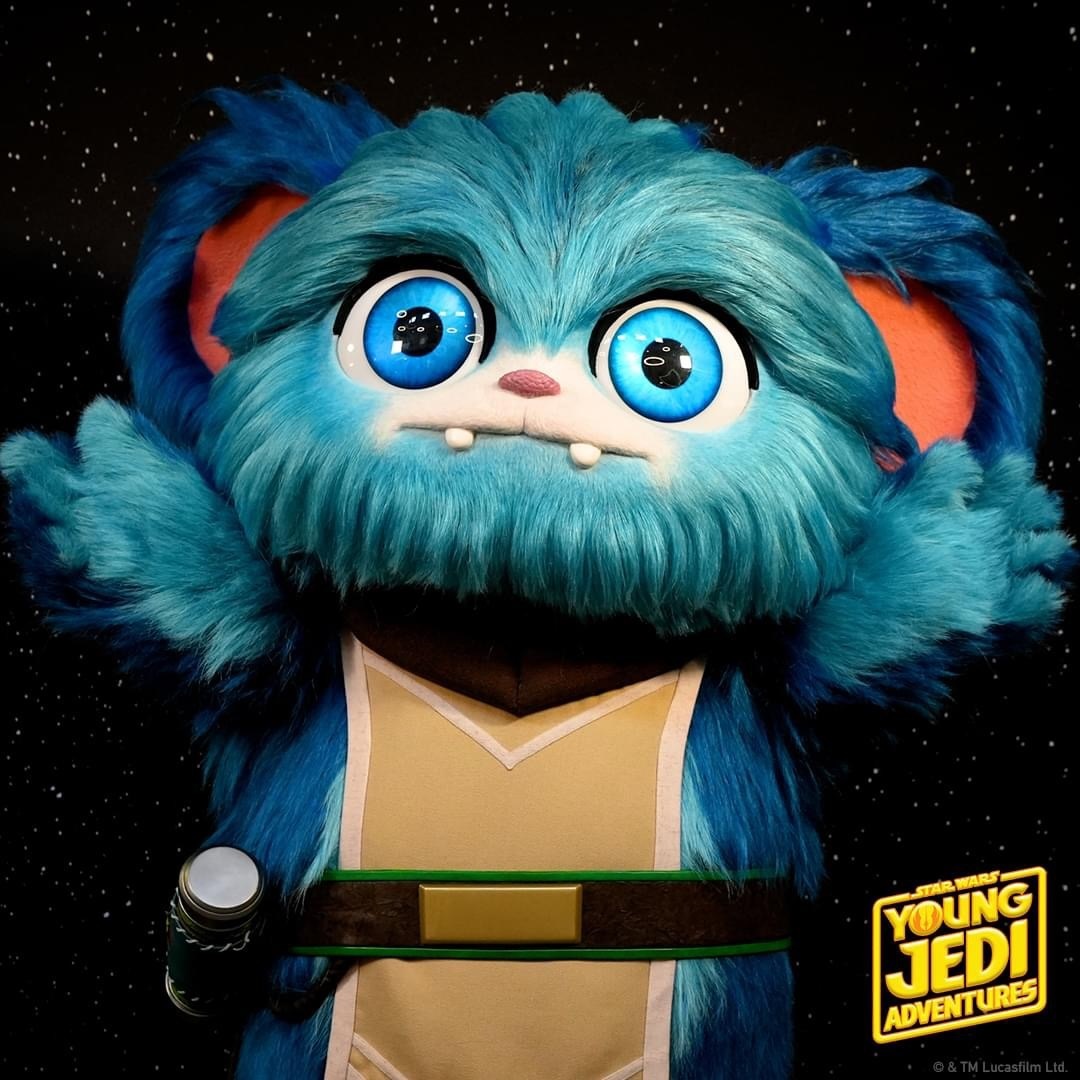
In terms of [how Nubs looks when he's older], we did an episode where we got to see an adult Pooba in season two-- they are just these giant, hulking tanks, basically. So for us, the fun part-- and this took forever-- [was] trying to figure out, 'What does a gangly teen version of a Pooba look like?' We went back and forth, back and forth [with] my art team, particularly my artist Bill [Breneisen], just struggling to try to figure out the right proportions. Thankfully we landed on this this wonderful, adorable design that still feels like Nubs, but it's teenage Nubs. But yeah, someday I would love to see a full grown Pooba Jedi in live action, just mowing down the the Sith or something [laughs].
LP: We did get a Nubs walkaround character who appears at conventions and other events. What did it feel like to see that materialize?
Olson: Oh my. Totally surreal. I mean, this feels like the theme of our whole talk today is-- this is just surreal, right? Yeah, this was a character that I dreamed up while I'm sitting shortly before the pandemic. I was working [at Disney Jr.] at the time, and so the only time I would be working on developing this show was late at night. My daughter was asleep, we had a tiny apartment, so I'm sitting on the floor in my daughter's bedroom while she's passed out, writing quietly and dreaming up this character. The first time I got to see the walkaround was on the lot at Lucasfilm, and having him walk out of the room was overwhelming, to be honest-- just to see this character truly come to life like, 'There's my baby. There he is. My big blue baby.' [laughs] It was it's super fun and I got to go to [Star Wars] Celebration in Japan this year, and they brought brought him out, and I was just so touched and blown away. There was just a massive amount of people-- a huge line of people that lined up to take pictures with him and get to meet Nubs. For me that was just such a [thrill] to be in a completely different country with this character I created and and to see so many people so excited to take pictures and meet Nubs. [It] was just absolutely incredible.
LP: Lastly, now that the series has wrapped up, what do you hope people are taking away from Young Jedi Adventures as a whole? What lessons are are you hoping kids and families learn from this show?
Olson: When I handed in my initial document to Lucasfilm saying, 'This is the show I hope you guys want to make,' I led off with a section about why I would want to make this show and why I felt it was important. And that's been the North Star for my me and my whole team as we've made the show. And that really has been everything that's just core to what the Jedi already are when they're at their best, which, as George Lucas says, boils it all down to selflessness. From that springs so many other incredible qualities that I think are important for kids to learn about and to see modeled, but then also even more important today, in the culture that we're living in. Those qualities would obviously [fall under the umbrella of] selflessness, but that looks like so many different things.
For Kai, [the idea] was I wanted kids to see what healthy, good leadership looked like-- a leader who cared about the people he was leading, who wasn't afraid to feel connected to people, who wasn't afraid to show their emotions. So for me it was modeling that kind of behavior, and then just in general for kids to see that they can serve and and help and improve the world around them, even though they're small and they might feel like they don't have the ability to make change, that they can. To me those feel like very core Star Wars ideas and I feel like this show had a unique opportunity to have a different expression of that. So I hope kids and families take away connection, selflessness, and good leadership-- how to be a good brother or sister to your younger siblings.
The full series of Star Wars: Young Jedi Adventures is now available to stream on Disney+, with episodes also airing on Disney Jr. You can listen to the audio of my interview with Michael Olson in Episode 237 of Laughing Place's Star Wars podcast "Who's the Bossk?"