
Tiana Nonosina Liufau Invites Viewers to Dance Into the World of Moana


The world of Moana is carried by more than its ocean vistas and familiar characters. It also lives in movement, in the people performing it, and in the traditions those performers bring with them. To celebrate the live-action film’s arrival on Disney+, Disney invited guests to explore that connection firsthand at a special event with choreographer Tiana Nonosina Liufau, offering an opportunity to learn authentic Pacific dance movements featured in the movie.
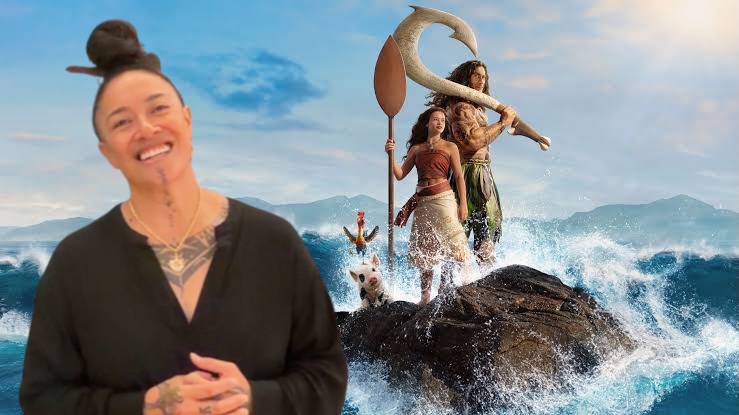
The dance experience gave the celebration a fitting focus. With a film that introduces audiences to a world inspired by Pacific cultures, learning about its choreography provides another way to appreciate the people and creative choices behind what appears on screen. Speaking with Laughing Place at the event, Liufau described that work as both a privilege and a responsibility, one rooted in representing her communities while welcoming others to learn about them.
“I’m just so privileged to have my part in it to make sure that our stories are told from our voices,” she said. That purpose extends beyond the communities being represented. As Liufau explained, the opportunity also allows people “from all communities” to get to know more about the Pacific, making the film a point of connection between its performers and a worldwide audience.
Liufau has been part of the Moana world since 2016, when she was brought in to help the animators choreograph the dances in the film. She described seeing its reach on a platform like Disney+ as “almost surreal.” Growing up, she watched stories about other parts of the world. Now, she has a role in sharing stories connected to her own, with the opportunity for viewers to discover them in their homes and return to them over time.
The celebration brought that idea of cultural exchange into a participatory setting. Guests were invited to learn some basic movements, including some from the live-action film, and discover how dance, rhythm, and cultural traditions help bring its world to life. For Liufau, sharing those elements is consistent with a broader understanding of community, rather than something that begins and ends with a movie’s release.
“Sharing is a part of who we are. We are a village mentality,” she said. She described that collective spirit as one of the great strengths of Pacific people, emphasizing an approach that welcomes others into appropriate parts of the culture. The event offered a way to extend that invitation through movement, giving guests an entry point into an aspect of the filmmaking that carries meaning beyond the steps themselves. The event was welcoming to all: “If you have an open mind and an open heart and you have it with respect, you can partake,” she explained, describing the spirit in which guests can approach the elements being shared.
Bringing Moana into live action gave her a different way to work with those traditions after contributing to its animated world. For the animated films, Liufau had to learn how to translate a form of expression she had grown up with into a different creative process. Choreographing meant communicating movement to artists and understanding how it would take shape in animation, an approach she became more familiar with through Moana and Moana 2.
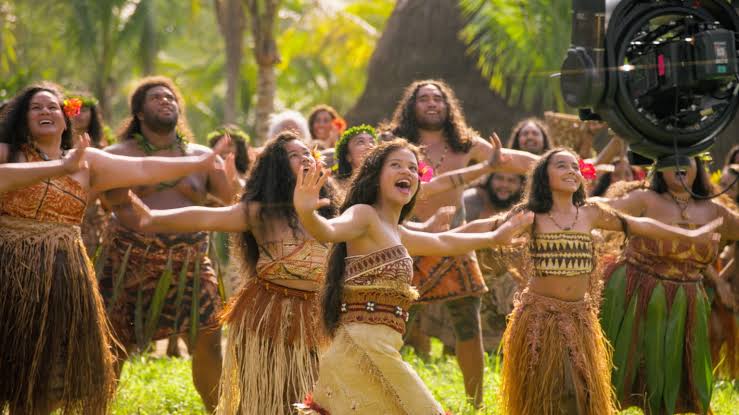
“The world of animation, I had to learn a different system,” she recalled. She enjoyed that experience and praised what the artists accomplished, but live action brought her back to a kind of collaboration that felt especially familiar. Working directly with dancers meant responding to people in the room, their expressions, their energy, and the connection that develops through teaching and performing together.
“Live action, it tapped into something very tangible and so real,” she said. “I’m used to teaching humans.” For Liufau, that human interaction was an opportunity to return to her roots, feeding off the performers’ energy and their mana while seeing their faces and feeling the collective presence of the group.
Who those performers were mattered just as much as the opportunity to work with them directly. Liufau emphasized the care she took to cast people from communities with Polynesian and South Pacific ancestry. Their presence brought a personal connection to the traditions being represented, extending the meaning of the work beyond the characters they played.
“Not only are faces being seen, but our last names and our genealogy, our ancestors; we’re representing for all of them,” she said. In that view, representation encompasses more than an individual appearing in a film. It also recognizes the families and communities carried into the production by that person, making the work feel, as Liufau put it, “very authentic and very real.”
That sense of collective representation also shaped the film’s Hollywood Bowl premiere, which Liufau recalled with unmistakable affection. Merely mentioning the performance brought on what she called “chicken skin,” the Hawaiian expression she used for goosebumps. The venue’s history made the occasion meaningful, but so did the opportunity to bring the film’s community onto such a prominent stage.
Liufau and her team brought together villagers and dancers from the movie for the Bowl performance, carrying a part of the production into the celebration. “We wanted the people to know what it felt like to be on set, but even more so to feel the spirit of our people,” she explained. Seeing Dwayne Johnson and Catherine Lagaʻaia take the stage in traditional dress added to the significance of a moment she described as meaning everything.
For someone whose work centers on movement, Liufau acknowledged that words can sometimes feel insufficient to express the experience. “I think that’s why I really dive into music and dance because I let that speak for itself,” she said. Her recollection of the premiere helps explain why a dance event was such an appropriate way to mark the film’s next chapter on Disney+, allowing movement to carry a part of the celebration’s meaning.
As Moana reaches Disney+ audiences, that exchange can continue with viewers who are encountering its world for the first time and those returning to a story they already love. The dance celebration encouraged a closer look at the people behind that world, whose contributions encompass ancestry, lived experience, and decisions about how their traditions are represented. It gave the streaming arrival a human context, connecting the film on the screen to the artists sharing their culture beyond it.
Liufau’s village mentality provides a meaningful way to understand the celebration as a whole. The invitation to learn was an invitation to approach another culture with curiosity, openness, and respect, guided by people who know which traditions they can welcome others to experience. For a Disney story reaching audiences around the world, that connection is part of what gives its movement meaning, carrying the voices of its communities along with the adventure.