
Review: Marvel's "VisionQuest" Offers Thoughtful Themes and Great Performances


What makes someone human? Is it the way they were created, the memories they carry, or the relationships they choose to build? With Marvel’s VisionQuest, showrunner Terry Matalas takes questions about artificial intelligence and gives them an emotional center through family, identity, and love. The series is filled with twists and turns, but its greatest strength is how those developments keep bringing us back to the characters. Our familiarity with the Marvel Cinematic Universe provides a foundation for a story that has plenty on its mind without forgetting to be entertaining.

That balance is especially important for a show tackling subjects that could easily become abstract. Questions about whether an artificial being can love, change, or define its own identity are more compelling when we care about the beings asking them. VisionQuest benefits from that investment, using its characters’ changing perspectives to complicate ideas that initially might seem straightforward. It gives viewers plenty to consider while retaining the humor and sense of discovery that make spending time in this universe enjoyable.
The series does arrive with an expectation that deserves some qualification. Billed as the conclusion of a trilogy that began with WandaVision and continued through Agatha All Along, VisionQuest works as a satisfying series in its own right. However, I would not approach it expecting the kind of larger narrative resolution that Avengers: Endgame brought to the Infinity Saga. There is a difference between telling a worthwhile story and making the audience feel that an entire chapter has closed, and VisionQuest is more successful at the former.
That distinction reflects a frustration some have with the MCU’s expanding television universe. These shows have introduced plenty of intriguing ideas and dangling plot threads, but it is not always clear when, or even whether, those threads will be revisited. As those questions accumulate, however, anticipation can give way to uncertainty. My reservations about billing VisionQuest as a conclusion come from that larger context, even as I appreciate what the series accomplishes on its own terms.
Fortunately, the experience of watching it offers plenty of reasons to stay engaged. Marvel and Disney+ made a wise decision to release the episodes weekly. Each installment is dense with concepts, plot developments, and fun, giving viewers enough to digest that immediately moving into the next episode could diminish some of the pleasure. This is a series worth savoring, with time to consider a shifting perspective or rethink an assumption before another chapter adds to the conversation.
The changing viewpoints also help the series explore its themes without reducing them to a single, tidy answer. Humanity, family, and love are complicated enough when everyone involved is human. Bringing artificial intelligence into those discussions opens up additional questions about how we understand ourselves and one another. The show’s twists are entertaining, but the opportunity to reconsider its characters is part of what makes those turns rewarding.
There is a similar balance in the series’ relationship with Marvel history. VisionQuest can stand on its own as a story while still drawing heavily on the universe around it. I would not choose it as someone’s introduction to the MCU, although the questions it explores are accessible to anyone. You do not need an encyclopedic knowledge of Marvel to understand why identity or belonging matters, even if that knowledge adds richness to the experience.
Viewers familiar with the films and Disney+ series will find plenty of callbacks stretching back to the MCU’s beginnings. Despite reports that Marvel wanted its television projects to become less dependent on extensive franchise knowledge, this series remains deeply connected to that history. Those connections may not all be essential to enjoying the show, but they reward the audience’s investment. Marvel Comics fans will also have plenty to look for on repeat viewings, and the enthusiasm for the source material comes through without overwhelming the universal appeal of the central themes.
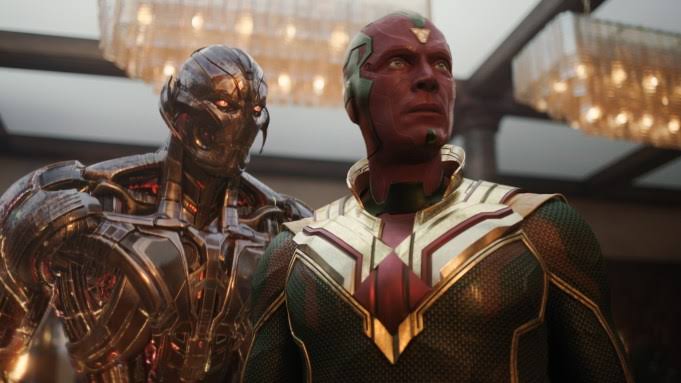
What holds all of these elements together is an exceptional ensemble. For me, this is the best-cast Marvel television series to date. James Spader’s human avatar of Ultron and T’Nia Miller’s Jocasta are particular highlights, but there is no weak link among the performers. A show so concerned with artificial intelligence needs its characters to feel distinct, and this cast gives each of them a personality worth paying attention to.
Henry Lewis and Jonathan Sayer bring welcome humor, while Todd Stashwick adds gravitas. Emily Hampshire, Orla Brady, and James D’Arcy each give their AI characters individual character and charm. That variety matters beyond making the ensemble entertaining. It gives the show’s questions about individuality an immediate, tangible expression, allowing the audience to encounter these beings as characters rather than simply as examples in a debate.
Ultimately, VisionQuest succeeds because its big ideas remain connected to emotional concerns. Its relationship with the larger MCU can be both a source of richness and a reminder of unfinished business, and I wish its positioning as a trilogy’s conclusion came with a stronger feeling of closure. Even with that reservation, its thoughtful themes, weekly storytelling, and outstanding performances make it a satisfying experience. Marvel has long used extraordinary characters to explore recognizable human struggles, and VisionQuest finds fertile ground in that tradition by asking what humanity means to those whose claim to it is most complicated.
I give VisionQuest 4 out of 5 stars.