
25 Years Later: Why "Zenon: The Zequel" Still Zooms


Premiering on January 12, 2001, Zenon: The Zequel arrived at a fascinating moment in Disney Channel history. It wasn’t just following one of the network’s earliest hit original films, it was also proving that a Disney Channel Original Movie could sustain a mythology, a fanbase, and a sequel-worthy escalation of ideas before that was common practice. A quarter century later, The Zequel stands as both a tonal evolution of the franchise and a surprisingly ambitious sci-fi coming-of-age story wrapped in Y2K futurism.
Set in 2051, the film finds Zenon Kar older, bolder, and still wildly impulsive. Now 15, Zenon isn’t battling corporate greed as she did in the first film; she’s pushing back against something far more intimidating: government control. The space station has been placed under military authority, with General Hammond restructuring Zenon’s entire world in the name of “efficiency.” Where the first movie centered on saving a home from sabotage, The Zequel is about who gets to decide what that home becomes.
Zenon’s conflict with Hammond’s daughter Margie—her earthly nemesis from the first film, turned reluctant ally in the sequel—embodies that tension. Margie begins the film weaponizing privilege and authority, but her arc toward empathy mirrors Zenon’s own growing understanding of responsibility. It’s a subtle but meaningful shift, signaling that The Zequel is less interested in villains than in systems, and the people raised inside them.
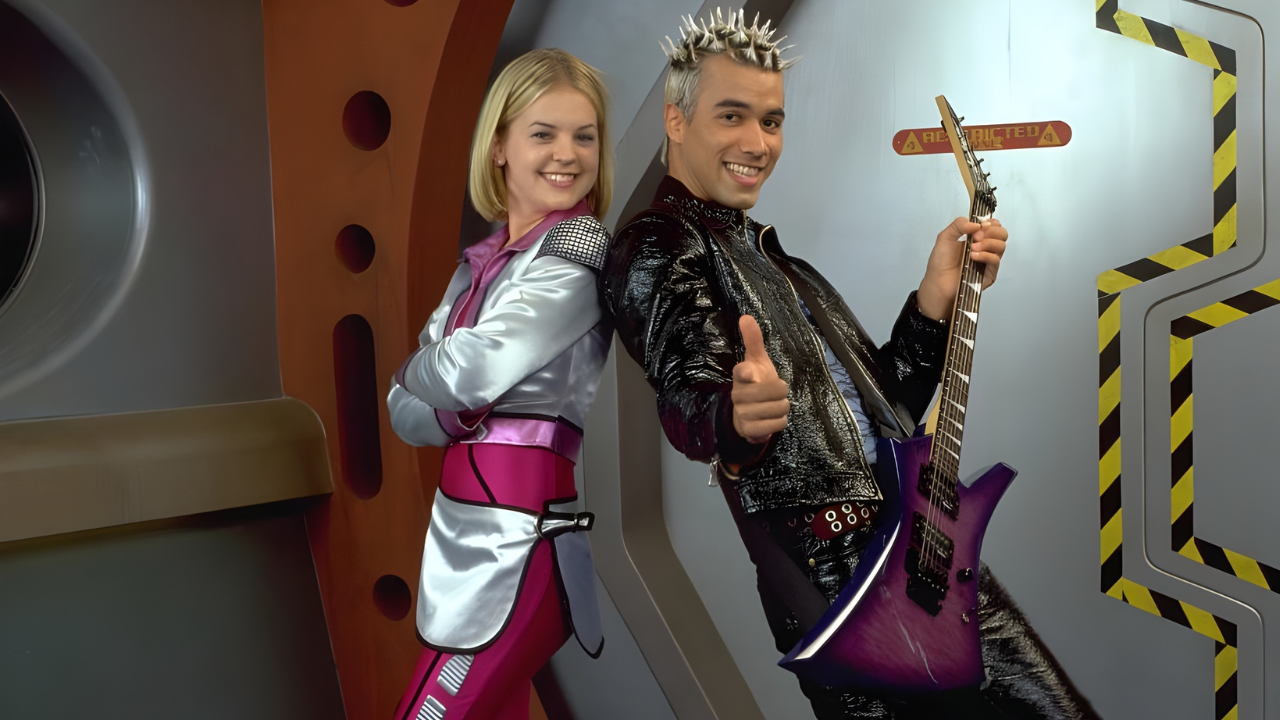
With “Supernova Girl” helping cement the original film’s legacy, a follow-up without Proto Zoa would have felt incomplete. Now a recluse, Proto Zoa believes his relevance has passed, a strikingly introspective turn for a Disney Channel pop-star archetype. His rediscovery of purpose comes not from chasing fame, but from connection: aliens who have been drifting through space for three years, using his music as a beacon.
That musical through-line extended behind the scenes as well. When production needed a new song—“Galaxy Is Ours”—something about the lyrics didn’t feel quite right. Screenwriter Stu Krieger rewrote them overnight, faxed the revised version overseas, and the song was recorded and filmed the very next day. It remains his only songwriting credit, and one that still earns him residuals. The last-minute scramble mirrors the film’s own themes of urgency, collaboration, and creative trust.
While developing Zenon, Krieger consulted scientists at NASA’s Jet Propulsion Laboratory and deliberately avoided far-fetched technological leaps. His vision of the future was incremental: big computers becoming smaller ones, video calls evolving into something like Zoom, and Zenon’s zap pads anticipating modern tablets. The future of Zenon wasn’t alien; it was recognizable, and in many ways, it all came true.
Zenon: The Zequel holds a unique place in Disney Channel history. It became the first Disney Channel Original Movie sequel, predating even Halloweentown II, and proved that audiences were willing to return to the same characters, settings, and emotional arcs long before “shared universes” became industry buzzwords. And when you factor in that Disney Channel initially envisioned Marilyn Sadler’s books as a TV series rather than a standalone film, the trilogy structure that eventually emerged feels almost inevitable.
That success was no accident. Krieger has since explained that Disney Channel had a very specific tonal mandate, and that his winning pitch for Zenon was not “Star Trek meets 90210,” but rather “Eloise at the Plaza… on a space station.” That framing instantly aligned with Disney’s brand DNA and got him hired on the spot, grounding the sci-fi concept in character, humor, and a distinctly youthful point of view.
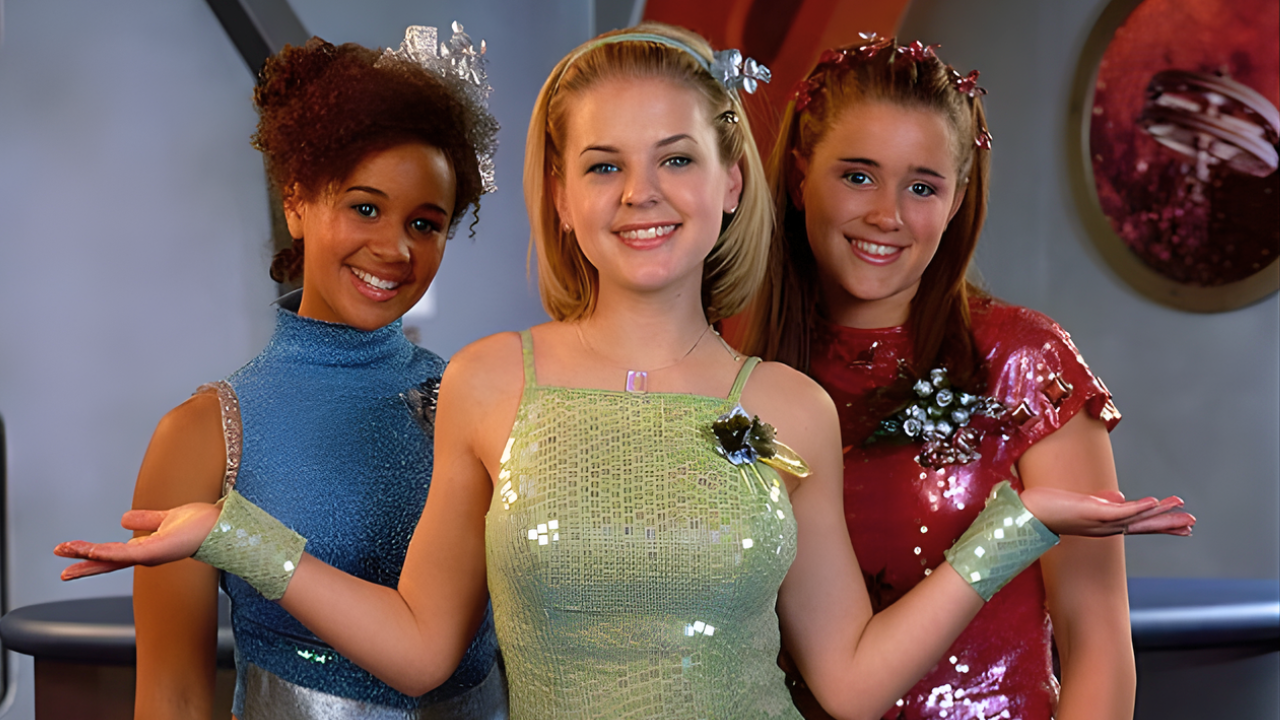
One of the most notable changes in the sequel came with Nebula. Raven-Symoné did not return due to filming conflicts with Dr. Dolittle 2, and the role was recast with Shadia Simmons, already familiar to DCOM fans from The Color of Friendship and Quints. The transition was seamless, preserving Nebula’s warmth and grounding presence.
Production also shifted continents. While the first Zenon was filmed in Vancouver, The Zequel moved to New Zealand, giving the sequel a slightly grander, more cinematic scope. According to Holly Fulger (Aunt Judy), the distance also brought the cast closer together. With everyone housed in the same hotel, they spent off-hours exploring the country, attending farm shows, watching sheep-shearing demonstrations, and even convincing Philip Rhys (Proto Zoa) to milk a cow. Fulger recalls Rhys as “lovely,” noting that the two frequently spent time together while filming the first two films.
Not every adventure was embraced equally. Fulger opted out of a glow-worm cave inner-tube excursion, joking that it didn’t feel safe enough compared to the carefully controlled risks of an amusement park, but the experience reinforced the sense of camaraderie that carries through on screen. She has also singled out producer Suzanne de Passe, praising her commitment to empowering storytelling and emphasizing how important it was to have girls “doing stuff,” solving problems, and quite literally helping to save the planet.
Directing duties fell to Manny Coto (June 10, 1961 – July 9, 2023), whose genre instincts are evident throughout the film. Before and after The Zequel, Coto worked across science fiction and horror, from Tales from the Cryptkeeper to The Outer Limits. Zenon: The Zequel would be his final feature film as a director before shifting his focus to television, where he served as showrunner of Star Trek: Enterprise’s final season and executive producer on 24, Dexter, American Horror Story, and American Horror Stories.
Looking back 25 years later, Zenon: The Zequel endures because it dared to let its heroine grow up. It expanded its world, complicated its themes, and trusted its audience to follow along—from Earth to the Moon and back again. In an era when mid-budget, original family sci-fi films are increasingly rare, The Zequel stands as a reminder of what Disney Channel once did best: bold ideas, earnest emotion, and just enough weirdness to feel like the future.