
Book Review: "The Art of Toy Story 5" Gives New Insight Into the Hit Film


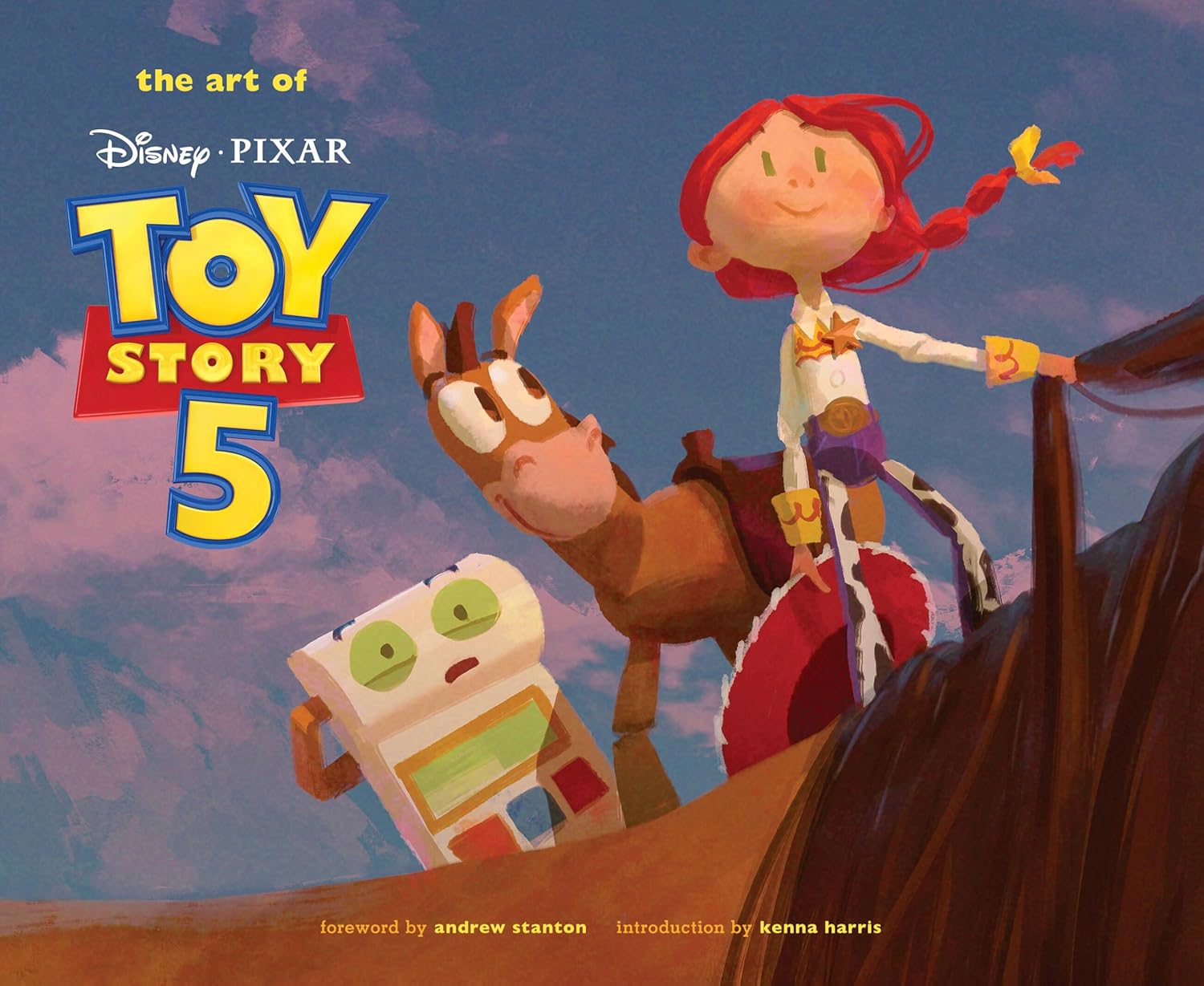
Fans looking to dive deeper into the creative process behind both the box office and artistic success of Toy Story 5 will want to pick up the latest installment in Chronicle Books' acclaimed "Art Of" series. The Art of Toy Story 5 features a foreword by director Andrew Stanton and an introduction from co-director Kenna Harris, setting the stage for a fascinating look behind the curtain of Pixar's latest adventure. Packed with concept art, storyboards, character explorations, and production paintings, the volume chronicles every stage of the filmmaking process while also featuring insightful commentary from the artists, writers, and filmmakers who brought the project to life.
The book opens with a deep dive into the film's memorable "Multi-Buzz" sequence, one of the most visually ambitious openings in the franchise's history. According to Stanton, the scene was one of the earliest concepts developed for the film. "Rarely do writers hear the phrase 'Write whatever you want' on a project, but that's exactly how my involvement with Toy Story 5 began," Stanton explains. "The Multi-Buzz opening was the first thing I wrote, and it never changed. Like the 'Green Army Men' sequence in Toy Story, it was born from a pure, inner-child desire."
While the sequence remained remarkably consistent from conception to completion, the book illustrates just how much artistic exploration occurred along the way. Readers can follow the scene's evolution from rough story sketches to finished animation while learning how production designer Bob Pauley and his team approached creating an entirely new interpretation of Buzz Lightyear and his fellow stranded space rangers.
Of course, while Woody and Buzz remain central to the identity of the franchise, Toy Story 5 ultimately belongs to Jessie. With Woody no longer serving as the leader of Bonnie's toys, Jessie has stepped into that role, creating a new dynamic within Bonnie's room. The book provides fascinating insight into how the filmmakers approached Jessie's expanded role and evolving relationships, particularly her growing connection with Buzz.
Interestingly, Jessie's story does not begin with the emotional moments many viewers may expect. Instead, the film opens with the wedding of Forky and Karen, a sequence that perfectly showcases Bonnie's boundless imagination. One of the book's greatest strengths is its ability to explain the visual logic behind these imaginative playtime moments. In Bonnie's world, rules are flexible, scale is irrelevant, and anything can happen. Through concept art and artist commentary, readers gain a greater appreciation for how Pixar translates a child's imagination into cinematic storytelling.
Speaking of Bonnie, one particularly fascinating detail that I completely missed while watching the film involves her visual progression throughout the story. Character designer Deanna Marsigliese reveals that Bonnie's wardrobe subtly reflects her emotional journey. "Bonnie's wardrobe reflects her transition from colorful playtime to monochromatic screen time, followed by disconnection from herself and, finally, her discovery of an imaginative balance between the two worlds." Seeing the various costume concepts side by side in the book makes this storytelling choice especially effective and demonstrates the extraordinary level of detail Pixar artists bring to every frame.
One of the book's most delightful surprises is a special inset manual dedicated to Lilypad. The section tracks the character's development across production and highlights the extensive thought that went into even the smallest performance details. Artists carefully considered how much movement Lilypad should be capable of when being manipulated as a toy by Bonnie versus how the character would move independently when interacting with the other toys. It is exactly the kind of nuanced world-building that fans of Pixar's creative process will appreciate.
Disney fans will also enjoy learning more about the film's unexpected Bambi-inspired sequence, which serves as a striking visual and emotional contrast to the high-energy Multi-Buzz opening. Elsewhere, readers will discover that the initial design for Smarty Pants originated from an intern, proving that great ideas can come from anywhere within Pixar's collaborative environment. The book also offers closer looks at the Multi-Buzz team's stable of horses and numerous supporting characters whose screen time may leave viewers wanting more.
As with many entries in the "Art Of" series, some of the most fascinating material involves concepts that never made it into the finished film. Readers are introduced to abandoned characters such as Calamity Cow, Pirate Polly, and the memorably named Hannah Montana Fofannah Banana. The book also reveals several alternate story directions that were considered during development.
Among the most intriguing is an earlier version of Jessie's storyline. At one point, Bullseye accompanied Jessie on a journey to reconnect with her original owner, Charlie. Later versions shifted the focus toward Emily, the beloved owner from Jessie's Song in Toy Story 2. One especially emotional sequence would have featured Jessie reuniting with an elderly Emily, now a grandmother herself. While the filmmakers ultimately chose a different path, the concept art and story discussions make it easy to imagine how moving that scene could have been.
Perhaps the most compelling takeaway from The Art of Toy Story 5 is the sense of joy that permeates every page. The book makes it clear that Pixar's artists view the filmmaking process as an extension of play itself. Story artist Austin Madison captures this sentiment perfectly when he reflects on the franchise's origins.
"The very first scene of the very first Pixar film was a kid's playtime. You could say that spirit of imaginative play launched the studio. I was eleven years old when I saw that film, so to storyboard a brand-new playtime thirty years later was an absolute joy."
Madison goes on to note that because so much of a Toy Story film takes place only inches off the ground, these playtime sequences provide artists with opportunities to expand the visual scale, explore entirely new genres, and unleash their creativity in ways that would otherwise be impossible. It is a reminder that, despite all the technical innovation and artistic craftsmanship on display, the heart of Toy Story remains rooted in imagination.
By the time readers reach the final page, they will have gained a newfound appreciation not only for Toy Story 5 itself but also for the collaborative spirit that continues to drive Pixar Animation Studios. Whether you're interested in animation, storytelling, character design, or simply love spending time in the world of Woody, Buzz, Jessie, and their friends, The Art of Toy Story 5 is an engaging and rewarding companion piece to the film.
The Art of Toy Story 5 from Chronicle Books is available now.
(Please note this article contains affiliate links. Your purchase will support Laughing Place by providing us a small commission, but will not affect your pricing or user experience. Thank you.)