
Michel den Dulk's Career is a European Fairytale


During a presentation aboard the Disney Vacation Club Member Cruise, Walt Disney Imagineer Michel den Dulk offered members an inside look at the creation of World of Frozen, the new land at Disney Adventure World at Disneyland Paris. However, the presentation was about more than the development of a single project. It was the story of a career shaped by European fairy tales, architectural observation, abandoned concepts, recycled ideas and a lifelong fascination with the people who create themed environments. While he may not be a household name yet, it was fantastic for my fellow members to discover something that I have learned over the past few years, that Michel den Dulk is one of the most endearing individuals in Walt Disney Imagineering history.
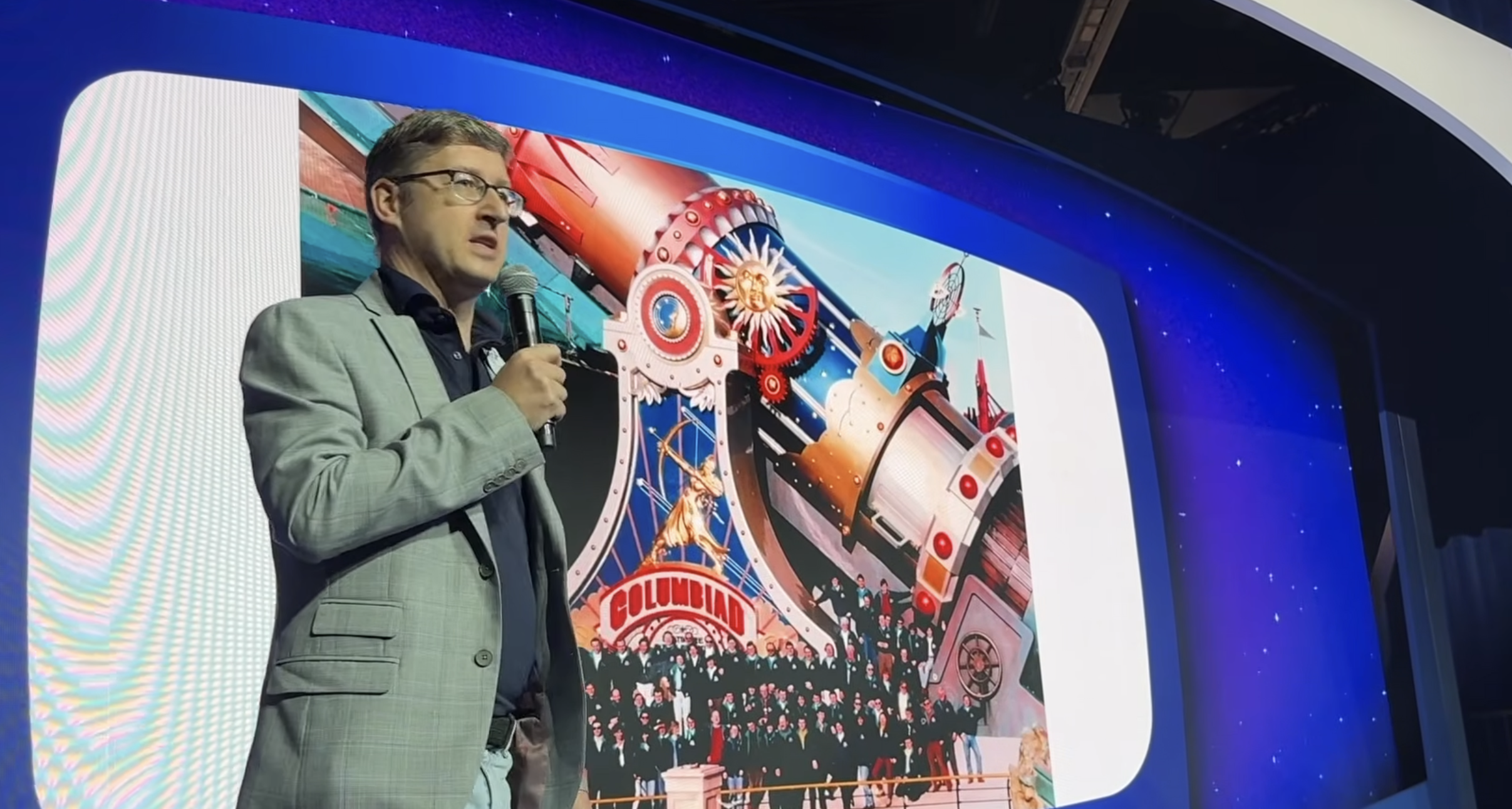
Den Dulk, who serves as the creative executive for Disneyland Paris, has spent approximately 25 years in the themed-entertainment industry, including 16 years with Walt Disney Imagineering. In his current position, he has creative responsibility for projects throughout Disneyland Paris, including its theme parks, hotels and Disney Village. Before revealing the details hidden throughout the Parisian version of Arendelle, den Dulk traced his journey back to the Dutch theme park that inspired his career. Growing up in the Netherlands, he frequently visited Efteling, a fairy-tale park that opened in 1952, three years before Disneyland.
Just as generations of American Imagineers have spoken about being inspired by childhood visits to Disneyland, den Dulk said Efteling played that role in his life. The park’s early visual identity was largely established by Dutch illustrator Anton Pieck, whose muted colors, detailed architecture and distinctive interpretations of classic fairy tales influenced den Dulk’s earliest drawings. As a child, den Dulk did not initially understand that someone had designed the environments he loved. That changed when Dutch television aired a documentary about the creation of Dreamflight, an elaborate dark ride developed as European theme parks prepared for the 1992 arrival of what was then known as Euro Disneyland.
“That’s the first time when I realized somebody is actually drawing these things that I love in that park, and that’s a job,” den Dulk recalled. “From now on, I’m not going to be a pirate or a bus driver or a doctor. I’m going to be a designer for rides.”
Den Dulk eventually joined Efteling as an intern before becoming a junior designer. Because the park’s creative department was comparatively small, he could not specialize in only one element of a project. He designed buildings, sets and decorative details, then helped oversee the translation of those drawings into physical environments. He describes that approach as the “Swiss Army knife philosophy.” Instead of handing an initial concept to numerous departments, den Dulk learned to carry an idea from its earliest sketch through detailed design and installation. That experience would continue to shape the way he worked after joining Imagineering.
One of his most significant Efteling projects was an attraction based on Hans Christian Andersen’s The Little Match Girl. Den Dulk created everything from the exterior architecture to the girl’s tiny shoes for an intimate show combining dimensional scenery, projection and an Audio-Animatronic figure.
The attraction did not soften the famously tragic conclusion of Andersen’s story. The little girl dies and is reunited with her grandmother in the afterlife, a scene represented through projection as the pair become a star in the sky. “She dies every four and a half minutes,” den Dulk joked. “But then, after four and a half minutes, you come back, and there she is again.”
Although unusually somber for a theme-park attraction, the project was consistent with Efteling’s willingness to take fairy tales and their literary heritage seriously. It also caught the attention of legendary Disney Imagineer Tony Baxter, whose work includes Big Thunder Mountain Railroad, Indiana Jones Adventure, Splash Mountain and the original Disneyland Paris.
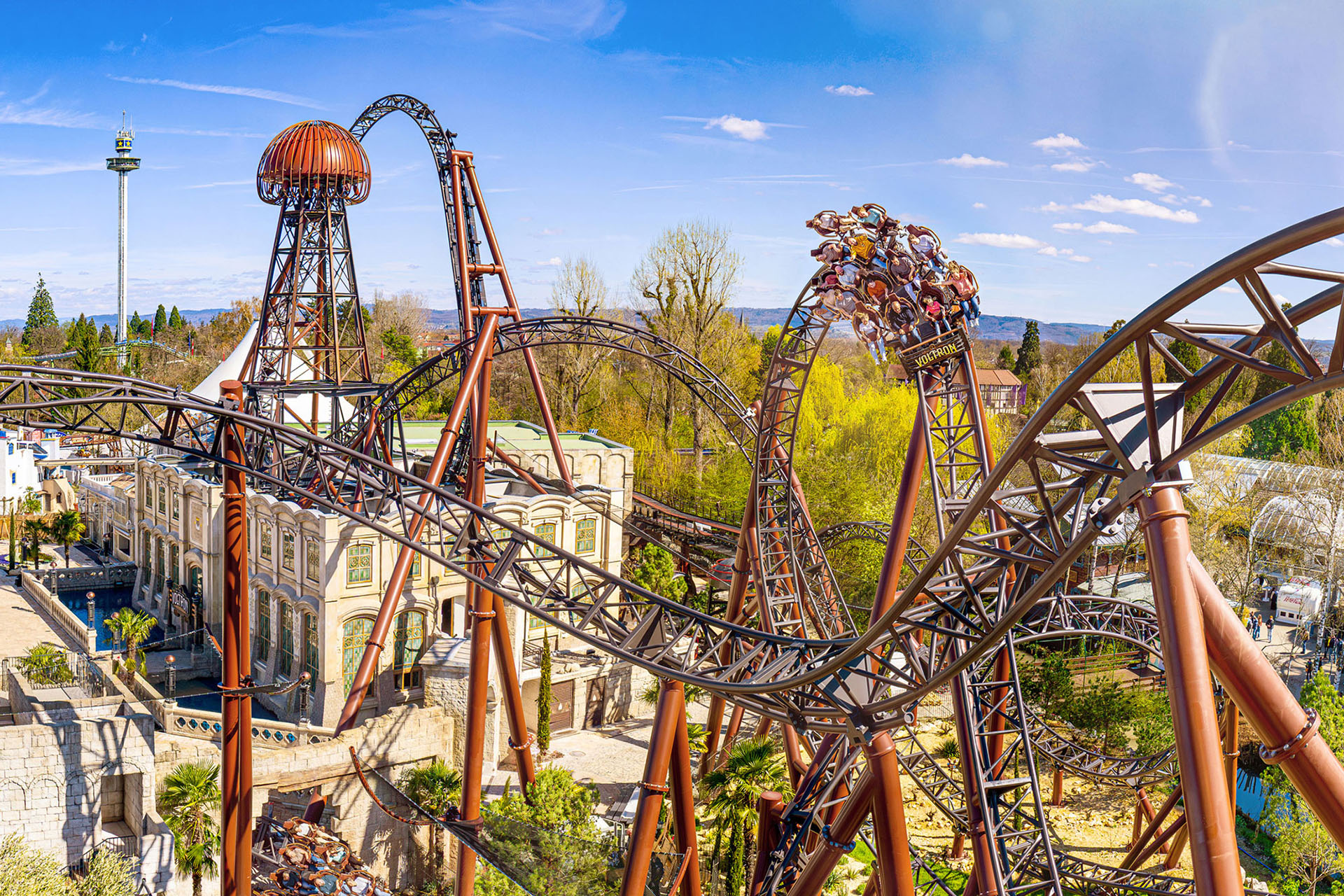
Den Dulk later worked at Germany’s Europa-Park, where he helped develop the park’s Iceland-themed area. Once again, he worked with a small team and produced everything from broad architectural concepts to scaled drawings of brackets and other individual building details. His career changed permanently when Baxter invited him to join Walt Disney Imagineering. Den Dulk moved to California in 2010, describing Baxter as his second great professional mentor. That relationship makes den Dulk’s current stewardship of Disneyland Paris particularly meaningful. Baxter helped lead the creation of the resort’s original castle park, and den Dulk now has the opportunity to protect and expand upon that legacy.
Despite being recruited by one of Imagineering’s most celebrated figures, den Dulk’s first Disney assignment was not an entire attraction or land. Disneyland Paris needed to disguise a black technical booth installed near the park’s central hub for the nighttime spectacular Disney Dreams! Den Dulk designed a detailed exterior that allowed the structure to blend naturally with its Main Street, U.S.A. surroundings. The booth remains in place today, and he said it still brings a smile to his face whenever he passes it.
His first major Imagineering assignment followed with Fantasy Faire at Disneyland. Constructed in the former Carnation Plaza Gardens area, the project created a permanent home for Disney’s princesses immediately beside Sleeping Beauty Castle. Because Disneyland’s castle is relatively small, den Dulk was concerned that the new development could overpower it. He visited Fantasyland early one morning and studied the height of the Peter Pan’s Flight tower. Since that structure coexisted comfortably with the castle, he used it to establish the maximum height of Fantasy Faire’s tallest tower.
The finished area is filled with small details, including Clopin’s Music Box and Figaro watching a bird from a window ledge. The latter fulfilled an idea den Dulk had unsuccessfully proposed years earlier for Efteling: a simple animated scene featuring a cat stalking birds. The concept finally found a home at Disneyland, modified to feature the mischievous kitten from Pinocchio. Den Dulk also incorporated a prominent village fountain into Fantasy Faire. Inspired by the fountains, statues and monuments that serve as focal points in European public squares, similar features became a recurring element of his work. That tradition would ultimately continue in World of Frozen.
Den Dulk’s long creative relationship with Frozen began in the summer of 2013, before the original film opened in theaters. Because the movie took loose inspiration from Hans Christian Andersen’s The Snow Queen, he attended an early screening without knowing much about Disney’s interpretation. He immediately recognized the Norwegian and Scandinavian influences, including Arendelle’s stave church-inspired castle. Those details prompted den Dulk to wonder whether the film could find a home in EPCOT’s Norway pavilion. That idea eventually became Frozen Ever After. While the attraction replaced the beloved Maelstrom, den Dulk noted that the former ride had low attendance and guest ratings, and EPCOT had considered replacing it long before Frozen arrived.
Frozen Ever After retained Maelstrom’s ride system, including the moment when its boats travel backward. Den Dulk repeatedly rode the original attraction while considering how that movement could support the new story. He eventually paired the backward sequence with Elsa’s performance of “Let It Go.” “Wouldn’t it be cool if she was singing ‘Let It Go’ right when the boats are pushed out?” he remembered thinking. Although the surrounding scene evolved considerably during development, that central idea remained in the finished attraction.
The ride also deliberately delays Elsa’s first appearance. Guests encounter Olaf, Sven, the trolls, Anna and Kristoff before finally seeing the character many of them most eagerly anticipate. “We build up the anticipation,” den Dulk explained. “When is she appearing? When is she appearing? And then she appears in the middle of the ride.”
Den Dulk also designed the Royal Sommerhus meet-and-greet location, expanding the Norway pavilion beyond its original village setting with a structure inspired by a historic country home near Trondheim. Although the exterior avoids overtly duplicating locations from the film, a crocus flower above the entrance subtly references the royal family of Arendelle. Den Dulk later incorporated the Royal Sommerhus into a painting created for World of Frozen. The imagined scene places the building within the kingdom of Arendelle, with the castle visible across the fjord. The artwork can now be found inside the restaurants in both Hong Kong and Paris.
Following the phenomenal success of Frozen, additional projects began arriving on den Dulk’s desk. An early proposal for Tokyo DisneySea marked his first attempt to translate the movie into a complete themed land rather than integrate it into an existing pavilion. The original concept was intended for an undeveloped area between Port Discovery and the Indiana Jones Adventure attraction. It later moved beyond the existing park into a larger expansion that included Tangled, Peter Pan and a hotel. Those ideas eventually evolved into Fantasy Springs, although den Dulk departed the project before its completion.
He next turned his attention to World of Frozen at Hong Kong Disneyland. During his first visit, den Dulk was immediately struck by the natural mountains surrounding the resort. Although Hong Kong has a tropical climate, the mountains visible from inside Disneyland do not prominently display palm trees and could therefore become part of the visual storytelling. The land was carefully positioned so the real mountains add depth behind Imagineering’s artificial rockwork. From within Arendelle, the North Mountain appears to be the kingdom’s tallest point, with the distant natural landscape forming additional layers beneath it.
World of Frozen at Disneyland Paris presented a different challenge. The original Walt Disney Studios Park lacked both the detail of the neighboring Disneyland Park and a satisfying physical layout. Much of the park followed a boomerang-shaped path, with few opportunities for exploration and limited greenery. In 2017, Disney committed to transforming the park with a massive expansion. That transformation ultimately included a new name, Disney Adventure World, along with Adventure Way, Adventure Bay and World of Frozen.
Adventure Way serves as the connective tissue between the original park and its new lands. Den Dulk envisioned it as a green corridor filled with gardens, restaurants and family attractions, giving guests a more beautiful and leisurely route toward Adventure Bay and Arendelle. Its design takes inspiration from European pleasure gardens, including Tivoli Gardens in Copenhagen, but its architectural language was developed specifically for Disney Adventure World. Rather than recreating a location from one particular film, the area establishes an original identity into which Disney stories can be woven.
Den Dulk also commissioned French film composer Philippe Rombi to create original music for the promenade. Instead of assembling familiar Disney songs, he wanted a theme written specifically for the environment. “It’s very idyllic, very romantic, and really brings you into the mood of calming, winding down as you stroll over the new promenade,” den Dulk said.
The expansion also improves connections with existing areas. Toy Story Playland, once squeezed behind other elements without a strong sense of arrival, now has a formal entrance and adjoining garden. The Gazebo Garden provides space for entertainment, character appearances and relaxation among bronze sculptures of characters including Peter Pan and Winnie the Pooh. Raiponce Tangled Spin, a covered teacup-style attraction, brings the world of “Tangled” into Adventure Way without literally recreating Rapunzel’s tower or the Snuggly Duckling. Murals inside the attraction conceal acoustic materials, while detailed lighting transforms the structure after sunset.
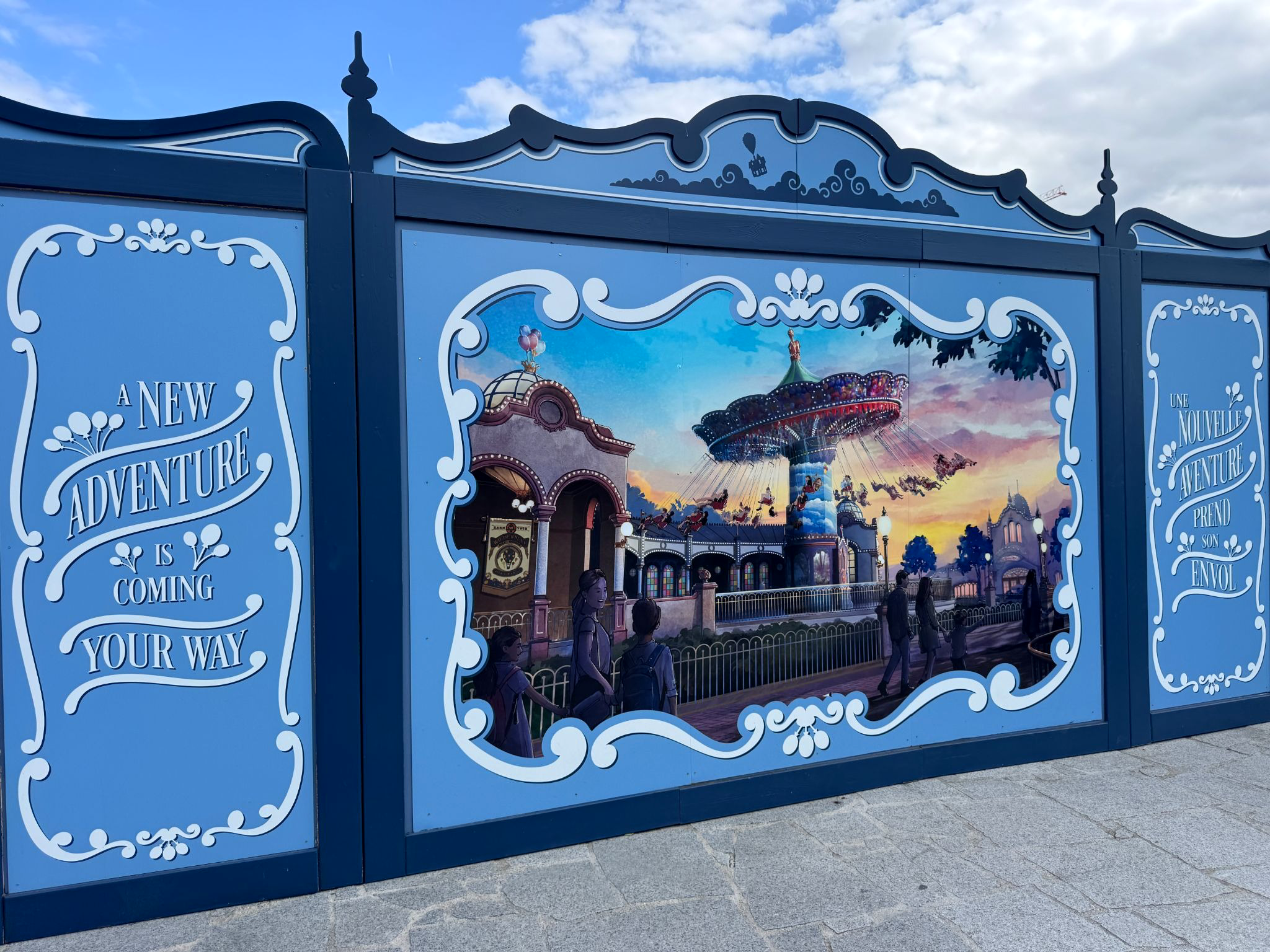
A family-friendly Up wave-swinger attraction is also under development. Its overall form remains consistent with Adventure Way’s original architectural style, with references to the Pixar film incorporated through details such as Carl Fredricksen’s balloon-covered house. An organ near the entrance will come to life as the attraction begins, with a small character conducting its music.
The Regal View Restaurant & Lounge represents the culmination of Adventure Way’s design language. The elegant lakeside restaurant offers character dining with Disney princesses, while its adjoining lounge is the first bar located within the boundaries of Disneyland Paris’ second park. Its architecture also revives an idea from den Dulk’s abandoned design for the Fantasy Springs hotel. A long arcade of windows, oval motifs and surrounding decorative elements were reinterpreted for the Paris restaurant. Even the salmon, green and plaster color palette connects the two projects.
Inside, the restaurant includes authentic Royal Delft porcelain plates, a detail particularly meaningful to the Dutch-born designer. The lounge takes loose inspiration from the work of Disney Legend Eyvind Earle, creating a subtle visual connection to Sleeping Beauty Castle at Disneyland Park. The restaurant overlooks Adventure Bay, home to the first nighttime spectacular in the second park’s history. With fountains, water screens, aerial drones, aquatic drones and pyrotechnics arranged in a 360-degree format, the show allows both Disneyland Paris parks to remain active into the evening.
World of Frozen stands across Adventure Bay as the visual destination at the end of the park’s expanded promenade. Early sketches already showed Arendelle Castle, the North Mountain and a prominent overlook designed to give guests a panoramic view of the village. For den Dulk, scenic composition was essential. World of Frozen includes places specifically designed for guests to pause, lean against a railing and absorb the relationship among the harbor, village, castle and mountains.
The transition from forced-perspective architecture into full-scale streets allows the comparatively small royal castle and distant mountains to feel larger than they are. Once guests enter the village, richly detailed storefronts, boats, water and architectural textures create a level of immersion previously associated with Disneyland Park rather than its neighboring gate. “The level of detail that we know and love from the first park is finally being brought also to our second park,” den Dulk said. “Elsa’s ice palace there on the mountain is of a scale and an immersion that really is so welcome.”
Water was particularly important because Arendelle is presented as a harbor town. World of Frozen includes docks, prop boats and carefully composed waterfront views. Paris also features a unique boat-based show performed several times each day, with Anna, Elsa and Olaf appearing to a new song written by Kristen Anderson-Lopez and Robert Lopez.
The land is also home to a free-roaming Olaf figure developed by Walt Disney Imagineering Research & Development. Den Dulk recalled the first time he saw the finished character moving through the actual land on a quiet winter day. The development team initially kept Olaf hidden before allowing him to emerge unexpectedly from around a corner. “He was walking around with typical Olaf mannerisms, and it was the cutest and most amazing thing to see in the context that we built around it,” den Dulk said. Following Imagineering’s work on free-roaming droids for Star Wars environments, he believes Olaf points toward even more possibilities for interactive characters in Disney parks.
Many of the land’s most unusual design choices originated with den Dulk’s research trips to Norway. The entrance to Nordic Crowns Tavern, for example, appears oddly positioned between purple and yellow facades rather than centered beneath either building.That arrangement was inspired by historic structures in Bergen, where neighboring buildings were connected above a narrow alley. From the front, the passage can resemble a single doorway shared by two houses. The colors of the restaurant’s facades add another layer to the story. One building represents Anna and the other Elsa, with the connected structures appearing to embrace one another just as the sisters do.
The restaurant’s interior uses extensive woodwork to reflect Scandinavia’s architectural traditions, while a cat seen in “Olaf’s Frozen Adventure” appears among its decorative details. The Arendelle Boutique continues den Dulk’s recurring interest in Hans Christian Andersen with references to “The Steadfast Tin Soldier,” including the soldier and the ballerina he loves.
Guests can also enter Arendelle Castle to meet Anna and Elsa in a richly detailed reception room. The entrance is composed so the castle is framed by the surrounding tower and marquee, turning even the approach to the character experience into a carefully designed view.
Frozen Ever After anchors the land. While it follows the same basic celebratory story as EPCOT’s attraction, the Paris version is approximately 90 seconds longer, with more elaborate sets and fully mechanical animated faces. It represents the continued evolution of the attraction den Dulk first conceived more than a decade earlier.
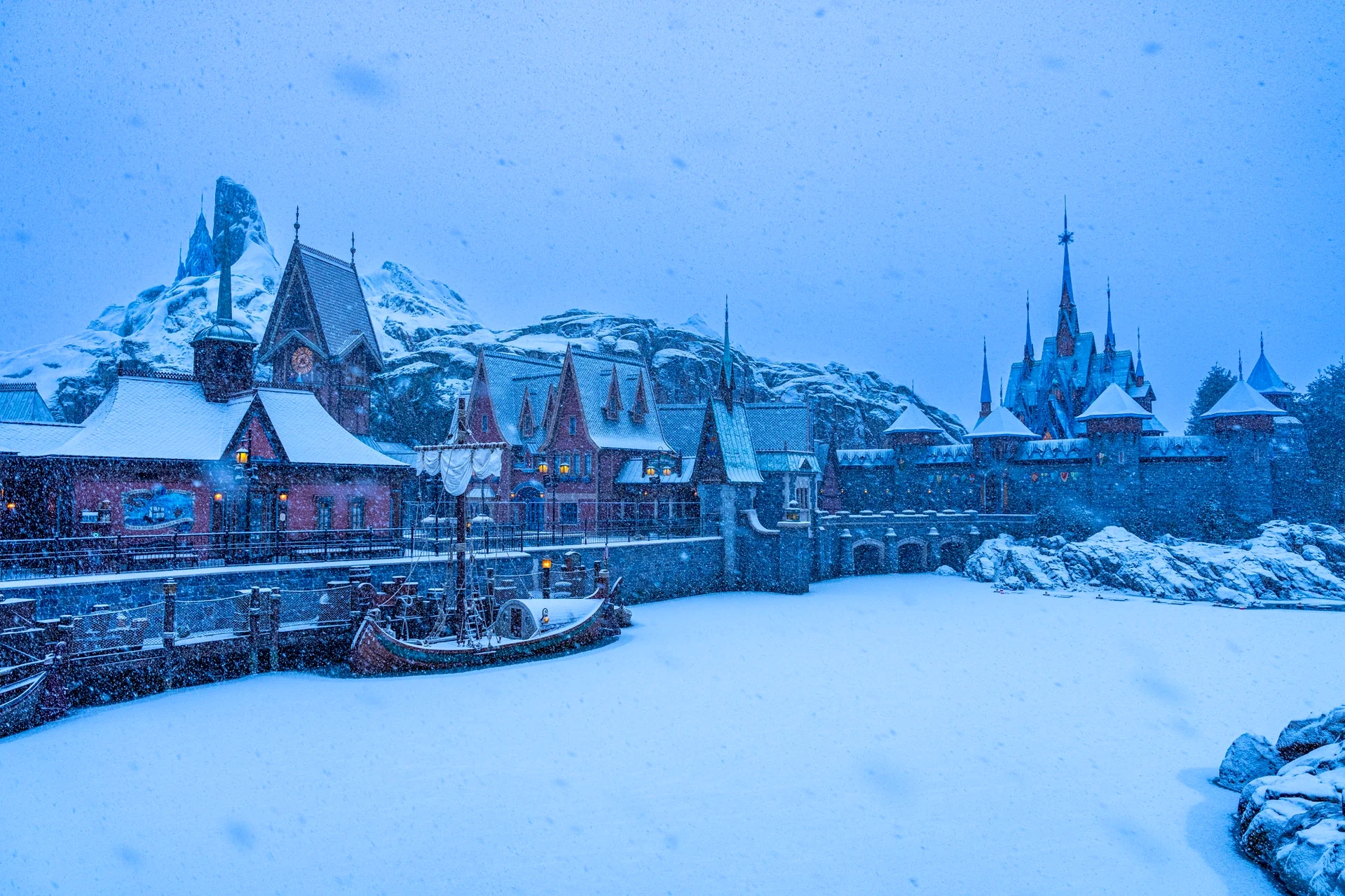
Paris also offers one atmospheric advantage that cannot be manufactured: real winter weather. Den Dulk displayed a photograph of Arendelle covered in snow during the winter before the land opened, emphasizing that the image was genuine rather than generated by artificial intelligence. The warm lights of the village contrasted with the cool stone and snow, demonstrating one of den Dulk’s central beliefs about the land. A guest does not necessarily need to love “Frozen,” or even know the films particularly well, to appreciate the environment. “It looks inviting and charming,” den Dulk said. “It’s a great old-world world that you can explore, and that is separate from the film itself. If you love ‘Frozen,’ then it’s maybe even better because you can find things you love from the film within this world. But you don’t need to know the film or enjoy the film for you to enjoy this type of environment in our parks.”
A finished poster for World of Frozen marked the conclusion of den Dulk’s artistic work on a story that has occupied much of his Imagineering career. He joked that he has probably spent more time and company money on “Frozen” than anyone else at Disney, beginning with that prerelease screening in 2013 and continuing through projects in Florida, Tokyo, Hong Kong and Paris.
World of Frozen may be his final Arendelle project for now, but the reinvention of Disney Adventure World is far from complete. The “Up” attraction is already under construction along Adventure Way, while Disney is developing its first land and attraction based on “The Lion King.”
Den Dulk’s presentation showed how World of Frozen emerged not from a single flash of inspiration, but from a lifetime of collected influences. Efteling’s fairy tales, Europa-Park’s small creative teams, Tony Baxter’s mentorship, Norwegian architecture, Dutch porcelain, an unrealized Tokyo hotel and even a cat he once failed to include in another park all found their way into his Disney work.The result is a version of Arendelle that functions both as a tribute to “Frozen” and as a believable European environment in its own right. For den Dulk, it is also the latest chapter in a journey that began when a young boy watching Dutch television first discovered that designing rides could be a real job.
As a Disney fan, it is great to know that Michel den Dulk is at Imagineering. While he has confidence in his work and is proud of his accomplishments, he has not lost his sense of wonder that inspired him to enter the industry in the first place. His enthusiasm for quality, no matter the size of the project, is infectious. With more exciting projects in the future for Disneyland Paris, I am excited to see what he has in store as he turns the page from Frozen to his next great adventure.