
Simplified Walt Disney World Trip Planning? Here's What the New Vacation Planning Experience Beta is All About


Planning a Walt Disney World vacation can require a guest to make dozens of interconnected decisions before ever reaching the checkout page. Historically, this has not been made easier by Disney Experience’s infamously poor guest-facing technology (See my ongoing Disney Cruise Line luggage tag situation for just one example). The good news is that Disney knows there is room for improvement — and the next step on their journey is a new DisneyWorld.com beta that aims to bring booking your next visit into one guided experience. Participating guests will be able to search across broader date ranges, compare resorts side by side, see the best available rate and ask questions tied to their own plans and priorities.
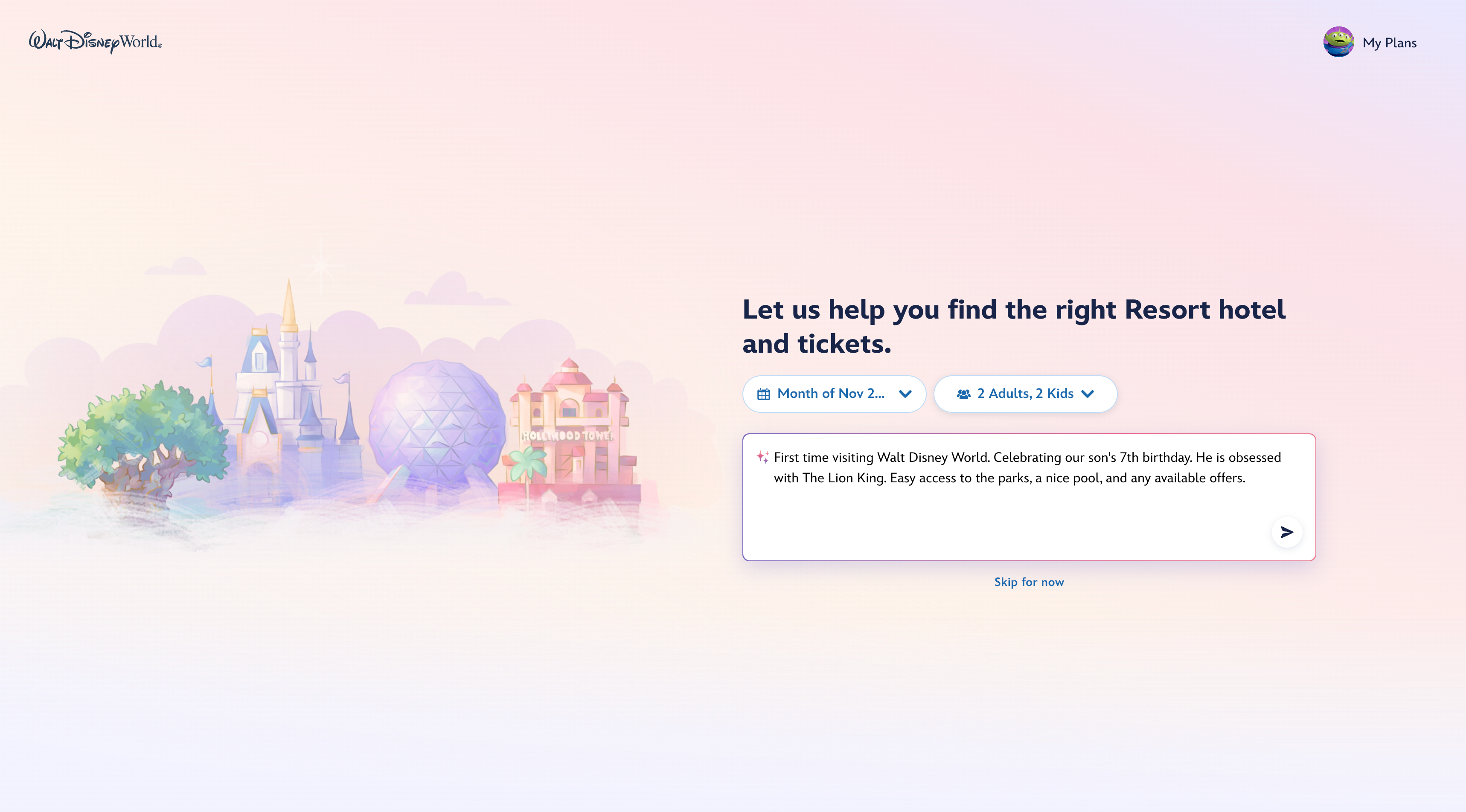
Developed in collaboration with Google Cloud, the new experience combines a redesigned booking flow with a measured use of artificial intelligence. It is important to note that Disney is not replacing the existing resort and ticket search or its human planning resources. Instead, the limited beta adds another path for guests who want more guidance, particularly those who know the kind of trip they want but do not yet know which resort, dates or offer will best fit it.
The experience will initially appear for a randomly selected group of signed-in users in the United States and Canada. Those guests will see a tab labeled “Guided Search Beta” on the DisneyWorld.com homepage. Disney emphasized during a media preview that the label is a description of the test, not a final product name, and that availability will expand in phases as feedback helps shape future versions.
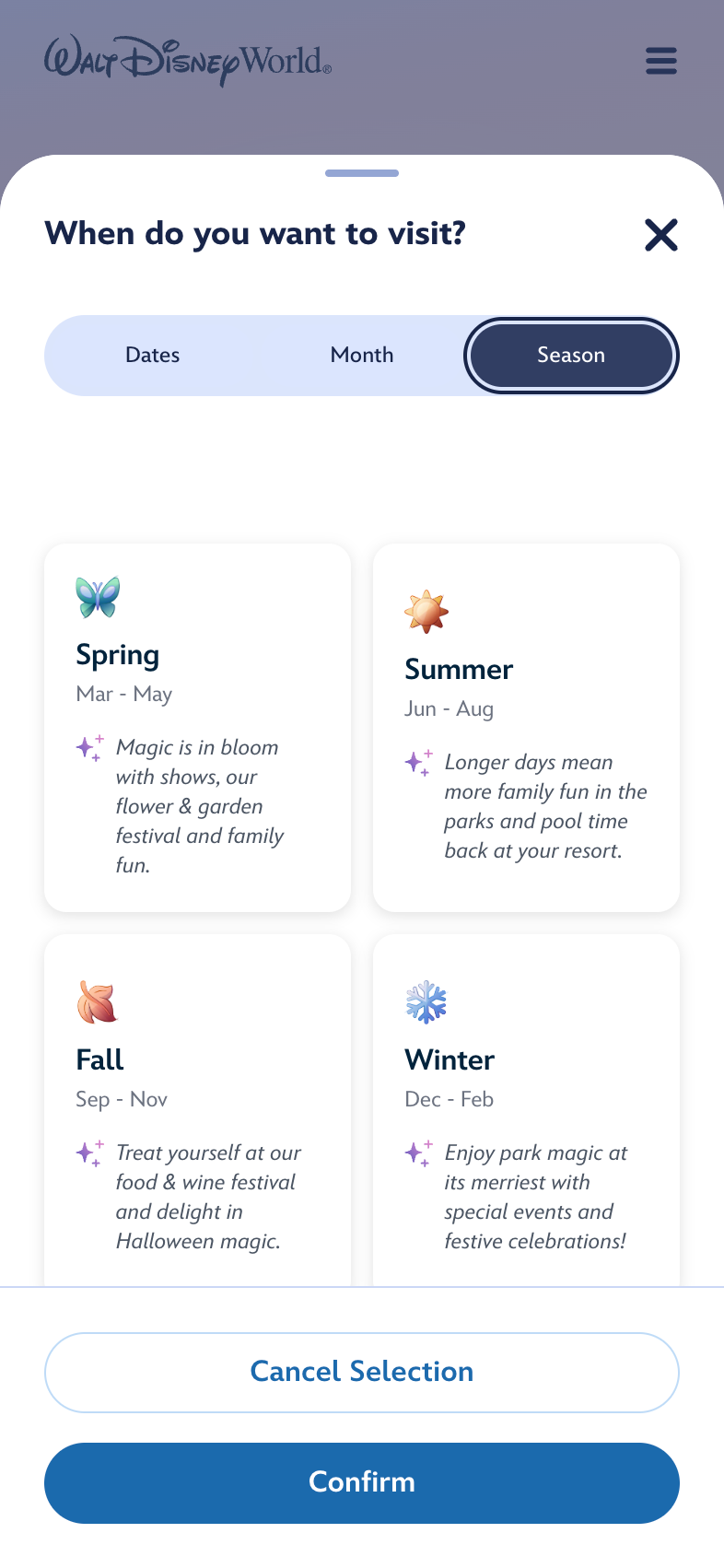
One important improvement is something I faced recently. I knew I wanted to book a trip in the fall but was unsure of my exact dates. Currently, Disney’s existing booking engine generally asks guests to begin with exact travel dates, even when their real plan may not be set in stone quite yet. This beta permits a broader search by season or month while retaining the option to enter exact dates. The system then checks availability and applicable offers across the selected period, giving the guest options to lock in their dates once they see various choices that fit their wishes.
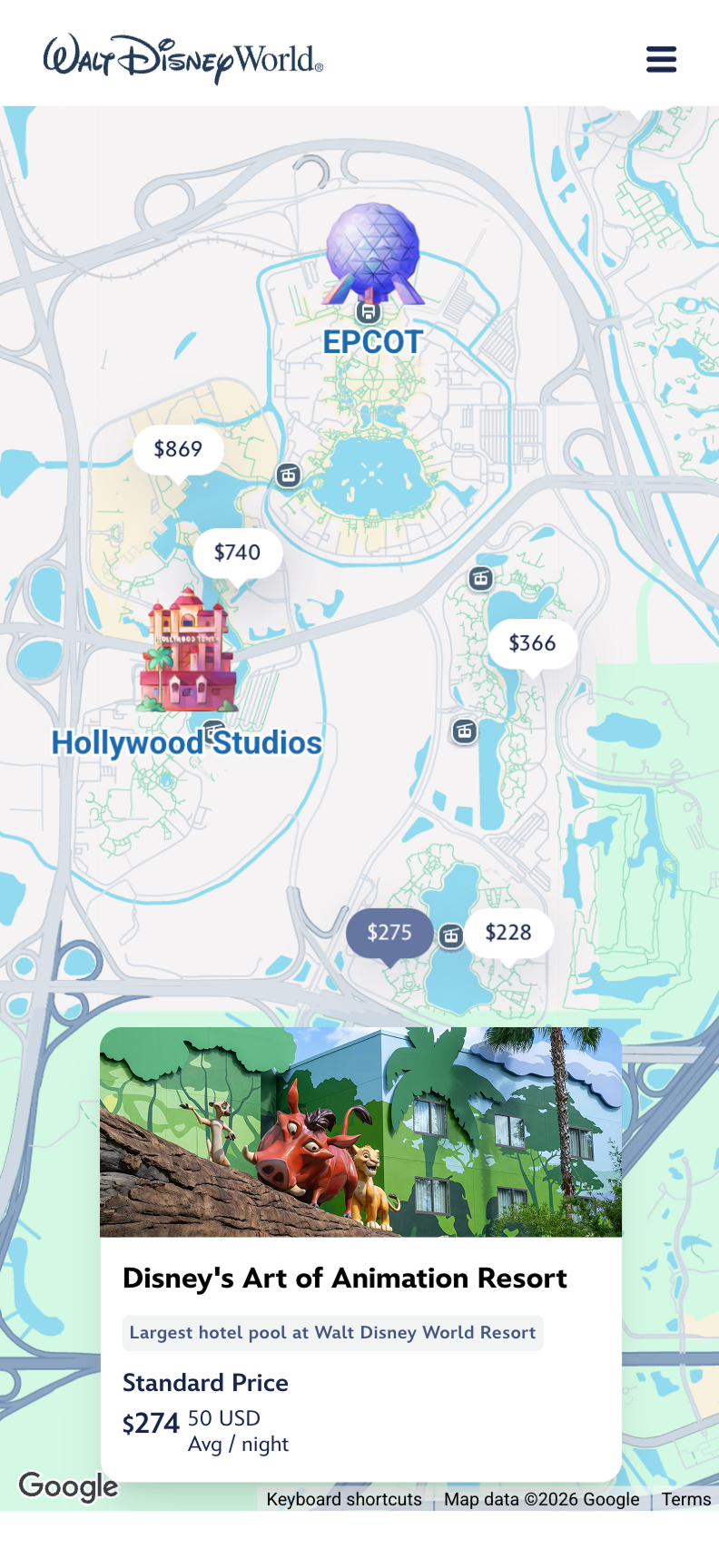
During the demonstration, a hypothetical party of two adults searched for a September trip centered on the EPCOT International Food and Wine Festival and easy access to the theme parks. Rather than requiring separate searches for each resort and promotion, the system returned options matching those priorities and automatically applied the lowest available eligible rate. A map displayed the resorts in relation to the theme parks and to one another, an addition intended to make Walt Disney World’s scale easier to understand for first-time visitors.
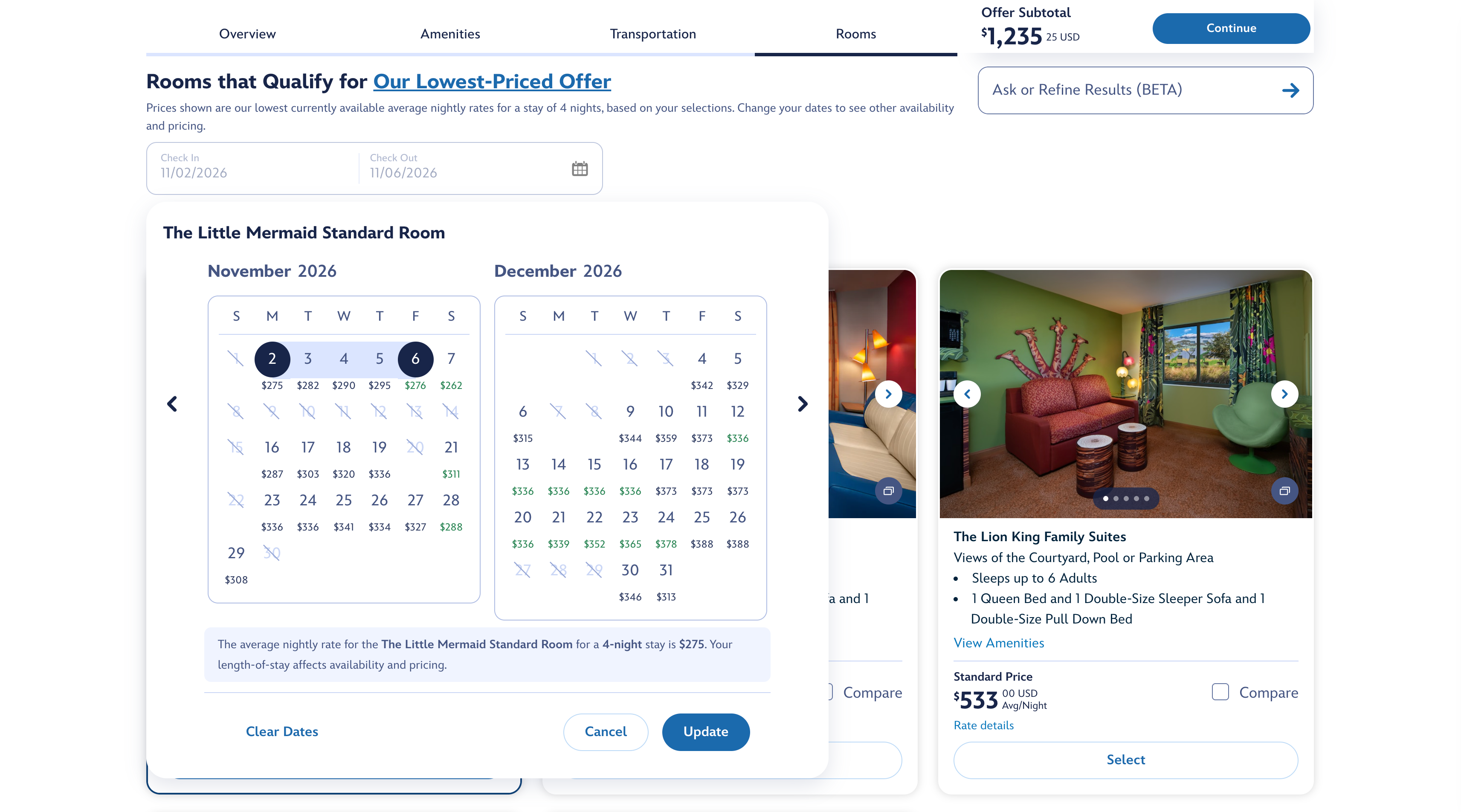
A new pricing and availability calendar then lets guests see how moving their dates could change the price or open additional options. The system checks the available room types, arrival dates, lengths of stay, party composition and applicable offers in the background. One presenter described the result as sifting through “hundreds of thousands of combinations” before bringing forward the best matches for the guest’s search.
Offer eligibility can reflect information already associated with the guest’s Disney profile, such as an Annual Pass or another qualifying affiliation. The initial beta does not analyze a guest’s past trips to build recommendations, and it does not yet handle every complex request such as multiple room reservations or weekends-only searches, but the tools they are offering at launch are a step in the right direction and there is always the possibility for further enhancements in the future.
Moving to the optional AI features, for guests that truly have no idea where to start, they can open an optional free-form field where they can describe their interests in their own words. A family might say that a child loves The Lion King, that a memorable pool matters or that convenient transportation is a priority. The results can then include short AI-generated summaries explaining why a particular resort may fit those requests. In one user test recounted during the preview, a mother who said her daughter loved princesses discovered the Royal Guest Rooms, an option she said she would not otherwise have found.
Disney deliberately chose a semi-structured flow instead of presenting visitors with an empty chatbot. Testing found that some guests did not know what to type when confronted with a completely open prompt. The new design therefore guides users through familiar decisions such as dates and party size, then uses AI where natural-language preferences can add context. Frequent visitors who already know what they want can skip the preference field and still use the broader search, calendar and automated offer comparison.
That division is also intended to make the role of AI clearer. The resort inventory, availability and rate calculations remain part of the booking system outside of the AI environment, while AI is used to interpret the guest’s stated preferences, produce personalized resort summaries and answer follow-up questions. “We’re not trying to steer them in any particular direction,” the Disney team explained. “We’re trying to make it easy for them to understand what their options are and have confidence in their decision-making.”
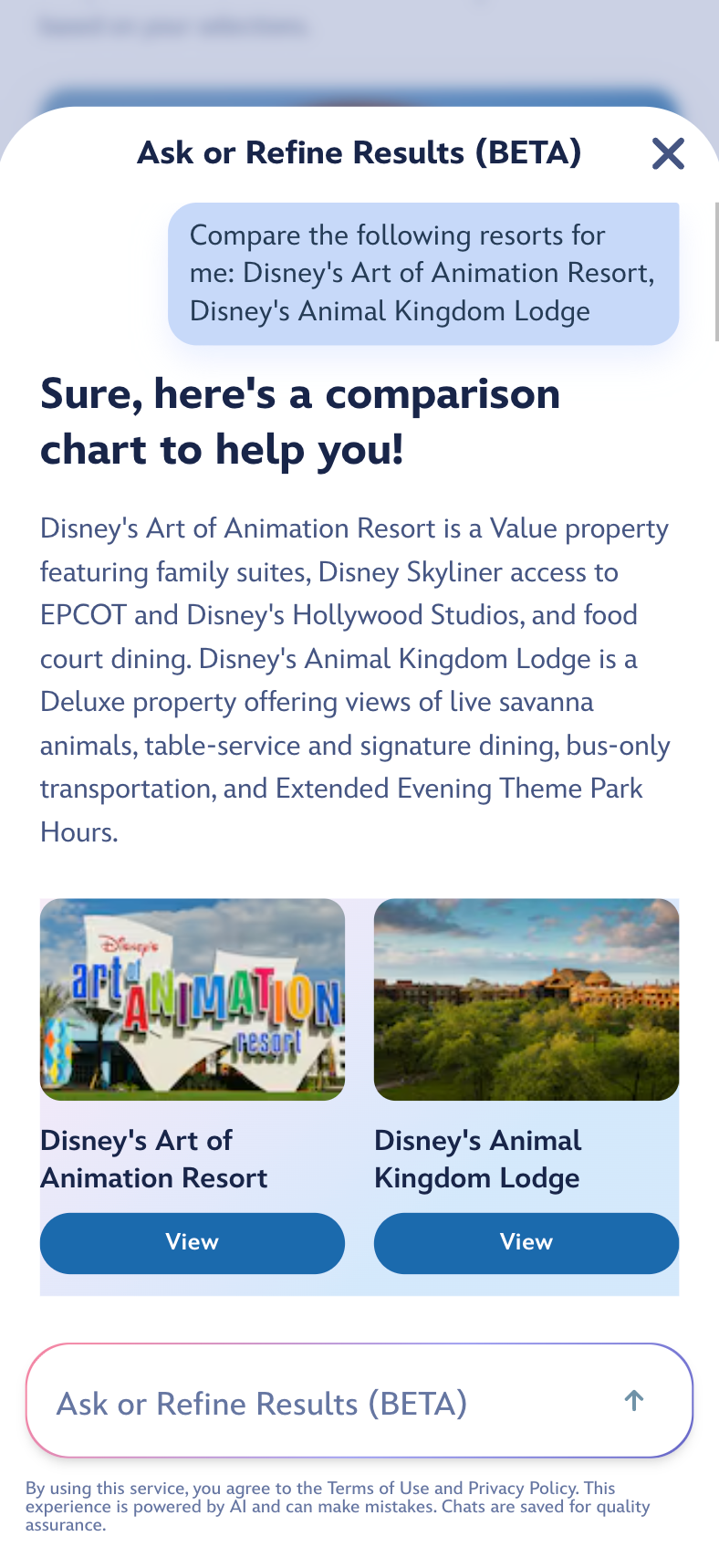
Once guests narrow the choices, they can compare two resorts without opening several browser tabs. The comparison summarizes differences in location, theme, transportation, dining, amenities and benefits, while a resort detail page can include video alongside still photography. A transportation section shows available ways to reach each park and an approximate travel time from the selected resort.
The launch scope is focused primarily on resorts, tickets and vacation packages. The experience can supply information about dining, but it will not make dining reservations or book Lightning Lane selections during the initial beta. Disney expects the range of supported planning topics to broaden over time, informed in part by the questions guests ask and the places where the current system cannot yet provide an answer.
The AI elements use Google Cloud technology, including Gemini Enterprise, while grounding their responses in Disney’s own online and internal information. Disney said it has added guardrails, evaluations and ongoing monitoring to reduce inaccurate or inappropriate responses. If a user persistently asks about something outside the Walt Disney World planning scope, the experience is designed to redirect the conversation and can ultimately point the guest toward a cast member or the contact center.
The team acknowledged the broader trust problem surrounding AI-generated travel advice. Its approach is to show guests why an option has been recommended, connect that reasoning to the preferences they entered and keep the actual booking process inside DisneyWorld.com. The conventional website flow remains available, as do travel advisors and Disney’s call center, and even beta users can avoid the AI functions while still benefiting from the expanded search and pricing tools.
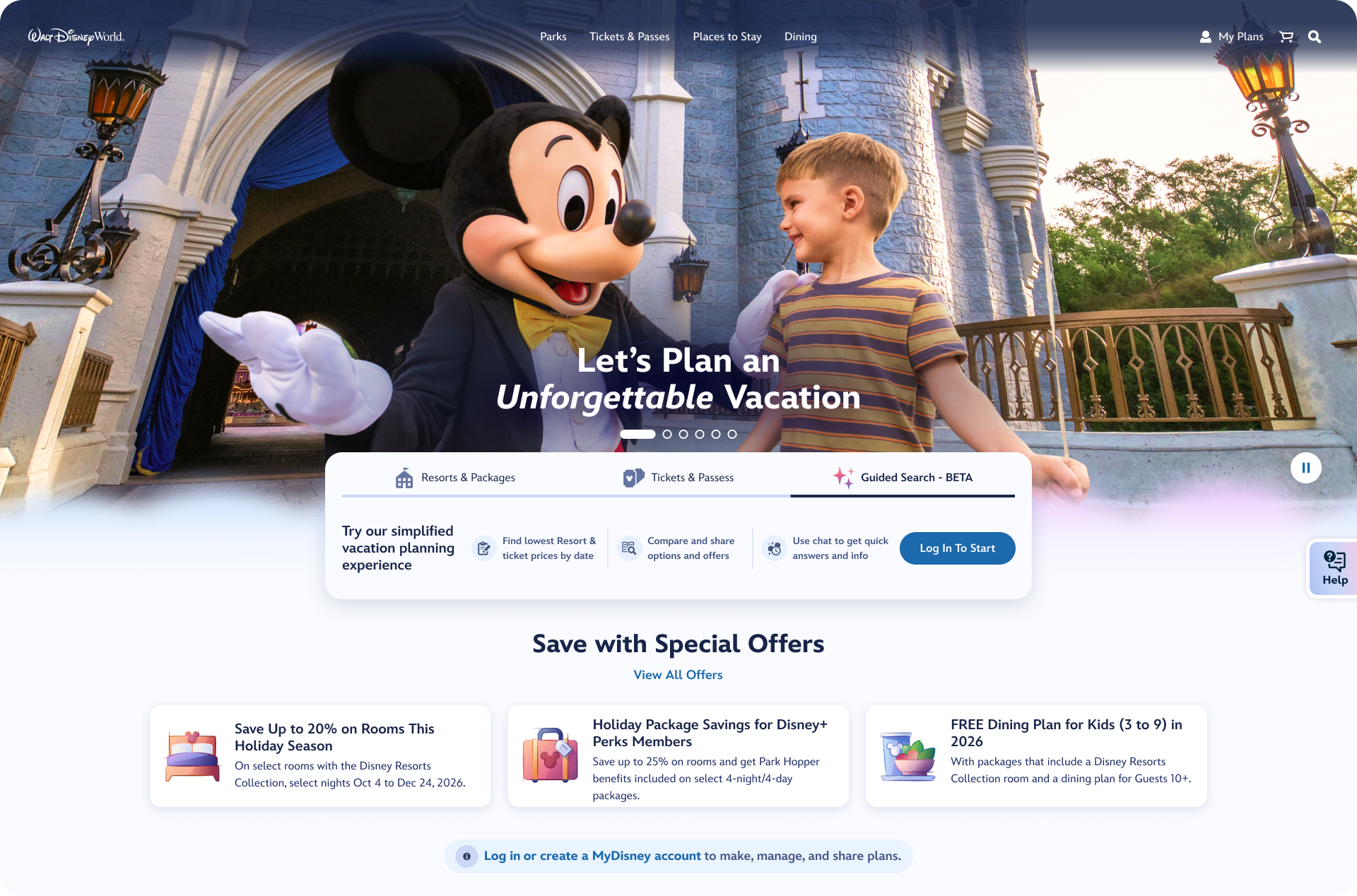
Disney has recently taken other steps to simplify its digital planning tools, including a redesigned DisneyWorld.com homepage with 40 percent fewer links, Spanish translations in the Walt Disney World and Disneyland Resort apps and new search summaries that draw from official Disney information. The company has not yet announced when the vacation-planning beta will begin, only that selected users will be brought into the test and that it will notify media when testing starts.
For guests, the promise is less time repeating searches and more confidence that they understand the tradeoffs before booking. For Disney, the beta is a test of whether flexible search, clearer comparisons and carefully placed AI can make one of the world’s most complicated vacations feel manageable without removing the choices that make each trip personal. The most important measure of success, the team said, will be whether guests find the experience easier and more helpful than the path they use today. Of course, many of these resources are already available by working with a Disney-focused travel agency, but many guests are unaware of that option and these enhancements will offer a version of some of the benefits of being able to have a tool to narrow down your Disney options to fit your wishes. While I do not think I will ever book a Walt Disney World vacation through the website due to the assistance our travel agent provides at no cost, it is good to see the Disney team trying to find ways to improve their digital experience and hopefully will continue in other meaningful ways, particularly in the immediate pre-arrival and post-arrival part of the vacation process. While planning the trip is part of the fun, the real fun comes once you arrive.