
Tigers, 2D, and A Very Special Desk: Sitting With Disney Legend Andreas Deja Before His Directorial Debut "Mushka" Arrives on Major VOD Platforms


It’s always fun when you get to sit with an animation legend, and I recently got the chance to sit with Disney Legend Andreas Deja to talk about his short film, Mushka. After making its rounds through various film festivals, the traditionally animated hand-drawn film will be arriving on major streaming VOD platforms, like Apple TV, Amazon, and Google Play starting on December 15th.
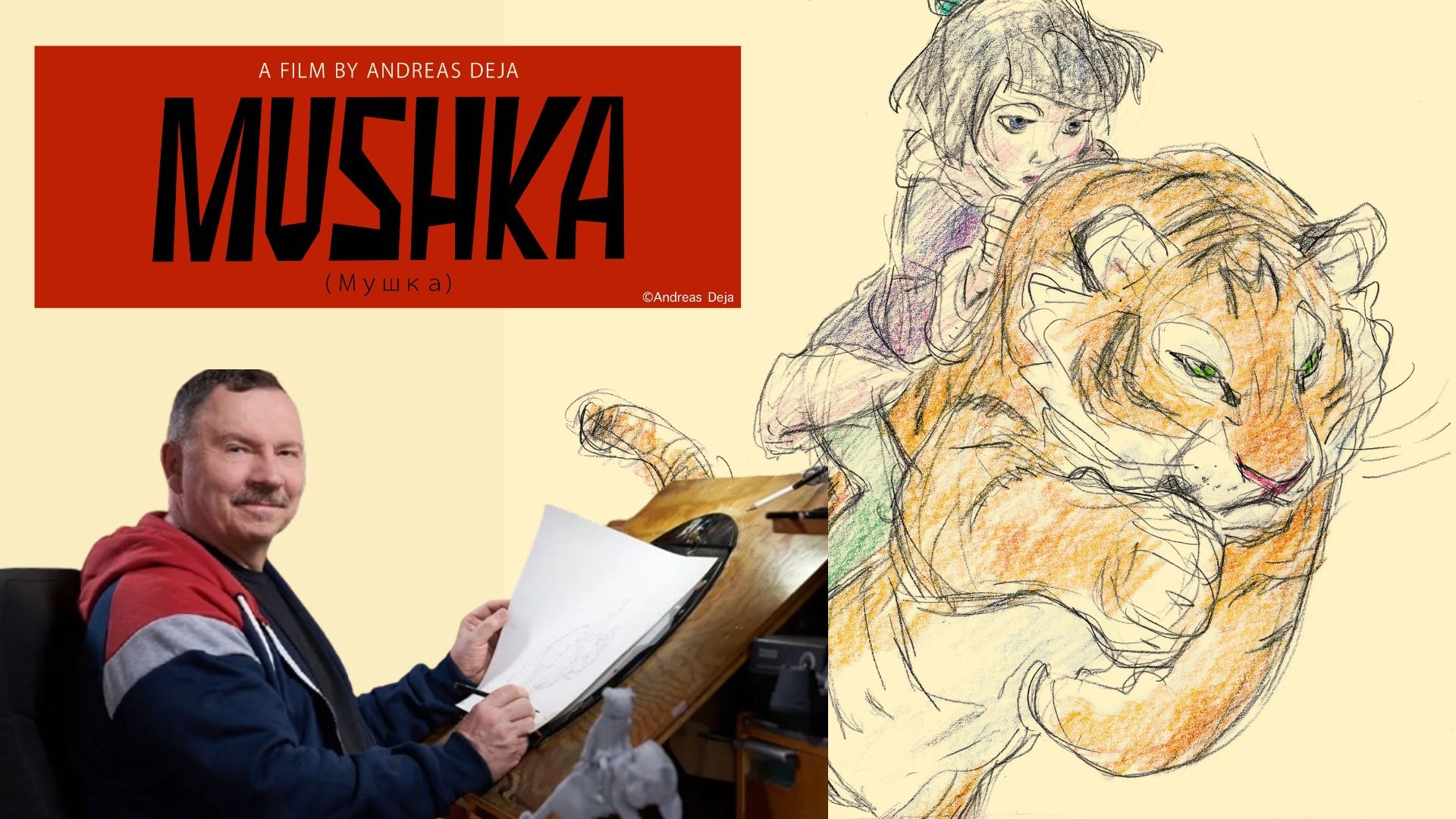
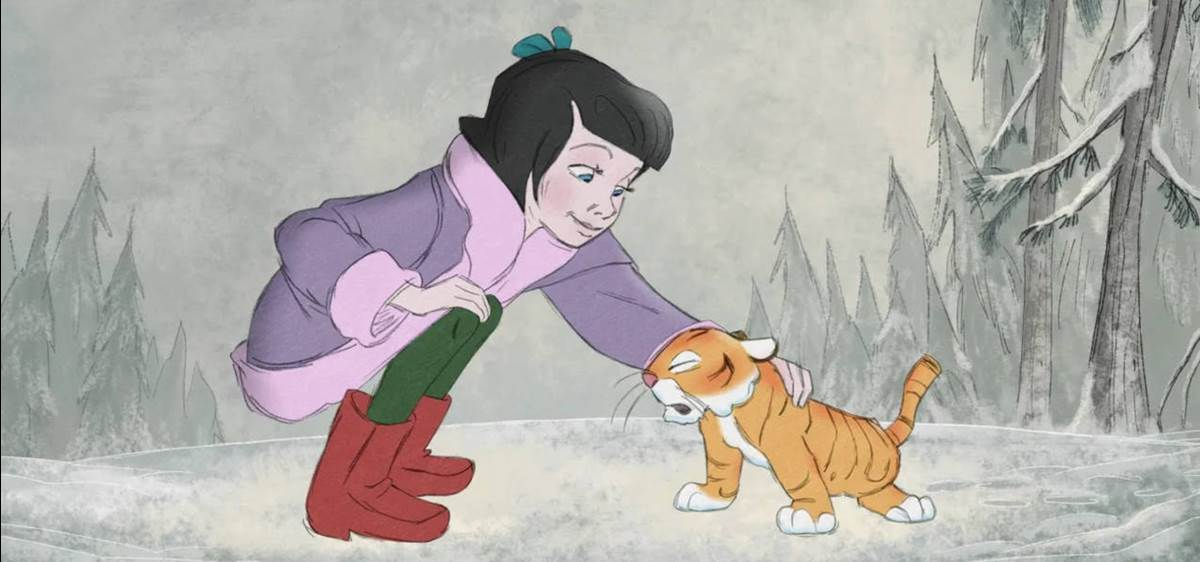
The 28-minute film tells the story of a Ukrainian girl and a Siberian Tiger Cub, and the emotional bond they build together before Sarah has to make a choice to protect the tiger as he grows, especially from the significant threat of some greedy men who know how much the tiger is worth.
Featuring animation reminiscent of the Disney films of the 60s and 70s, I was able to see the film at one of its earliest screenings (if not its first) at the CTN Expo in 2023, where Andreas introduced the film himself to a roaring crowd of animation students, professionals, and enthusiasts. As we talked, I learned a bit more about how this particular event shaped the creation of the film over the years, including the introduction of the legendary Richard Sherman into the projection, adding a song (one of his final efforts) to the film.
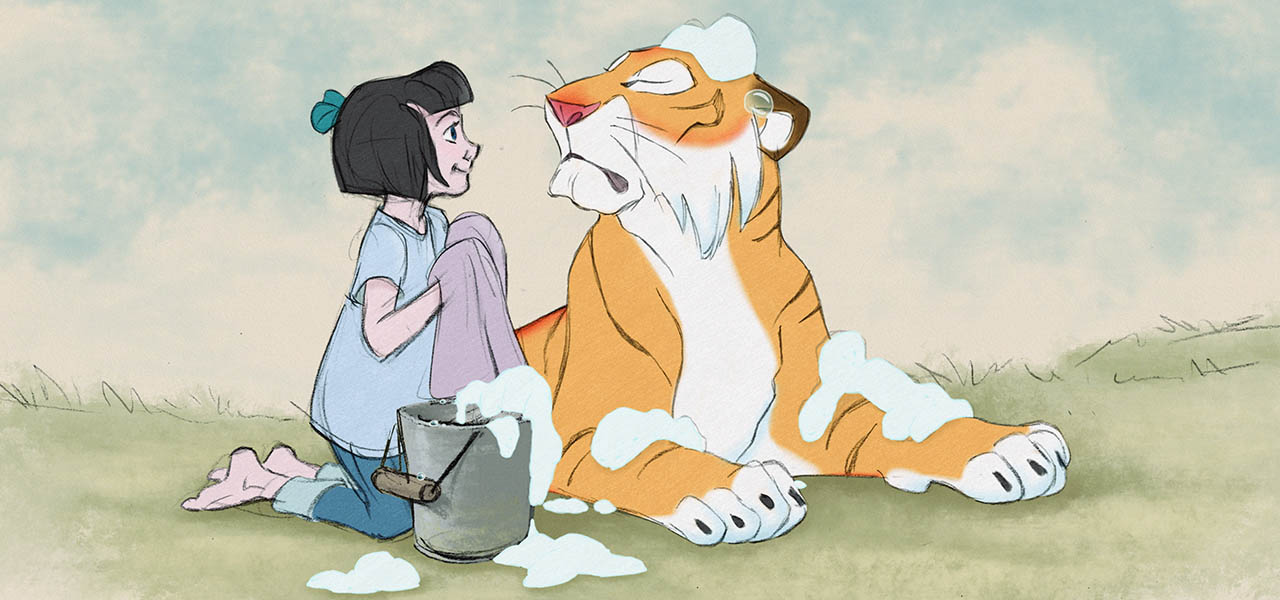
Deja, known for his iconic work shaping many Disney characters, especially some of the most villainous big-bads of the Disney Renaissance - like Scar, Jafar, and Gaston, has a number of things up his sleeve. Though we also know he is on the team helping with the highly-anticipated Villains land that we will see at some point in the future at Walt Disney World, he is also busy showing off his first directorial effort (Mushka) as it gets ready to hit streaming, as well as some other projects we talk a bit about, celebrating two of Walt Disney’s original Nine Old Men.
Tony Betti
We talked when Mushka debuted at CTN Expo.
Andreas Deja
Yeah, a little while ago.
TB
Yeah, a couple of years… 2023, right?
AD
And wouldn't you know, it's finally out! So, big reason to celebrate!
TB
It's been out. You just had to know where to find it.
AD
Well, at film festivals and things like that. But now, everybody can actually watch it. So to me, that's a big deal, obviously.
TB
Obviously! It is a big deal! Because not everybody has seen it - only those at the festival circuits - tell us a little bit about Mushka and the story told there.
AD
Well, I basically made the movie because I wanted to continue in 2D animation. The industry shifted, as we all know, and I still had things to say and things to express with drawing and animation. So I said, okay, now it's my time to create my own project based on the experiences I had at Disney. But of course, now it would be a little bit broader because I would have to wear several hats, not just the animation hat, but direct and work with background painters and art directors and composers. So very, very different from what I had done. And I still animated quite a bit on this film, but again, the responsibilities were much, much broader. But it's a big adventure. It was a huge adventure because there were times early on when I thought, can you even do this? Because you have no experience in storytelling. So let's start with a story.
TB
And that's what I really was asking - how did we land on the idea of Sarah and the Siberian Tiger in the 70s?
AD
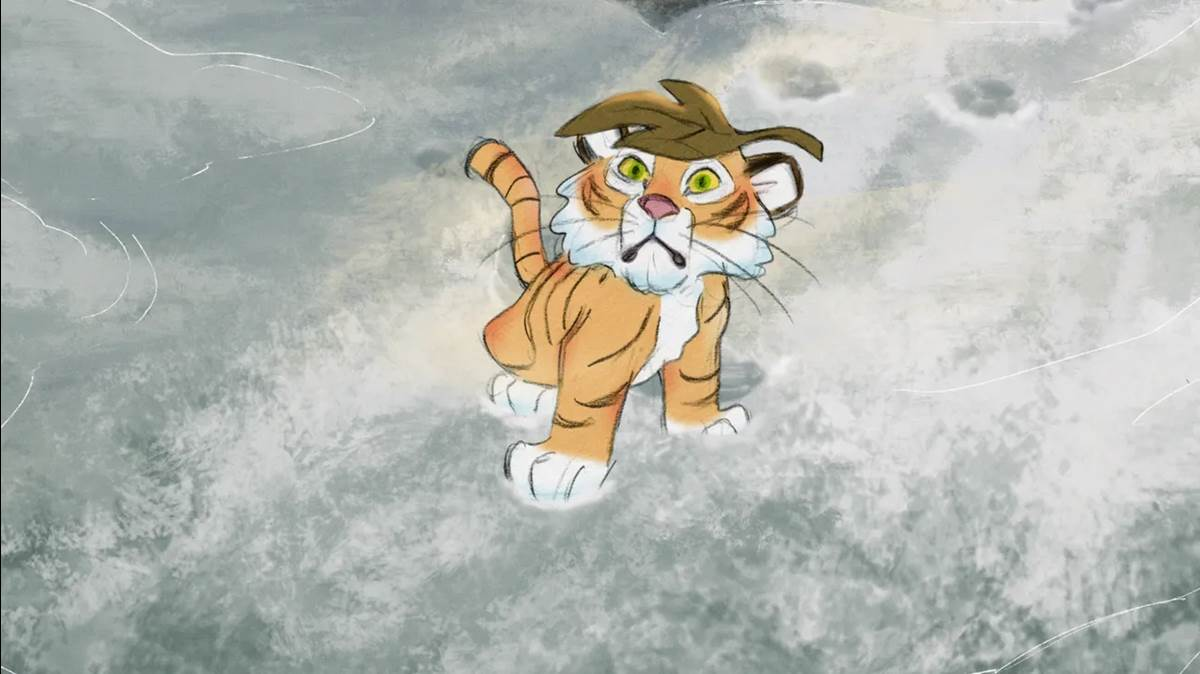
I wanted to do a story with at least one animal in it. And I settled on a tiger because I had some experience with animating big cats from all the studies we did for The Lion King. But a tiger, it really is one of my favorite animals. So let's do a tiger. Maybe you pair that with a new story with a little girl, you know, because the contrast could be kind of interesting for a story. Innocent girl and this big wild animal. So I went with that and I basically figured out the middle part, that she raises him from a tiger cub until he's big and they're bond and then trouble ensues because there are some bad people around those two characters who want to kill Mushka and sell him. She wants to, of course, save him, take him back to the forest where she found him. She hopes that he'll become a wild tiger, stay away from humans. And then that's all I had. That's not really a full story yet. So I needed a beginning and an end and much more. I turned to a friend of mine who was a writer, but he also writes music really well, actually. And just everything artistic, Micah does. He helped me to flesh this out into a screenplay, and he added characters like the grandmother and her father, who this girl never knew. And then it became this, it really became Sarah's story. And the tiger, of course, is a big part of it, but there are dynamics to deal with the other characters. So yeah, it really read, when I saw the screenplay for the first time or when I read through it, I said, well, this is like a little novel. It has a certain sentiment to it, a melancholy, which I liked. I questioned it at first. I said, is this funny enough? And then I thought, well, at Disney, we would have gag meetings and just add these gags. And I could have done that, but it just somehow felt wrong to get it up. It's just not that kind of a story. So I didn't. There's some humor in it, of course.
TB
I was about to say, there's some humor, but it's not, like, full of it.
AD
It's not a laugh fest. No, it has its own vibe. I stayed true to that. And then I had Richard Sherman, the famous, amazing Richard Sherman… he really helped me to set the tone. He got the tone of the film, writing this beautiful song for us.
TB
You kind of touched upon this a bit at the beginning, this is your directorial debut. This is the first time you did really anything outside of just animating. How challenging was that for this production?
AD
It was exciting and scary at the same time because you don't, you go into this thing because you really have to. You want to still, I mean, the wheels are still going and you want to animate, you want to do a film. But again, there are so many aspects that come with this type of filmmaking that I had observed at Disney. I had observed directors working with voice talent and I had observed directors talking to composers. I just wasn't involved myself. This time it was just kind of all me. It was fun and it's not all coming all at once. You know, first you just focus on the story. So I had one person helping me with the storyboard and flesh that out and we filmed that. And then we found out that the 8 minutes that I had hoped I could tell the story in - that went out the window. This story kind of tells you how long it needs to be once you start drawing it out. So it turned out, now, this 28 minute film. Then all the other aspects, they are also thrilling, absolute thrilling moments, not just working with Richard Sherman, that was just a dream come true. But also working with an orchestra in Vienna in Austria, which we did over Zoom. Just to see how that works, how they perfectly play it like the first time around and then they play that little bit of music maybe one more time to have a backup. But these guys are incredible. That was so much fun. That was a great day, the scoring day. And then going up to Skywalker Sound and having the sound mixed with these amazing sound artists up there. It was like one adventure after another until the film was done. It was super satisfying.
TB
So this also, all of that combined too, took longer than an average feature film. How long did this whole process take for this short?
AD
Well, we started, it's roughly 10 years. But during those 10 years, I also had to take breaks. One long break was about 3/4 of a year to write the book on the Nine Old Men, because that offer came to me from a publisher, from Focal Press. And you can't say no to something like that, so, let me put Mushka on the side and do this book project because it's an important book. So I did that. Then I also had the opportunity to curate two major exhibitions for the Walt Disney Family Museum, one on the history of Mickey Mouse and one on the movie, The Jungle Book. And of course, those take time as well. So if you want to subtract time for those projects… So maybe eight years, if you want to be fair, still a long time.
TB
And now you kind of touched that you did a lot of the animation yourself, but it wasn't just you, you had a team.
AD
Yeah, but they're all freelancers. And the freelancers also do other things. They go on to bigger projects. And so I would lose animators for half a year, sometimes more, and then they come back. So that was part of the reason why it took so long. But then you have these pillars, people who really commit and have a bit more time. I really can't praise my background artist Natalie Franscioni-Karp enough. She was a background painter on The Lion King, Aladdin, and she was available for a long time. She also had her side projects, but she painted about, I would say, at least 75%, if not 80% of all the backgrounds herself, one person. So that's an achievement. She's so talented and I'm so grateful to her.
TB
For the whole project… How much of it is digital hand-drawn animation and how much of it is actually on paper?
AD
On paper was the animation. So that really didn't change because that's the technique I was used to. I still have an old animation desk from 1940 in the business studio here in my studio. So animating on paper and then you scan the drawings when the animation is done. And then you can add color and add some special effects. But even that, adding color is frame by frame by frame. So it was still, even that process was time consuming. Natalie painted the backgrounds digitally, which was okay with me. So she didn't use watercolor paper or actual paint. But I said, “Natalie, as long as it looks like a watercolor sketch, it should look like this. Do it in a technique you feel comfortable with.” So she painted it digitally. And to me, they look like watercolors.
TB
Yeah, they look great. And the whole project itself. And I think this was intentional, it has a sketchbook kind of quality to it.
AD
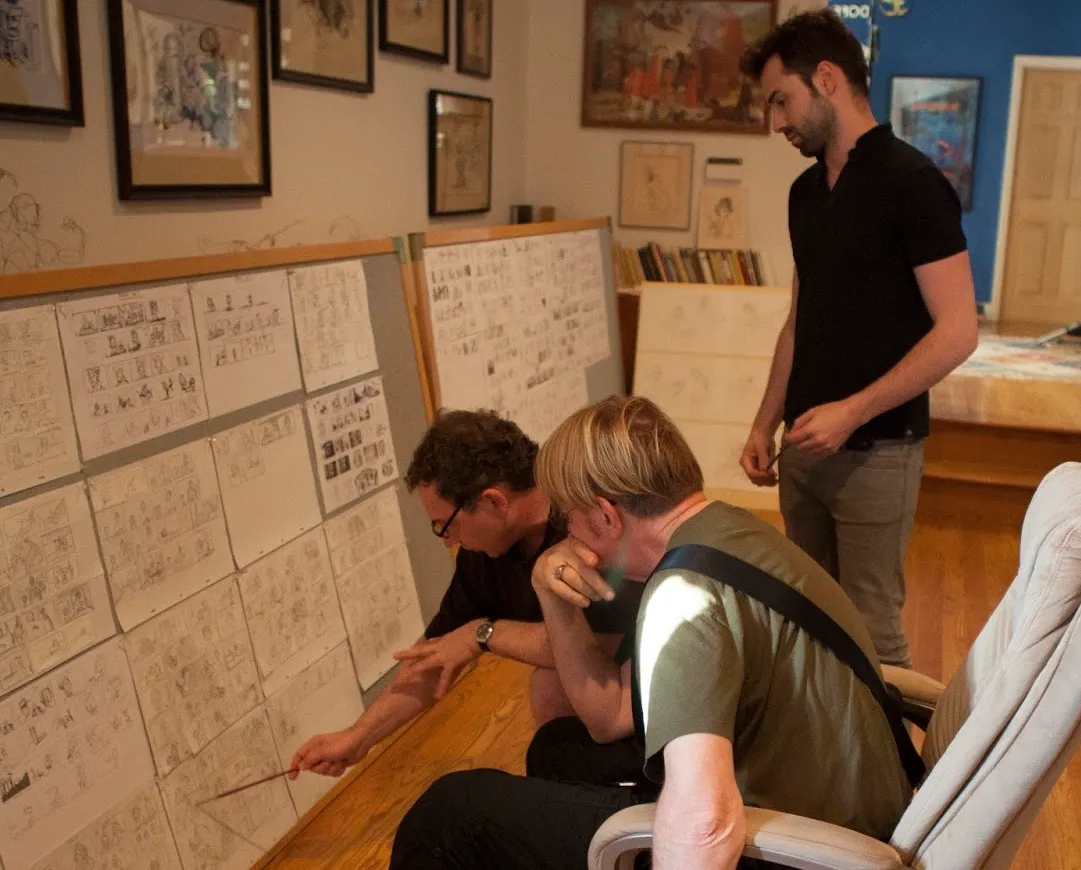
Absolutely. That was from the get-go. I was going to be much more loose and sketchy with a style, because I grew up with the Disney films from the 60s and 70s. And that's what they looked like then, not maybe throughout the whole film, but movies like Robin Hood, The Jungle Book, Sword in the Stone. A lot of scenes were kept loose to save money, you know, and not letting them trace one more time - that really saved money in those days. It also gives a vibrancy to the animation. And they look even more alive than the other versions where you would tie something down with one line. I was always fascinated by that. At Disney, I could never do that because they were always asking to retrace the animator's drawings. So I said, “on my film, we're not going to do that.” Let's keep it loose and sketchy. And I just think it has a special vibrancy that I like.
TB
Because it says, I know we talked about the art direction to being kind of 101 Dalmatians, The Jungle Book, It's funny because if you watch those in like 4K on Blu-ray now, you see the sketch lines, you see everything because on VHS or whatever, those little bits never made it over. But now it's crystal clear that those are not cleaned up as well.
AD
And they had to do that. They had to switch styles. really, or invent a new style after Sleeping Beauty, which was so mannered and expensively made, hand inked, hand painted. And then that movie didn't do very well. And so it was either finding a way to cut costs or close animation down. So then they invented Xerox for Disney and that saved the art form.
TB
We're still talking about your team a little bit here. I preach CTN Expo a lot, especially for students, and I'm going to give a bunch of people hope now that they might not get it. So I'm sorry, but - you found your supervising animator during a lunch at CTNX. Is that right?
AD
You mean Courtney [DiPaola]?
TB
Yeah!
AD
Yeah, Courtney found out about the project. I guess I had talked about it maybe on my blog or elsewhere. She was still finishing school at NYU in New York, and she wanted to work on it. So I gave her a test to do. I said, “well, there's going to be a hefty amount of realism involved.” It's not cartoony animation. So I said, “why don't you do a tiger walking in a circle? just animate that.” And she nailed it. She did it really well. And then she moved out here to LA and was a big, big help. One of the pillars who held this massive project up. So yeah, Courtney was awesome.
TB
I heard that story and I thought, “See there's hope, kids!” to those who go to that event. Unfortunately, I didn't get out there this year, but it's always full of students and I always recommend students to go to it. But things do happen at CTN.
AD
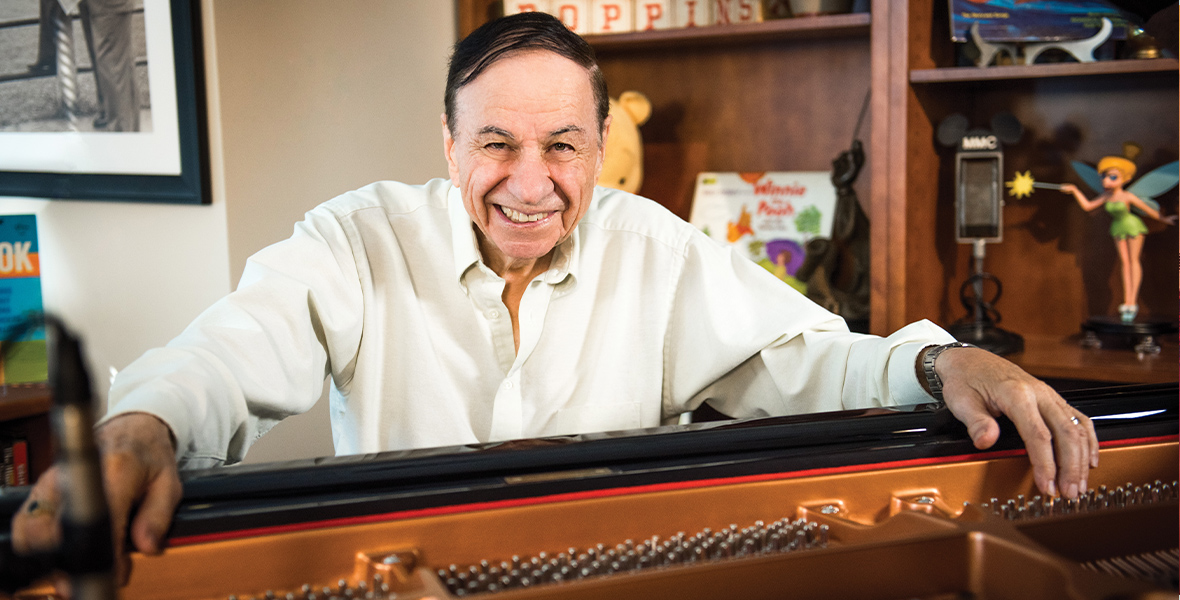
The Same with Richard Sherman! Years ago, we had asked Richard, “could you do a concert, play your greatest hits for CTN audiences?” And he said yes. Before he went on stage and did that, we had lunch at The Daily Grill (A restaurant at the venue that typically houses CTN Expo) and he asked me what I was doing. So I told him about this Mushka project and boom, he offered to write a song. So that again, things happen at CTN.
TB
You were able to work with him on this with “Mushka's Lullaby,” one of his final projects. What's that like to have that in your film?
AD
Oh, I'm still pinching myself. I still can't believe that really happened. And luckily, I'm so happy that he lived long enough to see it finished and appreciated. Because, yeah, that would have really bothered me had he not. Working with him was easy because we see eye to eye. I had to forget, to try to forget that he is THEE Richard Sherman, who, along with his brother, wrote all the songs for The Jungle Book and other Disney movies, the stuff that I grew up with - my childhood. Here he is in front of me talking about music! So yeah, it's still a pinch me moment, but he made it easy. it was just a joy to work with him because he feeds off enthusiasm and so do I. We meet on that energy level. We were both really excited about the possibilities. And it was the extra bonus that came from working with Richard, the occasional story he would drop, “oh, and Mary Poppins, yeah, Walt came by and he said, that's not da, da, da, da.” And I'm going, “oh my God, I want to hear more stories!” You know? That came along with this assignment that was working with Richard. It was awesome.
TB
When he signed up, did his input shape Mushka's story at all after that? Or was it already set in stone? Kind of a “Thanks for your help, Richard, we're doing this.” Or did he have anything to change or say about it?
AD
I think it strengthened the tone of the film. It committed to this lyrical, melancholic, sentimental feeling, which is sort of the tone of the film. He just hit that with this lullaby. It's very daring because I don't know that many people write lullabies anymore and have that at the center of that film because it's slow and it's pretty. It would be easy to throw a pop song in there. So it was very daring, but it just worked. We have it twice. I don't know if you remember. It's hummed. Singer Holly Sedillos in the middle of the song when we see Sarah and Mushka bonding. It's a whole melody just hummed and then it's sung also by her, same singer, at the end of the film over the end credits.
TB
I definitely remember it at the end credits. When you said that, it was in there, I pictured it as they're growing bigger together. just was curious if that shaped it at all too, because it does have a specific, very specific tone. We've talked about Mushka making the circuits, going around all the festivals and everything. It has also won, you might have a more specific number, but countless awards throughout. I know they all meant something to you, but are there any awards that you won that really meant more than the others?
AD
We won a few Kids' Choice Awards. When kids really get it, that means a lot to me because, I mean, you saw the film, it has its own tempo as well. It's on the slow side. I didn't know that kids these days - who play video games a lot and are used to a certain speed and energy - my film just doesn't have that. I wanted scenes in situations to breathe and play out. So I wasn't sure if kids would resonate with the film, but they apparently do because we won a whole bunch of Kids' Choice Awards. It was awesome.
TB
I'm so glad you said that because I've noticed, especially with Disney movies lately, a lot of them feel like video games. Like Raya and the Last Dragon felt like a video game. Moana, if you think about it, feels like a video game. Yours does not. It's almost soothing, especially with that lullaby and especially with that tone. So the fact that you are winning Kids' Choice Awards means that not everything has to be, you know, rapid fire (snapping fingers) crazy things all the time.
AD
TB, it even goes back to some of the films I worked on at Disney. I remember I didn't animate anything on it because it wasn't my character, but on Aladdin, the carpet ride, you know, (singing) “I can show you the world.” It's also sort of slow, not a lullaby, but it's a slow song. And the carpet zips through the clouds and on down…It's a little bit video game-ish. And I was wondering, “oh, I didn't see that coming.” I had a whole different feel for that sequence when it was storyboarded, but it is what it is. I just thought to myself, I think I would have, I wouldn't have done it that fast with a pacing that fast for this song. So, you have your own take on these things. Going to Mushka, I really wanted to play things out, like the scene where Sarah runs away from the house under the fence, and then she kind of is in nature and things become nice and beautiful for the first time since she's been out there back east. I wanted to have birds and a river with fish in it, and she just starts smiling, for the first time. Those scenes, you just need to stretch them out a little bit. You can't do it with cut, cut, cut.
TB
You pause on that for a second too, and you take that breath. It's not just background fodder. Like, “oh, there's a bird flying by,” but you keep moving… This next part is a segue kind of. You talked about your vintage animation desk. And I asked you this before in person… did that desk belong to Milt Kahl?
AD
It did. The upper part.
TB
The upper part, that's what it was. I knew there was an asterisk.
AD
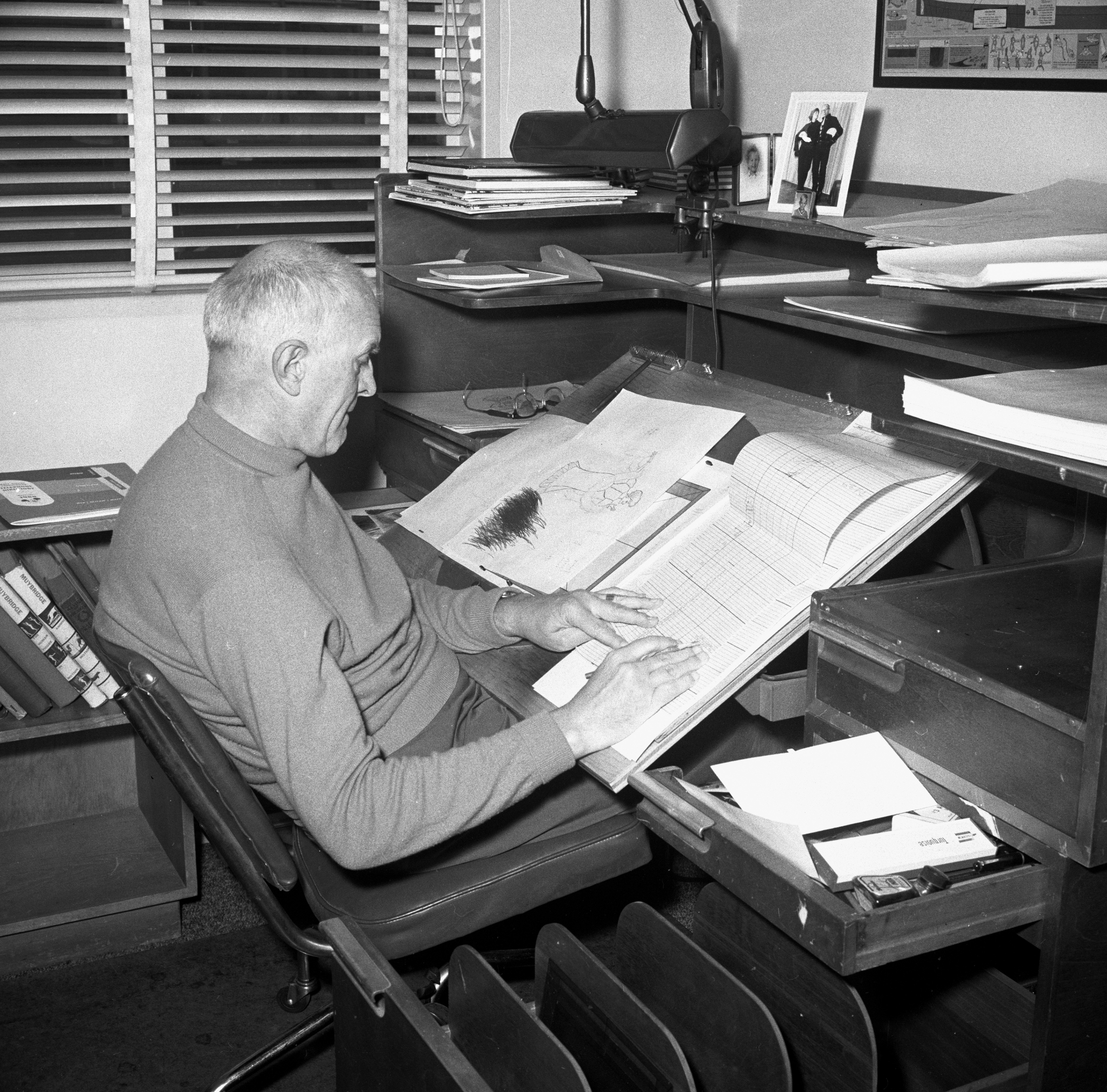
His classic desk, they come in two parts, the lower and the upper. The upper part for sure is his desk because I have photographs of Milt Kahl, great Disney animator who, designer of the Disney style, basically. I have photos of him sitting at that desk, doing Lady in the Tramp, Sleeping Beauty, all the way through The Jungle Book, and the reason I can tell it's that desk, because there's a certain wood grain, the pattern on the side of the desk. That's exactly in the photo and here on my desk. Also, when you open up a drawer, there's a serial number, 1430, I think it is. And that there is the serial number. So it's a nice thing to have. If you would ask me, has it helped me? No, it hasn't. But it's still a cool thing to have.
TB
But it also gives you kind of a little bit of credit as you come into making your new project, which is about Milt Kahll. If you want to talk all about that at all. Yeah.
AD
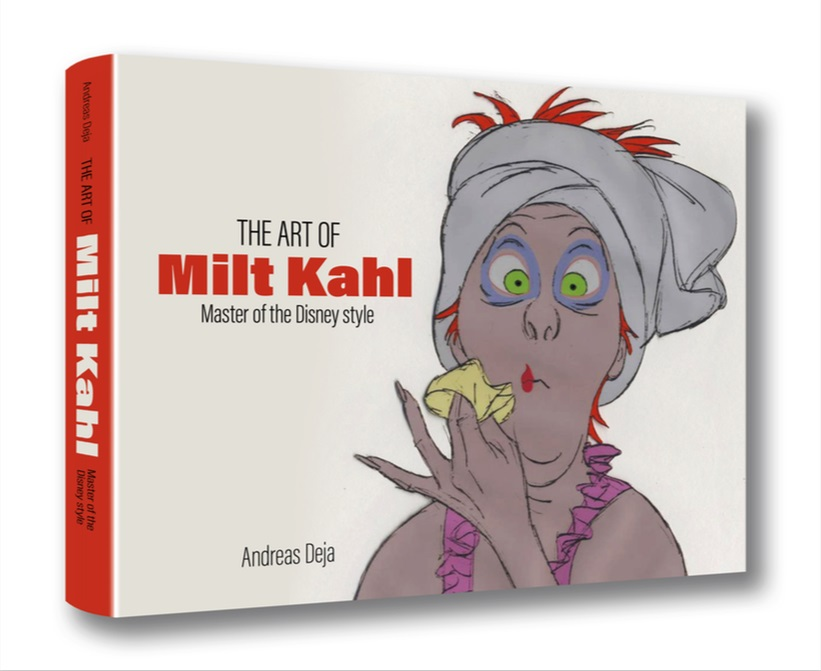
You're talking about the book project, right?...[That will] be a coffee table-sized book and be explosive from page to page, celebrating his art, his master draftsmanship. and his contribution to animation… I'm doing a documentary on Woolie Reitherman, who directed The Jungle Book and all those post-Walt films. That's a film. So both great, great projects.
TB
Well, we're looking forward to all of it. And we're also looking forward to Mushka on Video on Demand coming for all to enjoy on December 15th.