
Pixar Animator Bobby Podesta Brings Holiday Magic to Life in "North for the Winter" Graphic Novel


When you’ve spent nearly three decades bringing animated characters to life at Pixar, how do you take all that storytelling know-how and channel it into something completely different? For Toy Story 3 animator and longtime Pixar creative Bobby Podesta, the answer was to draw on his lifelong love of comics and finally tell a story of his own — one that just happens to begin with a flying reindeer.
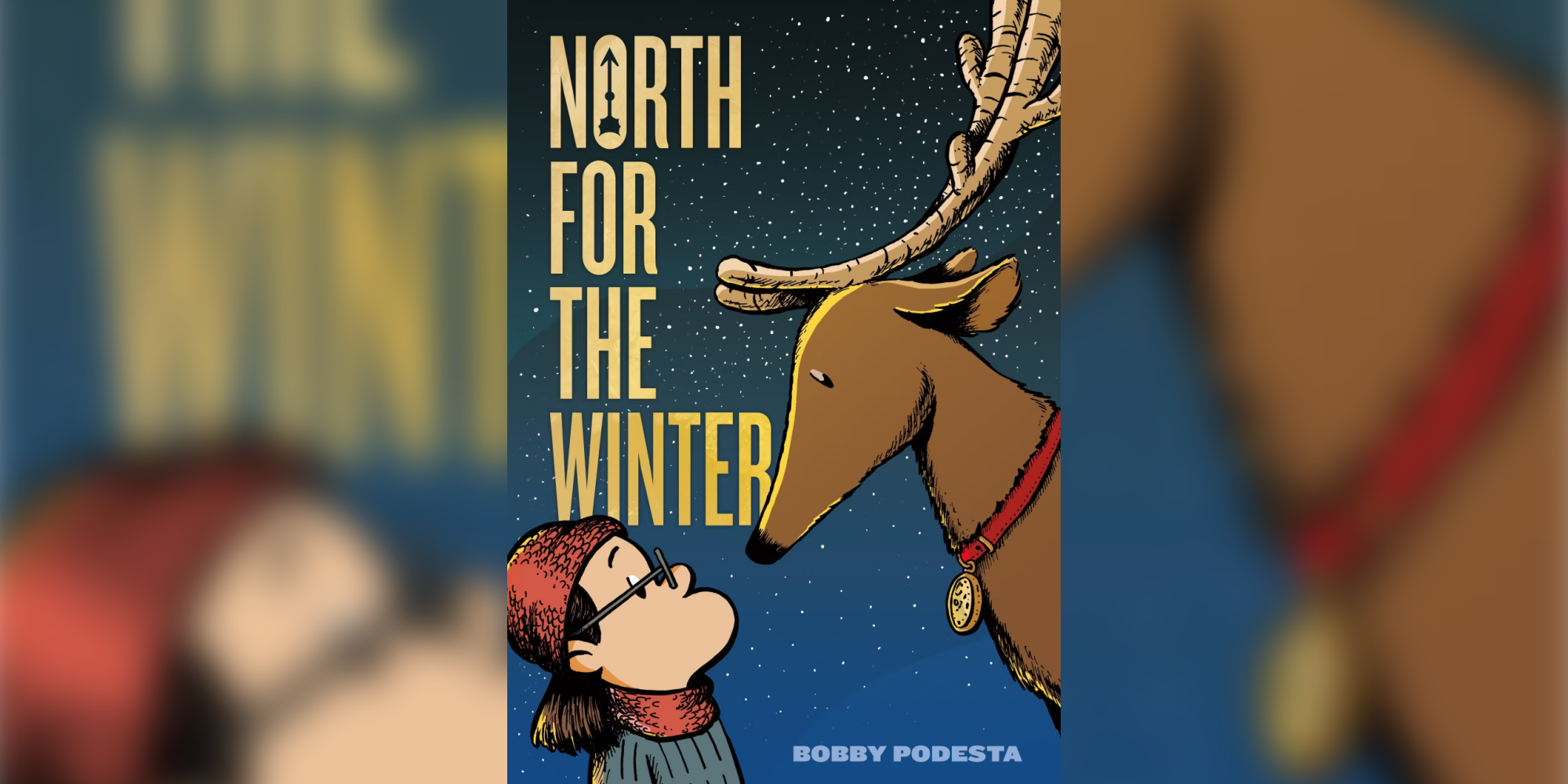
That story became North for the Winter, a new graphic novel from First Second Books that blends mid-century nostalgia, heartfelt emotion, and a dash of Christmas magic. During a recent virtual program hosted by the Walt Disney Family Museum, Podesta walked audiences through his creative process — and revealed how lessons from Pixar guided every page.
Podesta began by acknowledging the creative lineage he’s proud to join. “There’s a long history of Disney and Pixar artists who’ve made books — from Bill Peet to Mary Blair,” he said. “Getting to create something outside the screen feels like carrying on that tradition.”
A lifelong cartoonist, Podesta first published a comic strip while still in high school, but animation ultimately became his career path. After graduating from CalArts — the school Walt Disney helped establish — he joined Pixar shortly after Toy Story and went on to work on beloved projects for almost thirty years. Still, the dream of writing a book never went away.
Every Pixar story, Podesta said, begins with a what if? His book was no different. “One day I was driving to work and thought, what if a giant reindeer jumped in front of me and then flew away?”
That simple question sat in the back of his mind until it combined with personal experience: a single-parent upbringing, memories of his great-grandfather’s mid-century department store, and the childhood wonder of NORAD’s Santa Tracker.
From those pieces, North for the Winter was born — a story set in Denver, 1955, where a young girl named Virginia and her father move just before Christmas, only to encounter something extraordinary in the sky. “What if a child and her single parent suffered a sudden loss, and something magical happened just outside Denver, Colorado — involving a reindeer, the military, and tracking Santa Claus?” Podesta laughed. “See? It writes itself.”
Podesta’s storytelling formula mirrors Pixar’s own. His four pillars: What If, Experience, Research, and Taste — all bound together by Theme. Research anchored the story’s period details, from 1950s clothing to the real-life 1955 Sears ad that accidentally launched NORAD’s Santa-tracking tradition. Taste came through in the Peanuts-inspired linework and the warm color palette reminiscent of One Hundred and One Dalmatians.
But at the heart of North for the Winter lies its emotional core: trust and belief in one another. “It’s not something you can see,” Podesta explained, quoting the famous editorial Yes, Virginia, There Is a Santa Claus. “But it’s something you have to feel.”
Podesta’s first attempt, a prose novel, didn’t land. But one publisher made a suggestion that changed everything: try it as a graphic novel. Years of sketching had honed his visual storytelling. With renewed purpose, he started over — waking before dawn each day to write and draw. “Not many people make plans between 5 and 6:30 a.m.,” he joked. “That became my creative time.”
Every page began as thumbnail sketches, then moved to digital penciling in Procreate, and finally to traditional ink on Bristol board. Podesta loved the imperfections: “That’s where the life is.”
Colorist Irene Yam helped bring the world of North for the Winter to life, guided by Podesta’s mid-century references and a desire to evoke “the warmth of Dalmatians in the snow.”
Each scene was designed to “read visually first,” echoing the storyboarding mindset he honed at Pixar. “Making a graphic novel is the closest thing to making a movie,” Podesta explained. “It’s got characters, plot, staging, color, posing — everything but movement and sound.”
Balancing humor and heart, North for the Winter includes sly nods to classic holiday specials — from Rudolph the Red-Nosed Reindeer to playful in-story gags like an officer who over-decorates the command center.
The final cover captures the soul of the story: Virginia and the reindeer, framed against a wintry sky, bound by wonder. Podesta even designed the compass-shaped “O” in North, symbolizing both adventure and direction.“When someone you’ve never met feels what you hoped they’d feel… that’s everything,” he said.
Ultimately, North for the Winter isn’t just a holiday tale — it’s a testament to perseverance and creativity. “Whether it’s toys, fish, or a flying reindeer,” Podesta reflected, “we’re really just trying to tell human stories.”
With the warmth of mid-century nostalgia and the heart of Pixar storytelling, North for the Winter is a reminder that belief — in each other, and in the magic we can’t quite see — is what truly carries us home for the holidays.