
Book Review: David Eckstein's "Just Enough" Goes Deeper Than the Baseball Field


I have never read an autobiography about someone whose life is so strangely intertwined with my own, despite the fact that the subject has no idea who I am. Yet as I read David Eckstein’s Just Enough, I was struck again and again by moments in his story that reflected pieces of mine. That may sound like an odd thing to say about a two-time World Series champion and World Series MVP when I do not have an athletic bone in my body, but that is also what makes Just Enough such a wonderful book, as those parallels can apply to everyone in some form.
(Please note this article contains affiliate links. Your purchase will support Laughing Place by providing us a small commission, but will not affect your pricing or user experience. Thank you.)
Eckstein certainly tells the story of his baseball journey, but this is not really a book about box scores, batting averages or even championships. Baseball provides the setting for a much more universal story about family, health, love, adversity, triumph and eventually figuring out what comes after the thing you once thought would define your entire life. You do not need to know the difference between a double play and a doubleheader to understand what Eckstein is writing about.
I already knew much of his story before opening the book, and perhaps that should have made it less compelling. Instead, I could not put it down, reading Just Enough in a single sitting and easily ranking it as my favorite book I have read this year. That also makes it nearly impossible for me to write a conventional review. I cannot objectively separate the book from the memories and emotions it stirred up, so rather than pretending otherwise, I would rather explain why David Eckstein’s story has meant so much to me for nearly a quarter century.
In 2002, I was still at the beginning of my Disney journey while attending UCLA. As you might expect, I was obsessed with making my Disney dreams come true, but between school and trying to absorb everything I possibly could about the seemingly never-ending operations of The Walt Disney Company, I realized I needed something that would occasionally force me to disconnect. After suffering a concussion at work, I became close friends with Doobie and Rebekah Moseley, the co-founders of this very website, and apparently incapable of completely escaping Disney, we decided our non-Disney diversion would be attending Opening Night for the then-Disney-owned Anaheim Angels.
The Angels lost that night, but we had fun anyway. Since they were hardly expected to become a juggernaut that season, we figured tickets would remain plentiful and decided to keep going. Eventually, we bought a 20-game mini-plan in right field, at which point something unexpected happened. They started winning. Before long, our casual diversion had become an obsession of its own.
Among all those players, one stood out to me immediately: Number 22, David Eckstein. He was undersized, underestimated and seemingly required to prove that he belonged at every stage of his career, yet he played with an intensity that made it impossible not to notice him. I was never a ballplayer, but I recognized something in his approach. He seemed to love what he was doing so much that working harder than everyone else wasn't a burden. It was simply how he approached the opportunity he had been given.
I felt the same way about Disney. I knew there were people with more natural gifts for being the bright, polished Cast Member Disney traditionally celebrated, but I loved my job and was determined to work harder at it than anyone else. Watching Eckstein made me feel like there was value in that approach. You did not have to be the biggest, strongest or most naturally gifted person in the room if you were willing to care more, prepare more and refuse to give up when someone else decided you did not fit their idea of what success was supposed to look like.
There was another connection that made him especially meaningful to me. Kidney disease had deeply affected the Eckstein family, while I had spent much of sixth grade in the hospital dealing with kidney issues of my own. To me, this made the guy wearing Number 22 feel even more relatable.
Then came October, and after begging my family for the money for postseason tickets, I somehow ended up experiencing one of the most improbable championship runs in baseball history. I was able to invite my coach down for the World Series and ultimately watch the Angels win it all. I should be clear, I kept the scorebook for the team and never pitched or batted. But that didn’t stop Coach Talps from being a mentor to me. Much like many of David’s mentors he saw something in me.
The celebration spilled over into the Disneyland Resort, where Disney did what Disney does best and turned the championship into a wonderfully ridiculous fan festival. If you never saw a gigantic Rally Monkey hanging from the Golden Gate Bridge at Disney California Adventure, you missed one of the most gloriously silly promotions in the history of that park.
Baseball had given me exactly the escape I was looking for, and David Eckstein had become my favorite player. Before long, however, the ups and downs of my own Disney career took me across the country to Walt Disney World, forcing me to give up my Angels tickets. Baseball moved a little further into the background while Disney once again consumed most of my attention, and I became determined to understand not merely the parks but Disney as a company, its culture and all the different businesses and franchises that made up the organization.
Somewhere along the way, I became aware that Bob Iger was interested in acquiring Star Wars. It would take several years before that actually happened, but I decided I should probably understand the franchise better. I liked Star Wars, but I had grown up in the awkward period between the original and prequel trilogies, so I had not experienced the phenomenon at its cultural peak. It probably did not help that my earliest exposure came through basic cable broadcasts rather than seeing the movies on the big screen.
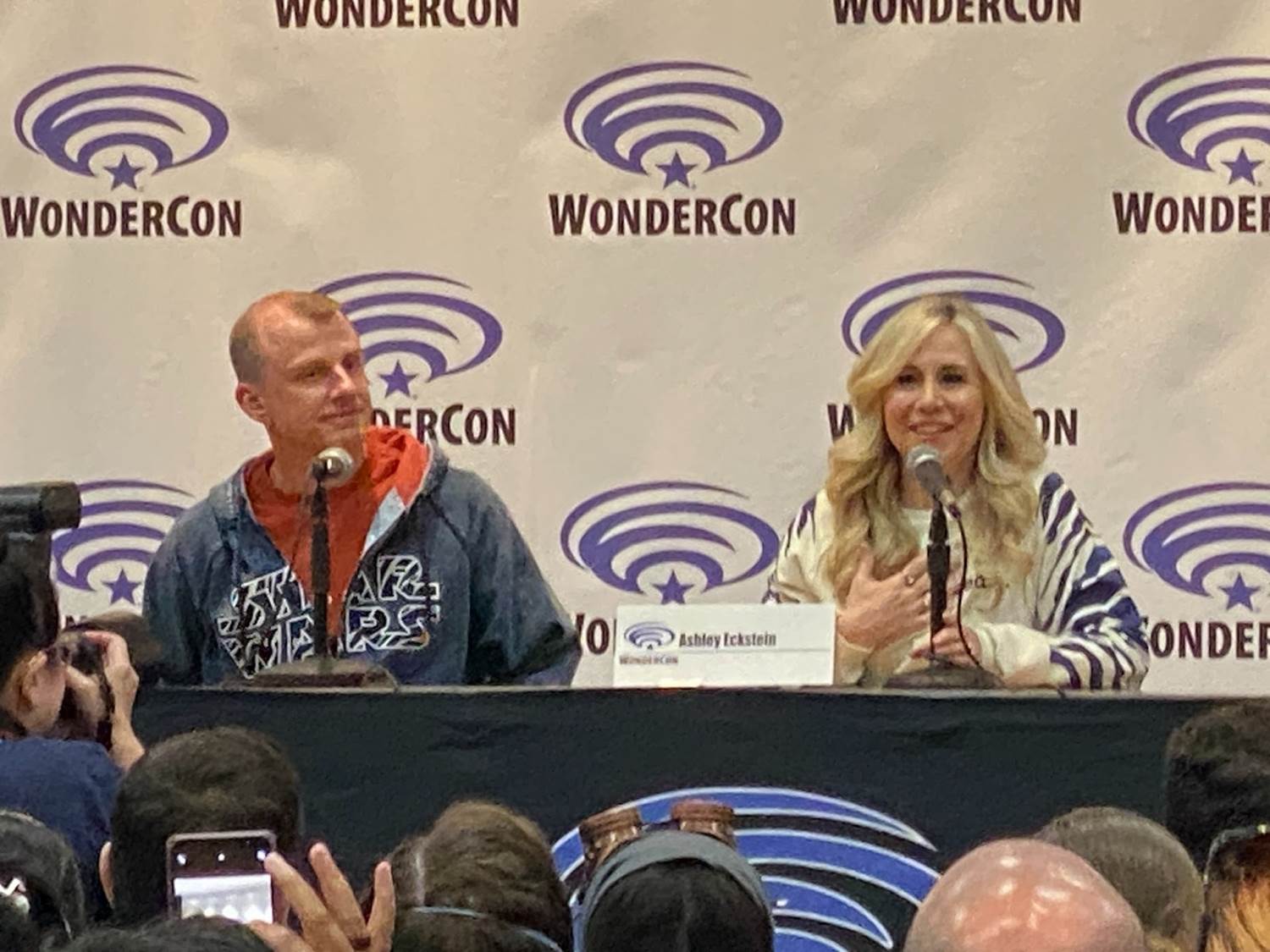
Fortunately, Walt Disney World had a solution for just about any deficiency in my pop-culture education. I threw myself into Star Wars Weekends at Disney’s Hollywood Studios, and in 2008 the event was helping introduce fans to the upcoming Star Wars: The Clone Wars, including a brand-new character named Ahsoka Tano. Guests could encounter Ahsoka as a walk-around character before the movie had even opened, while the woman providing her voice, Ashley Eckstein, was there helping introduce this new corner of the galaxy to the fanbase.
Ashley was immediately endearing. She talked about her Disney roots, including her father's time as a Cast Member and her own experience working at Walt Disney World, along with an acting career that included That’s So Raven. Naturally, I looked her up afterward, which was when my two worlds unexpectedly collided. Ashley Eckstein was married to David Eckstein. My favorite baseball player was married to the voice of this new Star Wars character, who herself had deep ties to Walt Disney World. Somehow the baseball diversion I had originally found as an escape from Disney had circled right back into Disney.
As my career continued to ebb and flow, I found myself interacting with celebrities, executives and Disney Legends on an embarrassingly frequent basis. Over the years, my paths with the Ecksteins crossed with surprising regularity, whether at D23 events, attraction openings, Disney Vacation Club Member Cruises or through my side gig stage managing at events such as Star Wars Celebration and New York Comic Con. While normally, I can handle engaging with celebrities without batting an eye, for some reason, that has never applied to the Ecksteins. I can talk to Bob Iger or James Cameron without thinking twice, yet put David or Ashley Eckstein in front of me and suddenly I forget how human conversation works. I have never completely understood why, and after reading Just Enough, I think I understand it a little better. Unfortunately, the book has probably made the problem worse.
The David Eckstein who emerges from these pages is not simply the scrappy baseball player whose uniform always seemed to be covered in dirt. He is a son trying to understand a complicated father, a brother shaped by his family's health struggles, a player repeatedly being told what he cannot do, a husband discovering that there are dreams more important than baseball and eventually a man learning how to move forward when the identity he spent his life building is no longer his daily reality.
Eckstein writes candidly about his father, whose toughness helped shape him but whose relationship with his son was far more complicated than a simple inspirational sports story might suggest. There is love there, but also pain, expectations and the lingering effects of growing up under someone whose standards helped forge the relentless competitor Eckstein would become. Rather than flattening that relationship into an easy lesson, the book allows those contradictions to exist, which makes the eventual understanding between father and son considerably more powerful.
He is similarly open about health. Medical challenges were part of Eckstein's story from birth and touched his entire family, adding another dimension to the familiar narrative about the undersized kid who refused to accept that baseball had no place for him. His resilience did not suddenly appear when a scout questioned his size or a team doubted his ability. It was being built long before baseball became his profession, through experiences that taught him just how little control we sometimes have over the challenges placed in front of us.
Perhaps the part I found most moving, though, is the evolution of what Eckstein considers his dream. For much of his life, the goal is baseball. He wants to play, then he wants to prove he belongs, and eventually he wants to succeed at the highest level. He accomplishes more than almost anyone could have reasonably predicted, winning two World Series championships and being named MVP of one of them, but eventually his conception of success changes. The dream is no longer simply about being a great ballplayer. It becomes about being a great husband and building a life with Ashley.
That transition could easily have been treated as an epilogue to the "real" story, but instead it feels like the point of it. There is something especially meaningful about hearing someone who spent his entire life fighting for a baseball career recognize that walking away from that identity did not mean giving up. It meant discovering that the determination he had devoted to baseball could be redirected toward something, and someone, even more important.
One of the smartest choices Eckstein makes as an author is refusing to rush toward Major League Baseball. He devotes substantial attention to his childhood, college years and climb through the minor leagues, and those chapters are essential because they allow us to understand the person before we celebrate the player. By the time he finally reaches the majors, his success feels less like the beginning of the story than the culmination of everything that came before it.
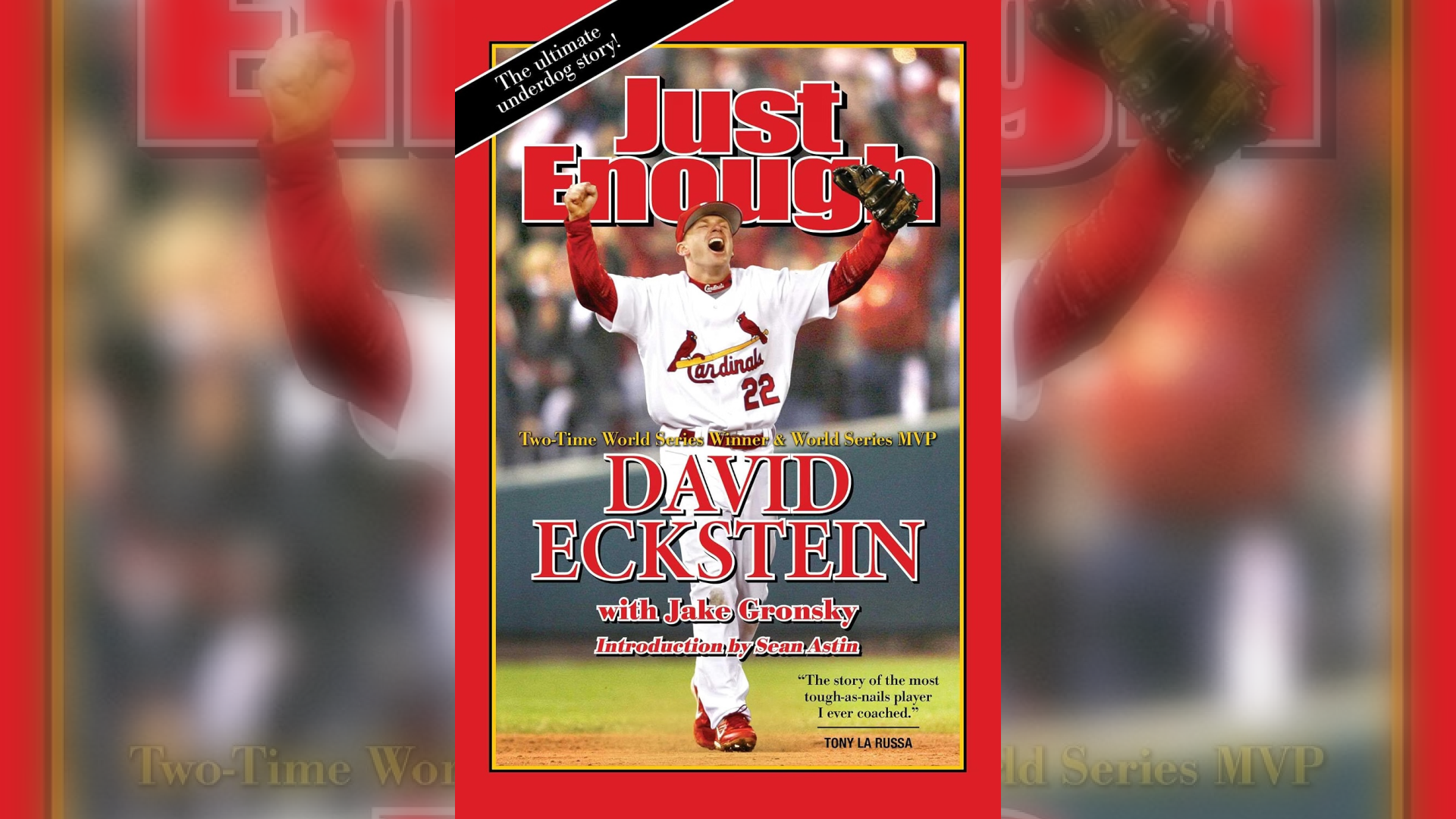
Even when discussing that success, Eckstein maintains the humility that made him so appealing as a player. He does not pretend he wasn't good, because false modesty would be just another form of dishonesty. Eckstein knows exactly what he accomplished and what he brought to a baseball team, yet there is something wonderfully amusing about reading his story while staring at a cover that announces "Two-Time World Series Winner & World Series MVP." You almost get the impression he would prefer the book to mention that a little more quietly.
That balance between confidence and humility may be one of the most valuable lessons in Just Enough. Eckstein knows his worth without needing to constantly announce it, and he can be proud of what he accomplished without allowing those accomplishments to become his entire identity. The rings and trophies speak for themselves, while the way he carried himself before and after earning them says considerably more about the person who won them.
Perhaps that is why reading about the end of his time with the Angels affected me so deeply. Professional careers end, players get released, employees leave companies, organizations change and people who once seemed indispensable discover that the institution will continue without them. That is life, but there is a difference between a relationship ending and a relationship ending without dignity.
David Eckstein deserved better from the Angels, not because he was entitled to play there forever, but because people who give an organization everything they have deserve to have that contribution acknowledged when the relationship ends. Eckstein had helped deliver the franchise's first World Series championship and had become one of the faces of the team. Then he discovered how quickly an organization can make someone who had given so much feel expendable.
That part hurt to read because I understood it in a way I wish I didn't. There have been moments in my own career when something I loved did not love me back in quite the same way, as well as transitions when years of work, loyalty and passion suddenly seemed less important than I thought they would be. Reading Eckstein describe his experience reminded me that this feeling is not unique to baseball, Disney or any particular workplace. Institutions inevitably move forward, and eventually the challenge becomes figuring out how you move forward too without allowing the way one chapter ended to diminish everything you accomplished while you were there.
That may ultimately be why David Eckstein has remained such an important figure to me. When I first discovered him in 2002, I saw someone who demonstrated that effort could compensate for the gifts you didn't have. Years later, through an almost absurd coincidence, his life intersected with the Disney and Star Wars worlds that had become central to mine. Now, reading his story at a very different stage of my own life, I find myself inspired by something else entirely: his ability to recognize that the dream can change without everything that came before it losing its value.
David Eckstein was never supposed to have the baseball career he had. He was too small, overlooked and underestimated, yet he kept going anyway. After achieving the seemingly impossible, he then had to confront something that eventually happens to everyone: even the dream you fight your entire life to achieve eventually changes or ends. What matters then is not simply what you accomplished while living that dream, but what you carry with you into whatever comes next.
The title Just Enough obviously evokes the way Eckstein played baseball. He was never the biggest guy on the field or the player scouts would have designed if given a blank sheet of paper, yet somehow, again and again, he had just enough. He had enough talent, determination, preparation, stubbornness and belief to keep proving people wrong until nobody could deny what he had accomplished.
After reading his story, however, I think the title means something more. A meaningful life does not require being the biggest star, having the perfect career or controlling how every chapter ends. Sometimes you simply need enough faith in yourself to keep going when someone tells you that you don't belong, enough humility to appreciate the people who helped you get there, and enough perspective to recognize when it is time for the dream to become something new.
Nearly a quarter century after I first watched Number 22 take the field in Anaheim, David Eckstein is still teaching me those lessons. Considering Just Enough somehow managed to increase my admiration for someone I already couldn't manage to speak normally around, I suspect the next time our paths cross I will be even more tongue-tied than before.