
How Marvel and WEBTOON Are Reimagining Comics for the Smartphone Age


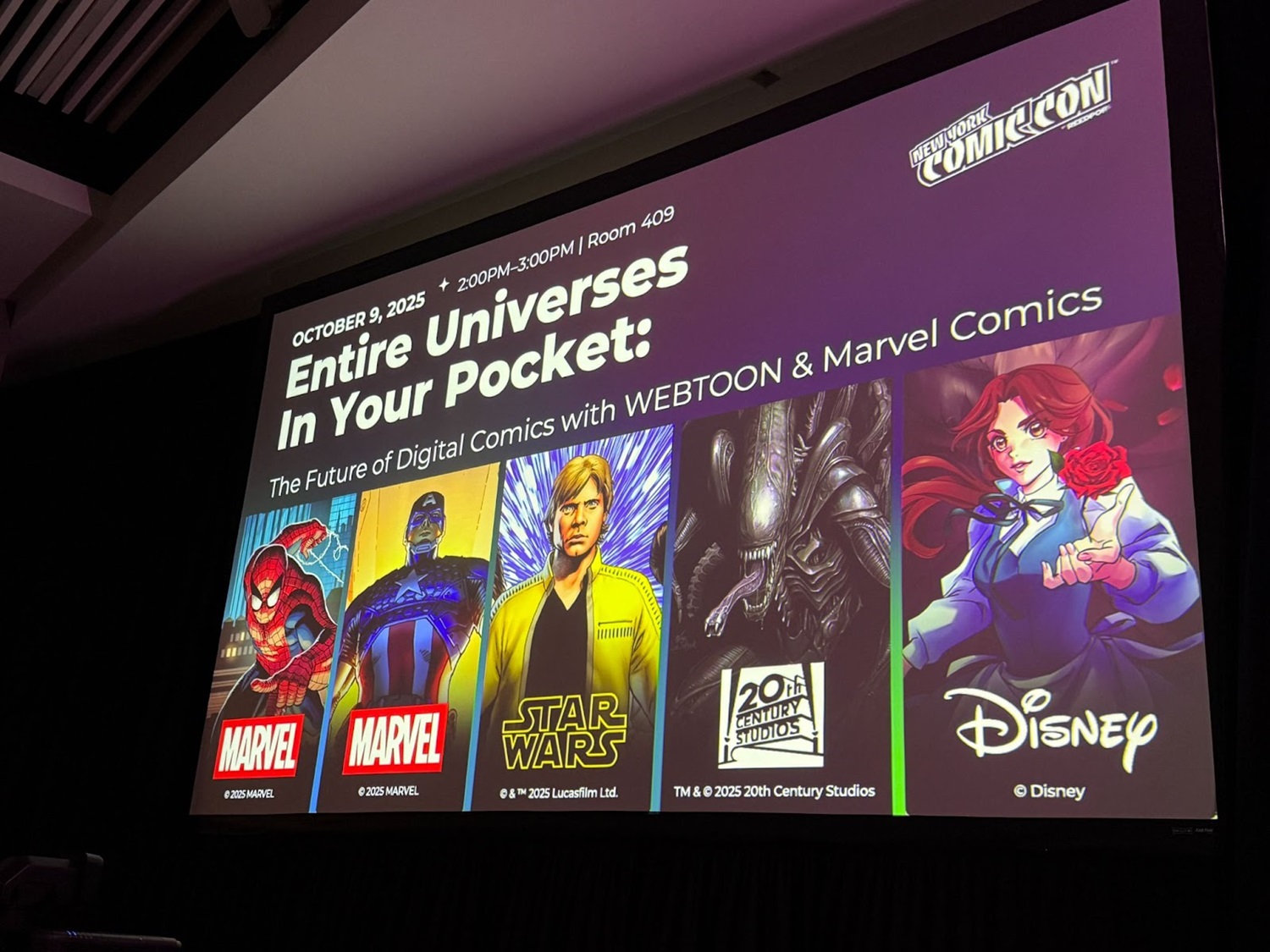
New York Comic Con’s “Entire Universes in Your Pocket: The Future of Digital Comics with WEBTOON & Marvel Comics" delivered exactly what its title promised: a clear look at how two industry giants plan to meet readers where they already live — on their phones. Eisner-nominated journalist Rob Salkowitz (ICv2/Forbes) moderated the conversation with Quinn Sosna-Spear (Executive Producer, WEBTOON), Ryan Lee (Head of US Content, WEBTOON), and Dan Buckley (Head of Marvel Comics & Franchise). Across an hour, they traced the road from early digital experiments to a mobile-native future, announced new titles coming to WEBTOON, and pulled back the curtain on how classic comics are being re-composed for vertical scroll.
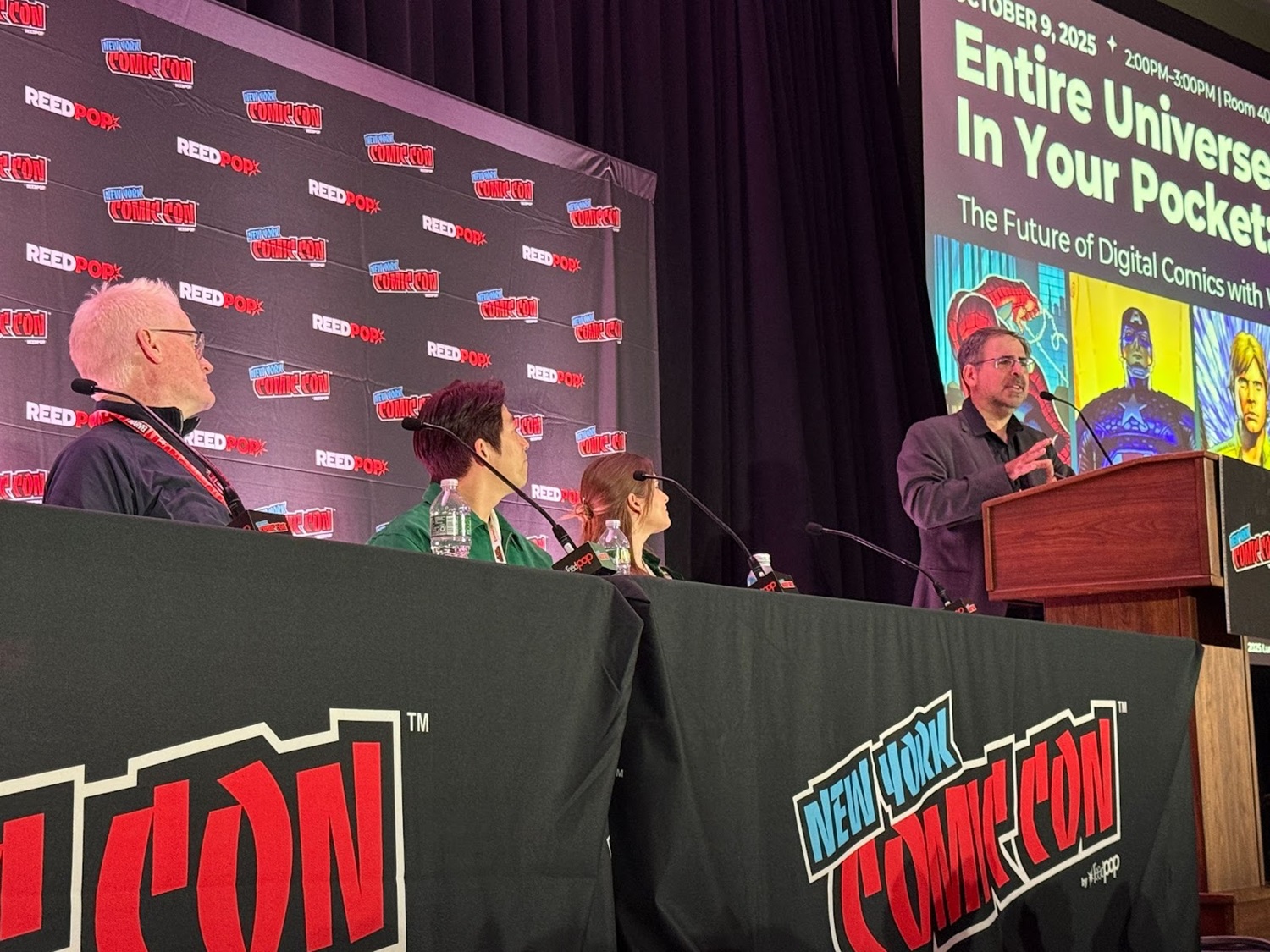
Dan Buckley talked about keeping Marvel relevant in the digital comics era. From the 2007 launch of Marvel Unlimited (and its early “smart panel" reader) through the iPad era to phone-first experiments, the company kept testing formats that expand audience without cannibalizing print. WEBTOON brings discovery at a massive scale, a cadence today’s readers expect, and an interface built for the device most people use to read.
WEBTOON’s Ryan Lee underscored that point with simple math: thousands of ongoing series worldwide, dozens launching each month, and a user base trained to check in daily. Quinn Sosna-Spear pushed back on the notion that “young people don’t read" — they absolutely do, she argued, but digitally and constantly. Put great art and strong character work in their feed, and they’ll show up every week.
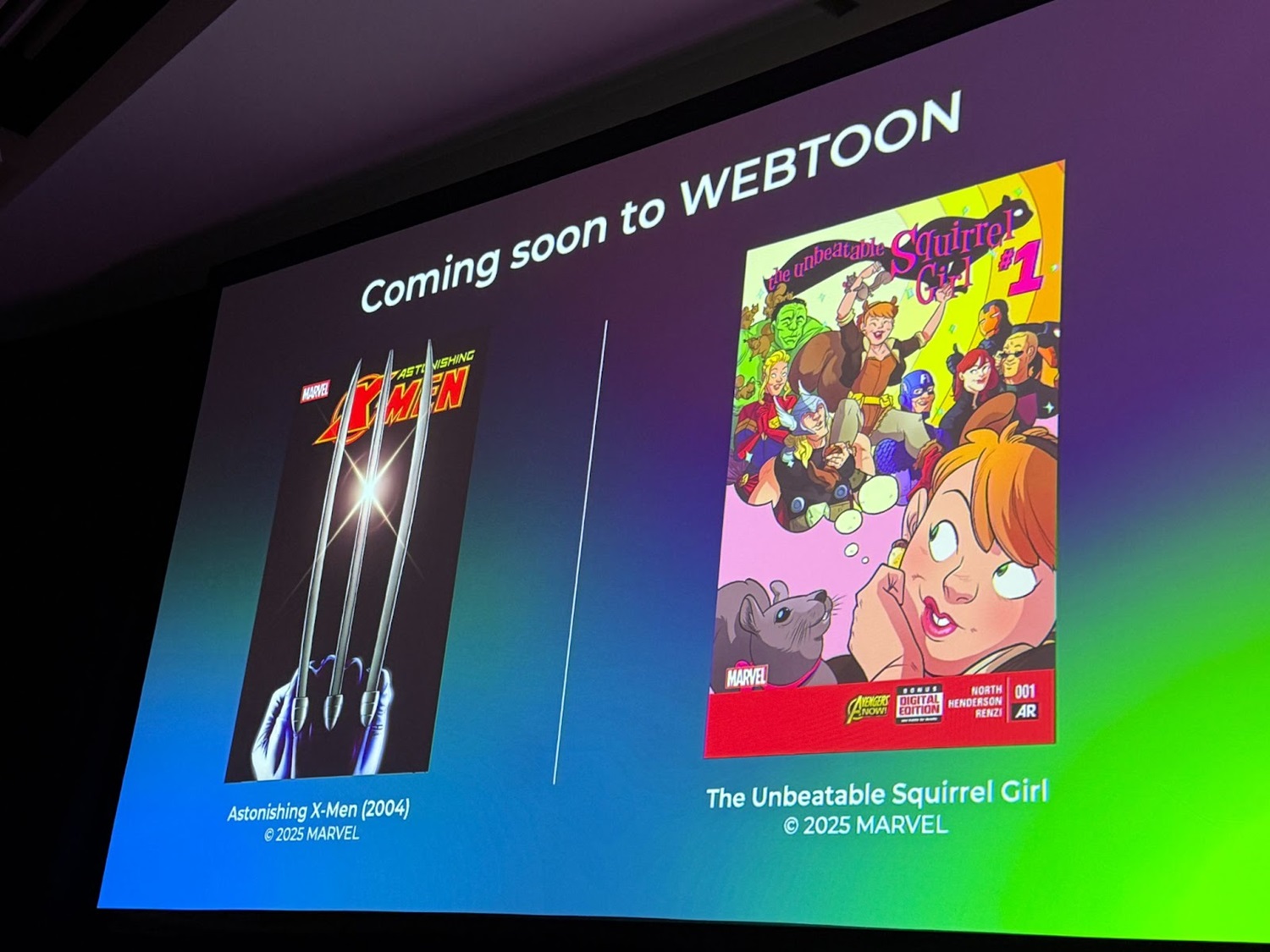
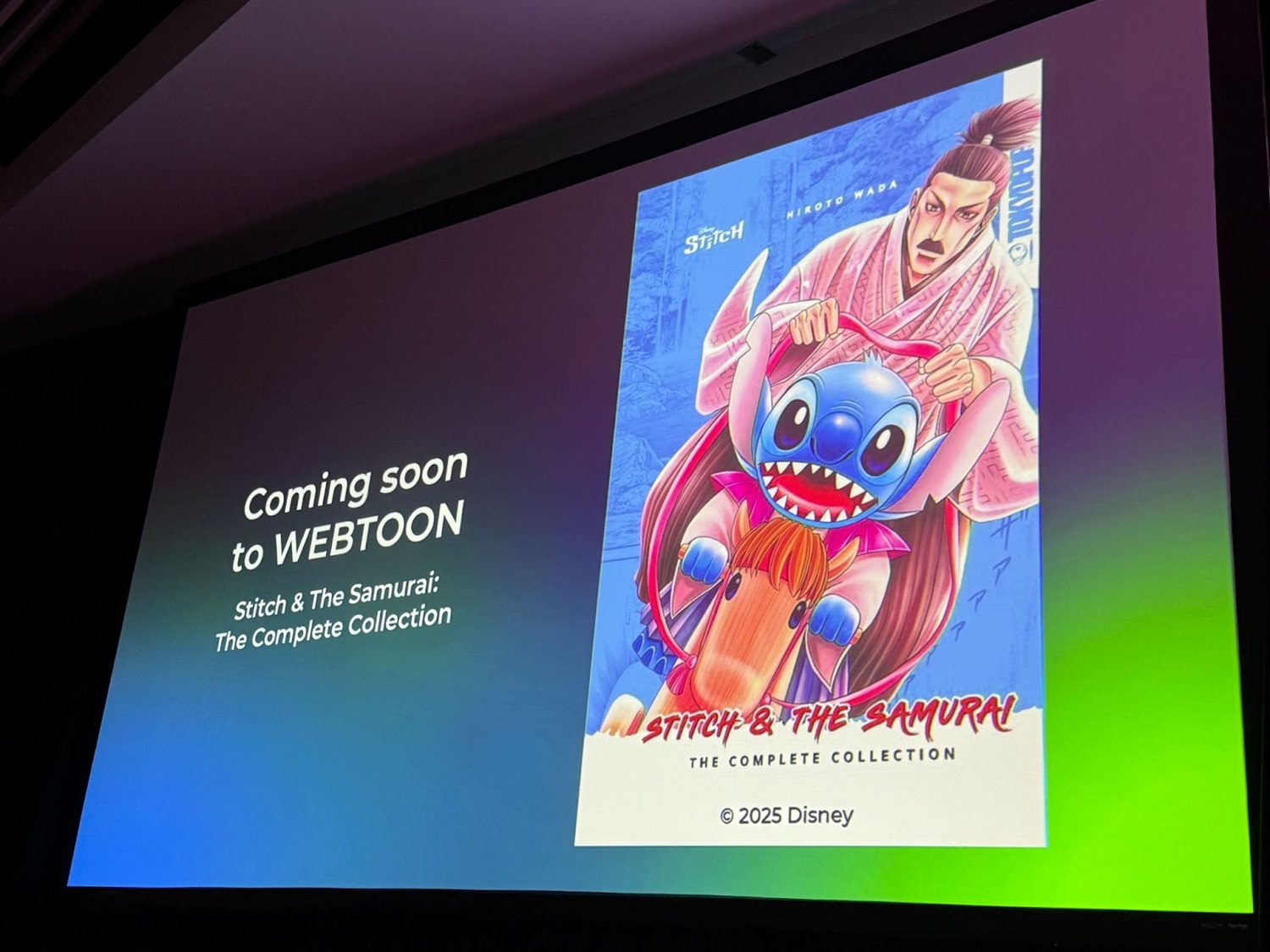
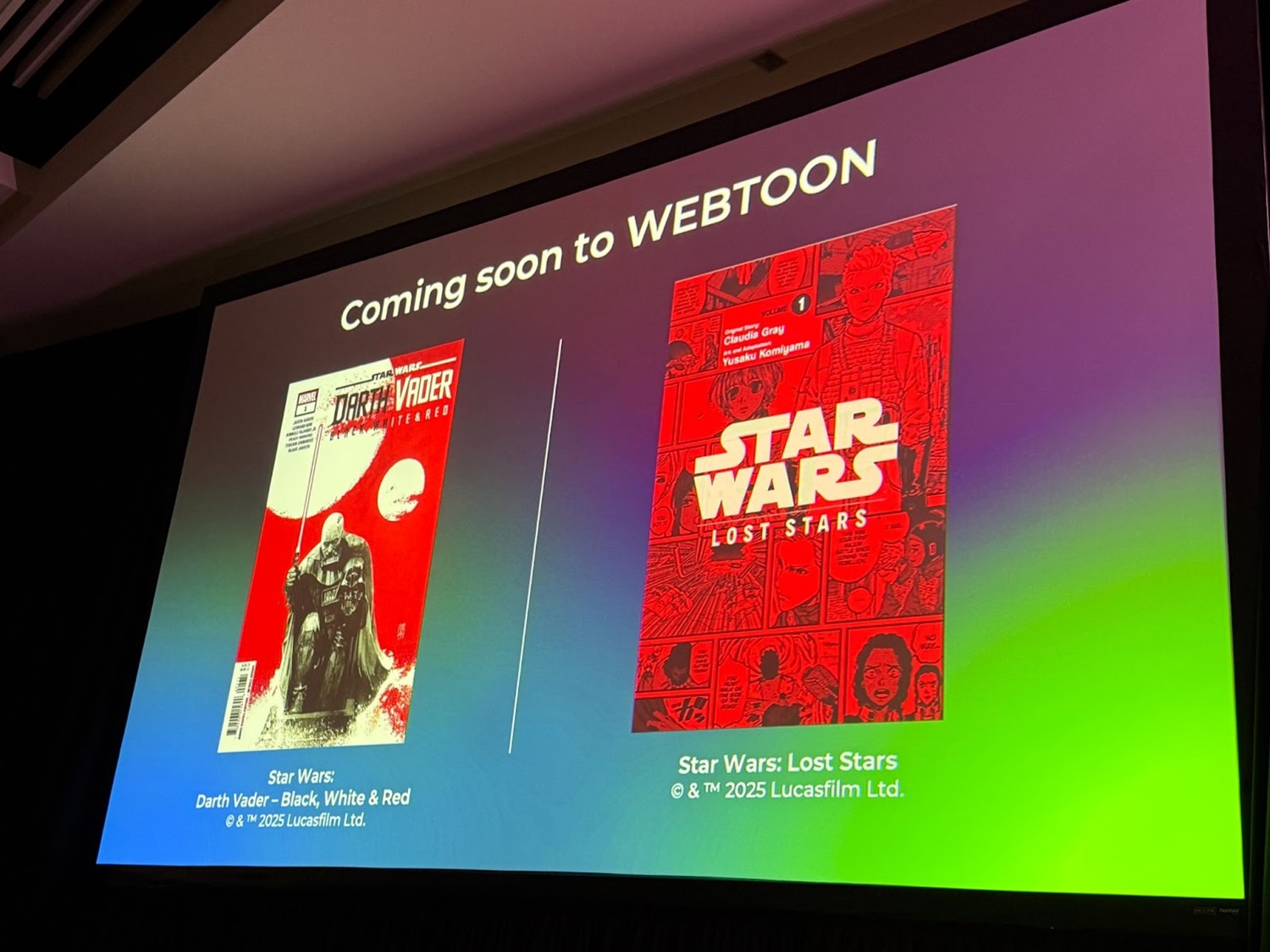
The headlines of the panel were an announcement of the next wave of Marvel and Disney titles arriving in vertical, custom-adapted editions on WEBTOON:
- Marvel: Astonishing X-Men, The Unbeatable Squirrel Girl
- Star Wars: Darth Vader: Black, White & Red, Lost Stars
- Disney manga: Stitch and the Samurai
Buckley explained the selection logic: start with contemporary runs and recognizable characters whose art styles “verticalize" cleanly and sustain long runs. Readers get a clear on-ramp, editorial has fewer whiplash style changes, and the production pipeline can maintain quality at WEBTOON’s weekly cadence.
All three panelists stressed that this isn’t about slicing pages into strips. It’s adaptation, not extraction.
- Intent first: WEBTOON editors start by mapping the original creative intent — panel beats, composition, balloons, SFX — then re-compose for vertical rhythm.
- New act breaks: A single 20-odd-page issue becomes roughly 2–3 WEBTOON episodes, so editors must craft fresh cliffhangers that feel natural to the story while encouraging weekly return reads.
- Emotional clarity: Buckley said vertical can actually amplify character beats that get skimmed on a double-page spread. The scroll slows readers into moments, while device color can render closer to what colorists intended than some print runs.
- Respect for creators: Early in the process, Marvel contacted artists about adapting their work; according to Buckley, creators were curious and supportive, with many eager to “see what it looks like" in vertical.
Sosna-Spear offered a helpful analogy: filming a stage play isn’t the same as making a movie — two mediums, two grammars. The job is to preserve the heart of the comics while composing for the native strengths of the phone screen.
Marvel die-hards still have print, trades, and full-page digital via Marvel Unlimited. The WEBTOON initiative is targeted squarely at new and younger readers — people who love Spider-Man, X-Men, or Star Wars from screens big and small, but haven’t built a Wednesday pull list.
WEBTOON, meanwhile, expects Marvel on-ramps to encourage sampling beyond cape books. Panelists shouted out action-forward WEBTOON originals — unOrdinary and Ordeal got particular love — alongside licensed favorites already thriving on the platform like Sonic the Hedgehog and Godzilla. The intended behavior is sticky and simple: a title (or two) per day keeps fans checking the app all week.
If the 1990s showed anything, it’s that creators can build a brand in one ecosystem and then jump to marquee characters at Marvel. Buckley called it “inevitable" that WEBTOON-native creators will helm Marvel-native vertical series down the line. WEBTOON gives artists space to practice, fail, iterate, and build an audience without the pressure of immediate blockbuster sales—exactly the farm system Marvel has always drawn from, now updated for the scroll era.
Marvel and WEBTOON aren’t trying to collapse one ecosystem into the other; they’re building a bridge. With curated runs of fan-favorite characters, careful editorial adaptation, and a release cadence built for phones, the collaboration invites millions of mobile-native readers to discover what comics can do — one satisfying scroll at a time.