
Annecy 2026: Netflix Showcases "Ghostbusters: Night Shift," Brad Bird's Long-Awaited "Ray Gunn," and More


Annecy’s Palais des Festivals was filled to capacity on Wednesday afternoon for the annual "Next on Netflix Animation" showcase, now a confirmed fixture in the festival’s annual calendar. The presentation covered an unusually wide range of projects: a canonical Ghostbusters animated series, a new One Piece adaptation, Charlie vs. the Chocolate Factory, and the event's main draw, a rare extended look at Brad Bird's decades-in-the-making Ray Gunn, presented in conversation with Aardman co-founder Sir Peter Lord.
Ghostbusters: Night Shift
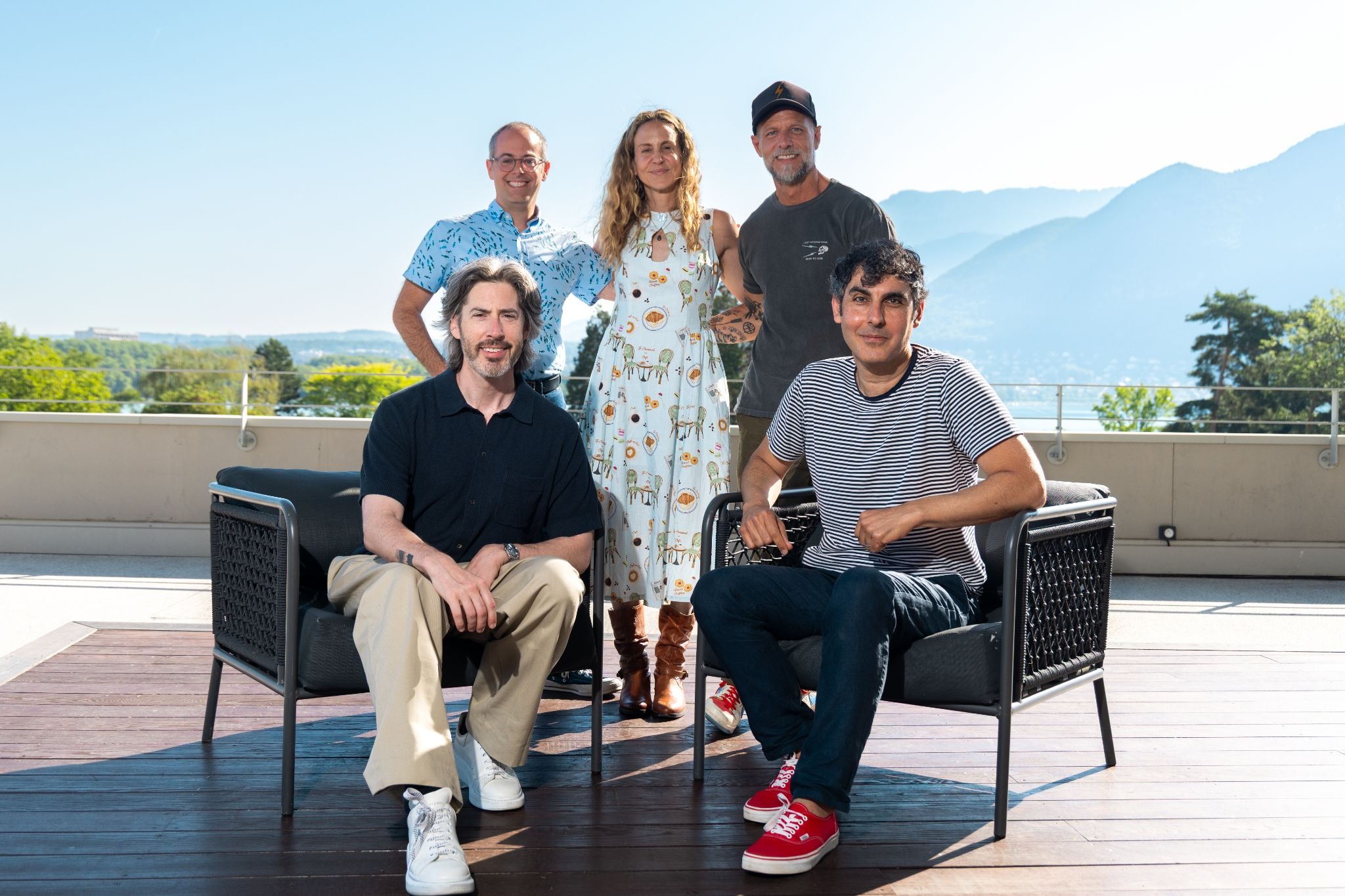
Executive producers Jason Reitman and Gil Kenan took the stage first, framing Ghostbusters: Night Shift as a story that could only exist in animation, a lost chapter set in 1994, wedged into the franchise's timeline between the original films and Afterlife. Joining them were showrunners and executive producers Ben Hibon and Elliott Kalan, who handled the bulk of the presentation with a loose, funny chemistry that felt very much in keeping with the show they described.
The premise: the original Ghostbusters have disbanded, leaving New York unprotected when a new supernatural threat emerges. A group of young, broke, and entirely unprepared New Yorkers stumble into filling the gap. The team — Belladonna, Mitzi, Zoe, Travis, Mike, and a so-called "terror puppy" — are emphatically not professionals. Hibon and Kalan made clear that the show's visual philosophy is rooted in New York's early-'90s punk and DIY aesthetic: grimy streets, uneven textures, handmade-looking gear, and a color palette that fights against the muted cityscape.
On the equipment front, the new Ghostbusters don't get pristine proton packs, they get half-working prototypes left behind by the original crew, customized with stickers and whatever spare parts they can find around the firehouse. A modified ghost trap runs on recycled skateboard wheels and a spinning mirror mechanism; a PKE meter is cobbled together from Sony PlayStation 1 components. The firehouse itself has been condemned by the city.
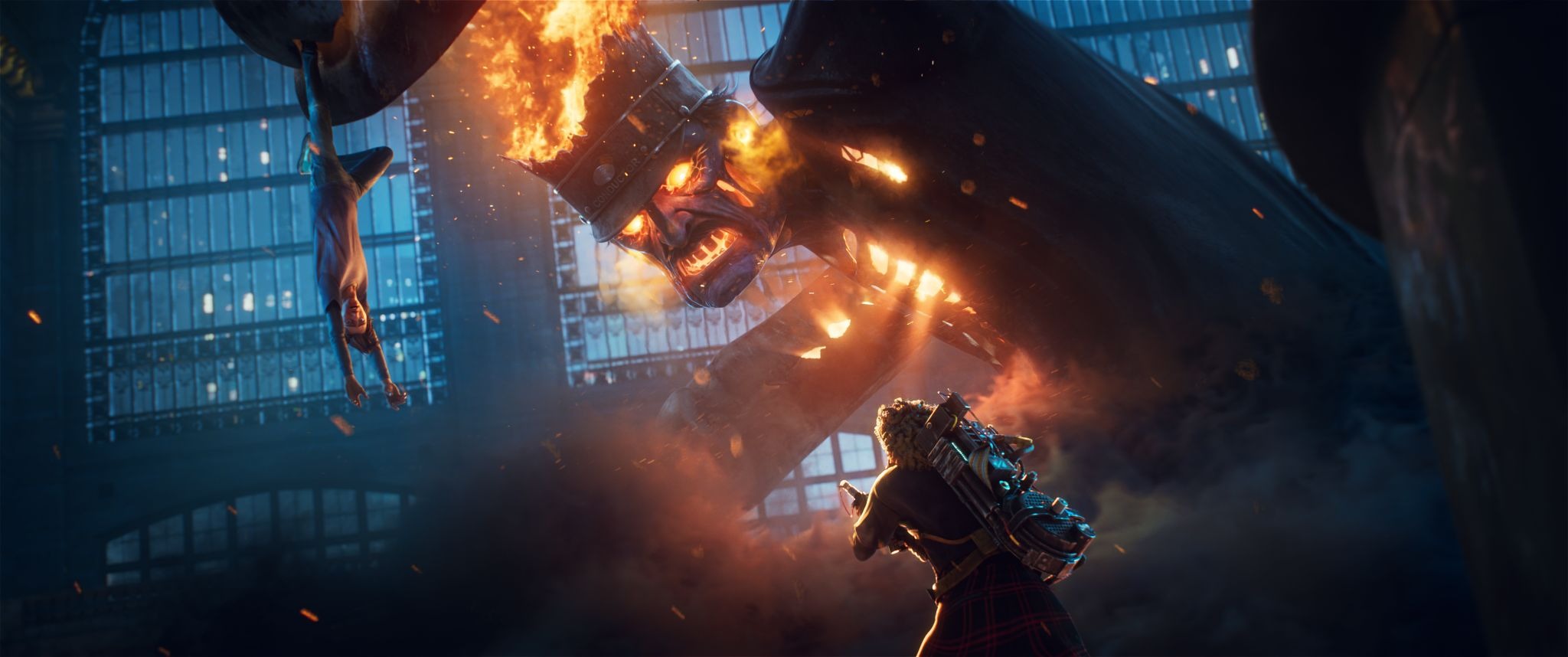
A brief clip from episode two showed team member Travis tracking a tranced-out Zoe to Grand Central Station, where she's boarded a ghost train. One background detail worth noting for Ghostbusters devotees: among the locations glimpsed in the presentation was a shot of “Ray's Occult Books,” the shop from the original 1984 film associated with Ray Stantz. Whether the character himself appears in Night Shift was not addressed.
Ghostbusters: Night Shift is produced with Sony Pictures Animation and arrives on Netflix in 2027.
The One Piece
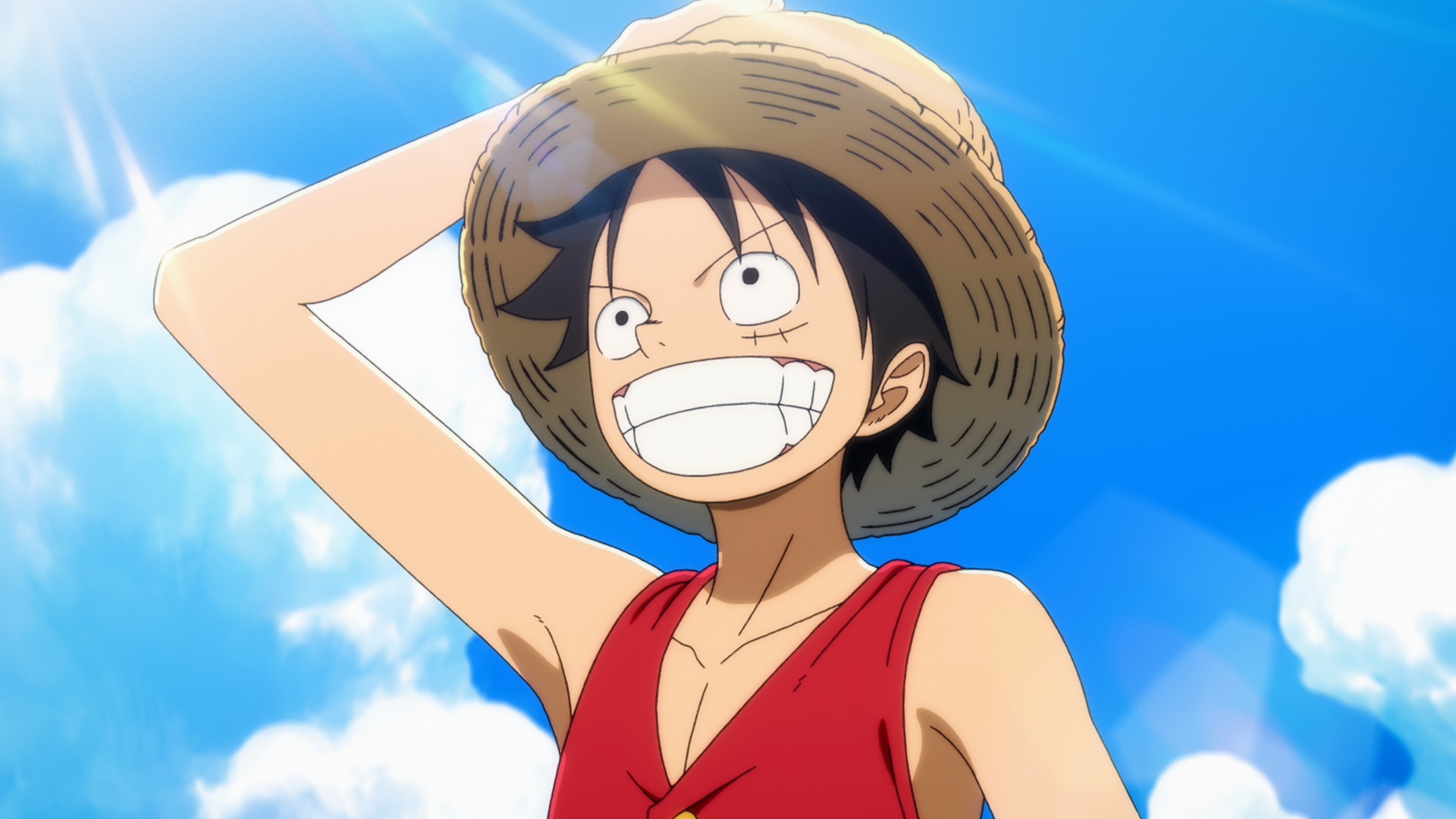
Netflix anime director Yuji Yamano introduced the next section with some context on the platform's anime footprint before unveiling a first-look teaser for The One Piece, an all-new adaptation of Eiichiro Oda's manga produced by Wit Studio and directed by Masashi Koizumi. Slated for February 2027, the project is positioned as an entry point for new audiences rather than a continuation of the existing long-running series. More of The One Piece was shown at Netflix’s Anime presentation.
Charlie vs. the Chocolate Factory
Directors Jared Stern and Lane Hogan presented Charlie vs. the Chocolate Factory, arriving on Netflix in 2027, with a firm clarification baked into the pitch: this is not a retelling of the Roald Dahl book, and it is not connected to the previous film adaptations. It picks up after the events audiences already know, with Willy Wonka, voiced by Taika Waititi, having served prison time for turning a child into a blueberry, now returning to his factory to start over.
The clip shown was rough — approximately 50% layout complete, 35% animation, 10% lighting by the directors' own accounting, with placeholder voice work in some roles, but the comedic tone came through clearly. The factory's residents include some recognizable returns alongside new characters; the Oompa Loompas, redesigned for this version, are small and furry. The overall energy felt closer to a heist movie than a morality tale, which appears to be intentional.
Ray Gunn: Brad Bird in Conversation with Peter Lord
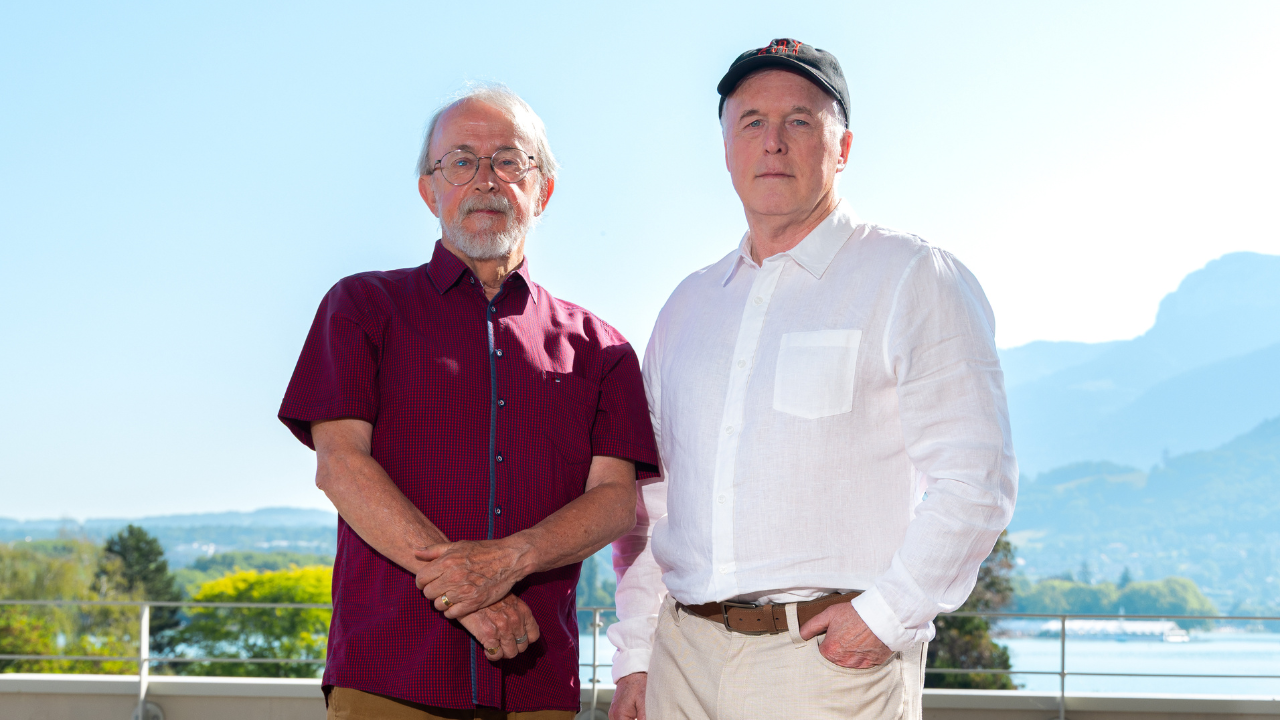
The afternoon's main event was a long-form conversation between Aardman co-founder Sir Peter Lord and Brad Bird, director of The Iron Giant, Incredibles, Ratatouille, Tomorrowland, and Mission: Impossible — Ghost Protocol, followed by the first public screening of Ray Gunn's opening seven minutes.
Bird has been developing Ray Gunn for roughly 30 years, or more precisely, it spent much of that time in a filing cabinet at Warner Brothers, in turnaround, legally out of his reach, even though the studio wasn't making it. He eventually negotiated the rights back and brought the project to Skydance Animation, which is producing it for Netflix. Had Warner Brothers made Ray Gunn during that dormant period, Bird noted, it would have been hand-drawn, which he said would have been "cool," but the film is essentially what he always wanted it to be. Left unspoken, but worth considering: had Ray Gunn moved forward at WB in the early 2000s, the career that produced The Incredibles and Ratatouille at Pixar might have looked very different.
The film's concept originated, appropriately enough, from a mishearing. Bird heard "Planet Claire" by the B-52s, which opens with a repeating bass line, and briefly mistook it for Henry Mancini's "Peter Gunn" theme. When he realized it wasn't, he thought: Ray Gunn. That's a character name. The rest followed.
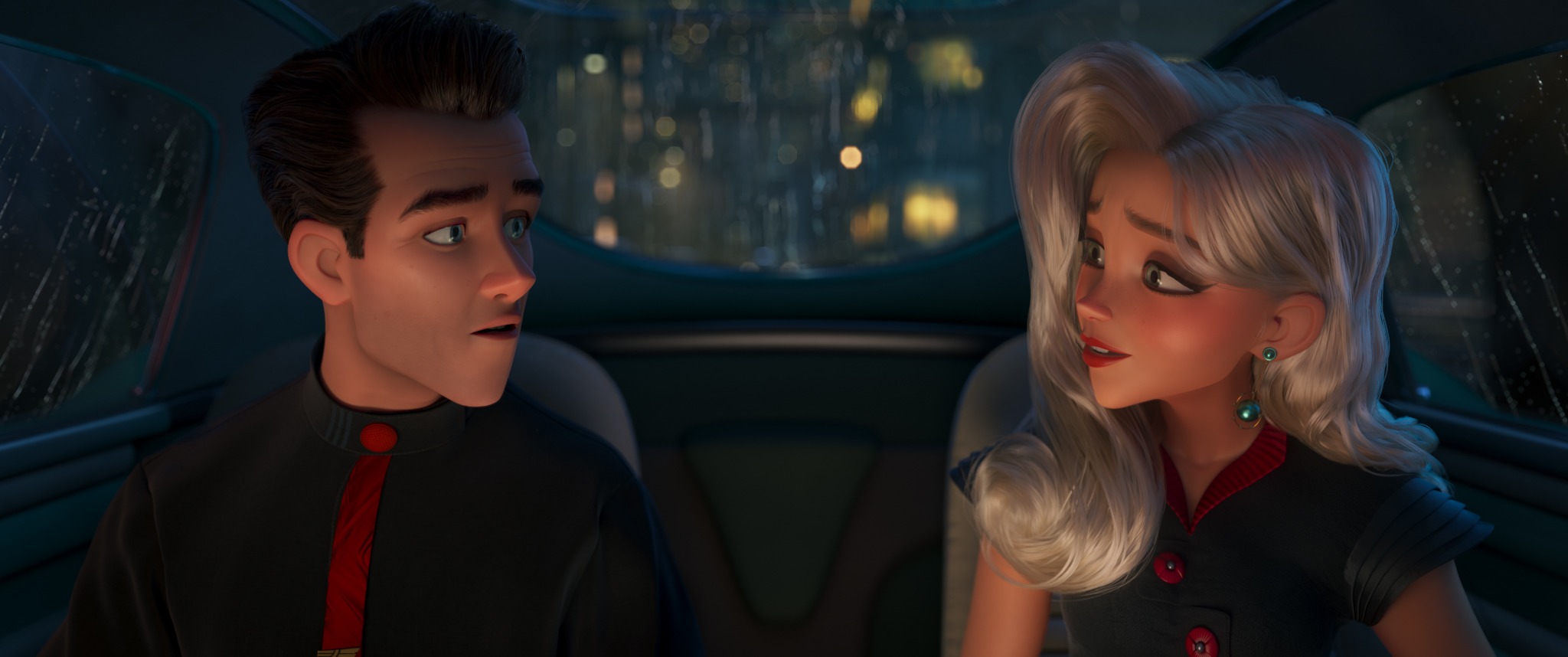
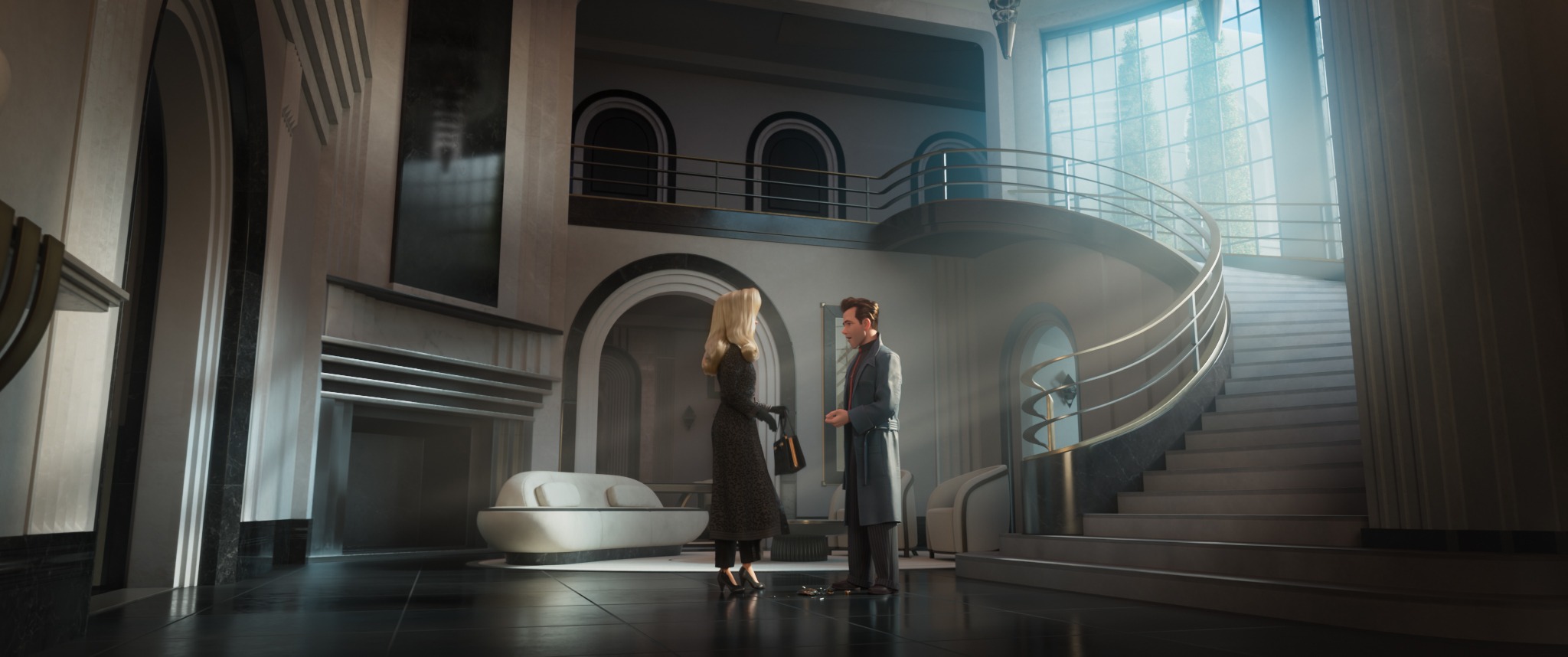
The setting Bird describes is a future as imagined from 1939: Art Deco and Streamline Moderne architecture scaled up to mile-high urban towers, with the optimism of the World's Fair era sitting uncomfortably alongside corruption, desperation, and aliens. "Buck Rogers meets The Maltese Falcon" was Bird's own shorthand. He cited Hugh Ferriss and Raymond Loewy as visual touchstones and pushed back on the assumption that film noir requires darkness and wet streets; his primary reference for the genre is Chinatown, which is set largely in sunlight.
The voice cast includes Sam Rockwell as Ray Gunn, Scarlett Johansson as Venus Nova, and Tom Waits as an alien named Ira. Bird mentioned that Rockwell and Johansson had previously worked together on Jojo Rabbit, and that he managed to get Rockwell and Waits in the booth for a recording session together, a scheduling achievement.
The first clip shown followed Ray into a gun shop, framing him as a noir-archetypal down-on-his-luck detective in need of a new weapon after his weapon failed him at a critical moment. The shop owner walked him through increasingly absurd options before landing on a limited-production prototype: the “Kahl A113 Particle Blaster,” seemingly a nod to both the CalArts classroom tradition and Disney Legend Milt Kahl.
Concept art shown during the conversation included costume designs for Venus Nova that captured the film's dual-nature themes visually: one gown transitions from angelic white to devil-red flames, and the production boards shown alongside it included reference stills of Maleficent as a design inspiration.
The presentation closed with the film's opening seven minutes, a kinetic, densely detailed sequence that established the city, introduced Ray mid-case, and delivered a confrontation in a high-rise office that was as exciting as the best moments from The Incredibles. The sequence confirmed that Ray Gunn is operating at a different visual scale than most of what surrounds it: the city backgrounds were layered and intricate in ways that rewarded the large screen.
Lord and Bird's conversation was warm, wide-ranging, and frequently funny. But Bird kept returning to one simple throughline: he wanted to see this movie, and the only way to see it was to make it. Having finally done so, Ray Gunn closes out a remarkable Annecy showcase for Netflix as its undisputed highlight, and one of the most anticipated animated films of the year. Ray Gunn premieres December 18th on Netflix.