
Mike Gunton Talks "Prehistoric Planet: Ice Age," Jon Favreau’s Influence, and Lessons from "The Lion King"


Prehistoric Planet: Ice Age marks the next evolutionary step in the award-winning natural history series on Apple TV. I spoke with executive producer Mike Gunton, who also serves as Director of Factual and the Natural History Unit at BBC Studios, about re-creating an ancient Earth, collaborating with Jon Favreau, and why authenticity remains the show’s guiding instinct.
.png)
Gunton recalls first meeting Favreau six or seven years ago while The Lion King was in production. “Apple set up this little meeting room in London,” he says. “Jon came in with his iPad, showing me some of the things he was doing. He’d just seen my series Dynasties and wanted to know what camera I’d used and how we achieved that realism.”
The two immediately fell into what Gunton calls a “geek huddle,” swapping ideas about film grammar and how to get inside an animal’s head. “From that moment on, it was clear this was a good marriage — his expertise in movie VFX and mine in dramatic, natural history storytelling. Now, I sometimes give more notes on the visual effects, and he gives notes on the natural history. We’ve almost swapped roles,” he laughed.
Favreau has since become, in Gunton’s words, a touchstone for the series’ rhythm and pacing. “I talk to him all the time about whether the storytelling feels right. He keeps me honest — everything must look filmed, not fabricated.”
Narrating the new season is Tom Hiddleston, best known for his role as Loki in the Marvel Cinematic Universe, who previously lent his voice to Apple’s Earthsounds. “He’s genuinely fascinated by this material,” Gunton noted. “He’s got a young son who’s obsessed with Ice Age animals, and that excitement came through in every session. Moving to a new era, we felt he was the right person to be the voice of this world.”
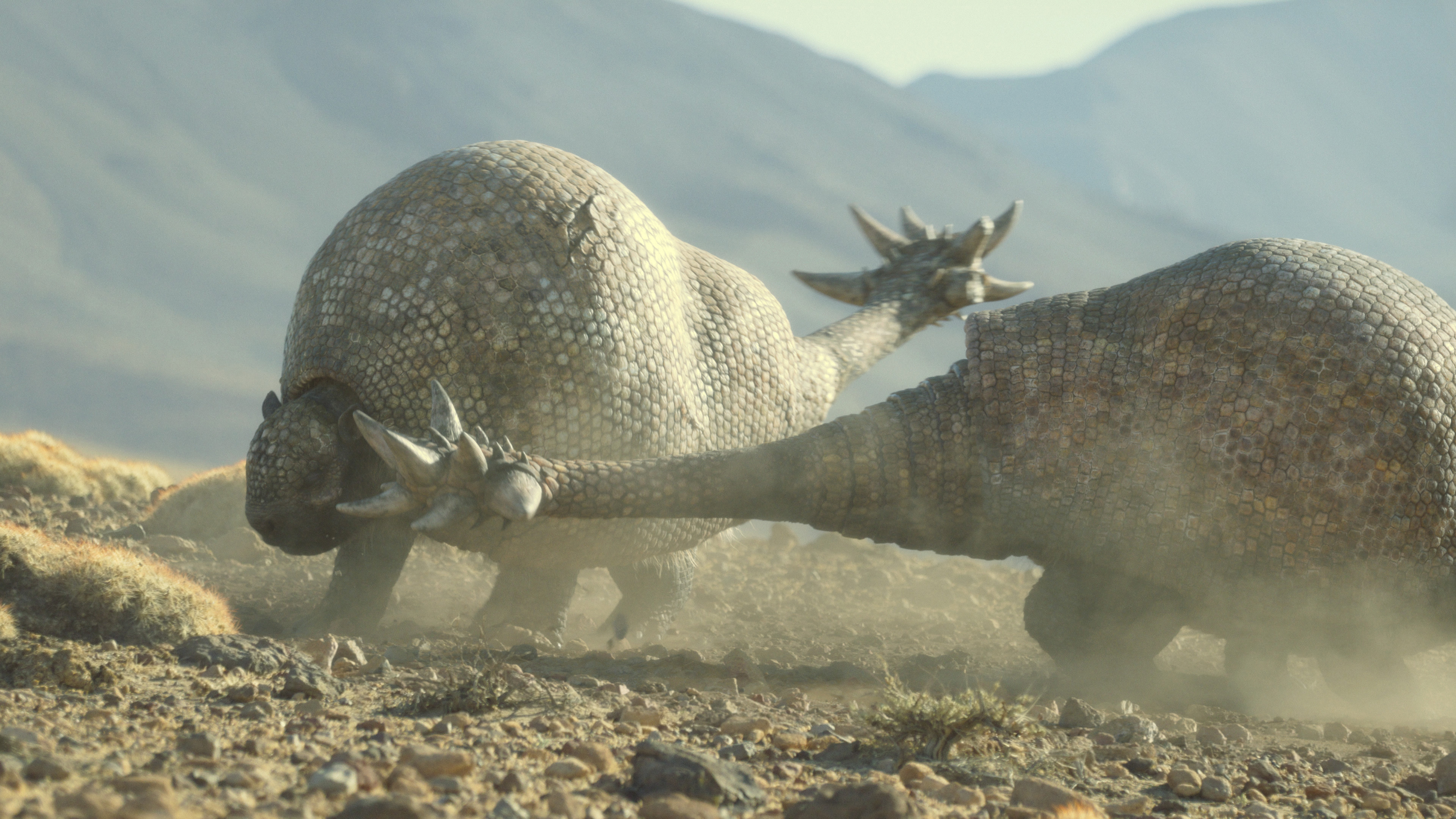
Although audiences might instinctively picture Blue Sky’s animated Ice Age films, Gunton says that connection wasn’t on the team’s mind. “The idea was always to make a Planet Earth for other time periods. I like to think of it as taking the entire Planet Earth crew in a time machine, back to the end of the Cretaceous for the first series, and now to two million to eleven thousand years ago.”
That Planet Earth style is intentional. “Anything that could not be done with a real camera, we don’t do. Jon’s big magnifying glass is: it must never look like VFX. Those constraints actually give us greater authenticity.”
One of the most striking choices in Ice Age is its use of classic monochrome night-vision footage rather than the colorized versions common today. Gunton calls it “a matter of personal taste and honesty.”
“When I go out at night, I don’t see in color — I’m using my rods, not my cones. My job is to make people see on screen what I experience in the field. Night vision in color feels wrong,” he explained. The familiar grain and glow of traditional night imagery also reinforce the series’ grammar of wildlife filmmaking. “Those cues subliminally add to authenticity,” he said. “If you make something look too cutting-edge, the audience assumes it’s VFX. We’d rather they believe it’s real.”
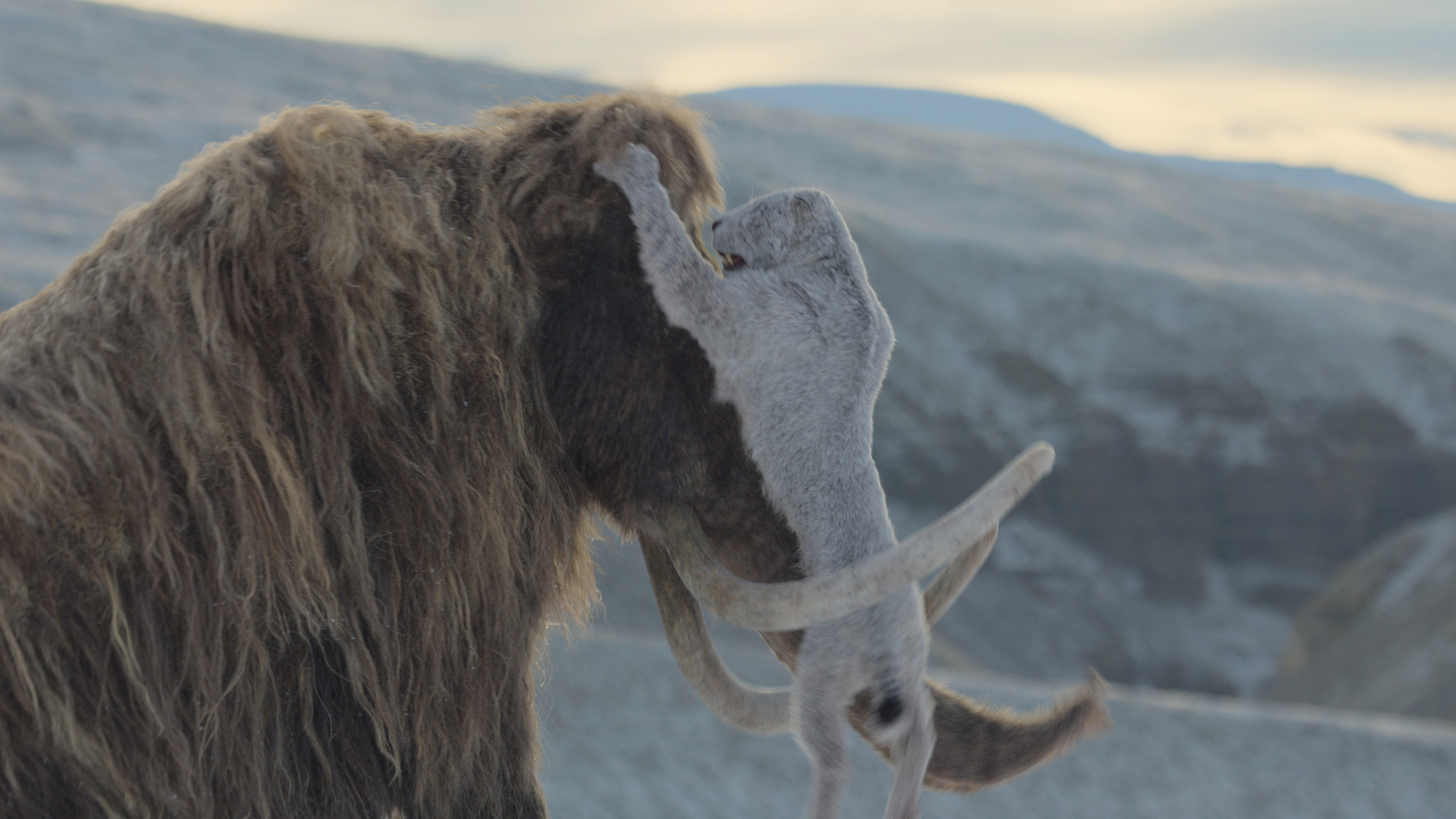
Gunton points to the series’ opening blizzard sequence as both the most difficult and most rewarding to achieve. “It’s one of the few scenes not shot in a real environment. You can’t put a digital mammoth in a real blizzard — the snow hides everything — so we built the blizzard digitally after filming all the interactions without any snow at all.”
That paradox — spending enormous effort on detail the audience barely sees — is deliberate. “It takes real chutzpah,” he said with a grin. “You’re basically hiding all your work because that’s what looks authentic.”
While “Ice Age” conjures images of endless snow, Gunton says the era’s greatest revelation was how much of the planet became drier. “All that water locked in ice pulled moisture out of the air. Forests retreated, deserts expanded, and grasslands took over. The savannas and steppes we see today are a legacy of that climatic change.”
For Gunton, that’s the series’ deeper resonance. “We’re watching the Earth reshape itself under extreme climate pressure. In a way, the world we live in today is the direct consequence of that transformation hundreds of thousands of years ago.”
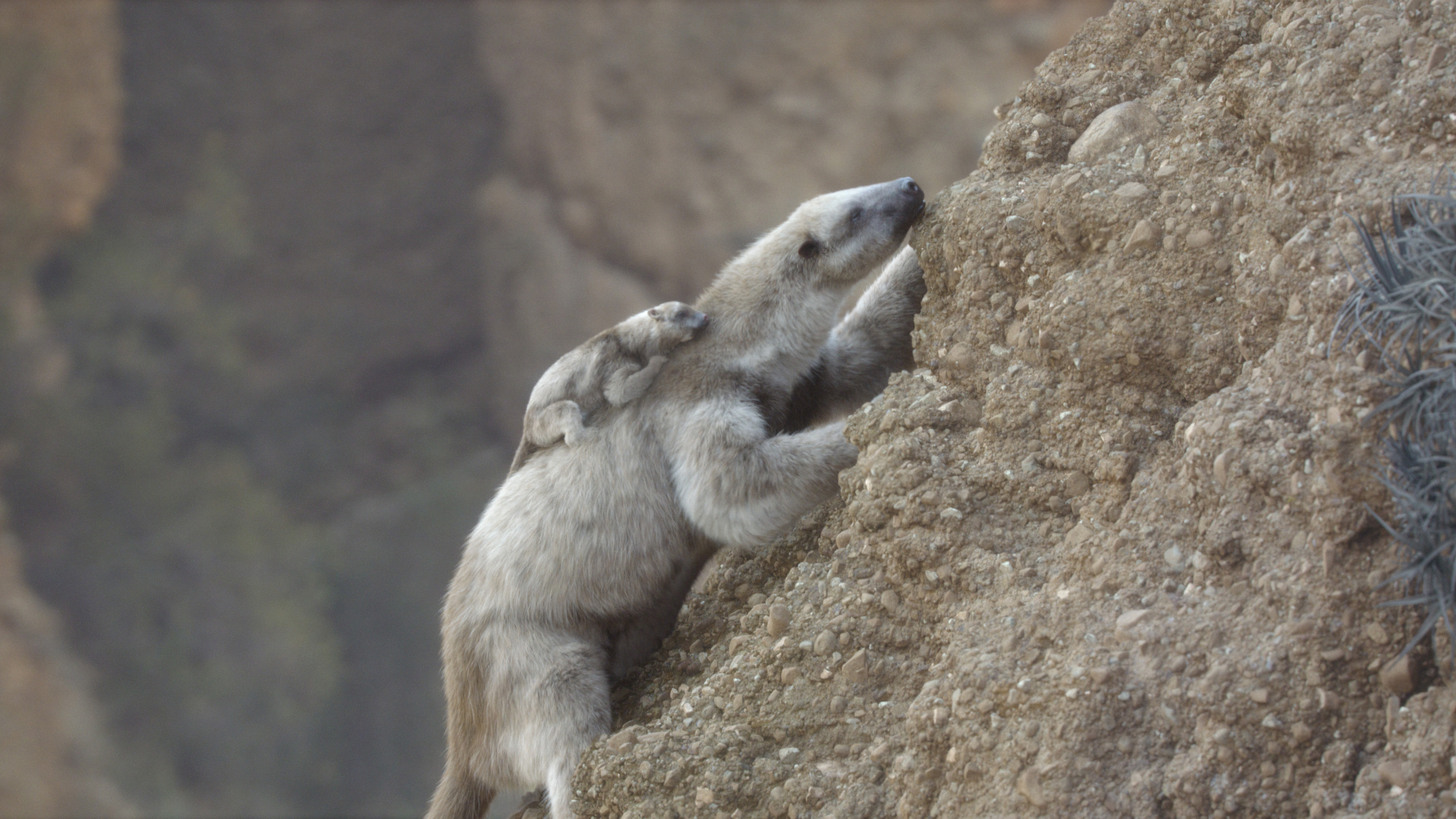
With its blend of cinematic ambition and scientific discipline, Prehistoric Planet: Ice Age continues to evolve the natural-history genre. Under Gunton’s direction — and with Favreau’s cinematic eye and Hiddleston’s eloquent narration — the series invites audiences to journey through a frozen past that feels both ancient and startlingly familiar.
Prehistoric Planet: Ice Age is now streaming exclusively on Apple TV.