
How Starfleet Academy Reimagines Star Trek for the Next Class of Cadets


Star Trek returns to the classroom with Star Trek: Starfleet Academy, which debuted today on Paramount+. Across two spirited TCA press conferences, the cast and creators discussed honoring Trek’s legacy, embracing teen-driven storytelling, and building an Academy grounded in hope, community, and representation.
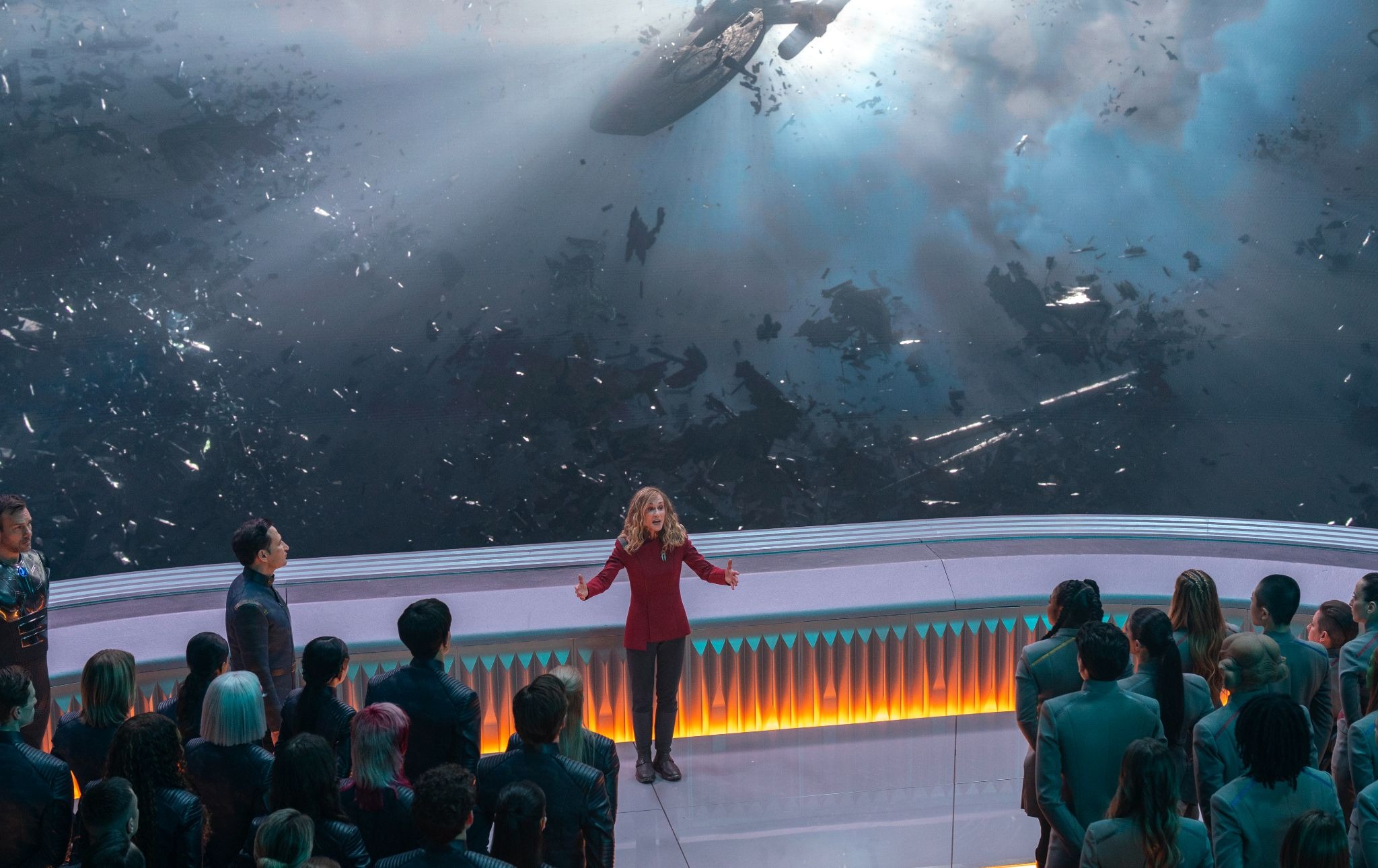
Showrunner Alex Kurtzman said the core of the new series emerged from the world today’s young people are inheriting. He sees the cadets’ emotional landscape reflected in his own son: “You’ve got a generation… that’s inherited a very divided world,” he said, while also holding “this sense of an uncertain future and also this absolute youthful exuberance that anything is possible.” That duality, he noted, “is what Star Trek is really about.”
Kurtzman also revealed that the back-to-back premiere episodes were intentionally designed. “The first episode is about getting to school and the second episode is about being at school,” he explained. While a pilot can hook an audience, “it’s the second episode that makes them decide… do I want to stick around?” When asked about the pacing of LGBTQ+ representation in the early episodes, Kurtzman was unequivocal: “Representation is at the beating heart of Roddenberry’s vision… there’s really no reason to change course.”
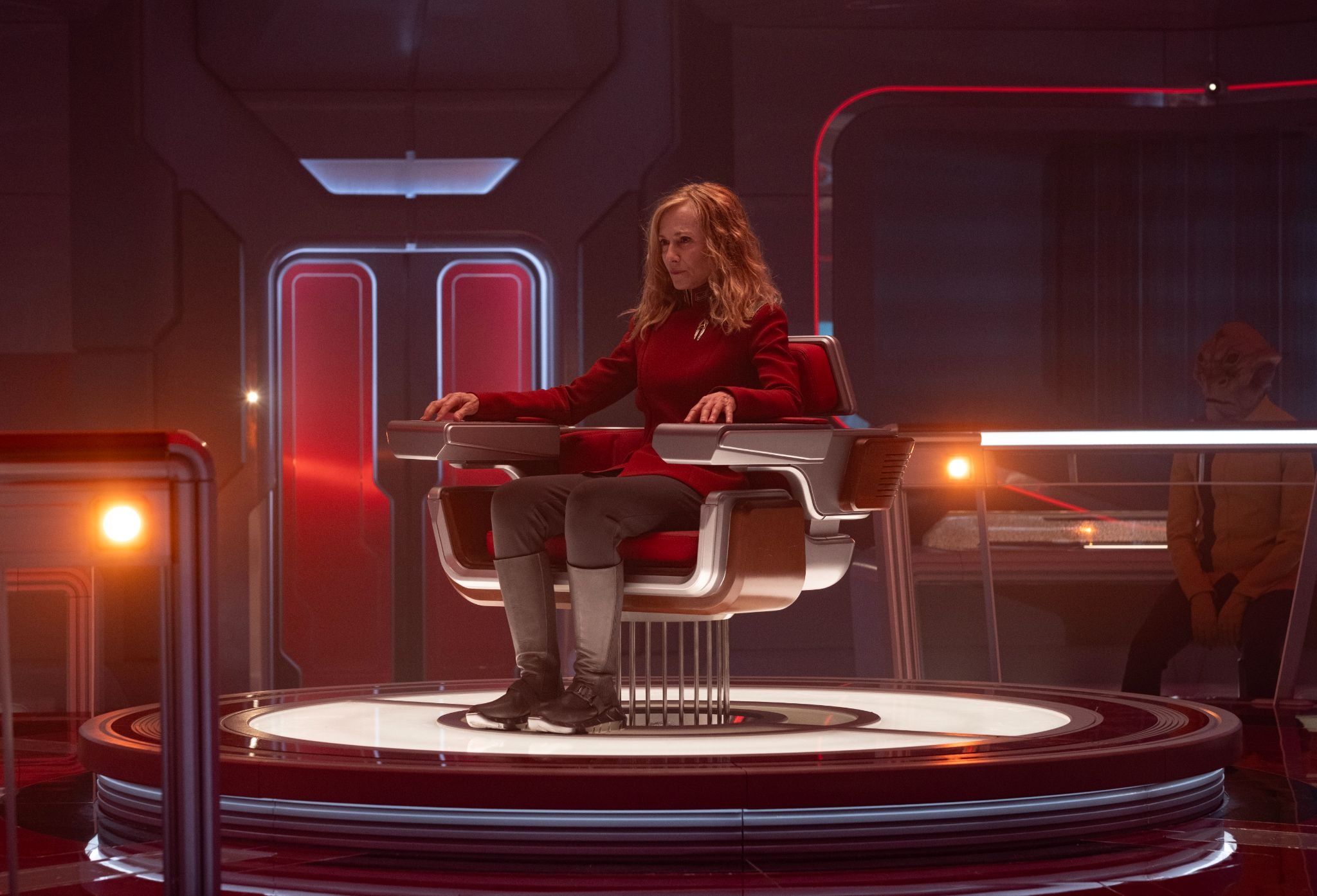
Holly Hunter’s Chancellor Nahla Ake brings a distinct physicality and philosophy to the Academy. Hunter admitted that Trek’s famous technobabble took work: she drilled a difficult line “until it was as comfortable as it could be,” even writing vocabulary “on the ceiling of my bedroom so that I would see the writing on the wall when it’s time to have breakfast.”
Kurtzman originally wrote the character as barefoot, which sparked Hunter’s imagination. She loved the idea and embraced a movement style with “a fluidity to the character.” Much of that was honed during on-set rehearsals with Kurtzman, where the two explored blocking and physical choices together.
Hunter also carries decades of Trek nostalgia. She vividly recalled watching the original series as a child with her family—“the beautiful mustard color of the suits” and the cast standing “like pieces of granite.” When she was approached for Starfleet Academy, she joked that seeing Paul Giamatti already attached made her think, “This is a red flag. I should avoid this thing at all costs,” before quickly adding that the offer was “a really easy yes.”
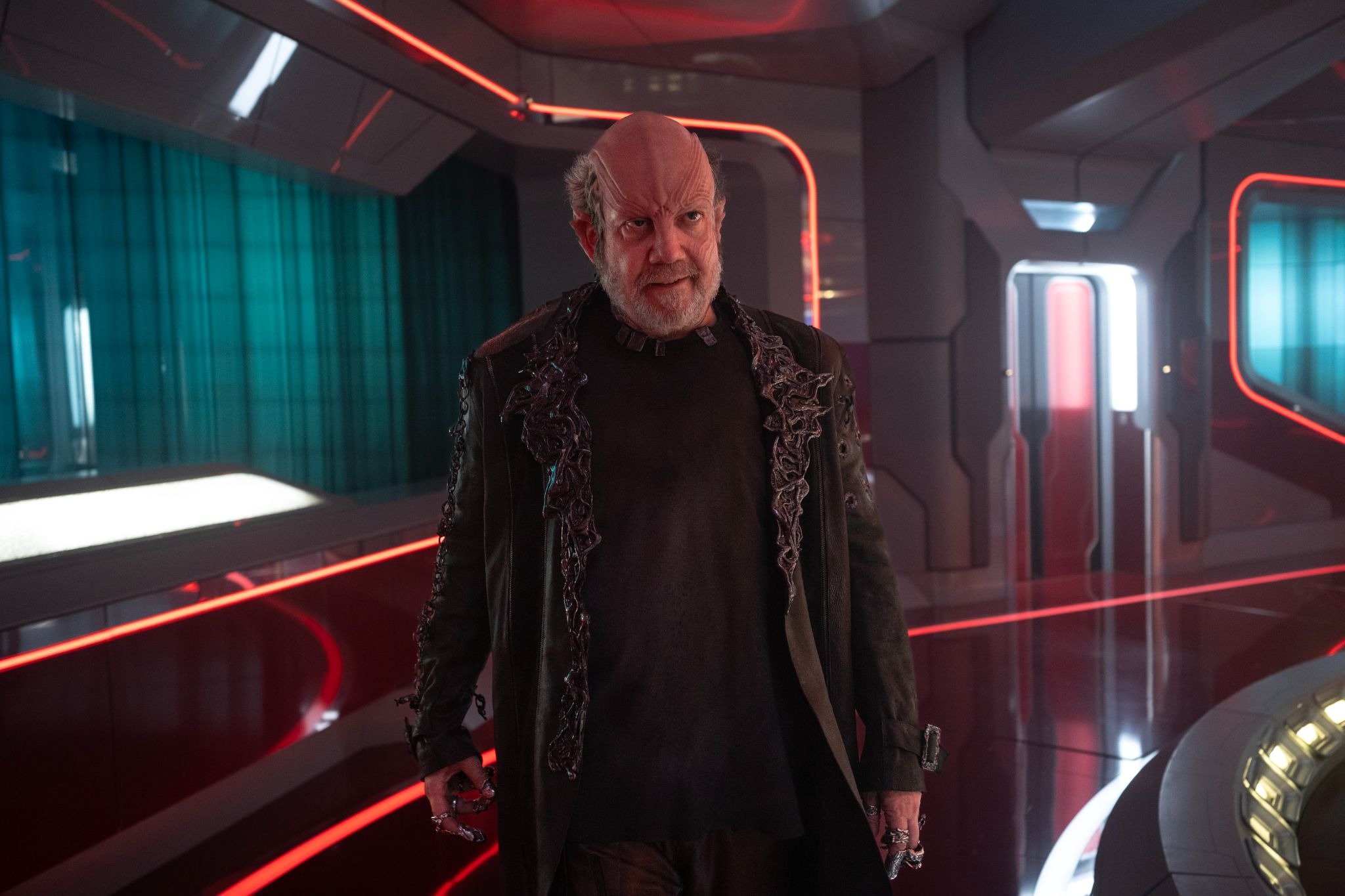
Giamatti’s enthusiasm dates back to childhood, when his father decided his “weird child” might enjoy Star Trek. He became a lifelong fan, especially of Deep Space Nine and Voyager, and meeting Robert Picardo left him “embarrassed with how excited I was.” Playing a Klingon was a longtime fantasy—one he never thought would happen. “You can manifest your dreams, kids.”
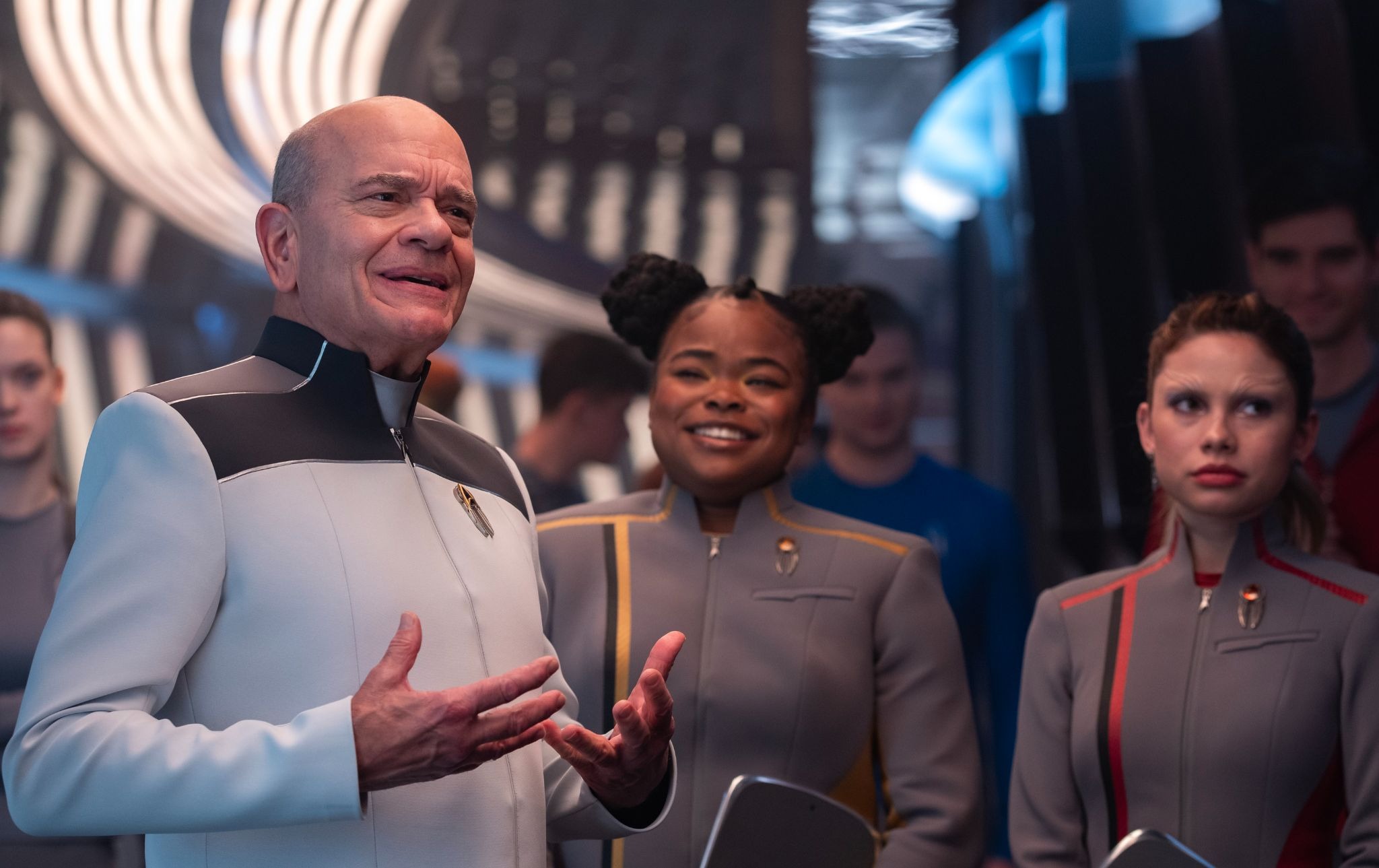
Robert Picardo returns as The Doctor, now older and teaching cadets. The shift to more contemporary dialogue surprised him—fans even reacted when he called something “super helpful,” prompting Holly Hunter to quip, “The doctor would never say that.” Picardo laughed it off: “In 800 years, the doctor may have changed a little.”
He also addressed the hologram’s aged appearance. If generations of colleagues grew old and died around you, he reasoned, “you would start to feel a little weird never changing.” The writers developed an in-story explanation, and Picardo’s kids teased him after seeing the pilot: “Hey, Dad, they got you to run. How did they do that?”
Comedian Gina Yashere, who previously co-ran the Bob Hearts Abishola writers’ room, said she loves simply showing up and acting. “I get to just turn up and play,” she said, adding that Alex Kurtzman encourages ad-libs. “A couple of those ad-libs actually turned up in the episode that we watched.”
Her engineering background—she once built elevators for Otis—did little to soften Trek’s technobabble. She approached some lines phonetically and joked she was “relishing the day I get to say stuff that I didn’t even understand… that’s the best part of Star Trek.”
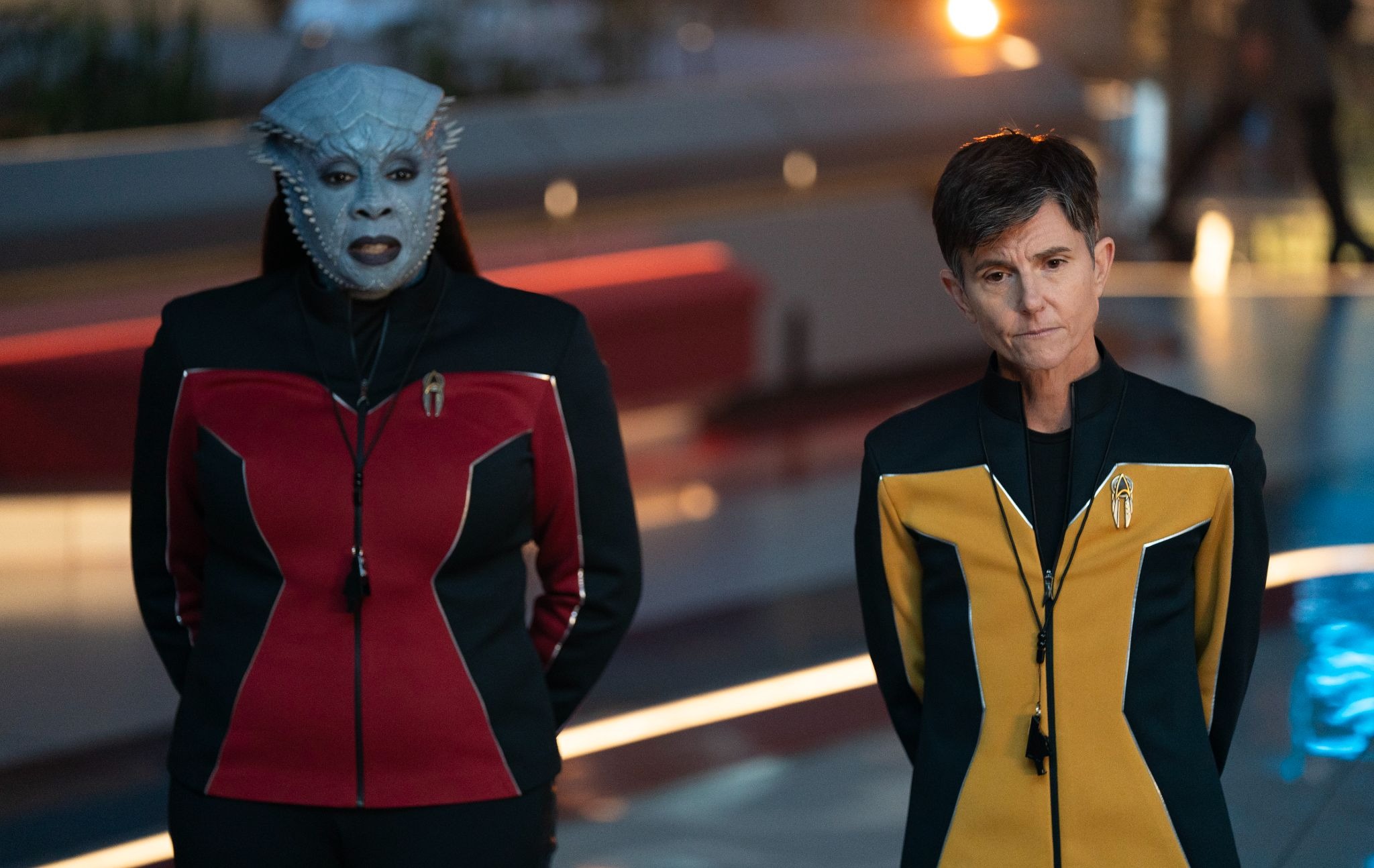
Co-showrunner Noga Landau described Star Trek as her creative foundation: “Every writers’ room I’ve ever been a part of… all I did was talk about Star Trek,” she said. “Star Trek raised me.” She wants the Academy to “look like the world around us,” a value she carried from Nancy Drew into the Trek universe.
When asked about comparisons to Hogwarts or Xavier’s School, Landau clarified that Starfleet Academy predates all of them. “People have been waiting for 60 years to go to Starfleet Academy,” she said. With Holly Hunter as a 400-year-old Lanthanite chancellor whose “effervescent… sense of adventure” shapes the school’s atmosphere, Landau believes the show captures “the fun of Hogwarts” and the discipline of superhero academies—while remaining “totally its own thing.”
The series’ young cast dove deep into Trek history while carving out new stories. Karim Diane, who plays a Klingon medical student, studied the franchise closely. “I watched everything that Worf was in,” he said. He wanted to respect the culture even while playing “a very different version of a Klingon” whose aspirations lie in medicine rather than war.
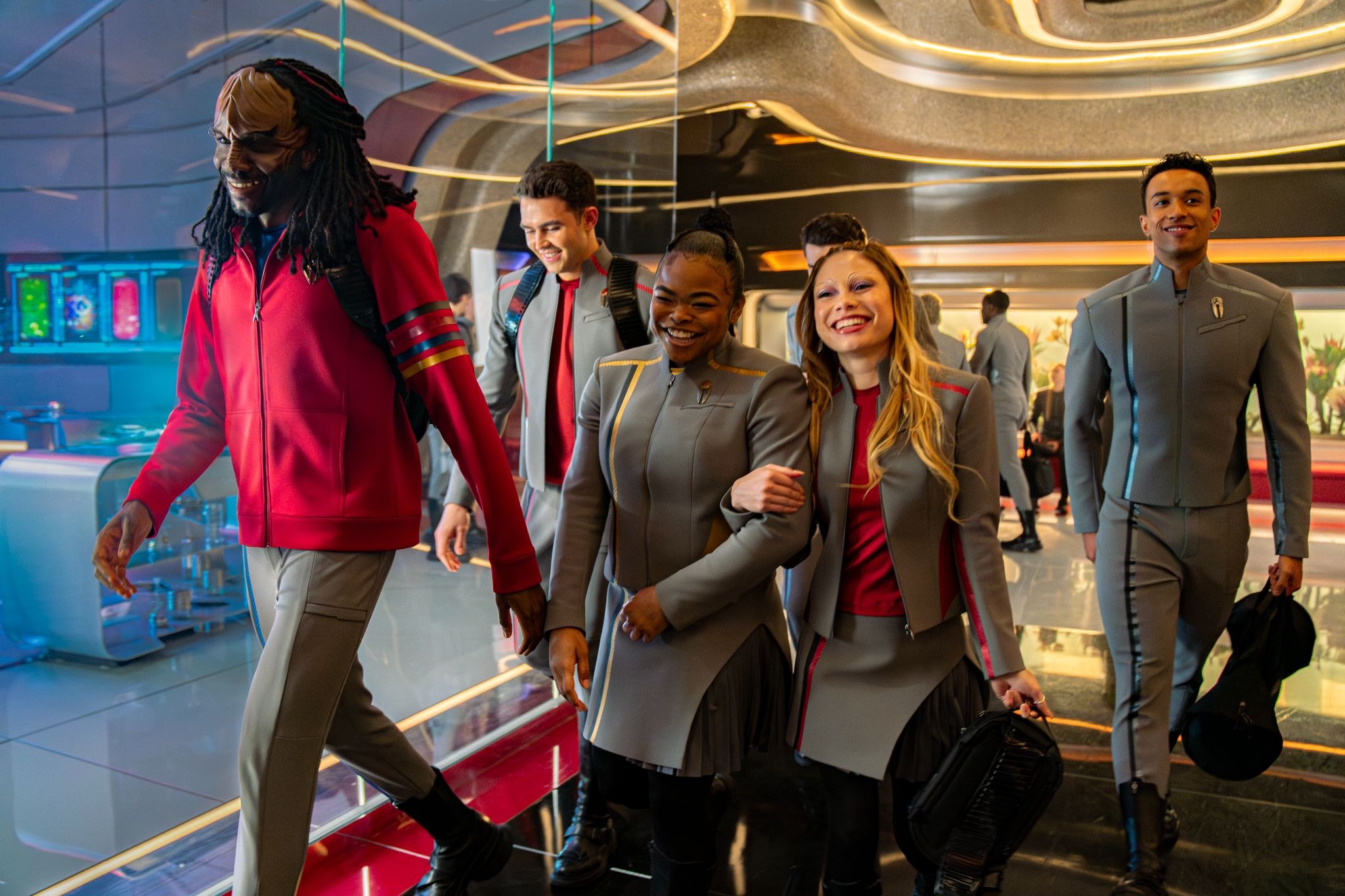
Kerrice Brooks approached her AI character through imaginative world-building. “I really draw into her AI-ness,” she said, describing a backstory “full of imagination… building it up from the ground up.” She joked that she shaped the character the way you’d use “an electric drill.”
Bella Shepard described the swagger of Genesis Lythe as both learned and protective. Growing up with a Starfleet admiral father shaped her, but much of her bravado is “a protective outer shell… a way to kind of find a sense of community” and step into leadership.
Zoe Steiner cited The Voyage Home as her favorite Trek entry and loved paying homage to “Jenny and George and the whales” in episode two.
George Hawkins applauded the prosthetics and digital enhancements that complete his character’s alien form, especially the side-blinking eyes. He also appreciated the Academy’s on-screen world-building, from fish-filled ponds to roaming drones: “The finishing touches are incredible.”
Sandro Rosta, a breakout newcomer, shared a heartfelt story about his unexpected path to the series. “Honestly… a lot of praying,” he said. As a new actor, he submitted each audition with hope but little expectation. Even now, he admitted, he hasn’t fully absorbed what it means to lead a Star Trek series—prompting castmates to jump in with praise for his “unbelievable talent and hard work.”
As Star Trek: Starfleet Academy launches on Paramount+, the series positions itself as both a love letter to six decades of Trek and an invitation to a new generation. By blending legacy characters with fresh faces, philosophical optimism with youthful uncertainty, and discipline with discovery, the show reclaims Starfleet as a place where learning, growth, and connection matter as much as duty.
Whether it’s seasoned icons like Holly Hunter, Paul Giamatti, and Robert Picardo grounding the Academy in history, or a vibrant ensemble of cadets redefining what the future of Starfleet looks like, Starfleet Academy embraces the idea that hope isn’t inherited — it’s taught, tested, and chosen. And in a universe that has always believed in the power of education, empathy, and shared purpose, class is officially back in session.