
Film Review: "Whalefall" Is a Technical Marvel That Belly Flops


Some stories are best left as books. Daniel Kraus’ 2023 novel Whalefall tells the intimate story of a young man trapped inside the belly of a whale as he reflects on memories of his deceased father. In 20th Century Studios’ screen adaptation, it becomes a body-horror thriller with a bolted-on family drama about legacy, and the two never fit together.
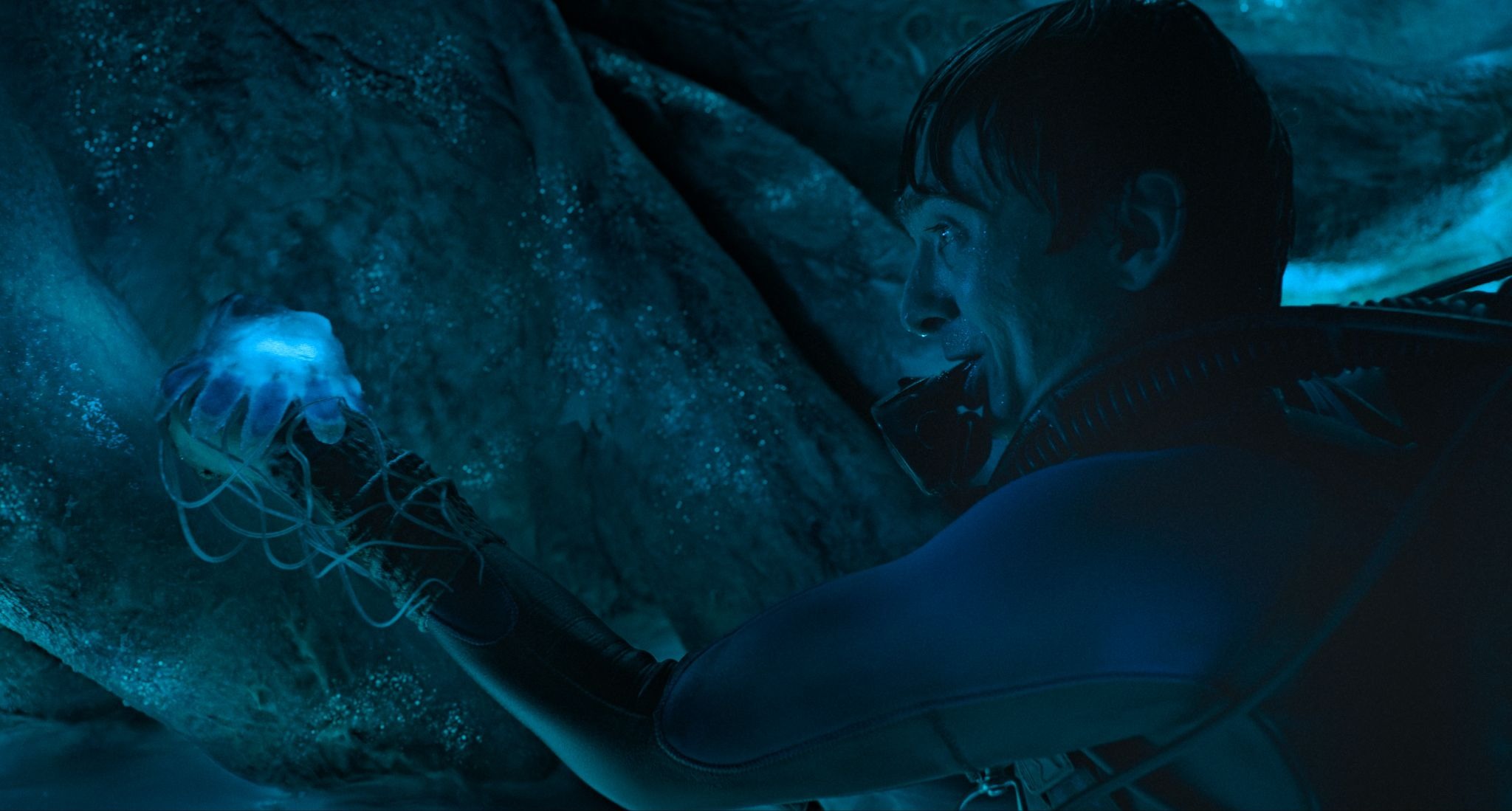
On the one-year anniversary of his father’s death, Jay Gardner (Austin Abrams) ignores all warnings to go diving in search of the body that was never recovered. Caught in the wrong place at the wrong time, Jay is dragged by a giant squid into the belly of a sperm whale, a sure death sentence. But as the son of professional diver Mitt Gardner (Josh Brolin), Jay draws on the lessons his father taught him in hopes of surviving the unimaginable, a journey that could help heal unresolved emotional wounds.
What works about Whalefall is everything that happens underwater. Austin Abrams gives an unforgettable performance, acting against submerged practical sets, puppetry, and some CG enhancements. The whale’s interior is full of horrific imagery that will have audiences squirming. The film may have a PG-13 rating, but it has enough nightmare fuel to rattle grown adults. It’s all even more impressive when you know how much of this was filmed practically, thanks to the wizardry of Wētā Workshop.
With a runtime of 1 hour and 46 minutes, writer/director Brian Duffield’s film quickly gets audiences into the belly of the beast, with maybe 20 minutes of exposition covering Jay’s estrangement from his father, mother (Elisabeth Shue), and sisters (Jane Levy, Emily Rudd) before his solitary journey underwater. However, it’s not enough to make viewers care all that much about what is, essentially, the heart of the film.
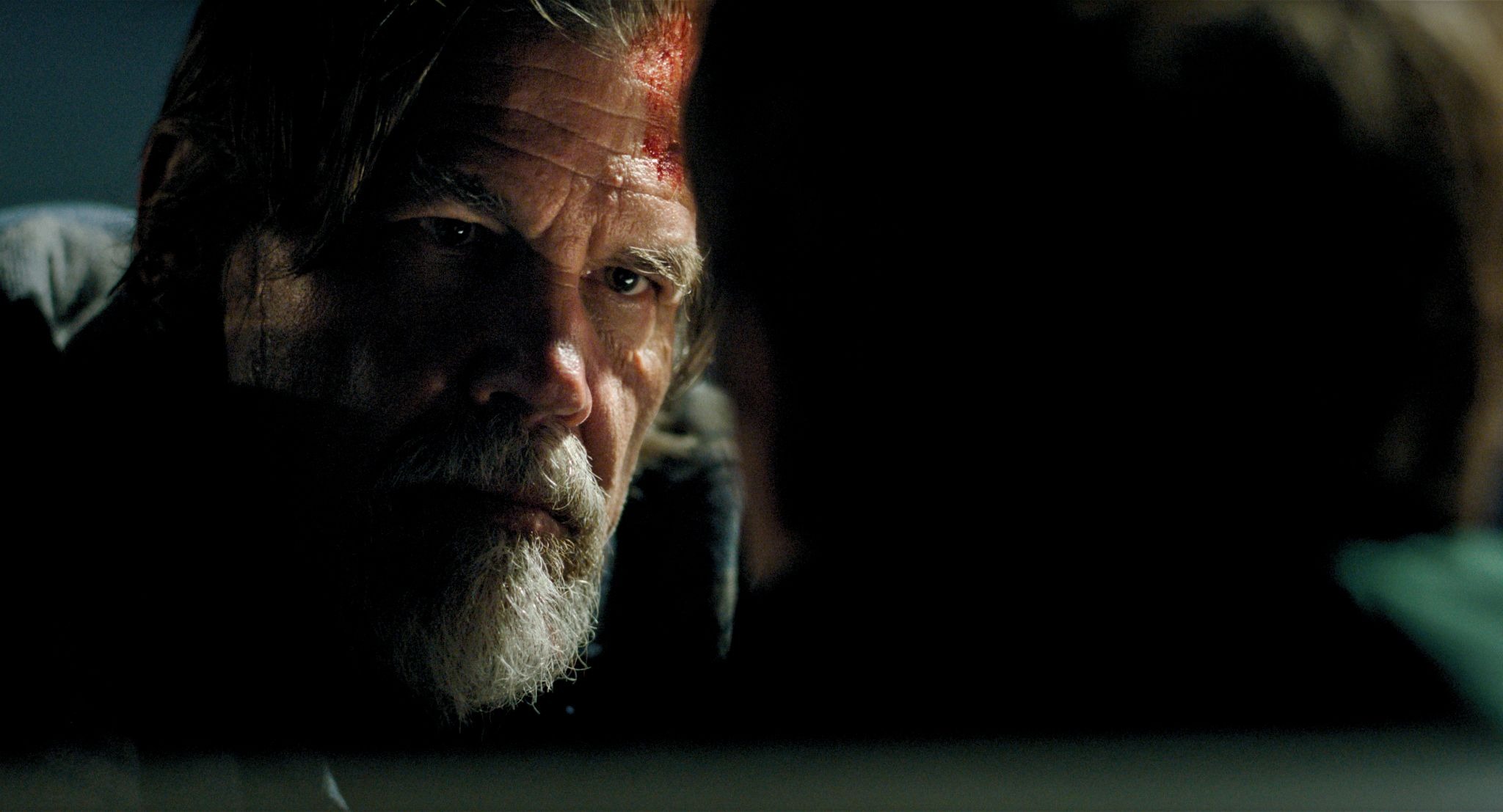
Mitt Gardner is not an easy character to love. In the first act, it’s clear that Mitt was a true father to his daughters, while Jay was meant to be Mitt’s mini-me. Through flashbacks of Mitt stamping out Jay’s sense of self to mold him in his own image, we’re supposed to understand Jay’s sense of duty to retrieve his father’s decayed remains. But the hell that Jay goes through, both emotionally and physically, never feels justified. Audiences will care more about the fate of a bioluminescent jellyfish than about Mitt Gardner.
There’s also a strange sense of destiny about the whole ordeal that feels a bit like M. Night Shyamalan’s Signs, where the deceased wife’s deathbed ramblings turn out to be premonitions for how to defeat the aliens. In this case, Mitt’s rants become life-saving advice for Jay, and the film also hints at a mystical connection between Mitt and the whale that it never really explains. Even the explanation of the film’s title, which gives goosebumps in print, feels downright preachy on screen.
Technically, there’s plenty to admire in Whalefall. Abrams carries the film almost single-handedly, and the labor that went into creating the whale’s insides as three-dimensional underwater sets is remarkable in a CGI-dominated era. The sound design is also incredible. Anyone still curious should seek out a Dolby Atmos screening.
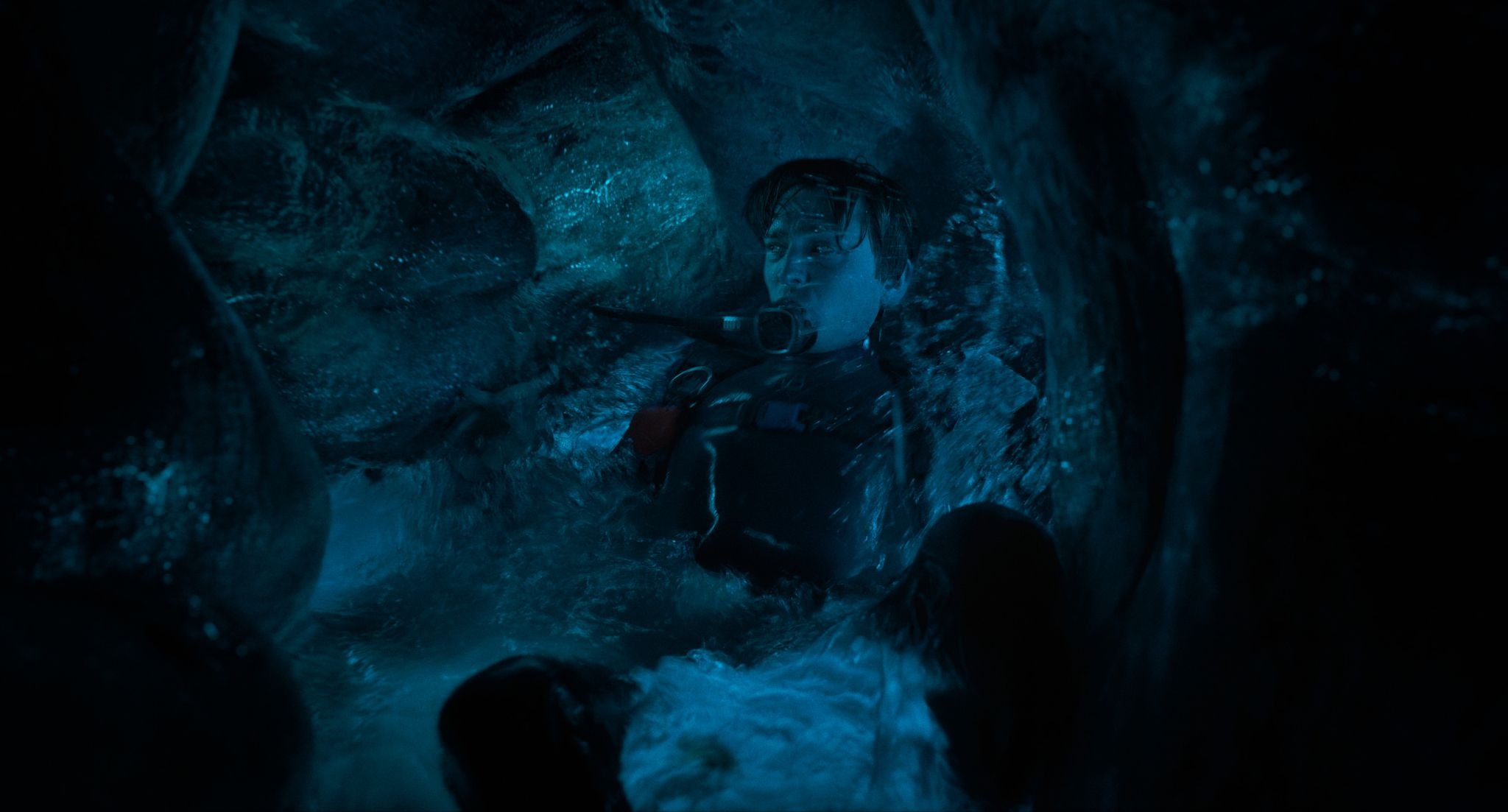
It’s a shame the film’s emotional core rings so hollow, because in the end, it likely works best as a 75-minute story about a diver who’s swallowed by a whale and fights to get out before his oxygen tank runs out. That’s the part that works. The rest belly flops.
I give Whalefall 2 out of 5 stars.
Whalefall opens Friday, October 16th, exclusively in theaters.