
Thank You, Bob: A Brief Look at Iger's Legacy


As Bob Iger ends his second tenure as CEO of The Walt Disney Company, it feels appropriate to pause and recognize what his leadership has meant for the company and for those of us who follow it closely. While his second era in the role was not defined by the sweeping, transformative acquisitions and bold creative pivots that marked his first run, it served an equally important purpose. Iger returned at a moment of instability and uncertainty, and his primary achievement was stabilizing the organization while quietly laying the groundwork for the next era of growth.
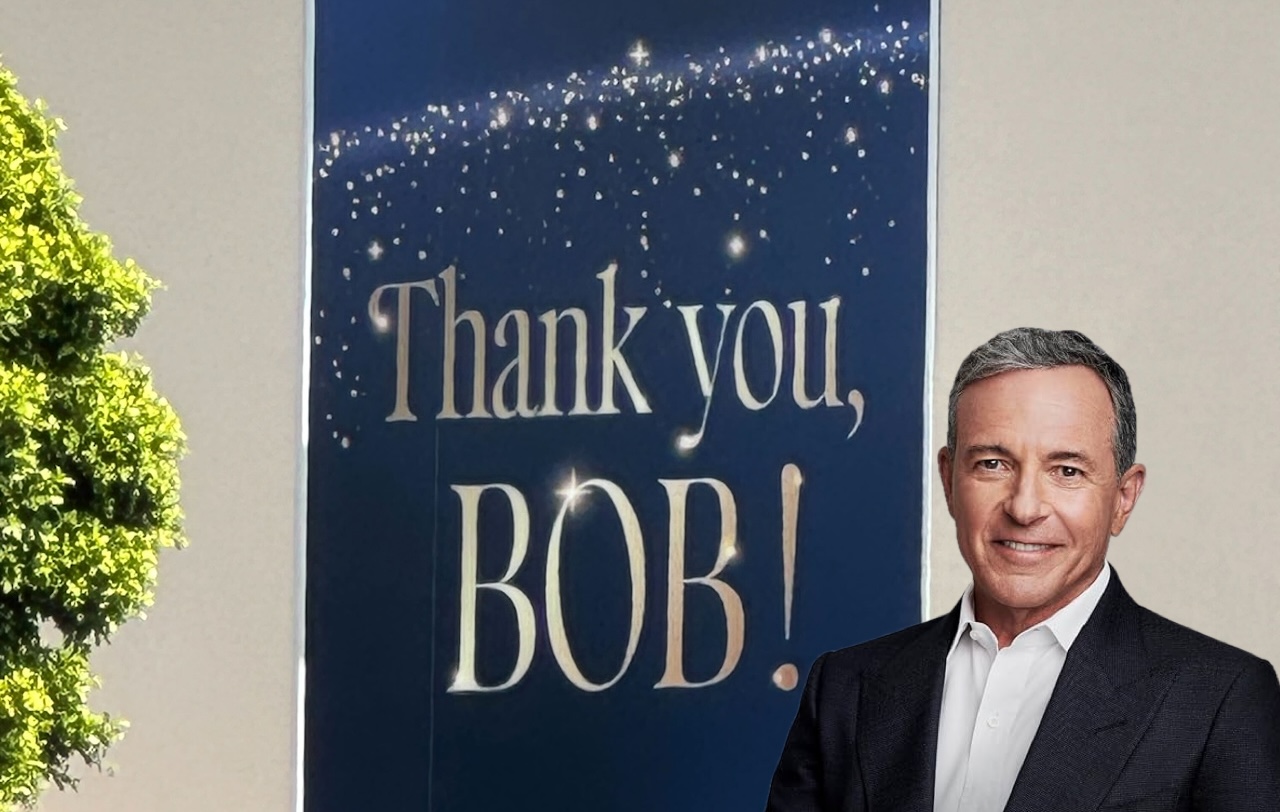
He did not need to come back. After nearly two decades of leadership, he had every reason to enjoy retirement. Yet when the Board asked him to step back in and help steady the company, he answered that call. Even if the situation that required his return was partly of his own making, his willingness to re-engage and repair the foundation of Disney deserves recognition.
Looking at the entirety of the Iger legacy, one theme emerges again and again: a willingness to confront problems directly and solve them with bold, sometimes unpopular decisions. Early in his first tenure, he recognized that Disney’s animation division, long the heart of the company’s storytelling identity, had lost its creative momentum. Rather than attempt incremental fixes, he pursued the acquisition of Pixar. At the time, many on Wall Street questioned the price and the wisdom of placing so much creative influence in the hands of Pixar leadership. In hindsight, it stands as one of the most important strategic decisions in Disney history. Not only did Pixar revitalize Disney animation culture, but it reestablished Disney as the gold standard for animated storytelling.
Iger also demonstrated a clear understanding that Disney’s theme parks were not simply revenue generators but physical embodiments of the company’s storytelling legacy. When Disney's California Adventure and Walt Disney Studios Park opened to underwhelming reactions, he did not accept mediocrity. Instead, he committed to long-term reinvestment, transforming those parks through ambitious expansions and new experiences. From the reinvention of Disney California Adventure with Cars Land and other additions, to the ongoing evolution of the Paris resort, Iger made clear that Disney parks must live up to the standards set by Walt himself. More recently, that philosophy continued with the approval of an extraordinary $60 billion investment plan aimed at expanding and enhancing Disney’s parks and experiences division over the coming decade.
Of course, Iger’s career has not been without missteps. Perhaps the most significant challenge he faced during his second tenure was correcting the leadership transition that followed his original retirement. His decision to appoint Bob Chapek as his successor ultimately proved unsuccessful. In less than three years, the company found itself facing internal cultural tensions, strategic uncertainty, and declining confidence from employees and investors alike. The situation deteriorated to the point that Iger was asked to return to the role he had previously vacated.
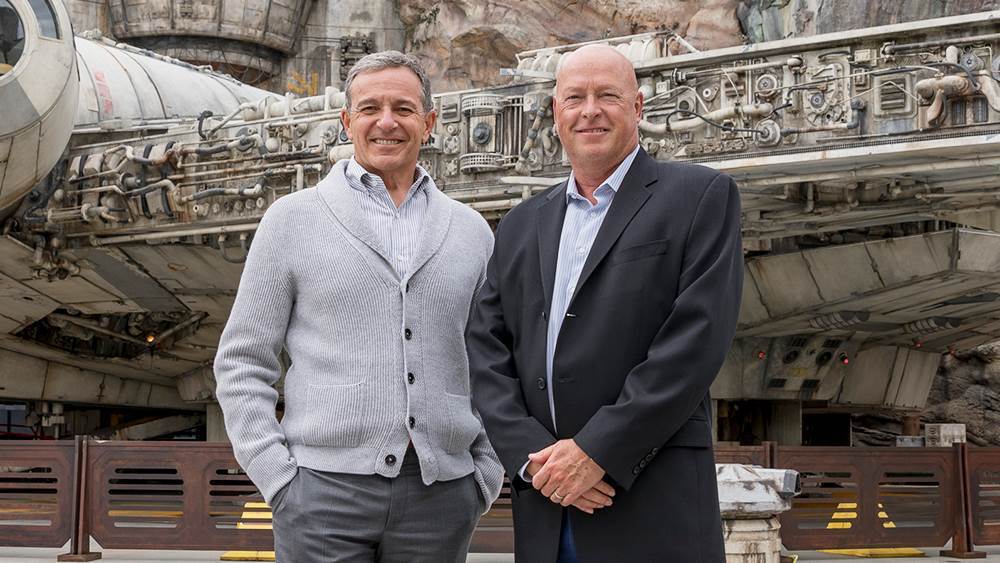
And return he did. In a move that felt almost cinematic, Iger stepped away from retirement and reentered the executive suite to restore stability. His task was not to launch sweeping new initiatives, but to repair the organizational structure, rebuild trust across the company, and reestablish a sense of strategic clarity. Those efforts were largely successful. During his return, Iger refocused Disney’s priorities, streamlined parts of the organization, and prepared the company for its next leadership chapter.
That preparation matters enormously. The next CEO will inherit a company whose creative engines remain strong, whose parks division is poised for historic expansion, and whose storytelling brands remain among the most valuable in the world. In many ways, Iger’s second tenure was about ensuring that Disney would continue to chart its own path. In an era when major entertainment companies are being consolidated or acquired by deep-pocketed investors, maintaining Disney’s independence was no small achievement. Without decisive leadership during this transitional period, the long-term trajectory of the company could have looked very different.
Perhaps most importantly, Iger helped create the conditions that will allow the next leader to focus on growth rather than repair. Many observers believe that Josh D'Amaro is well-positioned to guide Disney into its next era. Whether or not that ultimately becomes reality, Iger’s work during his return has ensured that he will inherit a company prepared to build rather than rebuild.
For Disney fans, that may be the most meaningful part of his legacy. During his first tenure, Iger expanded the company’s storytelling universe and strengthened its global presence. During his second, he protected the foundation so that the next chapter could be written from a position of strength.
So, as Bob Iger steps away once again, it is worth offering a sincere thank you. For the acquisitions that reshaped modern entertainment, for the reinvestment that elevated Disney’s parks, and for the willingness to return when the company needed experienced leadership, his impact on Disney will be felt for decades.
May he look back on his legacy, in this second retirement, with pride in knowing that generations of Disney fans have benefited from the choices he made and the stability he helped restore.