
One Disney: "The Mandalorian and Grogu"


There is so much One Disney happening around The Mandalorian and Grogu that it is nearly impossible to miss. Just off the top of my head, there have been marketing collaborations involving National Geographic, Family Guy, and ESPN — on top of the traditional promotional stops like Good Morning America and Jimmy Kimmel Live!. For a film that some have dismissed as comparatively small-scale by Star Wars theatrical standards, the level of creative collaboration across The Walt Disney Company has been anything but small.
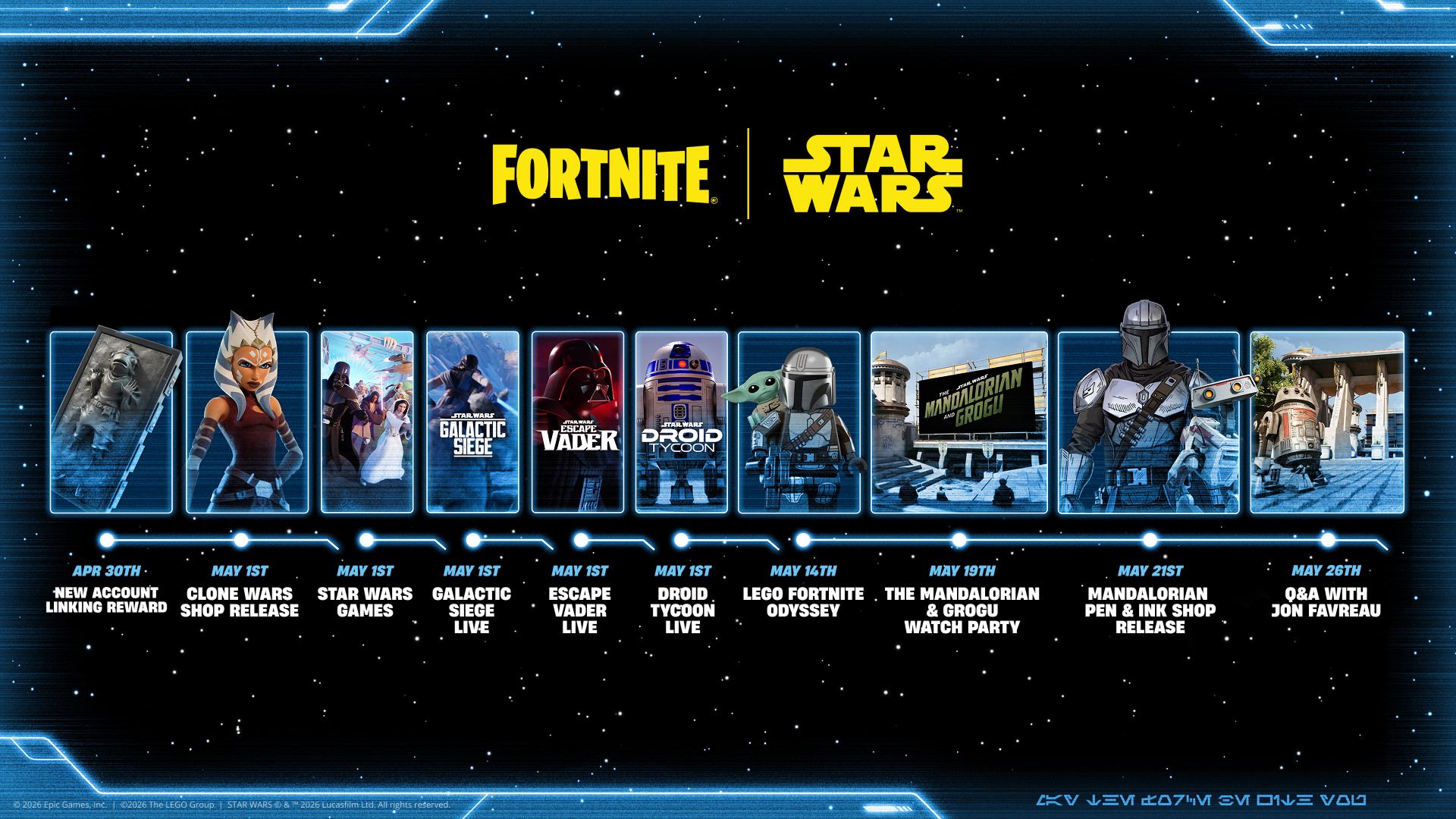
Speaking of epic, let’s start with Epic Games. While not technically part of Disney, Epic has become one of the company’s most significant collaborators in bringing The Mandalorian universe to life. The partnership goes back to the very beginning, with Unreal Engine helping power the groundbreaking virtual production techniques used on the Disney+ series. But for the film, that relationship evolved even further. Fortnite became an active promotional platform, with custom tools and themed experiences designed to support the release. Most notably, fans were able to visit a Watch Party Island to view the first 10 minutes of the film before its release, turning gaming culture into a direct marketing extension of the movie.
At Disney Parks, the synergy is even more tangible. The film itself incorporates the BD-X droids, which Walt Disney Imagineering has spent the last few years introducing to guests around the world. That alone is a remarkable example of creative alignment between Lucasfilm and Imagineering. But the collaboration did not stop there. After seeing the film, Walt Disney Imagineering created a concept mockup for a themed food truck inspired by the movie, featuring Grogu, Hugo, and the “thermal detonator” themed beverages at Galaxy’s Edge. Previewed during a Disney Consumer Products showcase, it was a striking demonstration of how quickly ideas can move between divisions. Even if that exact offering never reaches guests, the exercise itself fuels the kind of cross-pollination that leads to future innovation.
What has already reached guests is even more significant. The enhancements to Millennium Falcon: Smugglers Run are more than a simple promotional overlay. Yes, bringing The Mandalorian and Grogu into one of the park’s flagship Star Wars attractions helps support the film. But Disney also used the opportunity to make meaningful upgrades to the attraction itself, including much-needed gameplay improvements, updated image processing, and new hardware. They were able to support the film while materially improving the guest experience.
And Disney did not stop with the attraction update. Galaxy’s Edge also debuted The Curious Child, a limited-time nighttime offering centered on Grogu, giving the land yet another touchpoint tied to the film. Add in cast appearances, star visits, and promotional moments staged inside the park, and Disney Experiences has become one of the film’s most visible promotional partners.
From a pure box office perspective, The Mandalorian and Grogu may not open at the level of the biggest theatrical Star Wars films. But Disney’s ambitions here clearly extend far beyond opening weekend.
Early indicators suggest the film is performing especially well with children — arguably the audience most critical to the franchise’s long-term future. With its eventual life on Disney+, its physical presence in the parks, and its role in cultivating the next generation of Star Wars fans, the film’s value cannot be measured solely by initial ticket sales.
These franchises are not just individual films or television shows. They are creative ecosystems that fuel storytelling, merchandise, attractions, gaming experiences, and fan engagement across the entire company. Viewed through that lens, The Mandalorian and Grogu is not just a movie release. It is a case study in Disney operating exactly as one company. And by that measure, the Force is very much strong with this one.