
Interview: Gavin Boyland on Taking Viewers to New Places with "Africa: Earth’s Wild Home"


For many Disney fans, the first images that come to mind when thinking about African wildlife look something like The Lion King. Lions, elephants, and sweeping savannas have a powerful place in our imaginations, reinforced by generations of nature documentaries. But for Gavin Boyland, the challenge behind National Geographic’s Africa: Earth’s Wild Home was to look beyond those familiar images and reveal a continent that still has plenty of surprises to offer.
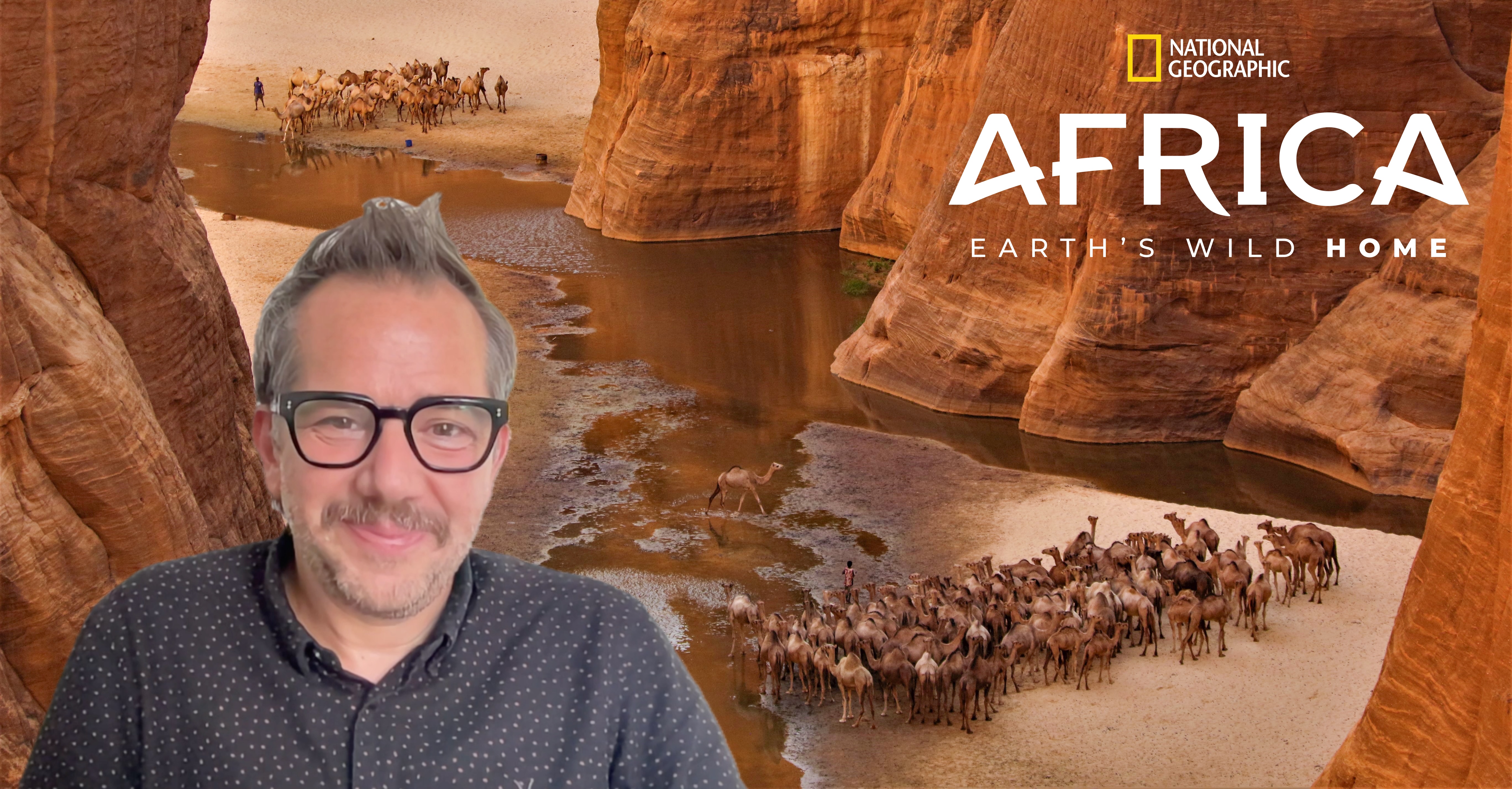
Speaking with Laughing Place, the showrunner described a production driven by curiosity about places and animals that audiences might never have encountered on screen. The ambition was not simply to revisit spectacular wildlife with better cameras. It was to broaden the picture of Africa itself, exploring the environments, behaviors, and individual stories that can disappear when an entire continent is reduced to a handful of recognizable animals.
That approach grew out of the relationship between BBC Studios Natural History Unit and National Geographic. Boyland recalled conversations with a National Geographic executive about making something larger in scale, with the potential to explore different continents and show unexpected sides of each. Africa offered a particularly compelling starting point because new research, local guides, and access to additional locations were opening possibilities for fresh storytelling.
“It just felt like a really fresh time to re-explore what is a continent that people always associate with wildlife,” Boyland explained. Familiarity, in this case, became a reason to look again. The team wanted to challenge the sense that viewers already knew what an African wildlife documentary would show them.
The result is a seven-part series produced by BBC Studios Natural History Unit for National Geographic, narrated and executive produced by Wunmi Mosaku. Filmed over almost four years across nearly 30 countries, it also launches a broader franchise intended to explore the planet continent by continent. That scale supports Boyland’s central goal of showing how much variety exists within a place audiences may think they understand.
“It’s got savannas, but there’s mountains, there’s lakes, the rivers, the islands,” he said. The team found especially promising material in less-filmed locations throughout West Africa, the Sahara, and remote islands. Seeking out those places created opportunities for stories that could offer both the excitement of discovery and a fuller understanding of the continent’s wildlife.
Even extensive preparation, however, could only take the filmmakers so far. Research, conversations with experts, and reconnaissance trips helped establish where a promising sequence might be found. What happened after the cameras arrived remained beyond the production’s control, and some of the most memorable footage came from events whose scale could not have been anticipated.
“Nature writes the script,” Boyland said. “You never quite know what’s going to happen.” One particularly striking example came from Senegal, where a local guide told the team about a pair of golden wolves that visited an island to hunt pelicans. Boyland described the animals as roughly coyote-sized, making the prospect intriguing even before the crew saw the location.
On arrival, the filmmakers discovered an island with approximately 4,000 pelicans. The wolves charged into the birds almost daily, sending pelicans into the air amid flying dust and feathers. What had sounded like a promising wildlife encounter became a spectacle the team could not have fully imagined from the initial description.
According to Boyland, the crew was the first to film in that park, as well as to capture the behavior. The experience illustrated why returning to a continent so strongly associated with wildlife could still yield something genuinely unexpected. “Africa is a well-trodden path, but it still has the power to surprise,” he said.
Those surprises also shaped the way the series presents its landscapes. Boyland pointed to a location in Chad, on the edge of the Sahara, where visiting a place that had seen little attention from film crews revealed just how dramatic and beautiful the surroundings were. Access was part of the story, but so was the deliberate decision to seek out environments that might challenge the audience’s expectations.
Technology helped the filmmakers translate that discovery into a different viewing experience. Alongside other drones, the production used first-person-view racing drones to move through landscapes with a sense of flight while maintaining the cinematic quality expected of the series. Rather than simply observing a setting from above, those images could give viewers a feeling of traveling through it.
For Boyland, the combination mattered. Improved equipment could provide a new perspective, but the team also needed to go somewhere worth seeing from that perspective. By deliberately capturing distinct and varied landscapes, the filmmakers could make Africa’s diversity part of the visual experience as well as the subject of the narration.
The same curiosity extended to creatures far smaller than the continent’s best-known wildlife. During our conversation, I brought up a black rain frog whose encounter in the series struck me as something resembling a bad date. It was a memorable example of how an unfamiliar animal could become the center of an engaging story without needing the grandeur of a lion or elephant.
Boyland explained that the black rain frog was known to scientists but had not previously been filmed for television, making it an opportunity to introduce viewers to a species through a situation they could understand. Finding animals like that was part of the production’s intention from the outset. New environments were important, but so were fresh subjects within them.
“We thought it’s a really good opportunity to tell a very relatable story about a creature that people haven’t really heard of before,” he said. That idea of relatability became a guiding principle in the editing process. The challenge was to help viewers connect with an animal’s circumstances while preserving the reality of what the filmmakers had observed.
Boyland emphasized that factual integrity and ethics remain fundamental to the BBC production team’s approach, values he also associated with National Geographic. At the same time, making the series for Disney audiences offered an opportunity to bring story, character, and emotion to the foreground. He saw those qualities as natural elements of wildlife’s lives that the filmmakers could help audiences recognize.
“Every story we tell, it is the reality of what happens to that animal and the behavior it undergoes and what we captured,” he explained. Music and commentary could help make those events understandable in human terms, giving viewers a way to appreciate the danger, drama, and challenges facing a species. The aim was to communicate the stakes of an animal’s experience without assigning it human feelings.
That distinction is particularly meaningful for Disney viewers. Fictional animal characters can offer a familiar route into stories about friendship, danger, or survival, but a documentary has a different responsibility to its subjects. Boyland’s approach suggests that the emotional appeal does not have to come from turning wildlife into fictional personalities. It can emerge from helping audiences understand what the animals are actually facing.
The series ultimately turns that attention toward the people working to protect them. When asked what he hoped viewers would take away, Boyland returned first to the surprising diversity of Africa’s environments and animals. But his second answer was a message of hope, rooted in the conservationists and communities safeguarding those species.
He described the final episode as full of emotion and inspiring individuals, highlighting a new wave of Indigenous conservation in Africa. After spending time with the animals and their habitats, viewers have an opportunity to meet people whose work is helping secure their future. Conservation becomes a continuation of the stories the audience has followed rather than an abstract concern introduced at the end.
For Disney audiences, that may be the most meaningful connection the series can make. Familiar images can spark an interest in wildlife, but Africa Earth’s Wild Home asks viewers to let that interest grow beyond what they already recognize. By pairing unexpected discoveries with factual storytelling and the work of people protecting these environments, the series offers a way to turn fascination with the natural world into a deeper appreciation of its variety and its future.
Africa: Earth’s Wild Home premieres October 2 at 8 p.m. EDT on National Geographic and streams October 3 on Disney+ and Hulu.