
Artemis Fowl at 25: Eoin Colfer Tells Rick Riordan How His Anti-Hero Outlasted the Harry Potter Comparisons


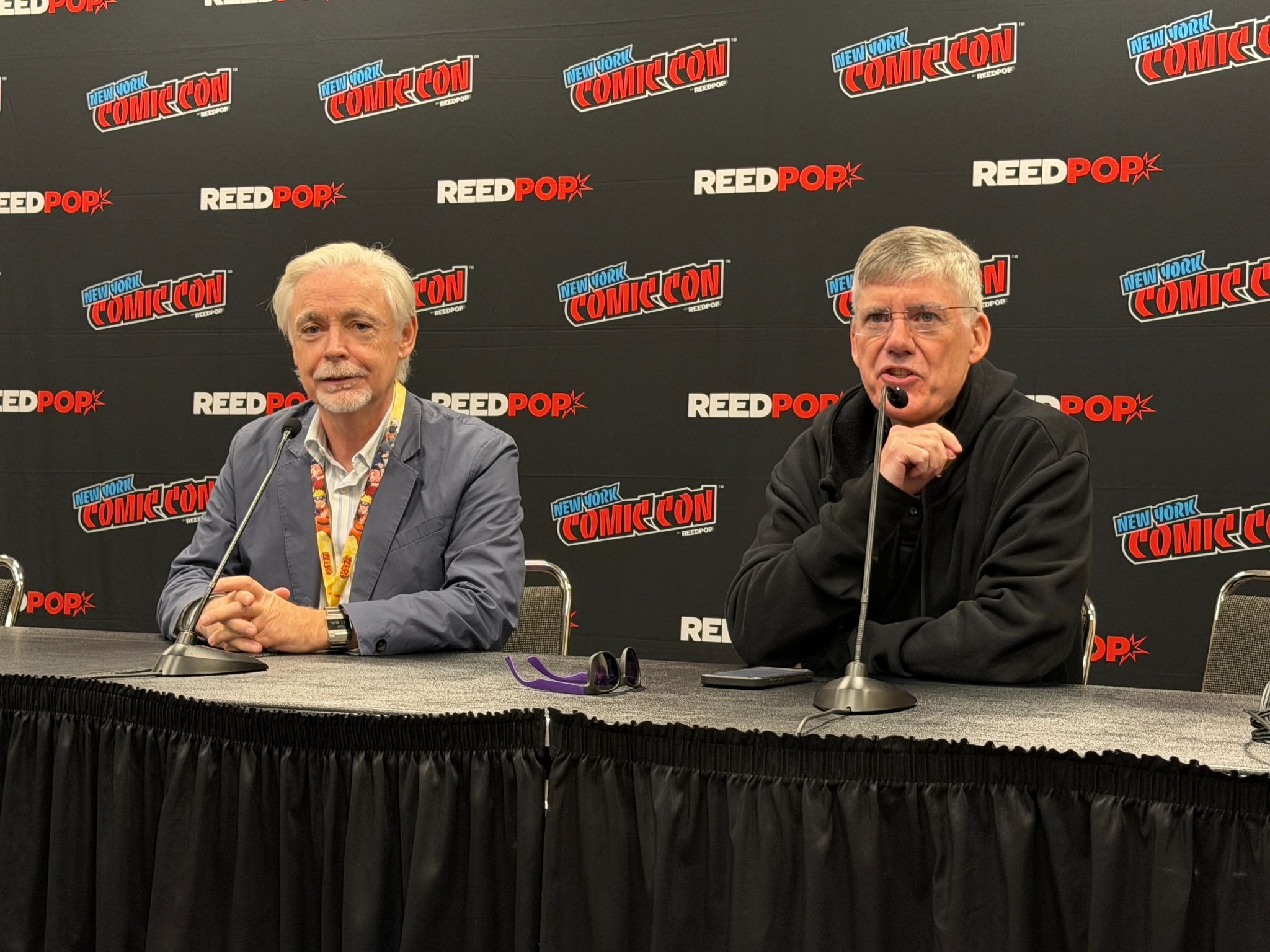
A quarter century after the first Artemis Fowl novel hit shelves in 2001, Eoin Colfer's teenage criminal mastermind has sold more than 35 million copies in 48 languages. To mark the milestone, New York Comic Con hosted "25 Years of Artemis Fowl," a conversation between Colfer and fellow bestselling Disney Press author Rick Riordan (Percy Jackson and the Olympians), who moderated as both a longtime friend and a self-described fan. The hour moved from the series' unlikely origins to cut scenes, fan encounters, and how Colfer's view of his anti-hero has changed since the first book.
Asked for the origin story, Colfer rattled off a list of inspirations: Bart Simpson, the Artful Dodger, Hannibal Lecter, and Darth Vader. "I have always loved a good bad guy," he explained, and he set out to write a book with an anti-hero, though the character started out in more of a supporting role.
The face of Artemis came from a family photo. In Ireland, children make their First Holy Communion around age eight, and Colfer joked that the boys in their black suits look like they stepped out of Reservoir Dogs. When he saw a picture of his impish younger brother Donal in a suit and tie with slicked-down hair, he knew he had found his anti-hero, adding that he's never told his brother this or he would owe him a lot of money.
The plot riffs on what Colfer called the oldest Irish story: a naughty boy chasing a leprechaun's pot of gold. His twist was to make the captured fairy something nobody expects, with a fairy world that has advanced just as much as the human one. He swore it would be a single book. Eight books later, he quipped, he has finally stuck to that.
Riordan asked what led Colfer to blend fairy lore with technology. Colfer explained that writing a fairy book is nearly obligatory for Irish authors, so he wanted his to stand apart. While teaching, he noticed his students glued to their Game Boys at break time and realized gadgets were what kids loved but rarely saw in books. He looked around for fairy stories built on technology and found almost none.
Knowing tech-heavy books date quickly, he kept fairy technology distinct from human technology and powered it with magic. He jokingly takes some credit for predicting a pocket device in the third book that combined a phone, music player, medical records, and fitness tracker, which bears a striking resemblance to the iPhone. If he were starting today, Colfer said he would make all fairy technology water-powered, since the fairies live underground with water constantly running down to them.
On the long-running fan debate over whether Artemis is a villain or an anti-hero, Colfer described him as a kid on the cusp of becoming something. The darkness in his life and the memory of his father pull him one way, while Holly Short shows him through her own actions what it means to be good. The turning point, Colfer said, comes when Butler is hurt, and Artemis realizes his schemes have consequences.
He admitted much of that arc was retrofitted. The first book was meant to be a standalone adventure with little concern for character development, so when it became a trilogy, he had to go back and plant the seeds of change. He also began to wonder whether a lead character who gets everything he wants was a good example for young readers, and rethought his strategy.
Riordan raised a related question about Butler: is the bodyguard enabling a villain or just being a good employee? Colfer said Butler's shift comes when Artemis puts Butler's sister, Juliet, in danger. From then on, Butler remains loyal but draws a firm line at Artemis endangering him or his family.
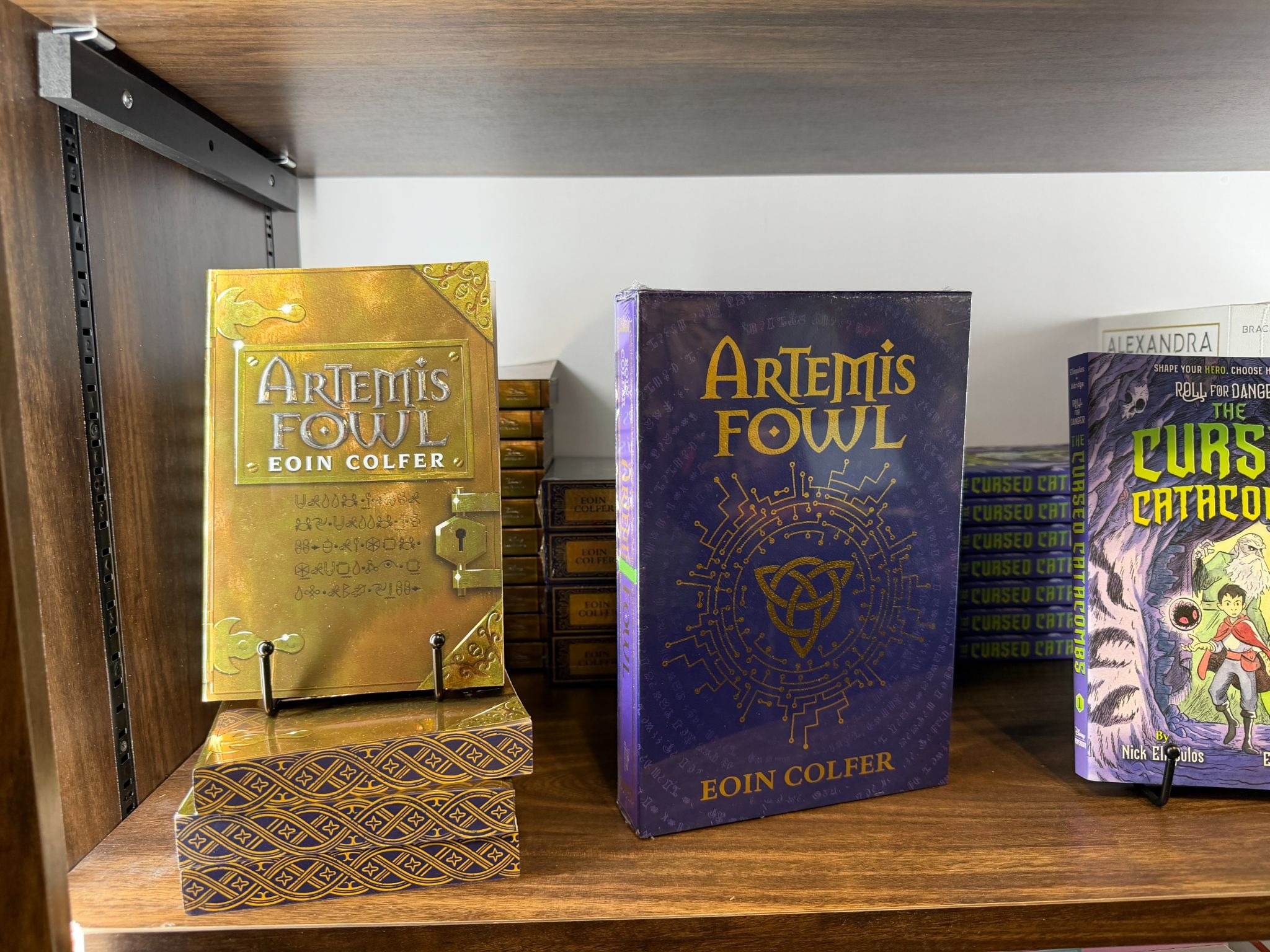
Colfer did not expect Artemis Fowl to succeed. His wife Jackie, his first reader, had politely praised his earlier books, but after reading this one she told him to get an agent. He resisted, wary of rocking the boat in Irish publishing, so Jackie organized a family dinner that turned into an intervention.
Part of his doubt came from experience. His earlier novel Benny and Omar, in which a boy abandons the brother he is supposed to be babysitting, drew criticism in Ireland for its premise, and he assumed a book about a kid who kidnaps a fairy would meet the same fate.
The series arrived at the height of Harry Potter mania, when publishers slapped "the next Harry Potter" on nearly every fantasy book. Colfer recalled being asked at the Edinburgh Book Festival whether he had ever seen J.K. Rowling's house. Being dubbed "the anti-Harry Potter" instead turned out to be a gift, because it carried no impossible sales expectations. Around the third book, the comparison questions finally stopped, and he knew he had made it. He even revived an old joke for the crowd, announcing a cash-in sequel titled "Artemis Fowl and the Philosopher's Goblet of Azkaban," noting it was the first time he had told it in years.
Asked about a favorite line, Colfer pointed to a scene in which Artemis refused both tap and bottled water at a restaurant because the bottled water is chilled with ice, which is just frozen tap water. The moment captured how insufferable and self-assured Artemis is, and Colfer explained that his books follow a classical structure, citing The Count of Monte Cristo: give a protagonist everything they take for granted, then take it all away.
His process has changed too. Where he once considered every word genius, he now outlines five or six pages before impatiently diving in, and he writes out of sequence so he can tackle ideas while he is still excited by them. That means scenes get lost, though he believes nothing in writing is wasted.
Two scenes never made it past his publishers. In one, the missing and presumed-dead Mulch Diggums turned up partying with supermodels at a Hollywood disco. In another, Artemis appeared to shoot his own father in the head, with the explanation held back for chapters in the style of The Sting. His publishers worried young readers would be devastated, so he had to hint early that it was part of a plan. He still has the original scene and may use it someday.
Mulch himself is the character who demanded more page time. Colfer intended the flatulent dwarf as a one-time gag, convinced he was above that kind of humor, but readers loved Mulch so much that he joined the crew permanently and became the most popular character after Artemis and Holly. Colfer also singled out Chix Verbil, the sprite who thinks he is irresistible and is perpetually unlucky in love, comparing him to the self-adoring tech specialist on Slow Horses.
Riordan challenged Colfer to sum up his characters in one word each. Artemis is crafty, Holly compassionate, Butler stoic, Foaly inventive, Mulch exuberant, and Commander Root is, in a four-word exception Riordan allowed, "furious at all times."
As for which character Colfer would want rescuing him from a hostage situation, the obvious answer was Butler, who could simply stand in front of him. That reminded him of a book club made up of his mother's friends, who pressed him on whether Butler was based on a real person, and whether they might have his phone number.
The conversation turned heartfelt when Riordan asked about fan encounters. Colfer recalled returning year after year to Anderson's Bookshop outside Chicago, where the same mother and child always came to see him. One year, the child, who had since transitioned, took the name Artemis. Colfer said being a small part of that journey affected him deeply, and the two still keep in touch.
He also shared a story about Illegal, his graphic novel with Andrew Donkin and Artemis Fowl graphic novel artist Giovanni Rigano about unaccompanied children migrating from Africa to Europe. At a school signing, a young boy who had made that journey and did not yet speak English clutched his copy, reluctant to hand it over. His teacher explained that he had been using the book to tell classmates his story, pointing at a crowded boat or another scene and then at himself to show what he had experienced. Colfer called it the most special unintended consequence of any book he has written, and a reminder that stories reach real people.
During audience questions, one fan asked whether the series' strong female characters were intentional. Colfer said yes, and credits the 10-to-12-year-olds he was teaching at the time. Holly was inspired by a small, determined student who wanted to learn in a class full of disruptive boys, and who once silenced a much bigger classmate for a record-setting 30 minutes. Opal Koboi was also drawn from a student, while Juliet was based on his niece.
Another fan asked about names. Colfer explained that he hides meanings in them, whether or not readers notice. Artemis is the goddess of the hunt, given to a boy as an honorary name, and fowl are winged creatures, making Artemis Fowl a hunter of winged creatures. He mentioned a similar game in his Hitchhiker's Guide novel, where one group of characters was named after types of chicken.
The strangest place he has met a fan? An acupuncturist's table, where, with needles in his head, he was presented with a manuscript and treated to several chapters of the practitioner's historical fiction. He decided he would rather live with the headaches.
Colfer has attended San Diego Comic-Con several times, and this was his second NYCC. He confessed he once closed WorldCon in Ireland with a bit pretending to confuse Star Wars and Star Trek, which landed in dead silence. His favorite convention memory comes from London, where he and Skulduggery Pleasant author Derek Landy were mid-event when Jason Momoa wandered across the back of the room, then kept doing so every few minutes, upstaging two Irish authors without saying a word.
Asked what has surprised him about the series' longevity, Colfer said he struggles to connect the crowds and lines with his everyday life as a dad in Dublin, describing it as a bonus life he never takes for granted. He loves the blunt questions from young readers, like the child who demanded to know why he was popular, or the girl whose entire question was whether she could hold the microphone.
The final audience question asked how his relationship with Artemis has changed. Colfer said it evolved alongside his own sons. When one of them finally read the first book before visiting the movie set, the verdict was that Colfer couldn't have written it, because it was funny. Over time, Colfer moved away from seeing Artemis as an arch cartoon supervillain and toward a boy with a good heart who isn't all about the money and ultimately makes a selfless sacrifice. He said he has simply become more thoughtful about his characters as he has gotten older.
As for what's next, Colfer said he is always juggling three or four projects. He has spent about two years developing an Artemis Fowl musical, and he raved about the Broadway shows Maybe Happy Ending and Two Strangers (Carry a Cake Across New York), which he saw as research. Everything else is in the pitch stage.
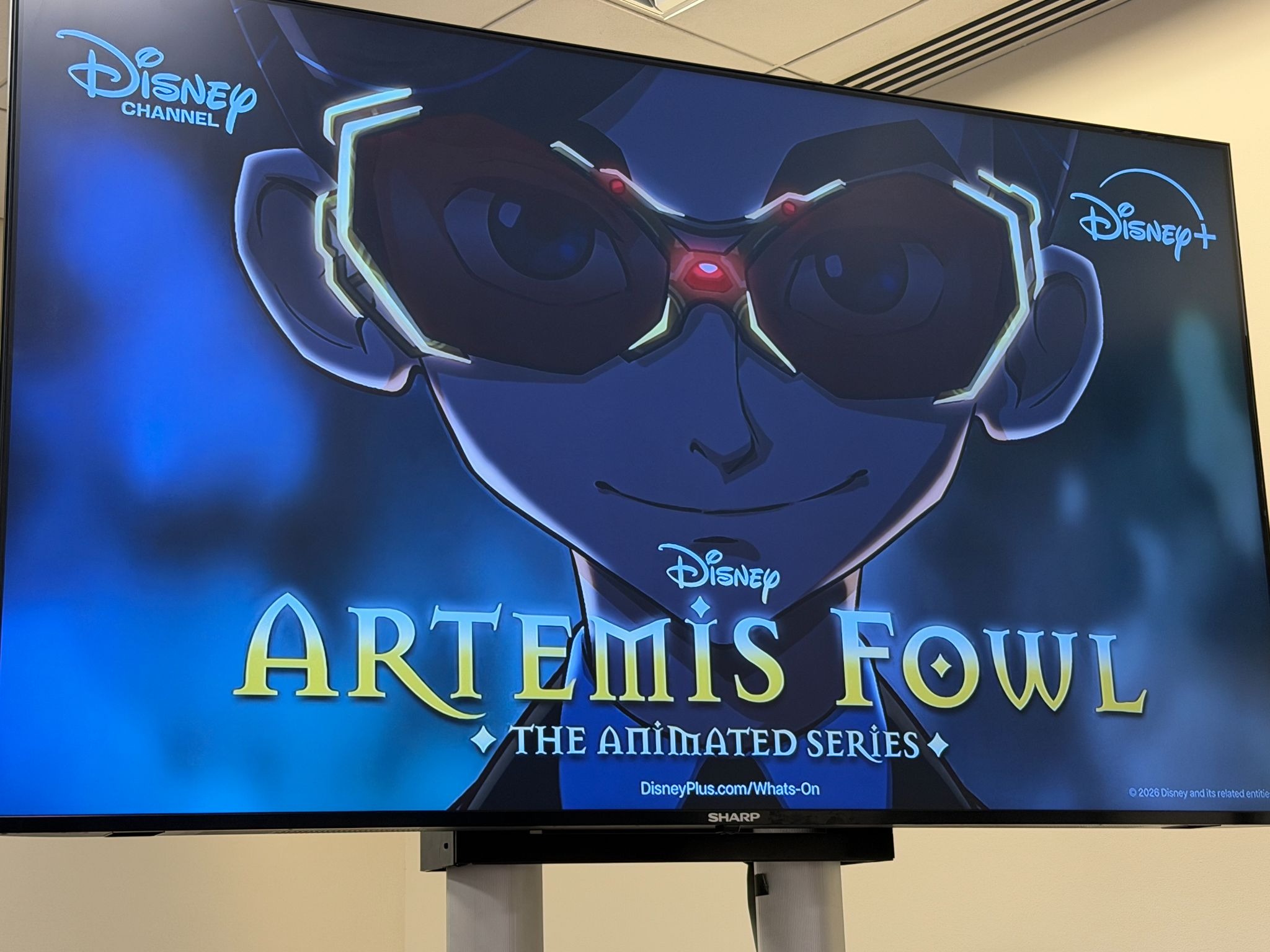
Just as Riordan was wrapping up, Artemis Fowl himself interrupted via a “phone call,” congratulating his creator on the anniversary and calling Colfer an Irish Santa Claus before revealing that an animated Artemis Fowl series is in the works for Disney Channel and Disney+, with Colfer as executive producer. Before departing, Artemis added that if anyone hears about a bank heist in London, he is completely innocent.
(Please note this article contains affiliate links. Your purchase will support LaughingPlace by providing us a small commission, but will not affect your pricing or user experience. Thank you.)