
“Make It Stupid”: How Big City Greens Engineers Its Funniest Moments


Walt Disney Television Animation’s Big City Greens Presents: Story & Comedy panel at LightBox Expo gathered Anna O’Brian (EP), Stephen Sandoval (Co-EP), Jonathon Wallach (Supervising Director), Raj Brueggemann (Director), Kiana Khansmith (Storyboard Artist), and Mike Trapp (Story Editor) for a lively craft talk that traced the show’s evolution from board-driven beginnings to its current hybrid pipeline, and unpacked how the team chases the funniest version of every beat. The highlight was a blow-by-blow look at the show’s 100th episode set-piece where Cricket literally drop-kicks a giant chicken into space, a sequence that perfectly illustrates how script, boards, timing, acting, and music stack to turn “pretty funny” into “stupid-funny.”
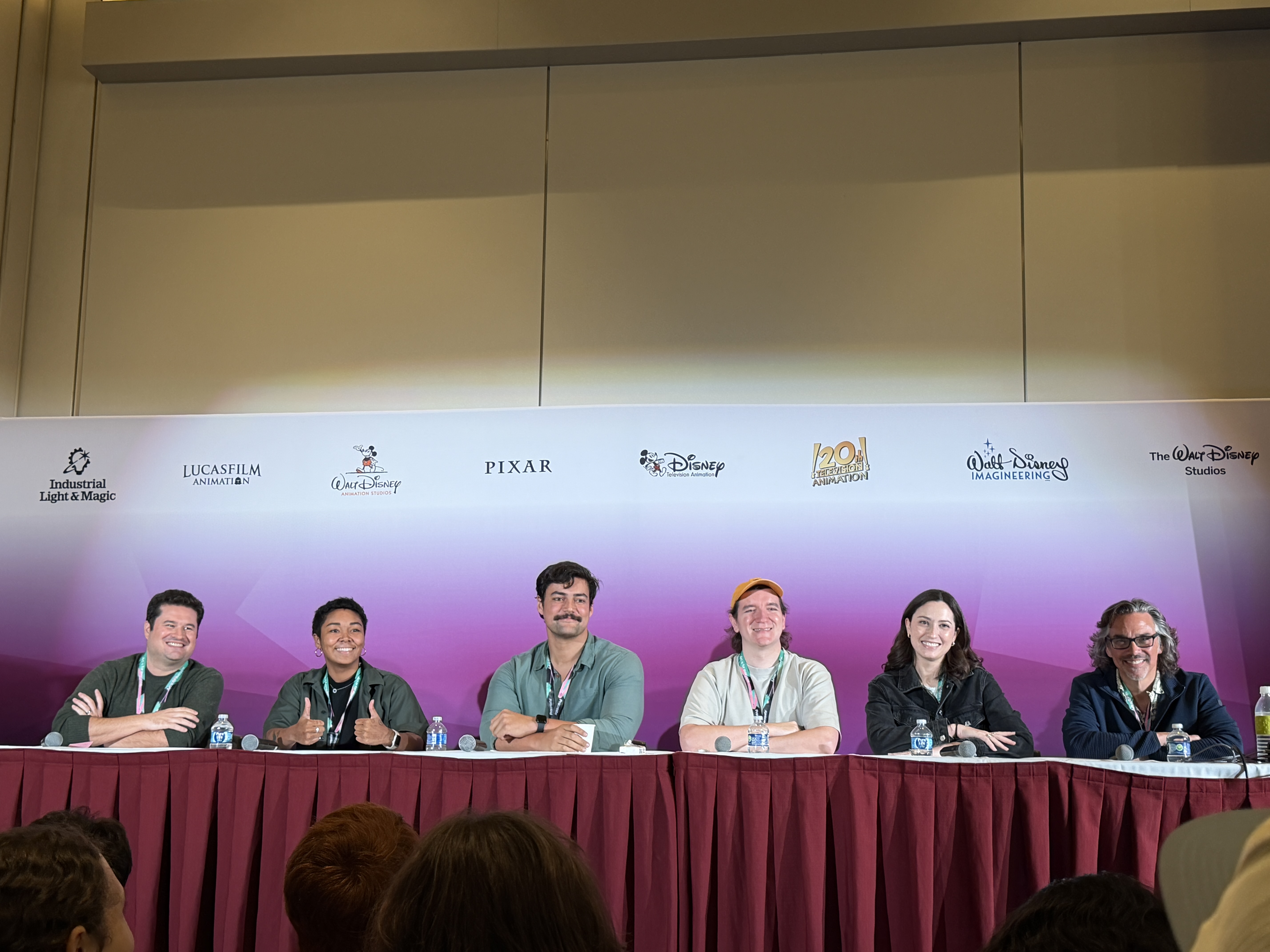
O’Brian framed the series’ production journey: early seasons were board-driven (outlines hand off to storyboard artists to write dialogue and gags), while a growing staff later enabled a script-driven backbone. Today’s sweet spot is a hybrid — writers deliver a script and board artists are encouraged to punch up, rewrite, and invent visual gags. Trapp called it “planning of the script with the magic of the boards,” a back-and-forth where the team routinely one-ups its own jokes.
The team walked the room through script pages → animatic → final, focusing on the moment where the script simply read: “Cricket summons all his power and drop-kicks the chicken so hard it launches off the planet into outter space.” Two lines on paper became a full-blown showcase once the boards took over.
- Boarding the action: Director Raj Brueggemann leaned into anime-inflected action language — Gundam-style motion, 2001 star-field vibes, and budget-savvy cloud/sky cheats carried over from Big City Greens the Movie: Spacecation — to escalate the joke visually.
- Checking-In: A killer button arrived in a check-in when Shane Houghton pitched the chicken’s calm acceptance of its fate.
- Hidden toppings: The explosion reads like a fried egg — a blink-and-you-grin touch you won’t find in a script. The team highlighted how these “quiet visual jokes” enrich rewatch value without dragging the pace.
- Timing is everything: Directors and editors hold on silence before the punchline to stretch tension; a single frame can be the difference between cute and cackle.
- Make it “stupid”: Voice direction often pushes a read past “smart-funny” to “stupid” (in the most loving sense). As Sandoval put it, that instinct works “every time.”
- Music turns the dial: Composer Joachim Horsley and mixer Eric Freeman punched the crescendo; a choir under the chicken added absurd majesty you can literally feel when the “egg-splosion” lands.
That’s how a two-line stage direction became a layer-cake of craft — design, acting, edit timing, sound, and score — ending in the exact kind of dumb brilliance Big City Greens fans love.
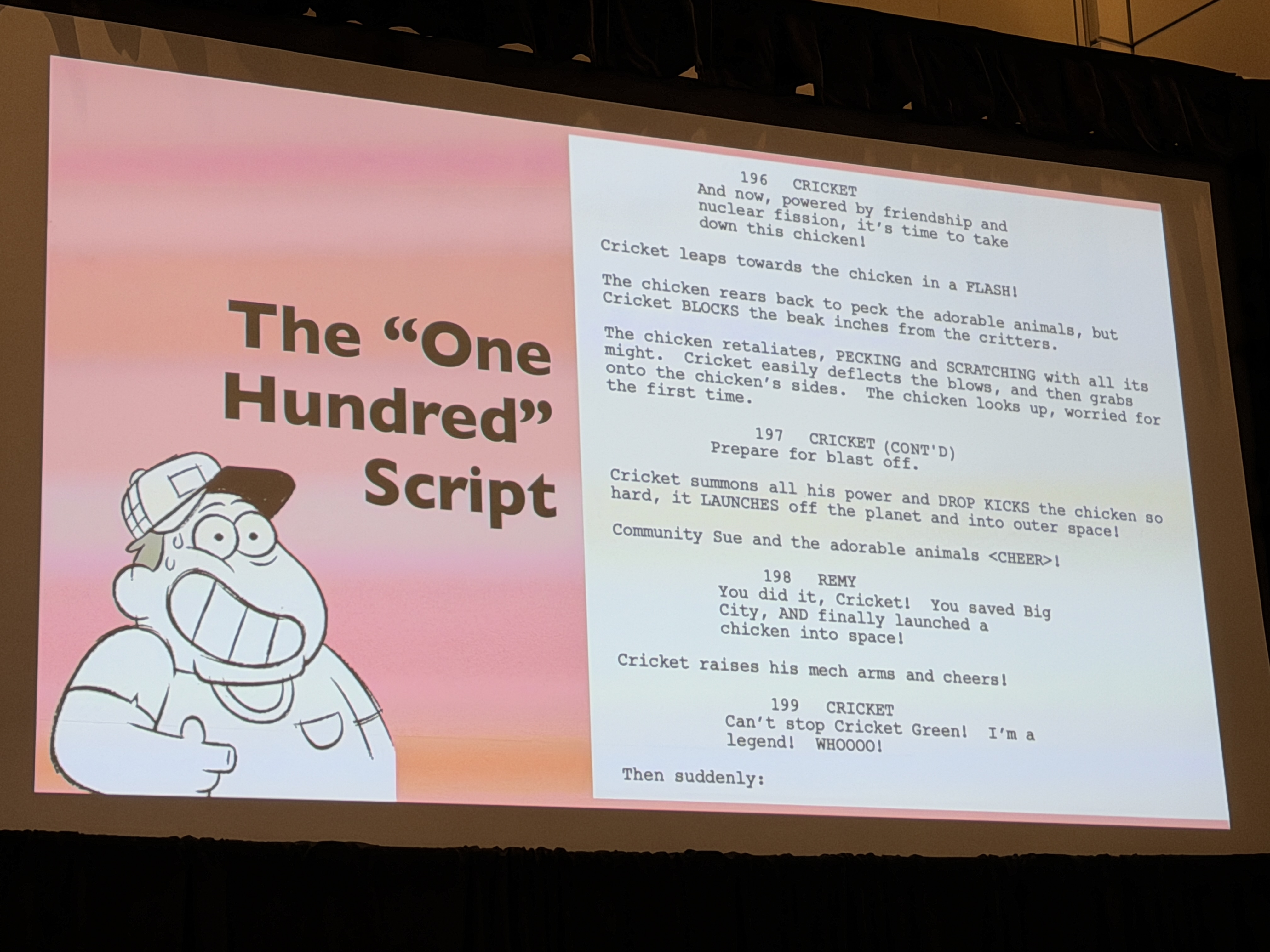
Brueggemann also unpacked the show’s camera language: push the action with dynamic, angled shots and land the joke with a flat, front-on frame. That contrast makes the punchline pop. Khansmith added that she often thinks in film grammar (wide for exposition/air, close-ups for pressure) and will replace words with physical comedy whenever possible — “a really dumb walk” or face can beat a paragraph.
Trapp’s writing workflow starts with relatable truth (“the embarrassing thing you’ve felt”), then a surprising-but-inevitable twist, then dialogue that says only what’s needed, because in animation, visuals do the heavy lifting. Across the pipeline, the rule of thumb is short, story-tied jokes win over cutaways that add time without adding character.
The panel repeatedly emphasized a safe, collaborative room where board artists are urged to swing big. If a bit only makes the room laugh, that’s still a useful signal. And when the laugh connects and serves the story, it sticks.

Without spoilers, the crew teased that Season 5 leans even harder into the show’s absurdist streak — “stupid” as a compliment — while still pulling from personal experience.
If you want the show’s story-comedy recipe in one scene, it’s that 100th-episode chicken kick: a modest script prompt → boards that over-deliver → a room adding just-right stupidity → razor timing → music that lifts the absurd to operatic. Big City Greens thrives where craft meets childish glee, and based on the hints dropped at LightBox, Season 5 aims to be its boldest — and silliest — victory lap yet.