
Inside ESPN Edge’s Vision for the Future of Sports, Including the Super Bowl


When describing the philosophy behind WED Enterprises, the organization that would eventually be known as Imagineering, Walt Disney explained, “There is really no secret about our approach. We keep moving forward, opening new doors and doing new things because we're curious. And curiosity keeps leading us down new paths. We're always exploring and experimenting. At WED, we call it Imagineering. The blending of creative imagination with technical know-how.”
Sitting at 7 Hudson Street, the NYC headquarters of the Walt Disney Company for the 6th annual ESPN Edge Innovation Conference brought these words to mind. It was an exhilarating evening discovering the latest tools available to sports storytellers. Returning for my second year, I watched as the event opened with highlights from last year's presentation, reminding me how many of the technological possibilities discussed then had since become part of everyday life.
ESPN is preparing for its first Super Bowl broadcast in February, and the presence of the Vince Lombardi Trophy at Accenture's booth, where attendees could stop for photos, served as a reminder of the milestone ahead. This year’s conversations also offered a glimpse into the creative and technological resources available. While the big game is an important milestone, as Walt's words suggest, moving forward is about more than reaching the next destination. It's about the doors that open along the way.
Through partnerships with innovative technology companies including Accenture, Meta, Microsoft, and WSC Sports, ESPN Edge is exploring new ways to engage audiences and enhance entertainment experiences within sports and beyond. The event brings these collaborators together through panel discussions and exhibition spaces where attendees can interact directly with the innovators, explore their tools, and discuss potential applications. Adobe has recently joined this group of technology collaborators and is expected at future gatherings.
New ways to experience sports
More Personalized View of the Game
While the traditional television broadcast remains central to sports fans at home, technology is creating opportunities to give audiences more control over what they see and how they engage with the action.
The NBA's approach to its app is one example. By incorporating multiple camera angles, customizable viewing options, and layers of statistics, the league is giving fans more ways to follow a game according to their interests. No longer locked into a single broadcast perspective, viewers can explore different aspects of the action, and the app has been adapting to user tastes. Multi-view experiences have been tailored to smaller screen users, letting them opt for a duo rather than the more typical quad setup that’s great for multi-game action on a large screen. And there’s excitement over this year’s third iteration of the animated “Dunk the Halls” Christmas Day presentation.
Transparency for Fans
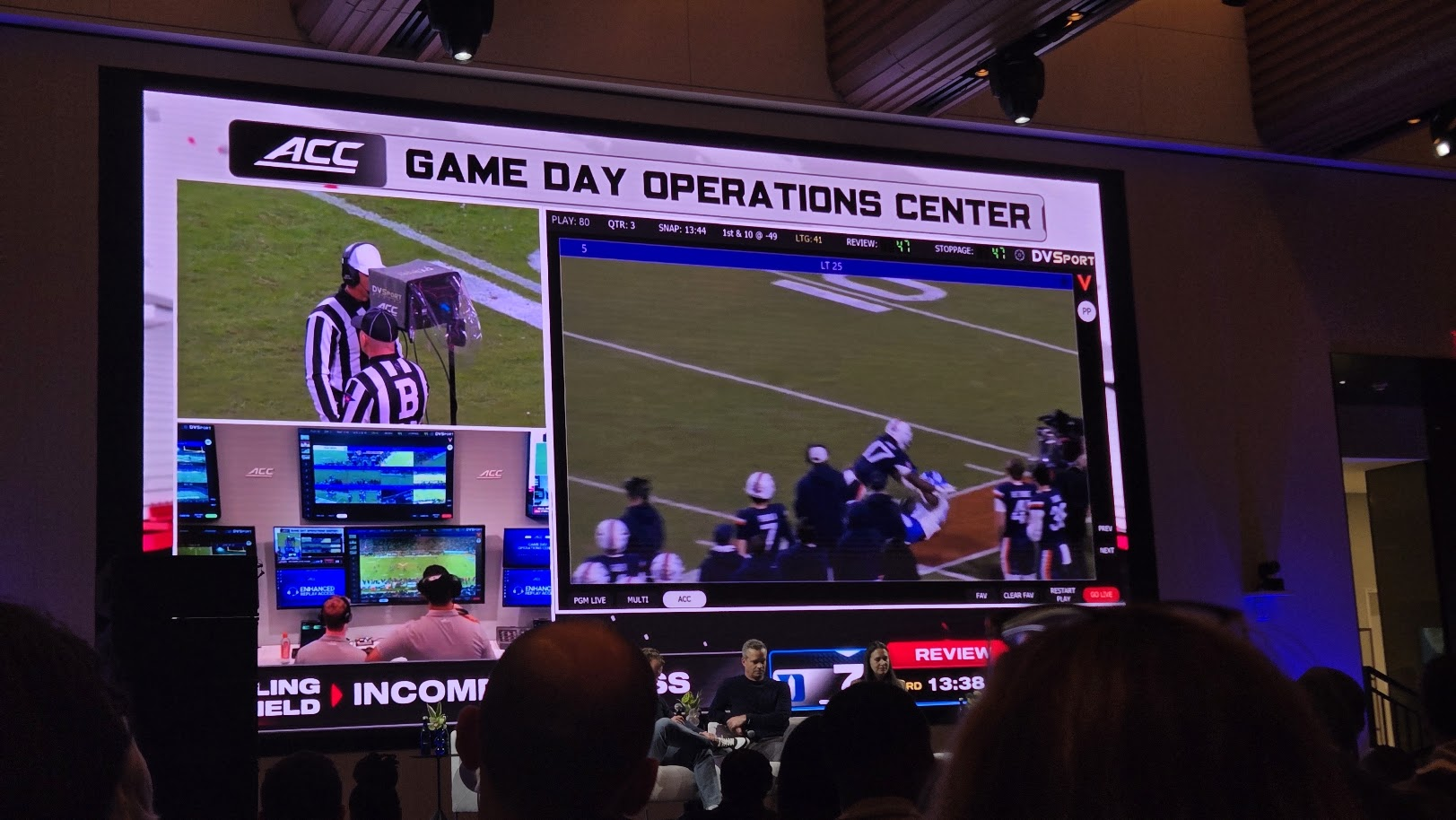
The ACC is taking a different approach to fan engagement through Enhanced Replay, which provides greater transparency into the officiating process. By giving viewers access to the audio and data used during official reviews, the initiative offers a transparent look at how game decisions are reached.
Bringing Live Sports Into VR
Meta offered another perspective on how immersive technology could shape the viewing experience. Through its partnership with ESPN, Meta Quest will offer 50 live immersive sporting events annually, with men's college football already among the offerings. Scott Hershkowitz also highlighted Meta's next-generation VR headset, which weighs just 100 grams, about 1/5th of the current headset in an effort to make extended entertainment experiences more comfortable and appealing to everyday consumers. ESPN is expected to play a prominent role when the new device launches next spring.
A Shared Experience in the Dome
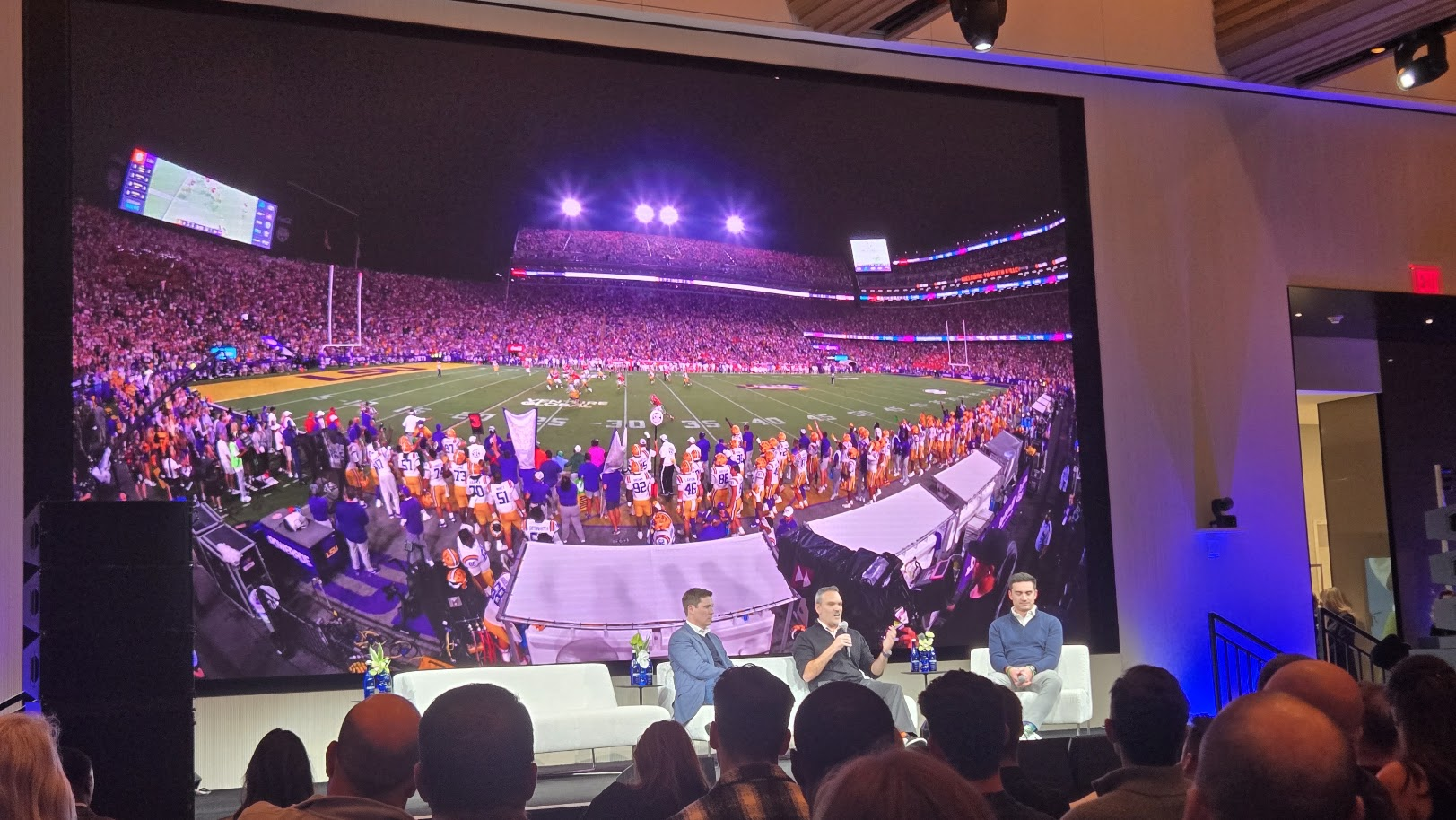
Meanwhile, Cosm is approaching immersive sports viewing from a different direction, using enormous dome screens to bring audiences together inside a shared viewing environment. But the technology behind these experiences may have applications well beyond the domes themselves. Peter Murphy explained that Cosm wants its specialized camera feeds to serve multiple purposes, from traditional broadcasts to immersive experiences on platforms such as Meta Quest demonstrating the broader opportunities available with collaboration. Camera perspectives developed for one format can find new audiences and applications elsewhere, while giving fans access to views that reveal more of the game. As Meta's Ryan Dornbusch noted, high-wide football angles can show the routes and overall play design in ways a conventional broadcast often cannot. The result is not simply a more immersive way to watch sports, but a richer understanding of the action.
Rethinking how sports are played
But ESPN’s innovative partners aren’t just finding new ways for us to watch our favorite sports but they also form new competitive events. They offer a spin on current sports with hopes of broadening their reach. For example, TMRW Sports’ TGL and WTGL leagues are putting a modern spin on golf, combining technology and team competition in a format that differs considerably from the traditional course experience. They are also working with the NFL developing professional flag football ahead of its 2028 Olympic debut.
New ways to tell sports stories
Turning NFL History Into a Personal Story
Beyond reimagining how sports are played and experienced, ESPN Edge also explored new ways to tell the stories surrounding them. One project that stood out was Super Bowl Generations, a collaboration between ESPN Originals and Anamorph coming next Spring that invites fans to create personalized highlight films from the NFL’s vast archives. The project offers something more than another collection of memorable plays. It gives fans an opportunity to collaborate with ESPN and NFL Films to create something they can share with others, reflecting one of the most meaningful aspects of sports: the memories and emotions we experience together.
Introducing Young Fans to Sports
ESPN JV, ESPN's newest YouTube channel, illustrates how the company is looking to reach younger audiences on platforms they already use. Through Sports Explorers, the channel uses animated storytelling to introduce children to careers of well-known athletes, including LeBron James and Shohei Ohtani. The longer-term goal is to build on that initial connection, introducing young viewers to SportsCenter Next and eventually bringing them into the broader ESPN ecosystem.
AI, authenticity, and human creativity
The conversations about content creation also brought some of the evening's most important questions about artificial intelligence into focus. Earlier in the event, company leaders had acknowledged the particular challenges of introducing AI into a newsroom environment such as ESPN, where efficiency must be balanced with editorial judgment and trust. As the discussions continued, those concerns took on different dimensions, from the growing capabilities of AI tools to the importance of preserving authenticity and human creativity.
Accenture's Rob Aitken offered a compelling look at the potential efficiency gains that allow smaller teams to accomplish more in less time. But Aitken also recognized that editorial environments require particular care, especially when it comes to establishing clear boundaries between tasks that can be automated and decisions that require human judgment.
This tension between efficiency and authenticity was further highlighted by Aviv Arnon of WSC Sports, who reflected on the future of sports media content: “What’s going to stay is the authenticity and the reality in sports content. People will care about what’s actually real.”
Arnon illustrated this with an anecdote about scrolling through Instagram and encountering a nature video of a bird building a nest, accompanied by voiceover commentary. He then noticed the AI label. He described the frustration this creates for consumers, who are left guessing: Was the editing AI-assisted? Was the voice altered, or was the entire scene fabricated? Does that bird actually do that? Does that bird even exist?
Addressing how creative teams operate in this new paradigm, Itai Epstein of WSC Studios described Sports Explorers as a human-led, creatively driven production. He emphasized the importance of uniqueness and quality in building an audience, crediting talented human creators and designers with producing distinctive content as platforms become increasingly flooded with generic, prompt-generated material.
The importance of preserving the human stories behind sports was also evident during a live Q&A. When an audience member asked whether future documentaries might use AI to bring deceased athletes back to life in a 30 for 30 film, Marsha Cooke (VP & Executive Producer, ESPN Originals and 30 for 30) firmly rejected the idea. “That's not our mission at all. I hope that never happens. I think the beauty of what 30 for 30 has done is highlight memories and nostalgia. We bring back the stories but not bringing back individuals who are long past. That would just be a buzzkill.”
Planning ESPN's first Super Bowl broadcast
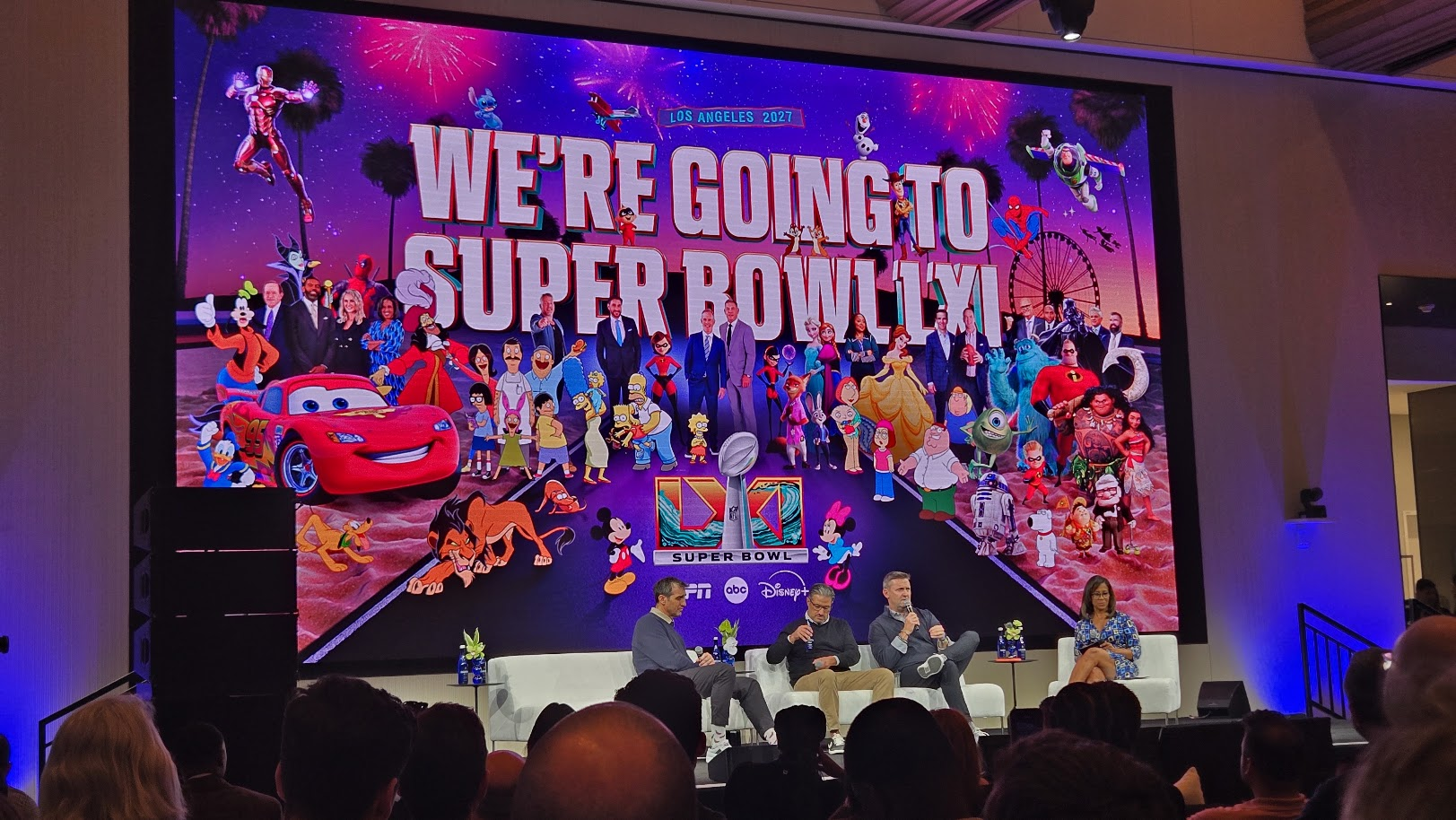
The evening's final discussion brought those ideas together in a broader look at ESPN's ambitions for Super Bowl LXI. The technologies and new ways of engaging audiences explored throughout ESPN Edge all have a place in the company's plans for its first Super Bowl broadcast. And while their goal is the most viewed Super Bowl to date, ESPN as part of the Walt Disney Company wants to establish their presentation as an experience well beyond the game and even outside of the standard lead up. They intend to pull in viewers, to drive curiosity and interest with a week of fun and festivities that pulls in viewers beyond the dedicated NFL fan. Andy Tennant, ESPN's VP of Super Bowl Production, captured the creative ambition behind the undertaking: “We're all Imagineers when it comes to the Super Bowl, and we're going to reimagine and redefine how the Super Bowl is presented. I think there'll be some announcements made in the coming weeks where you're going to see a lot of the intellectual property from The Walt Disney Company.”
We’ve already seen a small taste of what’s ahead during “The Handoff” ESPN’s 24 hours of programs post Super Bowl LX. Among its highlights were SportsCenter presented live from SoFi Stadium, home of Super Bowl LXI, ESPN’s broadcasts live from Disneyland the following day and the launch of the “We’re Going to the Super Bowl” campaign bringing together legendary figures from ESPN, ABC, Disney, Pixar, Fox animated series, Marvel and Star Wars.
Super Bowl LXI will be the first Super Bowl on Valentine's Day and the night before the Presidents' Day holiday. Tennant highlighted this calendar placement as a strategic advantage. To anchor the event in Southern California, ESPN is transforming Santa Monica into a broadcast hub. The setup will feature studios on the beach, a regulation-size flag football field, and interactive Disney fan experiences along the Santa Monica Pier.
ESPN is also maximizing its multi-platform distribution strategy. Super Bowl LXI will air across ESPN, ABC, and Disney+, alongside Spanish-language coverage on ESPN Deportes. The game will also be presented via numerous alt-casts, including ManningCast, the Field Pass with Pat McAfee, and Star Wars Funday Football. Tennant expressed particular enthusiasm for the Star Wars Funday Football alt-cast, predicting that the unique presentation of the game within that universe would "melt the internet."
In her closing remarks, Ellen Carnero, ESPN's Manager of Sports Business Development and Innovation, reflected on several themes explored throughout the evening. Extended reality is expanding the possibilities for experiencing sports beyond the traditional screen, while the growing capabilities of AI bring both excitement and questions about its role. Carnero emphasized that, regardless of the technology, people remain central to the process.
Looking ahead to February, she described ESPN's first Super Bowl broadcast as an opportunity to demonstrate what she called the "Disney difference": taking the biggest stage in sports storytelling and making it feel personalized, inventive, and enriched by the Walt Disney Company's distinctive intellectual property.
As the company prepares for Super Bowl LXI, the work showcased throughout the evening demonstrates how years of experimentation have helped lay the groundwork for reimagining one of sports' biggest stages. The ESPN Edge Innovation Conference illuminates the possibilities ignited when technical innovation and human imagination come together. By bringing these collaborators into the same room, ESPN is helping foster the partnerships and exchange of ideas that can move sports entertainment forward.