
James Cameron's Darker Vision for "Avatar: Fire and Ash" and What The Public Gets Wrong About His Filmmaking Process


With each return trip to Pandora, Disney Legend James Cameron has pushed Avatar further — not just technologically, but emotionally. With the upcoming release of Avatar: Fire and Ash, Cameron is not only expanding the world audiences first visited in 2009 but also inviting them into darker, more intimate territory with the Sully family at its core.
Speaking with LaughingPlace.com, Cameron reflected on how familiarity with Pandora has given him permission to dig deeper than ever before.
"If I had to look at this film from afar," Cameron said, "I would say we’ve already showed you the world. We’ve showed you the potential of it.” With that groundwork laid, he explained, the creative focus shifted. “We want to still deliver on adventure and action and new things, but I gave myself permission to work with the actors to go deeper on the characters."
That shift is especially evident in how the film follows the younger generation introduced in The Way of Water. Rather than simply supporting Jake and Neytiri, Cameron said the children now stand alongside them narratively. "We follow them as much as we follow the parents… and we challenge everybody. We really push them to the edge."
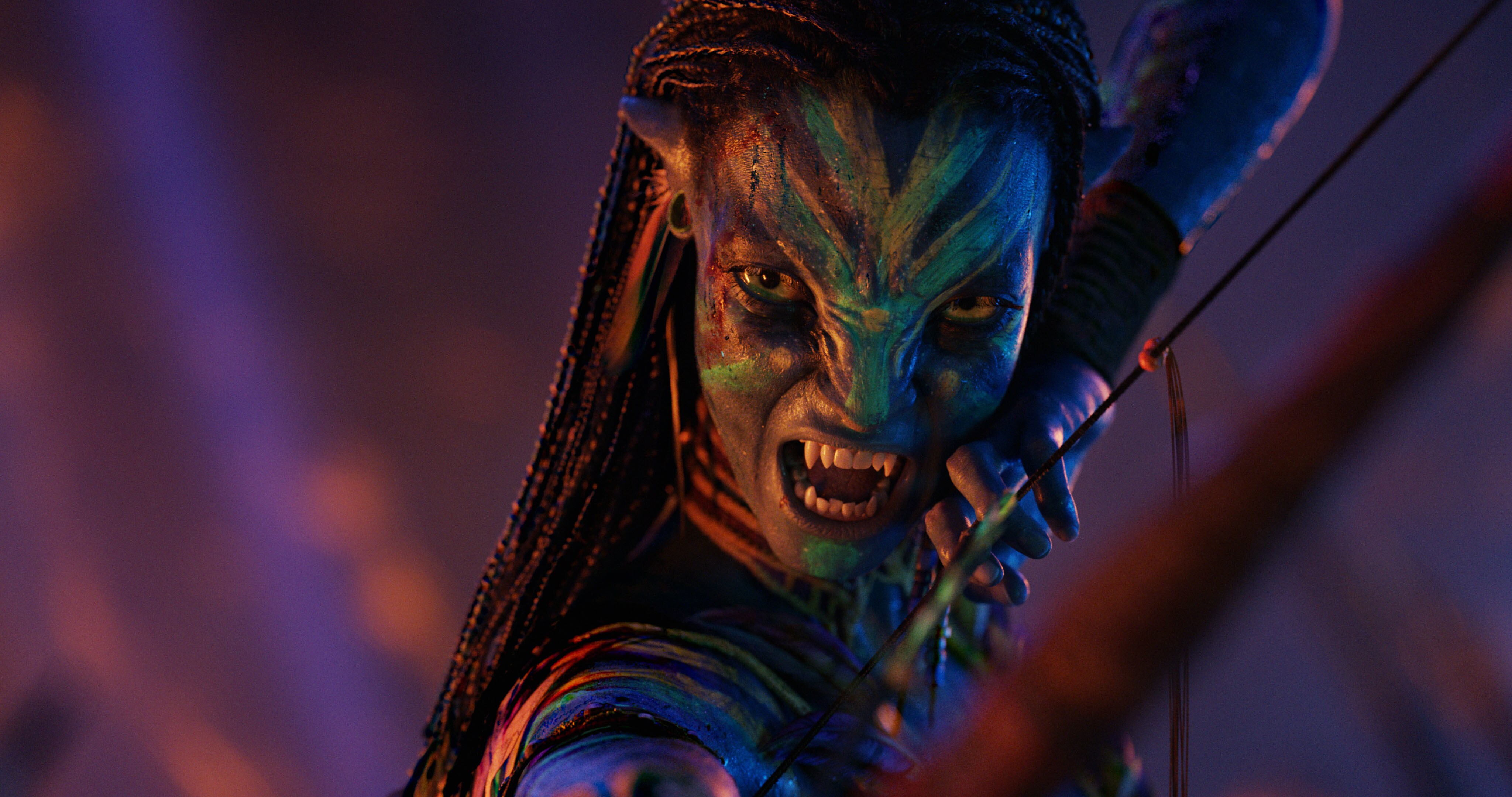
That willingness to push boundaries extended even to the franchise’s most beloved characters. Cameron acknowledged that some of the creative choices were intentionally provocative. The Sully family is still dealing with the aftermath of the death of Neteyam in Avatar: Way of Water. Every member of the family is dealing with the tragedy in their own way, but Cameron discusses the dark place the death of her son takes Neytiri.
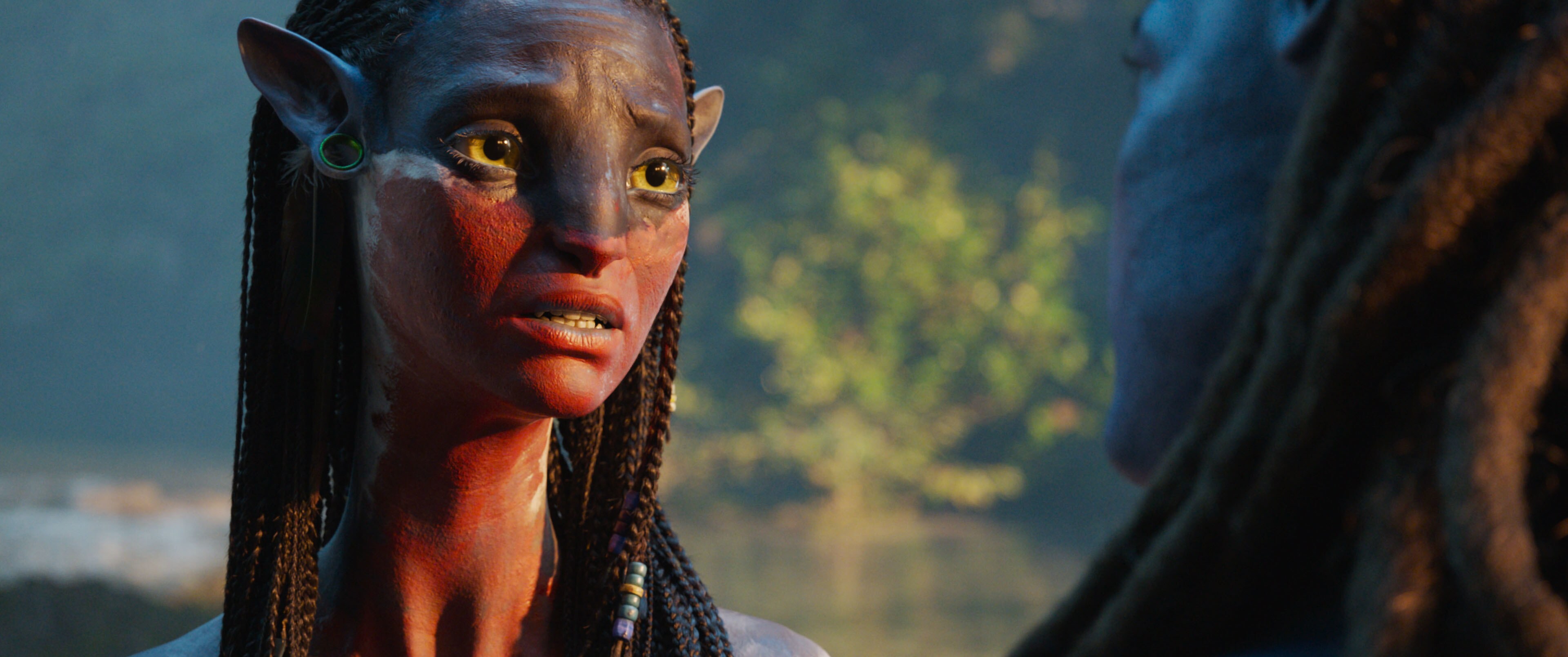
"Take the most beloved character, Neytiri, now show that her reaction to grief and loss is utter hatred of the humans," he said plainly. "That makes her a racist. You know, okay, fine — let’s see where that takes us."
Rather than softening those edges, Cameron said the creative team embraced them. "This was the brief with the writers. Let’s just go for it," he explained. "And that was the brief with the actors. Let’s not always try to be winning approval from our audience. Let’s take them on a darker and deeper journey."
While not intended to be the final film of the franchise, the film does wrap the story introduced in Way of Water. For Cameron, emotional resolution matters more than conventional happiness. "You know me, I don’t really say I like a happy ending," he said. "But I like resolution that’s satisfying emotionally. And if that means you tear up, great."
That emotional impact is part of what led Cameron to do something he had never done before: offer a detailed behind-the-scenes look at the making of Avatar through the Disney+ documentary Fire and Water. "I think people don’t understand what we do," Cameron admitted. "And I got a little nervous that people think that these performances are just whipped up using AI. They are not."
Instead, Cameron emphasized that Avatar remains deeply actor-driven. "It’s not coming out of my brain into an AI. It’s coming out of my brain as a writer, given to the actors as a baton pass," he said. "Then they take these characters, and we work for months."
In fact, Cameron noted that performance capture for the films stretched across 18 months, as multiple installments were produced together. The emotional response audiences feel, he said, comes directly from that human effort. "When you go on a journey, and you said you’re tearing up — those are people," Cameron explained. "They’re people being done in a new cinematic way, using CG. I think of it as digital makeup."
He drew a clear distinction between performance capture and generative AI. "That’s not character formation like with generative AI, where you just make up a character. That’s not what we’re doing here."
Cameron admitted that his earlier reluctance to show actors in capture suits may have been misguided. "I think I did the actors a disservice by keeping it all hidden before," he said. "People have been really responding to the behind-the-scenes stuff. It’s like, ‘Oh, that’s how they did it.'"
A big part of how they did it is producer Jon Landau, who lost his battle with cancer during the completion of Fire and Ash. The film is dedicated to Cameron’s longtime creative partner, whose impact on Avatar extended far beyond the screen. Cameron spoke movingly about Landau’s legacy — one defined as much by kindness as by achievement. "John was quite wise," Cameron said. "There aren’t any producers that I can think of offhand that achieved the level that he achieved in Hollywood."
Landau’s résumé speaks for itself, with three of the four highest-grossing films of all time under his belt. But Cameron believes it was how Landau worked that mattered most. "He did it through kindness, and through sharing, and through creating an esprit de corps."
That philosophy shaped the culture behind Avatar. "A lot of the Avatar family — the behind-the-scenes family — the camaraderie between the cast and the artists and so on, is his doing," Cameron said. "He made people feel that they were doing something amazing every single day, even though it might be the hardest thing they’ve ever done."
Cameron credits Landau with helping him reframe his own priorities. "When I started out in my career, the movie was the most important thing," he reflected. "Now I look at it as the process—the day-to-day journey—is the most important thing."
Landau, Cameron noted, brought joy and playfulness to even the most demanding work. "He was pretty zany. A lot of bad puns, practical jokes," Cameron laughed. "The harder the work, the more you have to play while you’re doing the work."
As Cameron and the Avatar team move forward, he sees it as their responsibility to carry that spirit on. "Now it’s our job… to keep that camaraderie and that mutual respect, and that sense of fun, that sense of play."
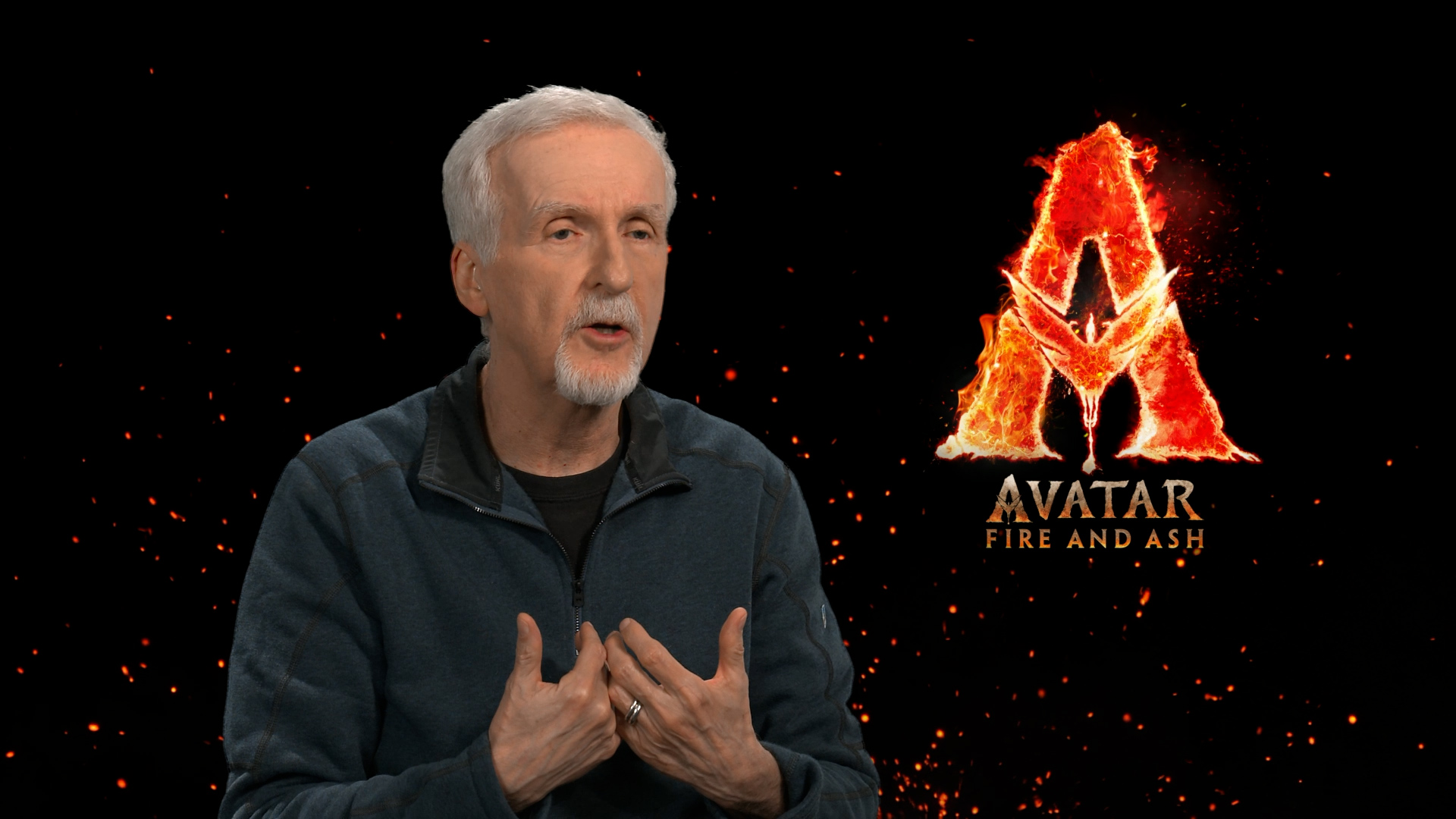
For Cameron, Avatar has always been about more than spectacle. At its heart, it remains a deeply human story — one shaped by collaboration, empathy, and the people behind the pixels. Despite the technology and innovation, it is a story of family. But while there is a family story on the screen, there is another family story of the one behind the scenes that is able to bring this cinematic experience to life. You can check out their hard work when Avatar: Fire and Ash releases December 19, 2025.
You can also check out our interview with Trinity Bliss, Bailey Bass, and Jack Champion: