
Interview: Leslie Iwerks on How Her New Film Unearths Disneyland's First Moments


When Disneyland opens its gates each morning, it’s easy to forget just how improbable the entire idea once was. Over seventy years later, Disneyland Handcrafted, the new documentary from filmmaker Leslie Iwerks, pulls audiences back to a moment before the magic — when dirt was still being moved, steel was still rising, and the dream was anything but guaranteed.
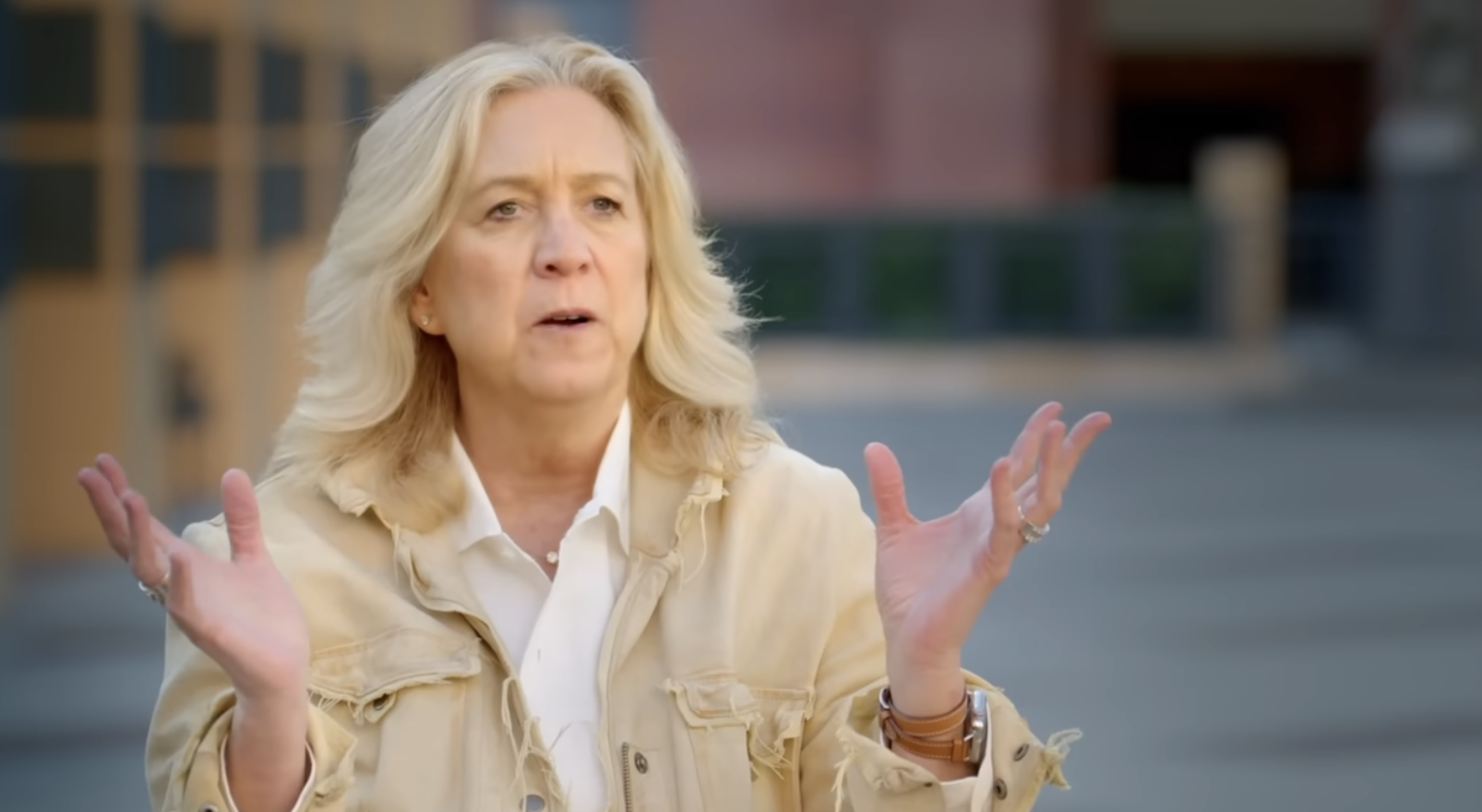
Set to debut on Disney+ and YouTube, Disneyland Handcrafted takes a strikingly different approach from Iwerks’ previous Disney-focused projects like The Imagineering Story, Pixar Story, and The Imagineering Story. Rather than relying on talking heads or modern commentary, the film immerses viewers entirely in newly restored archival footage from Disneyland’s construction, letting the images and sounds speak for themselves.
The project was born while Iwerks was working on The Imagineering Story. During that production, Disney transferred roughly 200 hours of archival film footage from its vaults. Within that massive collection, Iwerks discovered something extraordinary: nearly 100 hours of material documenting Disneyland’s pre-opening construction.
“Some of it had been seen before in things like Dateline Disneyland or The Wonderful World of Color,” Iwerks explained, “but there was a lot that had never been used — footage that had just been left on the cutting room floor.”
What stood out wasn’t just the rarity of the material, but its scope. The footage included observational scenes, aerial shots, behind-the-scenes moments, time-lapse photography, and even gag reels — all captured by Walt Disney’s cameramen as the park took shape.
“It was really cool to see it all come into effect,” Iwerks said. “You’re watching people working, the details, the process — all these different ways of documenting the making of Disneyland.”
From the start, Iwerks knew Disneyland Handcrafted couldn’t follow the traditional documentary playbook. “The whole point was to do something different,” she said. “There were literal scenes with multiple angles and points of view of the same moment. You don’t want to just pick one shot — you want to cut a full scene the way the cameraman intended.”
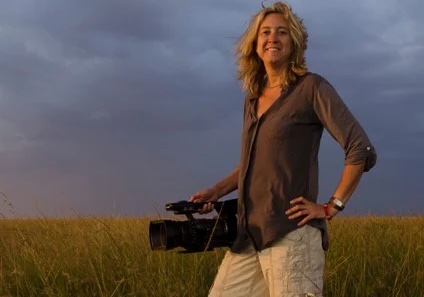
That philosophy led to the film’s cinema verité style — an approach that allows viewers to simply exist within the footage, rather than being guided through it. “We wanted you to sit in it,” Iwerks explained. “As close as you can get to being back in time — a time capsule.”
The result is a deeply visceral experience. Watching buildings rise slowly from the ground, feeling the scale of the undertaking, and absorbing the quiet tension of a project racing toward an immovable deadline gives the film an emotional weight rarely associated with archival documentaries.
One of the most ambitious challenges came from the footage itself. Though the film had already been scanned from 65mm to 2K, none of it had original sound. “It all came in MOS — no audio at all,” Iwerks said. “That’s how they shot it. Back then, Walt narrated over everything.”
To solve this, the team built the film’s sonic world from scratch. Iwerks first created a seven-minute silent proof of concept, then layered in carefully researched sound effects authentic to 1954-era construction equipment and machinery. By the time the project reached Skywalker Sound, the process became even more exacting. Sound mixer Bonnie Wild and her team spent weeks refining every detail, down to Foley sessions dedicated solely to recreating period-accurate effects. “She said it was harder than most of her shows,” Iwerks recalled. “Because you don’t have creative license here, every sound had to be authentic.”
Composer Cyrus Reynolds added another layer, crafting a score that blends organically with the mechanical rhythms of construction. In some moments, music heightens the emotional stakes; in others, its absence allows the raw imagery to land even harder.
Perhaps the film’s boldest creative decision is what audiences don’t see. Rather than cutting to interviews or archival photographs, Disneyland Handcrafted uses first-person audio excerpts from those who were there, construction workers, planners, marketers, and others involved in bringing Disneyland to life. “We scoured transcripts far and wide,” Iwerks said. “We wanted a 360-degree perspective — what people were feeling, whether they doubted it, whether they were surprised.”
Resisting the temptation to show familiar faces or historic stills required restraint, but it was essential to the film’s immersive goal. “A typical documentary would go there,” Iwerks noted. “Instead, we wanted you to feel it by seeing and hearing, not being told.”
For Iwerks, whose grandfather Ub Iwerks helped define Disney animation, the project carries a deeply personal resonance, but she views it first and foremost as an act of preservation. “These cameramen were hired by Walt to document the park,” she said. “And now, seventy years later, that footage is finally being seen.”
She also credits Disney leadership for recognizing the film’s value, particularly Disney+ executive Jason Recher, who championed the project after it spent time on the shelf. “When an executive sees the value of something like this for fans, first and foremost, that’s a gift,” Iwerks said. “It doesn’t always happen.”
As Disney increasingly leans into its heritage through projects like The Imagineering Story and Disneyland Handcrafted, Iwerks believes these films honor not just the company’s past — but Walt Disney himself. “I’m just honored to be the filmmaker who gets to tell these stories.”
Disneyland Handcrafted comes to Disney+ and YouTube on January 22.