
Swept Off Her Fins: Inside Pixar's Surprise Annecy Reveal of "Loving Dory"


Pixar wasn't on anyone's radar for a surprise this year at Annecy Festival, which is exactly how Lou Hamou-Lhadj and Mary Alice Drumm wanted it. The pair opened with a bit when they took the stage following Enrico Casarosa’s Gatto presentation, pretending they'd wandered into the wrong room, before letting the audience in on the secret: the studio is deep in production on a brand-new theatrical short film, Loving Dory. Hamou-Lhadj, whose résumé includes directing the 8th episode of Pixar’s Win or Lose, and Drumm, a producer on Brave, The Good Dinosaur, Coco, Elio, and a handful of Cars shorts, are reuniting for the first time since Brave to bring it to the screen.
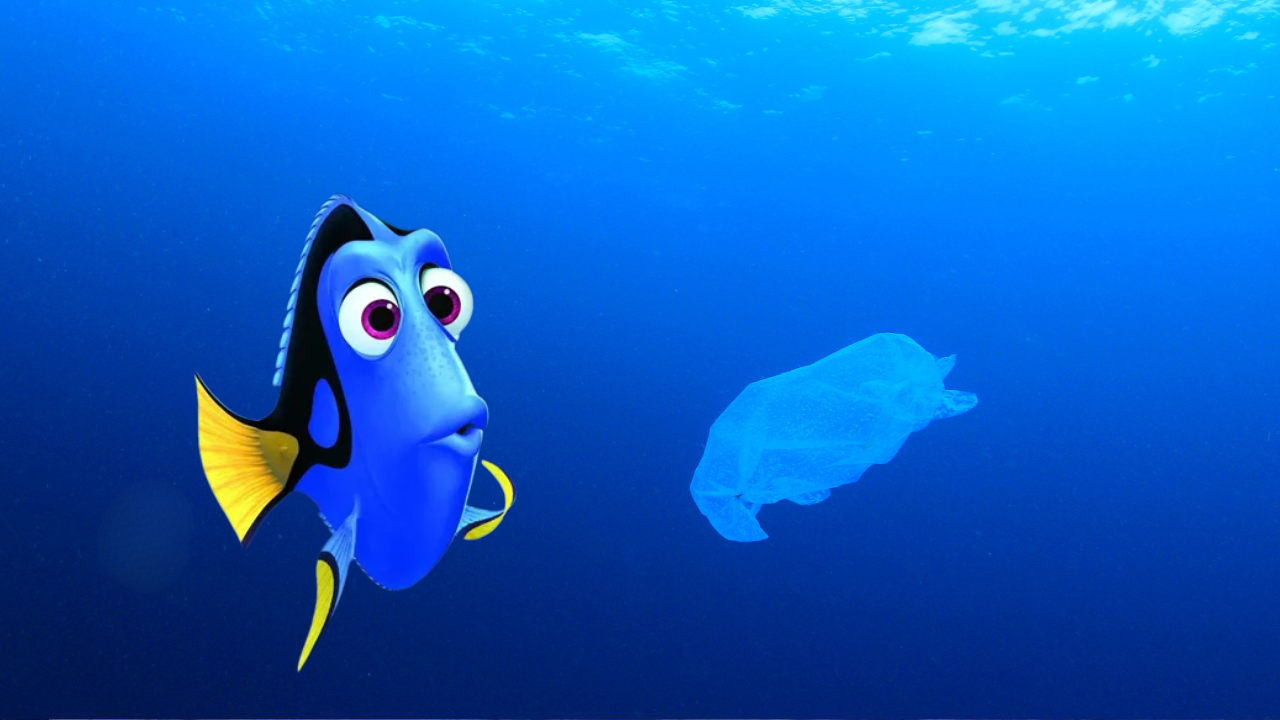
The film returns to the reef of Finding Nemo and Finding Dory for a new chapter in Dory's story. Why Dory? As Hamou-Lhadj puts it, she gives everyone "permission to have fun.” Her singular view of the world makes room for the absurd.
Rather than simply describe the film, Hamou-Lhadj recreated his original story-session pitch for the crowd, interleaving it with never-before-seen in-progress footage that, he notes, hardly anyone at the studio has seen yet. The pitch, however, wasn’t the full story, so even the Annecy audience will have to wait until the project is finished.
The short opens with the Luxo lamp's glow morphing into sunlight playing across the water's surface. Fish drift over a beautiful reef as a boat appears overhead, a young boy peering down. His father tells him to put on sunscreen, but the bottle and bag tumble overboard, scattering the fish. As the sunscreen slips out, the empty plastic bag turns buoyant and drifts through the water, taking on the unmistakable silhouette of a jellyfish.
We rejoin Dory dropping Nemo off at school. Alone, Dory catches sight of the floating bag, mistakes it for a jelly, and panics, crashing into it and tumbling into a patch of mushroom coral, where she gets stuck. The bag drifts close and gently brushes the seaweed from her face in a startlingly romantic caress. Dory blushes, and what’s sure to go down as one of animation’s strangest meet-cutes is born.
What follows is a full “L-O-V-E” montage. The bag's handle wraps around Dory’s fin, sweeping her "off my fins." Dory shows her love interest the sights, while its other handle gathers aquatic plants like a bouquet; she arranges shells into a heart on the seafloor before the sleeping crabs inside scatter. The sequence crests with the two of them watching a shooting star, the bag's handles wrapped around Dory in a spoon-like embrace. "I've got to introduce you to my friends," she says.
Back at the reef, Mr. Ray floats by Dory and the bag with his class. The kids swarm, all convinced the bag is a jelly, except Nemo and Mr. Ray, who exchange a knowing look. Tad rudely pokes it, Pearl asks if they're getting married, and Mr. Ray steps in for a gentle, worried teachable moment, trying to spare Dory from getting hurt without quite spelling it out. When Dory darts off to introduce the bag to her family, Nemo asks to be excused and quietly follows.
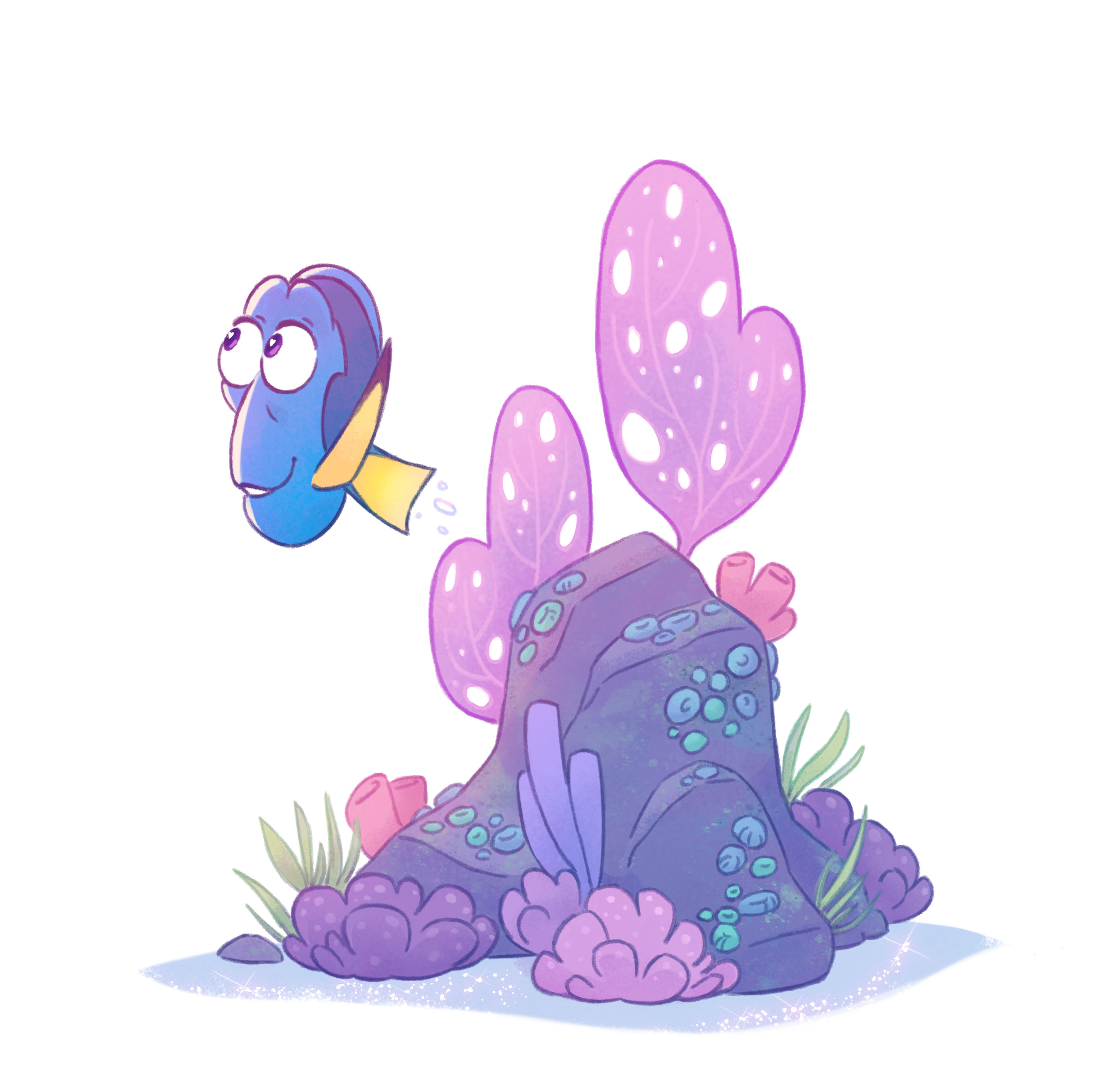
The pitch ended on a sour note. Passing a school of exotic fish, Dory warns one, Debbie, that her partner is spoken for. Then the bag vanishes. Dory searches, only to find it tangled near the rocks with the exotic fish, looking for all the world like she's caught it cheating. Hamou-Lhadj cut the pitch there, leaving the rest for audiences to discover.
Dory has fallen in love with a plastic bag, and it's "kind of a toxic relationship," the director joked. But he promised an optimistic ending for both Dory and the reef as a whole, a knowing nod to how often real sea life mistakes our garbage for one of their own.
Shorts, Hamou-Lhadj reminded the room, have always been Pixar's bedrock; the place where the studio takes technical risks and questions its own process. With a small team and a short clock, formalities fall away. Loving Dory is being made by a crew of around 10 people and is roughly 50% complete, the same milestone as Gatto, he noted, but with far less time to reach the finish line.
The big technical swing is an experimental interface for real-time character puppeteering. Hamou-Lhadj traced it back to the very first Marlin swim cycle he animated at Pixar in 2007, wondering years later whether he could fold those lessons into a procedural tool that felt like a conversation with the character rather than a curve-by-curve grind.
The result responds directly to the animator's mouse movements, with no translate handles and no rotation widgets; You simply place the character where it should be on screen and conduct the timing, rhythm, and musicality of the performance. Under the hood, it generates the same curves an animator would build by hand, so everything stays tweakable, and crucially, it considers the performance as the camera sees it, always working back from the final shot. He demoed "perform mode" for simple dialogue shots, even mapping on-screen pinwheels to game controllers to puppet the face and rough in lip sync. It's previs, he stressed, never intended as final animation, but it talks directly to Pixar's existing animation system, letting the team keep as much or as little of the puppeteered performance as they want. The benchmark, he's clear, remains a Pixar theatrical-quality film.
To stress-test it, animation supervisor Eric Anderson reblocked shots from Finding Nemo, including Marlin and Dory's classic "swim through it, not over it" debate at the trench, to see what the tool could do in its early days. The tech also powered the dating montage's 16 scattering crabs, a sequence animator Bruna Berford enjoyed so much she asked to find more places in the film for crab scenes (she may get her wish, the director hinted). And it handled previs on the star of the show, the bag itself, which had to read convincingly as both a bag and a jellyfish to sell the film's double entendre core.
Drumm confirmed the voice cast is returning to their roles. While no names were spoken from the stage, that presumably includes Ellen DeGeneres as Dory. On the music side, Thomas Newman returns to executive produce the score of Loving Dory, working closely with composer Nami Melumad (Dream Productions). Jazz vocalist Catherine Russell contributes two original ballads to the short.
As for when audiences will see it: Loving Dory hits theaters "soon," though the team pointedly declined to say which film it will play in front of. Gatto would be the obvious pairing, but the vagueness leaves the door open, including the possibility of attaching to another Disney release, or even a theatrical re-release of a Pixar film, in the same vein as Cars returning to the big screen for its 20th anniversary this September.
We came to Annecy expecting Gatto. We're leaving, thinking about a heartbroken Dory and a bag that never loved her back. That's Pixar for you, and "soon" can't come soon enough.