
Nine Lives, One Last Heist: Inside Annecy's First Look at Pixar's "Gatto"


15 years after his short La Luna premiered at the Annecy Festival, Enrico Casarosa took the stage to introduce Pixar's Gatto, telling the crowd they were the first audience anywhere to see finished scenes from the film. Luca also had a moment to shine at Annecy in 2021, albeit virtually via a Zoom presentation. Gatto trades the Ligurian coast for the canals of Venice, where, Casarosa explained, the streets were once ruled by cats. Having spent summers there, he became fascinated by their secret world of who they waited on for scraps, how they seemed to run the place. That fascination became the movie. He also teased a new, deliberately painterly visual style, describing the goal as the feeling of "walking into a painting," before promising to explain how they pulled it off later in the talk.
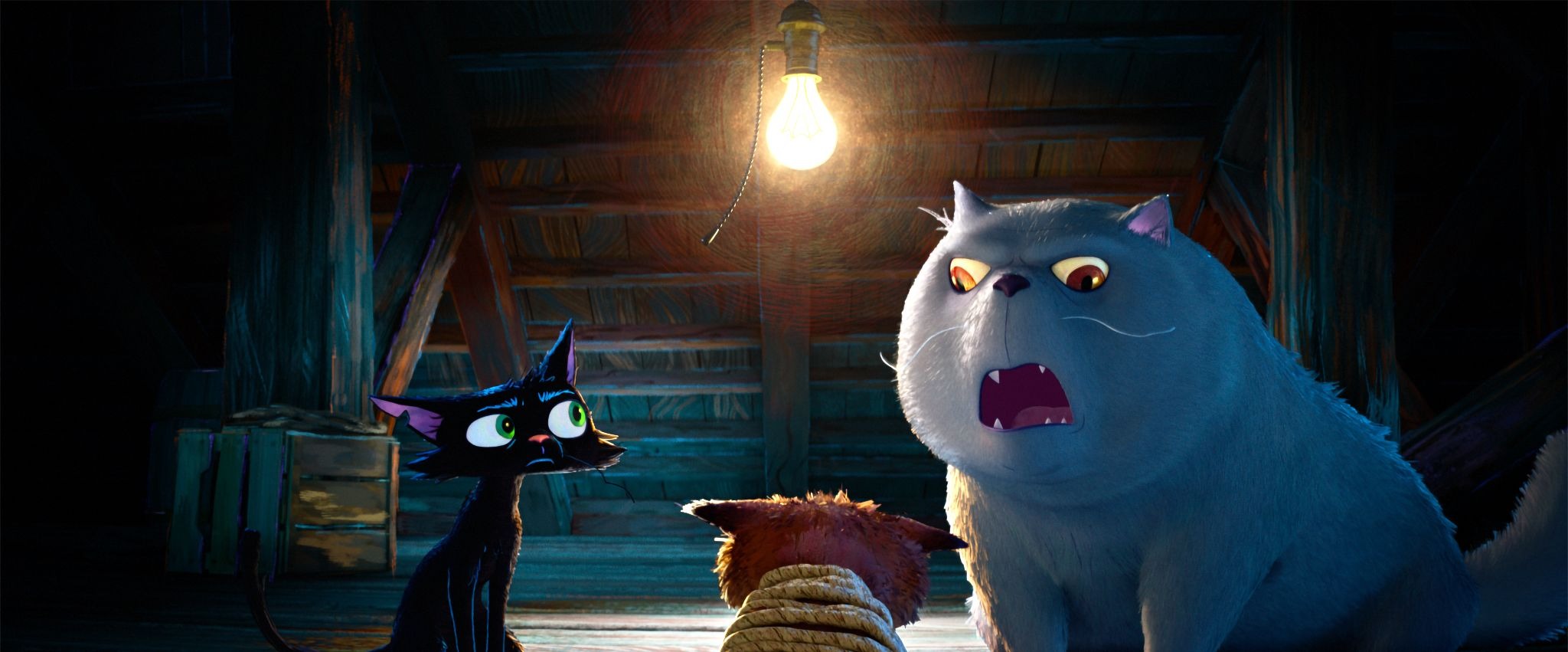
At the center of Gatto is Nero, a black street cat (voiced by Mark Ruffalo) who's had a hard go of it. Feared as bad luck in a deeply superstitious city, and, inconveniently for Venice, unable to swim. As a kitten, he's taken in by Rocco (Laurence Fishburne), the British Shorthair crime boss who rules the city's felines like a mob don, commanding a colorful crew of hench cats, one of whom, Casarosa showed in a slide, bears a striking resemblance to Machiavelli from Luca. A board sequence of Nero arriving at the gang's hideout drew one of the panel's biggest laughs, as the cats' "password" exchange devolves into authentic-sounding feline grumbling.
Rocco, it turns out, is an obsessive collector of fine cat art, and he's set his sights on a centerpiece: a rare violin carved with a cat-shaped head. The problem for Nero is timing; he's reached an existential crisis, weary of the thieving life and desperate to get out. Rocco offers him a way: one last job. Steal the violin, and Nero earns his freedom.
The violin belongs to Maya, a gifted young street musician and, like Nero, an outsider trying to make it in Venice. To get to her, Nero enlists Saverio Piccionini, a Venetian pigeon who owes Nero his life and happens to be a passionate union organizer for the city's pigeons. In the first sequence shown, Saverio leads a protest against the anti-roosting spikes lining Venice's stoops before peeling off to help, leaving a one-eyed pigeon named Catalina in charge of the picket line. Casarosa revealed he's voicing Saverio himself.
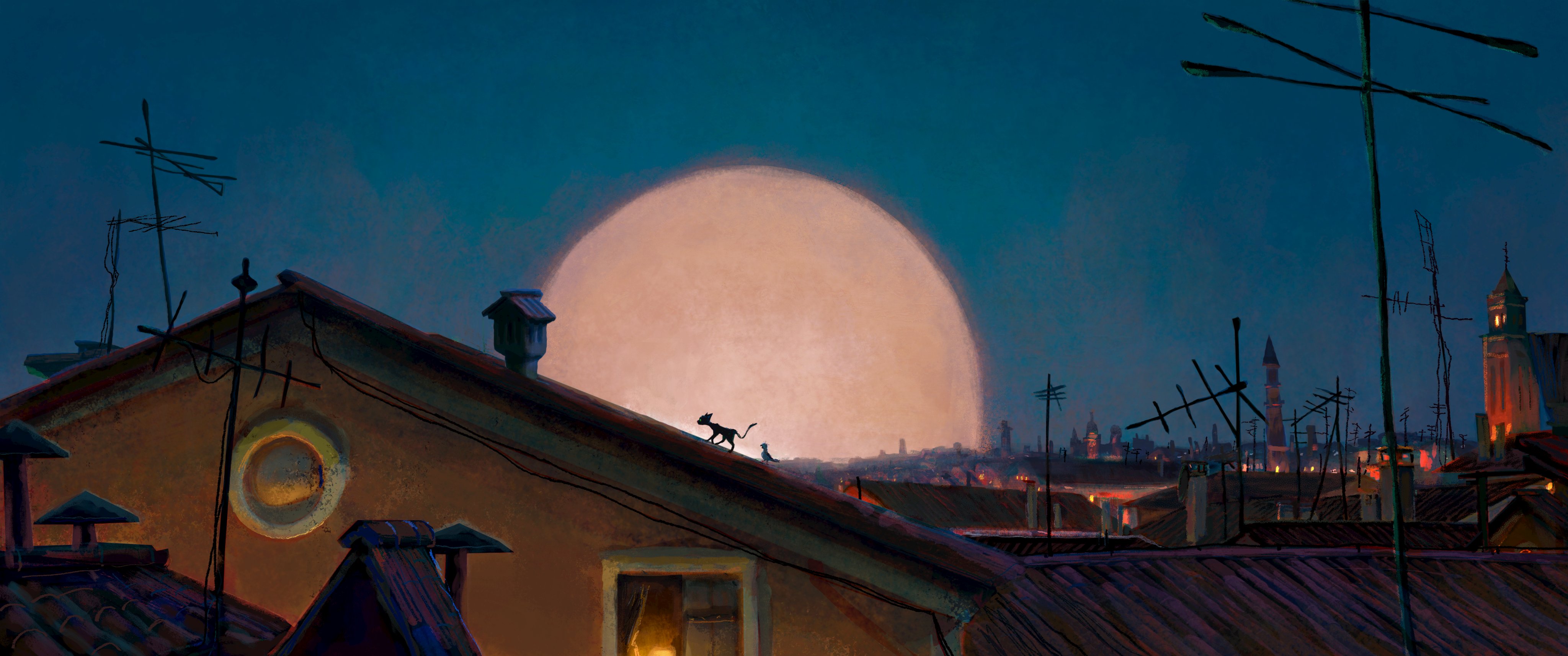
The heist immediately goes sideways. Maya, unlike nearly everyone around her, isn't superstitious and isn't afraid of Nero, but the persistent, deeply superstitious cops hounding her are. In a clip set moments later, she realizes she can wield the black cat to scare off Capitano Briganti, and decides to keep Nero as a pet. He has other ideas, faking the role of a sweet house cat while he hunts for his opening, until her superstitious father refuses to let the cat stay, and a caught-in-the-act escape attempt instead sparks the start of an unlikely friendship.
That friendship is the heart of the film. Nero, it turns out, has music in his bones (his tail dances helplessly whenever he hears it) and the two discover how much they share. In one of the finished scenes, Maya takes him on a canal-boat ride, drifting under a bridge in the rain outside the opera house to listen, and confides her dream of one day performing inside. As Casarosa frames it, these are two black cats in the world, one literal and one figurative, and Nero faces a real choice: steal the violin and betray her, or risk everything and defy Rocco.
Casarosa devoted the back half of the presentation to Gatto's style, which draws on the Venice of classic artists Tintoretto, John Singer Sargent, and Claude Monet to build an expressive, immersive city. Line work is applied wherever possible and is fully controllable by the animators. Nero's eyebrows are etched in by hand, his fur rebuilt to read as drawn strokes, and Saverio's wings designed to look like brushwork. For fast, cartoony beats, animators reach for multi-limbs, a nod to classic hand-drawn technique. Environments and props get 3D lines drawn over them as well; in a comp comparison, Casarosa toggles the rendered image off to reveal the linework alone, a black field of hand-drawn strokes that conceptually echoes the ink-line-over-paint approach Disney pioneered in 101 Dalmatians. Reflections aren't mirrored from the actual scene but rebuilt as simpler, watercolor-like brushstrokes, and the atmospheric haze is hand-scribbled fog the team affectionately calls "Scrog."
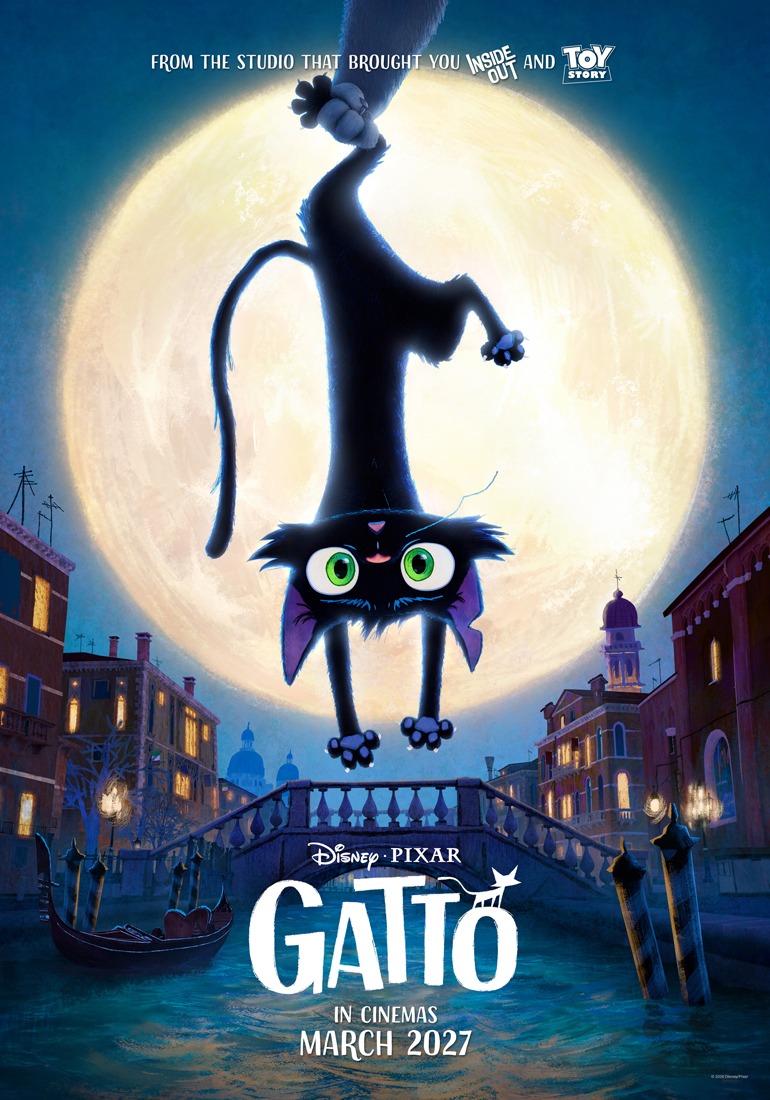
As of the day before the panel, Gatto officially crossed the 50% mark of completed animation, halfway to its March 5th, 2027 release date. Casarosa filmed a quick video with the audience cheering to share Annecy's enthusiasm with his crew back home. Billed only as a look at Gatto, the session then turned into the surprise reveal of a new Pixar short based on characters from Finding Nemo, Loving Dory. But not to steal Gatto’s thunder, Enrico Casarosa has had a winning streak with La Luna and Luca, and while Gatto may be about a very unlucky cat, all of the material shown was as winning as his track record.