
The Making of Short Circuit’s “Maddie & the Test” and “Life Drawings”


On March 12th, Walt Disney Animation Studios opened its Burbank doors to the press for a screening of its latest slate of short films. Among them were the two newest entries in the Short Circuit experimental films program: Maddie & the Test, directed by Heather M. Roberts Russell, and Life Drawings, directed by Larry Wu. Clark Spencer, president of Disney Animation and producer of films including Wreck-It Ralph, Zootopia, and Encanto, welcomed the audience by placing the shorts in the long tradition of Disney animation innovation — from Steamboat Willie to Paperman — noting that the Short Circuit filmmakers “each desired to make something very poignant and in some cases very personal to them.”
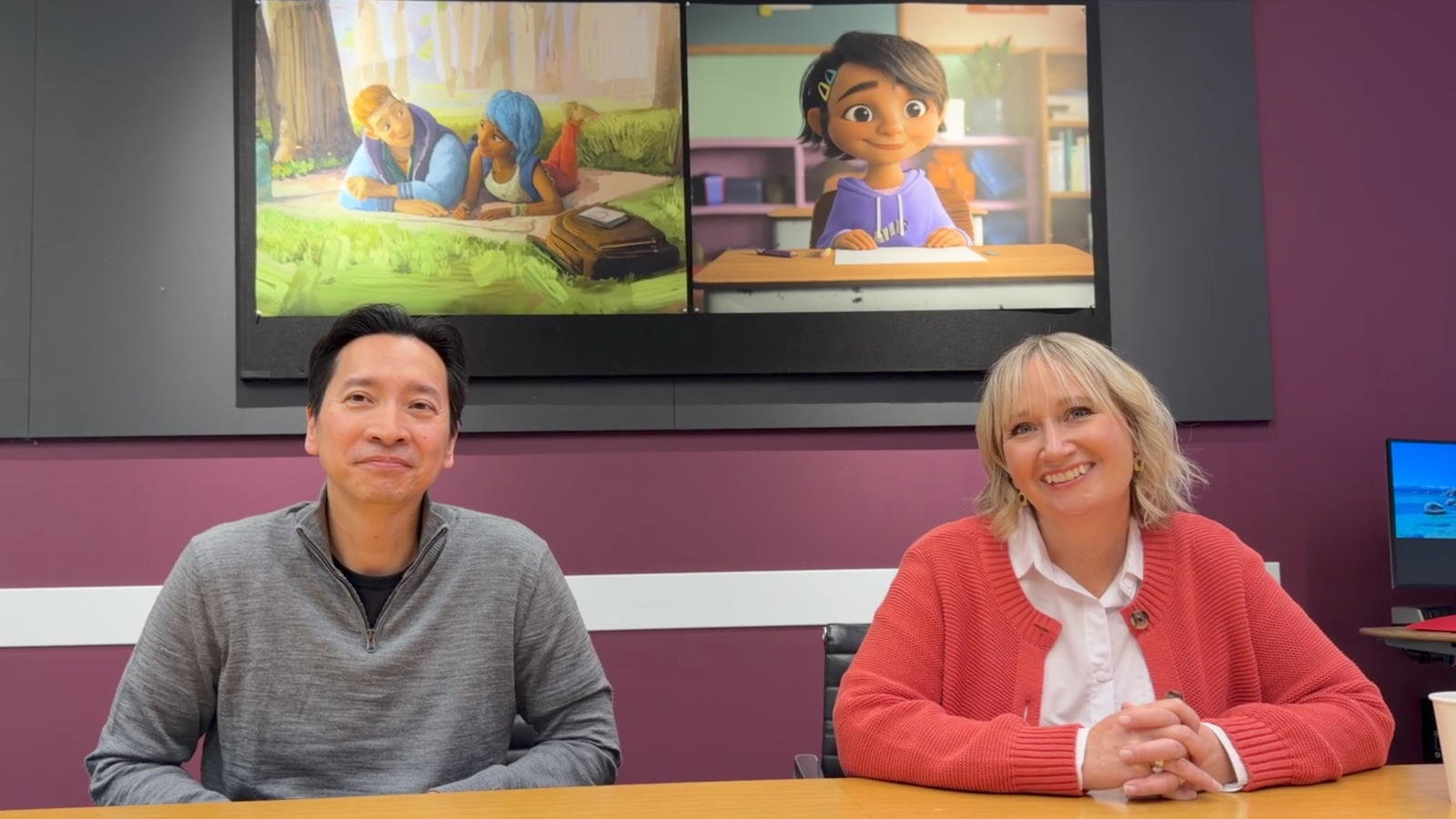
Short Circuit accepts pitches from anyone at Disney Animation through a blind submission process — a detail that worked in Roberts Russell’s favor. “My day job here is as a department manager,” she noted, “so it kind of worked out for me.” She supports the story and look development departments at the studio, describing herself as something like a “homeroom teacher for artists.” Wu, a veteran look development and environments artist whose career at Disney spans Bolt, Tangled, Wreck-It Ralph, Frozen, and Moana 2, had been carrying his idea for nearly a decade before it reached the screen. His path to completion was prolonged by leadership responsibilities. “I had to pause my project a couple of times because I was in a leadership position and had to finish features,” he explained. “In those gaps, other projects were developing newer tool sets that I could end up using for my short.”
When both directors finally learned their shorts would debut on Disney+, the news landed with unexpected force. “I was shocked, I was stunned, I didn’t believe it,” Roberts Russell recalled. “You create this thing, and you’re so excited about it, and then you have this moment where it’s finally going out into the world. Seeing it on the big screen was really, really special — I was trying hard not to sob in the theater.”
The two shorts couldn’t be more different in origin. For Roberts Russell, Maddie & the Test began with a quiet moment in a car. “I was with my oldest child and my niece Amelia, and we were talking about our favorite things — favorite movie, favorite restaurant, favorite food. My kiddo asked Amelia, ‘What’s your favorite book?’ And she got really quiet and didn’t say anything for a minute. Then she said, ‘I don’t have a favorite book. I don’t read well.’” Amelia, who is dyslexic, went on to describe what the condition feels like for her — and ended by saying that she was okay with it. “The grace and the strength that she had,” Roberts Russell said, “I was like, if the world could see what Amelia sees, we’d all be better off.”
That desire — for those without dyslexia to understand it, and for those with it to feel seen — became the foundation of the short. Roberts Russell deepened her understanding through extensive research: reading every book by UCLA’s Maryanne Wolf, a leading expert in the field; consulting organizations including understood.org; and holding roundtable discussions with Disney Animation artists who identify as dyslexic. The process also led to personal discoveries. “Through the course of making this short, I found out that my father and my sister are also dyslexic,” she said. “I have since learned that my own child is neurodivergent in different ways. It opened up my brain to what those possibilities are.”
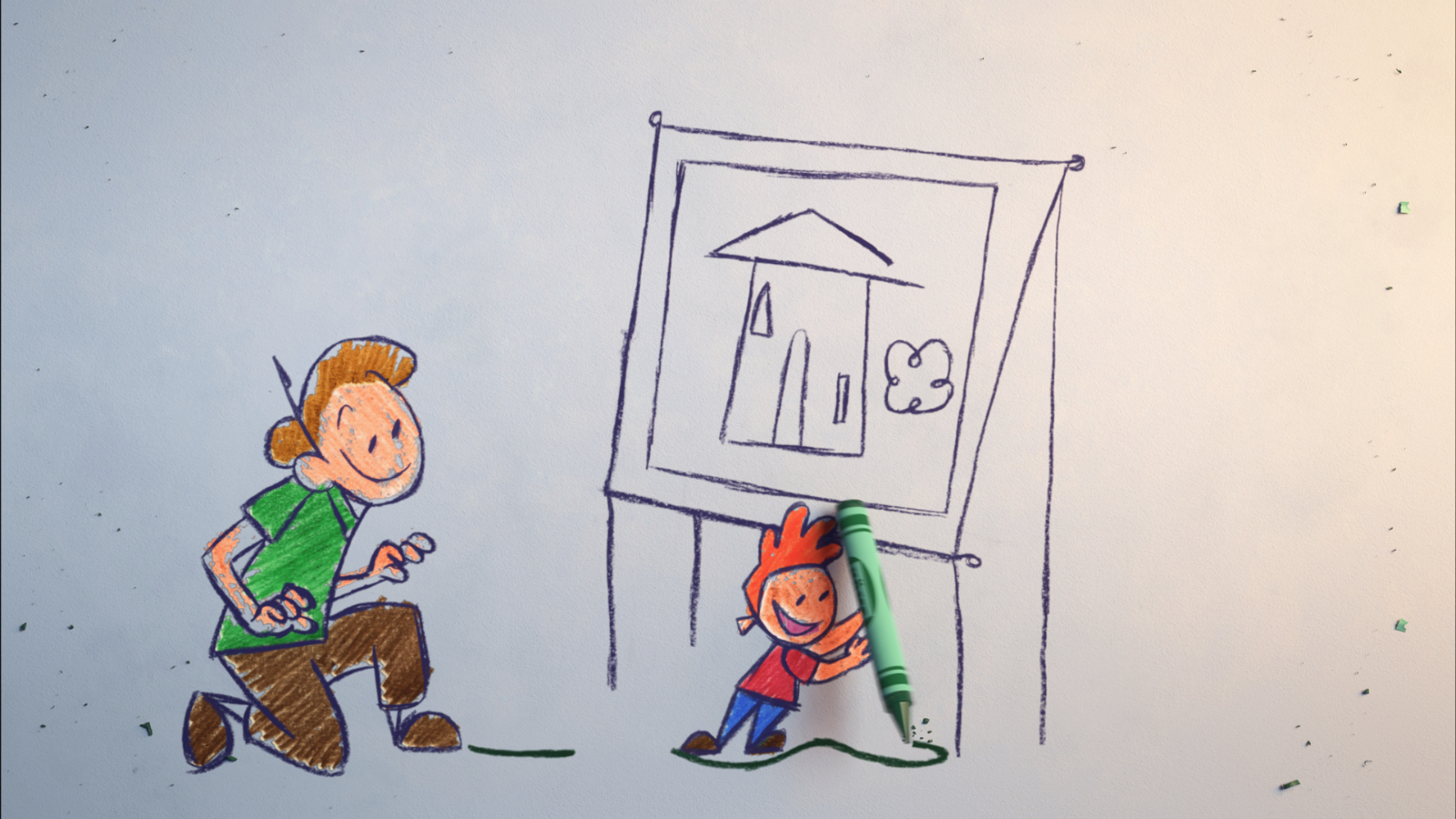
Wu’s inspiration for Life Drawings took a broader view. “This idea popped into my head to go through all the different stages of life but capture it through all the different art forms,” he explained. The short follows an artist from childhood to old age: crayons on paper, pencils on ruled notebook pages, then the functional visual language of instruction manuals during the long working years, and finally a return to painting as he prepares to pass his love of art to his daughter. Wu was deliberate about the proportions. “The instruction manual was a representation of your working life stage, and it was the longest section,” he said. “Because I feel like that is how your working life is — your longest stage in life. And then going back to what you love, and at the end, the daughter starting her own stage.”
Both shorts carry the fingerprints of Disney Legends, and both directors spoke about those collaborations with unmistakable reverence. For Roberts Russell, the partnership with Mark Henn — who animated Belle, Jasmine, Ariel, and Mulan over the course of his legendary career — was the creative centerpiece of Maddie & the Test. The decision to make everything that happens on the test page hand-drawn animation was made early, and Henn brought it to life. “For him to say to me, ‘Hey, you’re the director. What do you want?’ — that’s like an experience of a lifetime,” Roberts Russell said. “He’s the loveliest human. He was so gracious and kind, and he just brought really great ideas to the table.” She had grown up seeing Henn’s work: “I saw Aladdin 13 times in the movie theater when I was younger, and my goal was always to work here. When I got to work with the gentleman who animated Jasmine, it was really special.”
For Wu, the pivotal moment came when a colleague arranged for the late Disney Legend Burny Mattinson to hear his pitch. “I had that Mark Henn moment — I didn’t know how to talk,” Wu recalled with a laugh. “I pitched it with a stick on the board, and he just said a few words that had a really huge impact on the rest of my development.” The note Mattinson gave — to keep the childhood section fun, to not lose the lightness of those early years amid the story’s more somber themes — became a guiding principle that Wu carried all the way to completion.
Both shorts share the same composer: Lauren Harrold, who manages Disney Animation’s music production team. Composing for these films marked the first time she had done so for the studio, and each short gave her a distinct challenge.
For Life Drawings, Wu had envisioned a score where the instrumentation evolved with the story from the very beginning. “From my very first boards, I had the story, I had the style, and the third line was the music,” he said. “Starting with a toy piano, moving through orchestra and jazz, and ending back with a toy piano when the daughter arrives. At the time, it was way too ambitious for a three-minute short — but Lauren made it work much better than if we had originally tried to execute my version.” He was equally specific about sound design, wanting to capture the sounds of the physical mediums the characters use. “Because of the different types of canvases, it was important to capture the sound those instruments make. That was like a voice of my short.”
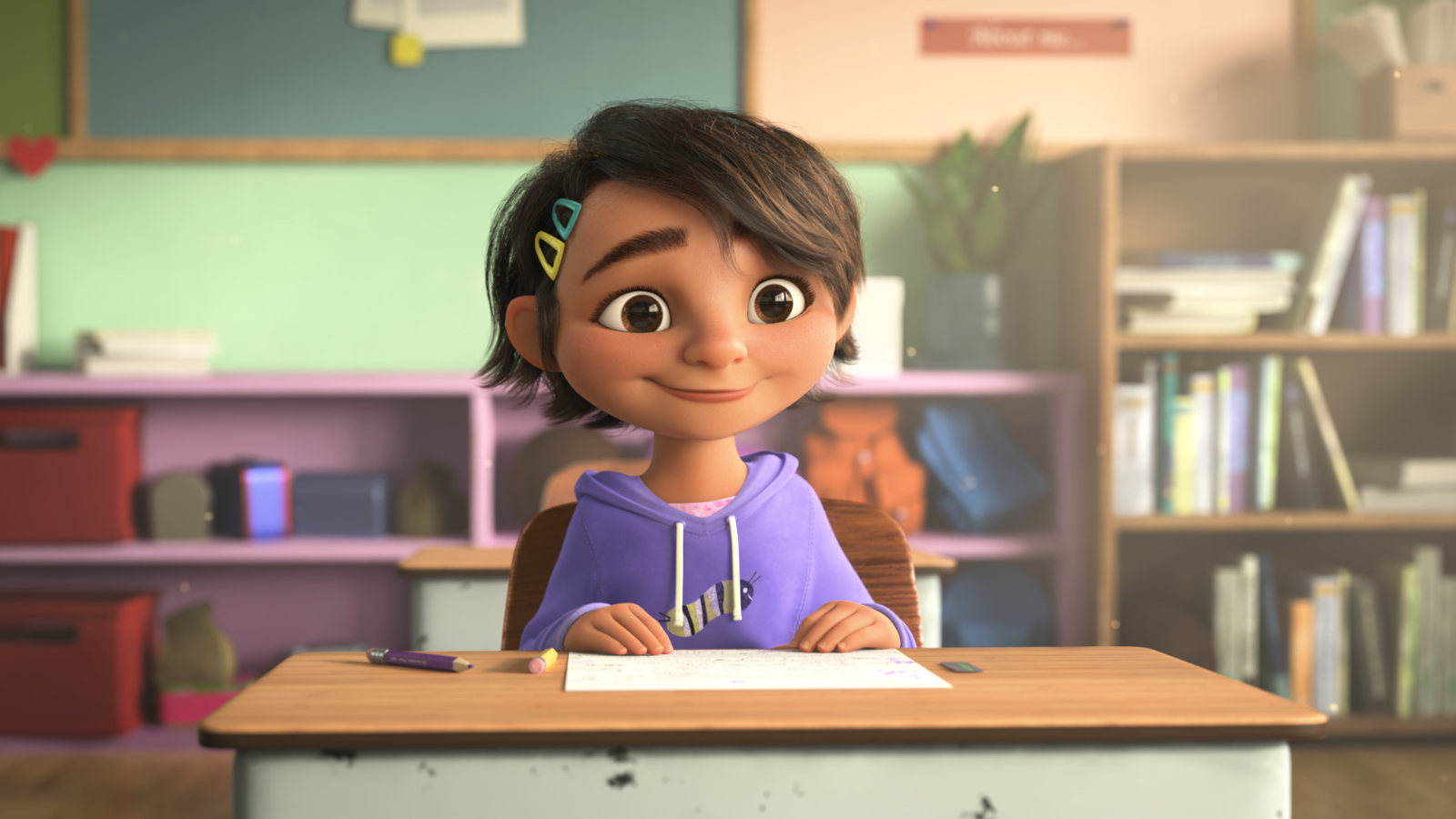
Roberts Russell came in with an equally ambitious concept. “I had kind of a crazy idea,” she said. “I wanted two different lines of music: one for Named Maddie, the little hand-drawn character who comes alive on the test page, with a jazz line — very improvisational, very in tune with who she is — and one for Maddie the main character, which was more orchestral, more cinematic.” Harrold not only made it work but also directed a live recording session to bring the jazz line to life. “She stepped outside of her comfort zone, composed the music for us, and then actually directed the musicians. We had live players come in and record on both projects.” Roberts Russell also credited sound designer David Fuller, noting that the interplay between music and silence became essential to the emotional rhythm of the film. “As important as the music was, Lauren understood when silence was the right choice.”
The visual ambition of both shorts created significant production challenges that required inventive solutions. For Wu, the central puzzle was how to animate using the actual physical mediums the story demanded, and then re-create their natural byproducts digitally. He asked his animators to “animate with the medium itself” — Tyler Pacana drew in charcoal, Austin Traylor used grease pencil — with 2D scene planner Brandon Bloch carefully scanning each piece of artwork. “He may have had to wipe down the scanner once in a while, but he was up for the challenge,” Wu said. The crayon dust and pencil shavings that drift across the page throughout the film, however, were created digitally using CG particle systems by the effects team. Wu also had to solve an “optical flow” problem created by his transition technique: nearly every shot in the film involves one page sliding or turning to reveal the next, requiring careful choreography of exactly when animation begins and ends in each shot.
For Roberts Russell, the central challenge was making dyslexia visible and dynamic on screen. “The biggest challenge was figuring out how to make sure we could see dyslexia on the page and make it feel as dynamic as it would feel to an individual who experiences it,” she said. Effects artist Kee Nam Suong developed a system that made the letters’ movements appear random while actually being precisely controlled and automated. Crucially, the letters’ disruption never fully resolves — a deliberate choice reflecting the reality that dyslexia doesn’t simply go away. The team also had to overcome the visual challenge of a predominantly white test page on a large screen. “How do we make that dynamic and not feel static, and how do we integrate all the elements of Mark Henn’s 2D work?” The answer involved close collaboration between Henn, 2D cleanup artist Rachel Bibb, and Brandon Bloch.
Short Circuit pairs first-time directors with alumni of the program, and both Wu and Roberts Russell credit their mentors with shaping the work. Roberts Russell’s mentor was Trent Correy, who directed Drop as part of Short Circuit’s first wave of Disney+ releases and has since directed Once Upon a Snowman, co-directed Once Upon a Studio, and is also in the director’s chair on Frozen 3. The relationship went beyond emotional support. “He was willing to dive in and get his hands dirty in the drawings with me,” Roberts Russell said. “Some of the earlier versions of the Named Maddie character actually came from Trent, playing with the squash and stretch of her.” The two are still in regular contact. Wu’s mentor was director Don Hall. “He let me do my thing,” Wu said simply. “Once in a while, he’d steer me in the right direction, but he thought I was probably self-sufficient enough. I got to ask him questions when I had them, and it was great.”
Both directors also spoke to the way their broader crews showed up. Roberts Russell noted that Short Circuit crew members volunteer to work on these projects. “Everyone who came and worked on the short was passionate about this topic, and because of that, they poured so much more into the short itself — which is what you wind up seeing on the screen.” Wu echoed the sentiment: “Every person who jumped on — from artists to managers — they volunteered ideas. Not all of it worked, but the fact that they were willing to share their thoughts was a huge surprise. It really made my film better.”
In the end, both films share a theme that neither director explicitly set out to match: the idea of passing something forward. “Even though Life Drawings is about a family — father to son, and then son to daughter — I hope that when audiences see it, it resonates with people from all walks of life,” Wu said. “It doesn’t need to be family. It can be teacher and student, or mentor and mentee. That message of passing down experience and wisdom is more of a global, generational thing for everyone.”
For Roberts Russell, the message is both more specific and more universal. “It’s about those who do not have dyslexia to see, and for those who do have dyslexia to feel seen,” she said. “But there’s a larger piece for me, which is that all of us face difficult moments in our lives, and we are there by ourselves. We have to learn how to draw from the tools we’ve built over time to handle those tough moments. And we’ll all make it through.”
Maddie & the Test and Life Drawings debut on Disney+ on March 18th.