
Why Jessie Was the Natural Protagonist for "Toy Story 5"


We are all aware that Jessie knows what it means to be left behind. Beneath the exuberance and fearlessness that have made her such a beloved part of the Toy Story franchise is the memory of being a child’s favorite companion and then watching that relationship disappear. That history gives her a particularly personal stake in Toy Story 5, where the question of what children need from their toys becomes intertwined with technology, friendship, and the courage it takes to invite someone into your world.
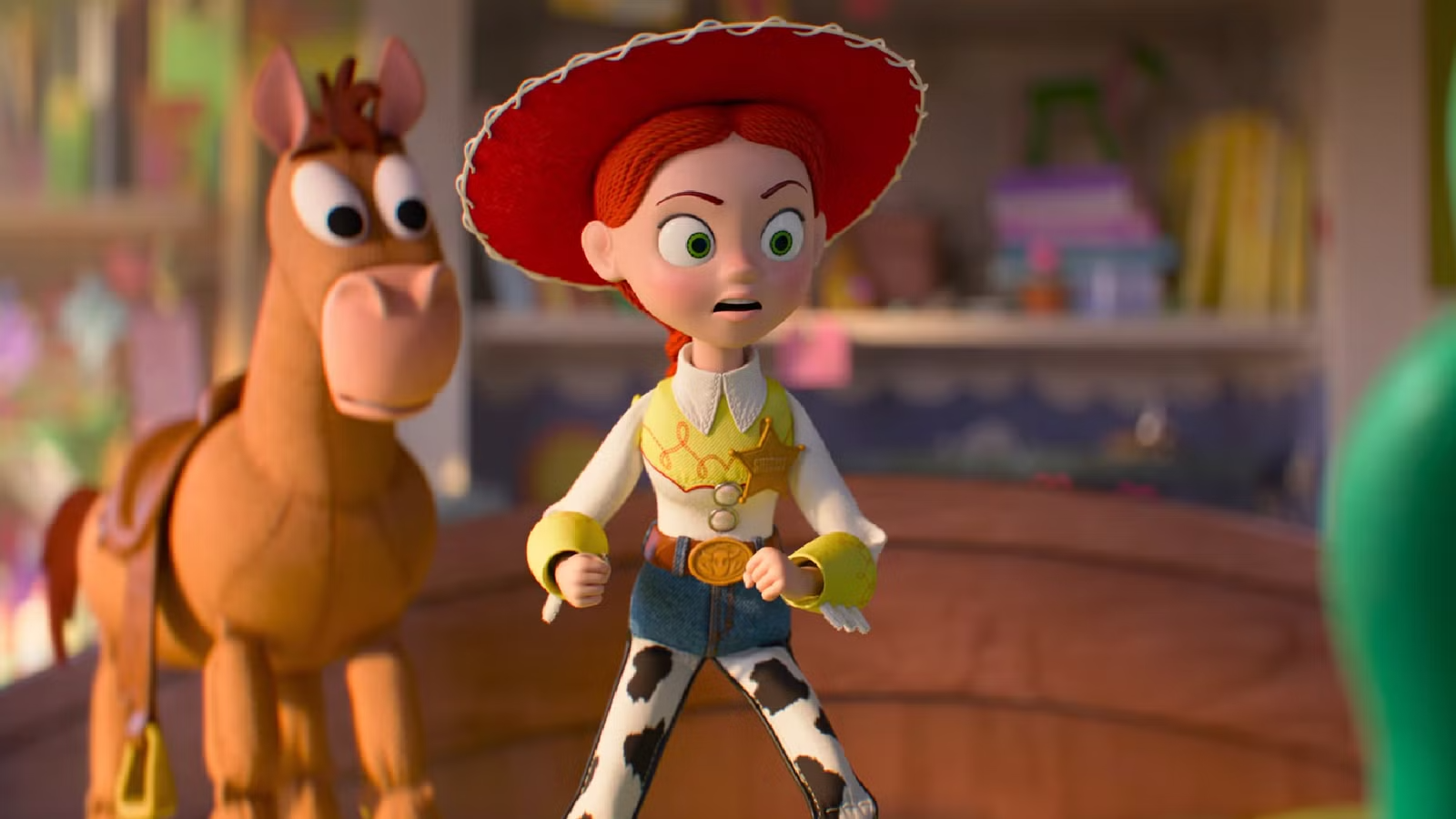
In a conversation with co-director and co-writer Kenna Harris, producer Lindsey Collins, and Jessie’s longtime voice, Joan Cusack, what emerged was a shared affection for a character whose toughness has never erased her vulnerability. Their discussion also revealed how the film found its emotional purpose. A story about toys competing with screens became something more meaningful when the filmmakers began asking how play could help two children connect.
For Harris, Jessie’s experience made her a natural protagonist. She has already lived through a child discovering other interests and moving on, giving her a perspective shaped by more than the immediate threat of a new device. The technology may change, but the fear of losing a place in someone’s life is something she understands.
Collins described a strong desire within Pixar to give Jessie that central role and to address the emotional history audiences have carried with her since Toy Story 2. The challenge was finding a story that could honor those experiences while making room for her energy, humor, and capacity for joy. Jessie’s past gives the new film its stakes, but her instinct to play gives it possibilities.
Cusack sees that combination through Jessie’s relationship with her child. “There’s a toy mom feeling of, like, protecting your kid,” she explained. “Making sure they get what they need, which is love and fun.” That interpretation makes Jessie’s mission about more than preserving her own importance. It gives her a responsibility to recognize what will help a child thrive, even when doing so requires confronting her own fears.
That protective instinct also connects with what Cusack values about play itself. “That’s what I grew up doing, was playing,” she said. “I think that’s how you find yourself. You can’t really always do it intellectually. You have to play and be close to people.” In that understanding, play becomes a way to discover who you are in the company of someone who makes you feel safe enough to be yourself.
Cusack brings her own long relationship with Jessie into the recording room. Harris recalled early sessions in which the actor offered suggestions about how Jessie would phrase a line, drawing on an understanding of the character that had developed across multiple films. Those contributions helped shape the performance from within. The filmmakers could devise new situations for Jessie, while Cusack helped ensure that the responses belonged to the character audiences knew.
That sense of continuity matters in a franchise whose emotional expectations have grown with every installment. Collins spoke candidly about Pixar’s caution when returning to familiar characters and the responsibility that comes with making another chapter. Toy Story 2 established an especially demanding standard, demonstrating that a sequel could deepen the original rather than simply repeat its pleasures. Each return has to earn its place in that history.
For Toy Story 5, earning that place meant acknowledging the world children actually inhabit. Collins explained that technology can be a difficult subject for animation because devices change quickly, potentially dating a film that takes years to make. But a contemporary Toy Story could hardly ignore the presence of screens in children’s lives.
“These toys are vampires,” Collins said. “They don’t age, but they watch the world go by.” It is a funny description of the franchise’s unusual perspective, but also a useful one. The toys remain recognizable while successive children bring different interests, habits, and expectations into the room. Their physical constancy makes the changes around them more visible.
The goal, Collins explained, was to represent that relationship honestly. Technology is part of the same world that allows Pixar to tell these stories, and the filmmakers were interested in the complications of living with it. A film about childhood needed to recognize those complications without turning its characters into spokespeople for a lecture.
Harris described a significant turning point during production, when the filmmakers reconsidered a version of the story that leaned too heavily on a simple opposition between toys and technology. The breakthrough came in shifting the focus toward friendship, with the conflict over play and screens serving the relationship between Bonnie and Blaze. That change gave the film something to move toward beyond defeating a device.
It also reframed what the toys were trying to accomplish. Their value could be expressed through what they made possible for the children, including the awkward, uncertain business of finding someone who wants to play with you. For Jessie, whose history is so closely tied to the pain of losing a connection, helping create one offers a particularly resonant purpose.
The film’s visual approach to imagination grew from a similarly personal question. Harris explained that Andrew Stanton wanted playtime to look different from the elaborate, sharply realized adventures associated with Andy. The starting point was the modest reality of a child playing with dolls on the carpet, and the fleeting world that could form around those objects in the child’s mind.
Working with visual effects supervisor Thomas Jordan and the team, the filmmakers developed a softer, handcrafted approach to those sequences. “How do we make it look like it’s really coming from her mind?” Harris recalled asking. The challenge was to make Bonnie’s imagination feel like an expression of Bonnie, with its own textures and logic.
Collins also emphasized the importance of allowing the girls’ play to be surprising and unruly. Their imagined adventures could take sudden turns toward danger or absurdity, reflecting the way children invent stories without worrying about whether the pieces belong together. That freedom helped keep their play from becoming a tidy adult assumption about what little girls should imagine.
The same respect for children informed the film’s writing. Harris described exchanging sequences with Stanton and trying to make a creative partner laugh or cry. The immediate audience was another storyteller, followed by a crew whose members remained closely connected to their own sense of play. Humor and emotion developed through that exchange, with the writers repeatedly testing whether a scene could make someone feel something.
Collins connected that process to Stanton’s confidence in children as an audience. Drawing on their experience with WALL•E, she recalled concerns about whether young viewers would follow a story with so little dialogue in its opening stretch. Stanton trusted their ability to observe and understand. Children spend much of their lives interpreting adults, noticing behavior and searching for meaning in expressions and gestures. Animation can speak directly to those skills.
Even with that confidence, finding Jessie’s emotional destination required extensive work. Collins described the repeated effort to determine what the film could give her that would feel right, with scenes reconsidered and recorded as the filmmakers searched for the appropriate resolution. The technical challenges could be considerable, but deciding what Jessie needed proved harder.
That distinction was striking in a conversation that also touched on complex character work, including the development of Blaze’s curly hair. Collins discussed the consultation and sustained effort involved in achieving beauty and specificity, along with the possibilities that such advances open for future Pixar films. The technical work expands who can be represented on screen, while the storytelling work determines whether an audience feels connected to them.
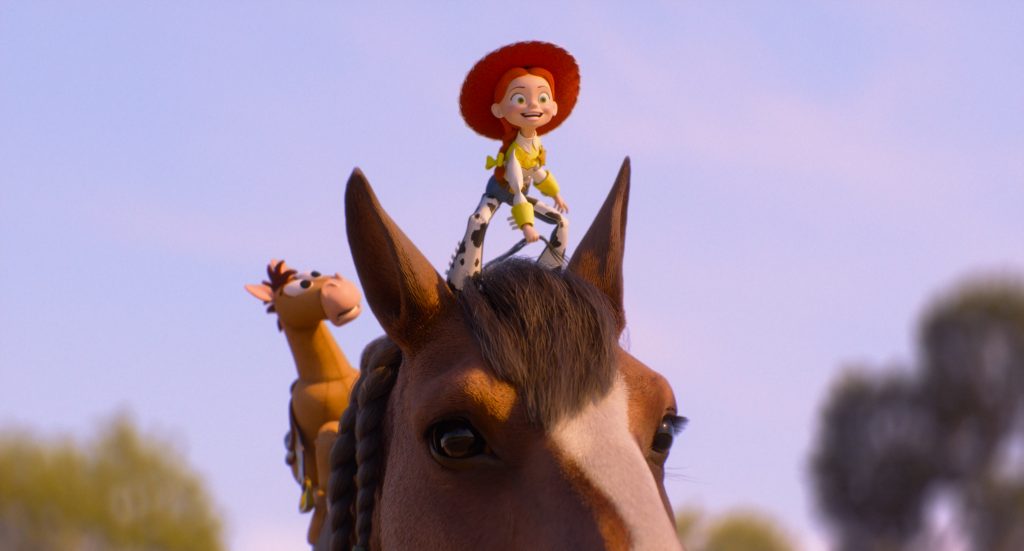
Throughout the discussion, play remained the meeting point between those ambitions. Harris resisted the idea that imagination has simply disappeared from modern childhood, describing it instead as a capacity people can still choose to use. Sharing that imagination involves a risk. Another person may not immediately understand your game, but they may also contribute something that makes it more wonderful than anything you could have invented alone.
Cusack brought that idea back to the kind of friendship people need at any age. “It’s about connecting without judgment,” she said. The desire to laugh freely with another person, to feel accepted in a moment of silliness or vulnerability, does not end when the toys are put away.
That gives Jessie’s central role a significance beyond the opportunity to spend more time with a favorite character. Her story has long held the joy of being loved alongside the fear of losing that love, and Toy Story 5 brings that history into a conversation about what play can give a child. For a Pixar series built around the emotional lives of toys, the enduring promise is the connection they help make possible: a shared world, an invitation to join in, and the discovery that someone else wants to be there with you.