
Voicing Mickey and Friends: Bret Iwan, Kaitlyn Robrock, Bill Farmer, and Jim Cummings Speak Out During DVC Member Cruise


Voicing Mickey Mouse is not quite like playing any other role. Mickey existed before his current performer was born, will almost certainly exist long after his tenure ends, and comes with nearly a century of history that audiences instinctively understand. The same is true of Minnie Mouse, Goofy and Pete, characters whose voices, personalities and relationships have been refined by generations of Disney artists and performers.
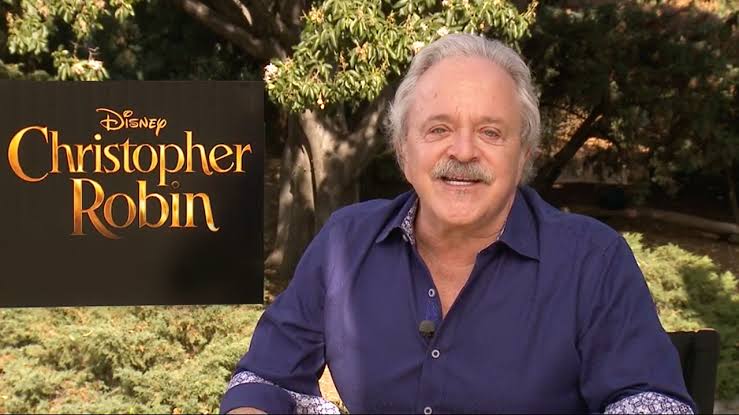
That unusual responsibility was at the heart of a wonderfully funny and unexpectedly thoughtful presentation aboard the Disney Dream during the Disney Vacation Club Member Cruise. Disney Legend Bill Farmer, the longtime voice of Goofy and Pluto, was joined by Bret Iwan, the voice of Mickey Mouse; Kaitlyn Robrock, the voice of Minnie Mouse; and Jim Cummings, whose enormous collection of Disney characters includes Winnie the Pooh, Tigger and Pete. Hosts Mark Ferreira and John Pelkey mixed games and live performances with a conversation about how four very different careers led to some of the most recognizable characters in the world.
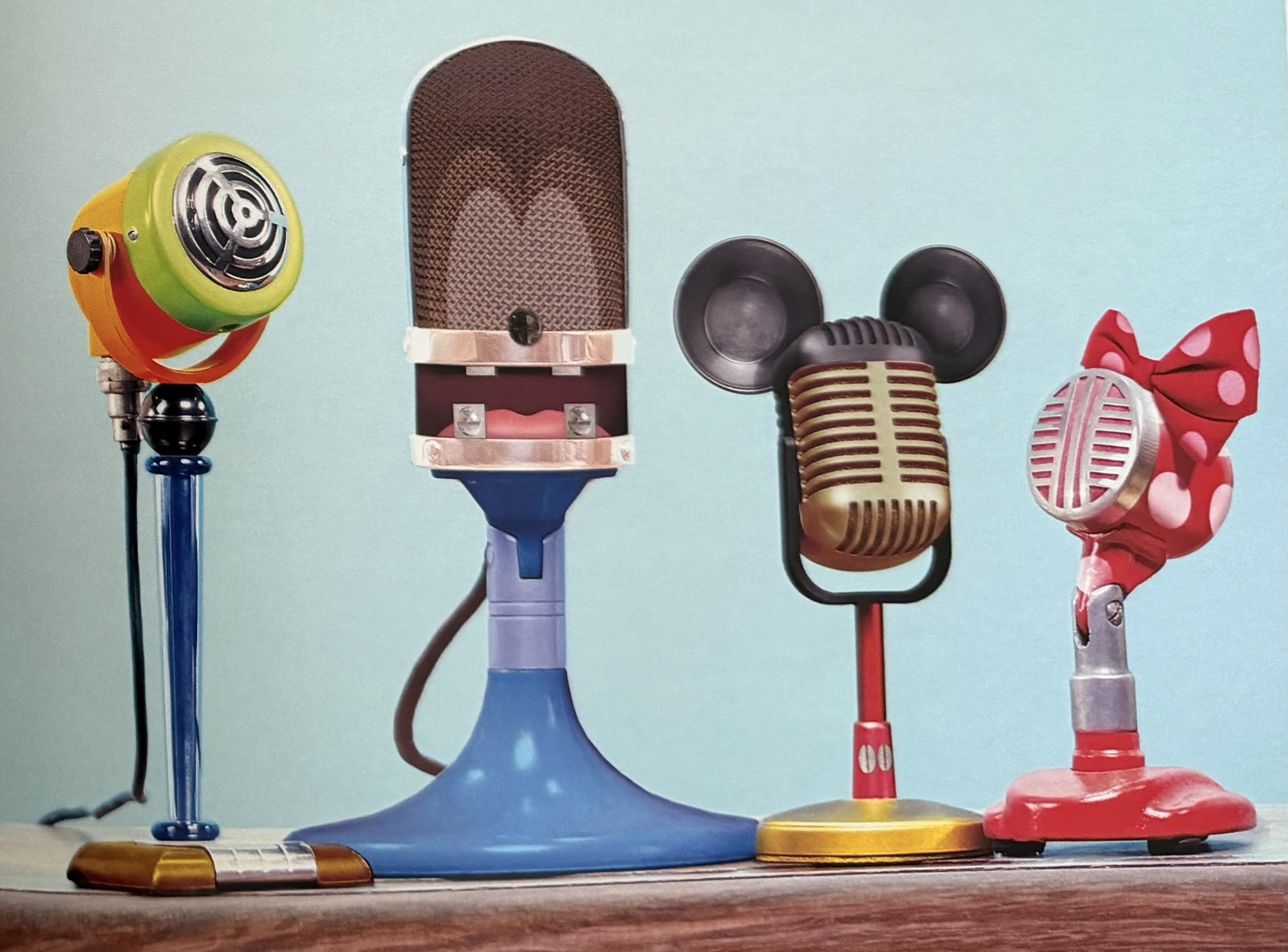
The result was a session that offered plenty of opportunities to hear those famous voices, but its most fascinating moments came when the performers talked about everything that happens before they speak into a microphone. For each of them, getting the voice right is only the beginning. The more difficult task is understanding who these characters actually are.
Bret Iwan’s path to Mickey Mouse began far away from a recording booth. He studied art, illustration and graphic design and spent about five years working professionally in that field before receiving an email that would completely change the direction of his life. At the time, Wayne Allwine had been Mickey’s voice for more than three decades, but Disney was looking for someone who could serve as an understudy and learn alongside him. A casting call went out among studio employees, and one of Iwan’s friends happened to receive it. She knew that Iwan was an enormous Disney fan who had always dreamed of working for the company, and she also knew he occasionally did a pretty convincing Mickey impression. “I’d be dumb not to take this wild chance that just fell in my lap,” Iwan remembered thinking. He had acted in high school and a little in college but had never seriously pursued acting professionally, making the audition an enormous departure from the career he had built.
Iwan received callbacks and eventually began doing trial recording sessions for projects including Disney on Ice and theme park material. The intention was for him to work alongside Allwine, but Allwine died in 2009 while the process was underway. Suddenly, what had been an audition to become an understudy became something much bigger. “What was meant to be an understudy position turned into a recasting, and I was really kind of just thrown into the mix,” Iwan said. He described what followed as a “trial by fire,” learning an extraordinary amount while already doing the job, and more than 15 years later, he remains grateful that he took that unlikely chance. “I’m very happy that I took a chance, as crazy as it was. Living a dream, for sure.”
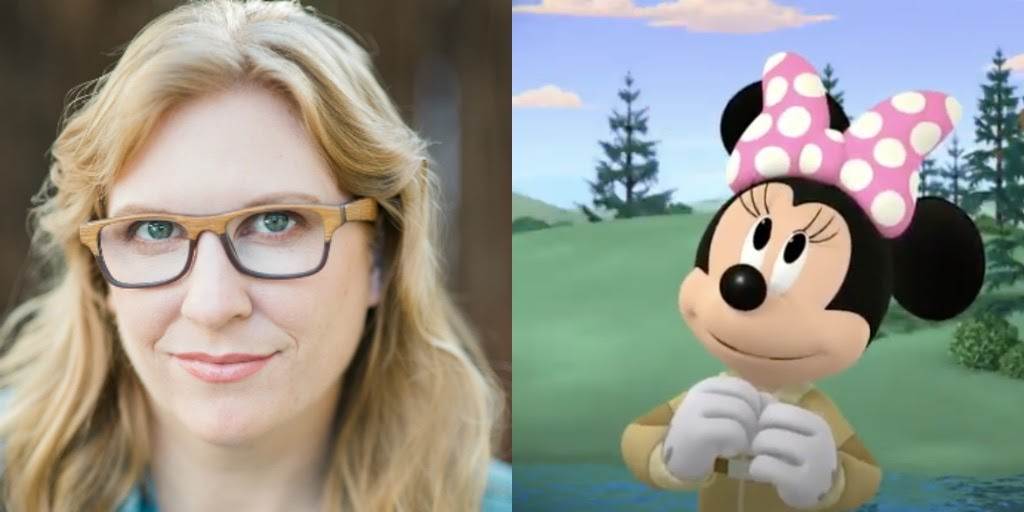
Kaitlyn Robrock’s inspiration came from another legendary voice performer. As a child, she had wanted to see Beauty and the Beast, but her brother spent the day convincing her to see Hook instead. That introduced her to Robin Williams, and when she encountered Williams again as Genie in Aladdin a couple of years later, she suddenly knew what she wanted to do. “I want to do what he’s doing,” Robrock remembered thinking. “I want to do cartoons. I want to be funny voices in cartoons.” Growing up in a family of artists with what she described as a “very heavy animation upbringing,” the idea felt like a natural fit.
Robrock initially assumed Broadway was the route into voice acting because so many recognizable Disney performers had theatrical backgrounds. She studied musical theater and moved to New York for about a month before discovering both snow and the financial realities of trying to establish herself there. Injuries also complicated her plans, and she ultimately returned to California, where she continued studying voiceover while being a cast member at the Disneyland Resort, a place she would call home professionally for more than 20 years.
It was at Disneyland that Robrock discovered Minnie Mouse might have been hiding inside her all along. After spending so much time in Town Square, she had memorized the audio cues from the parade, and one day she absentmindedly spoke one of Minnie’s lines along with the track. A coworker immediately noticed and told her, “That’s creepy. You sound just like her.”
That comment caused Robrock to start listening much more closely to Russi Taylor, who had spent more than 30 years defining the modern voice and personality of Minnie Mouse. When Taylor unfortunately died in 2019, Robrock decided it was time to find out whether all that listening and studying might lead somewhere. “You’ve walked the walk, now you have time to talk the talk, to see if it is meant to be,” she remembered thinking.
Even after auditioning, Robrock did not realize she had actually landed the part. She arrived for what she believed was a third callback only to discover that it was a recording session. There was no opportunity to spend days panicking about the magnitude of what had happened because she suddenly had to perform. “I didn’t have time to freak out about it,” Robrock said. Disney initially used her on a trial basis, and she joked that since they are still calling, she assumes she passed. Behind that joke, however, is an enormous appreciation for what Minnie has meant to her career. “It is the crown jewel of my career. It’s the greatest achievement I think I’ll ever have, and I love every minute of it.”
Jim Cummings had a considerably earlier revelation about his future career. He was five years old when he sat with his father watching The Jack Benny Program and saw legendary voice actor Mel Blanc. His father explained that the man on television was responsible for Bugs Bunny, Daffy Duck, Elmer Fudd, the Tasmanian Devil and many of the other cartoon voices young Cummings already knew. The concept was immediately appealing for a kid who apparently had a habit of getting in trouble for making strange noises. “All I could think of is, I bet he doesn’t have to stand in the corner until he shuts up for being weird,” Cummings joked. Even at five, he realized there was apparently a way to turn that weirdness into a living.
That instinct eventually led to a remarkable career encompassing hundreds of characters, including some of Disney’s most recognizable voices. Cummings can be as gentle as Winnie the Pooh, as exuberant as Tigger and, when necessary, considerably less trustworthy as Pete.
His approach to developing new voices is appropriately unconventional. Cummings explained that if someone performs a great impression of a person nobody recognizes, they have effectively created a new character. Likewise, a terrible impression of someone everybody recognizes can become something original because nobody can identify the source.
Another option is combining two voices until neither inspiration is obvious. Cummings pointed to Star Wars pirate Hondo Ohnaka as an example, revealing that Hondo grew out of a mixture of Charles Bronson and Yul Brynner. Once Cummings slipped into Hondo’s voice, the connection somehow made perfect sense.
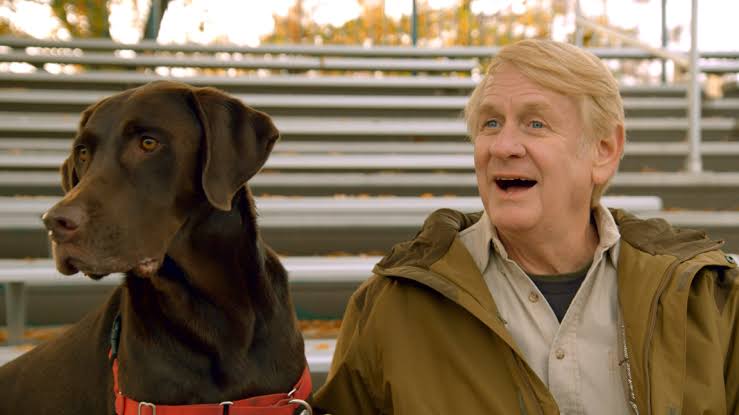
Bill Farmer grew up in Pratt, Kansas, where, as he joked, “We had tornadoes and grains. That was about it.” He loved cartoons and movies and gradually discovered that he had a talent for impersonating celebrities, particularly John Wayne. His classmates noticed too, leading Farmer to perform the impression at high school pep rallies.
The voices followed him into adulthood. Friends would encourage him to order at Burger King using strange characters, such as a spot on Pat Buttram impersonation, simply because it made them laugh. After earning a degree in broadcast journalism, Farmer worked in radio and started incorporating characters into his shows. Management generally did not care what he did as long as he played the records and delivered the news.
In 1982, Farmer visited a comedy club in Dallas and thought performing stand-up looked like fun. He returned for an open mic, received a strong response and eventually spent about five years performing comedy around the country. An agent in Dallas finally suggested that someone who used so many voices in his act ought to see what might happen in Hollywood.
Farmer moved to Los Angeles planning to give himself somewhere between six months and a year. About five months later, his agent asked if he could do any Disney characters. At the time, Disney had not yet completely settled on one regular performer for each of its classic characters, so Farmer found recordings of Goofy’s original voice actor, Pinto Colvig, and began studying.
Disney hired him for a single project. Farmer emphasized that even today, there is no permanent guarantee attached to the role because every new job comes with a new contract. His first recording session as Goofy took place on January 23rd, 1987, meaning Farmer is approaching an extraordinary 40 years with the character, and his plan for the future is refreshingly uncomplicated: “I’ll do it as long as they call me.”
The conversation became particularly interesting when the performers were asked to move beyond the voices and describe the characters themselves. For Cummings, that meant looking at how much Pete has changed during his extraordinarily long history. Pete predates Mickey Mouse and originally could be genuinely threatening. “He was a bad guy,” Cummings said, remembering versions of the character who were far more dangerous than the grumpy antagonist modern audiences generally encounter. Cummings recalled working on Mickey, Donald, Goofy: The Three Musketeers and encountering a proposed moment in which Pete’s treatment of Minnie went further than he thought the character should go. He pushed back against the idea because, even for a villain, there was a line Pete should not cross.
Over the years, Pete has evolved from a genuinely nasty villain into what Cummings described more as a “pain in the rear.” He still cannot exactly be trusted, but Cummings came up with an amusing standard for measuring the modern Pete’s morality: “You can’t trust him with your wallet, but he’d probably be okay if you dropped your kid off for an hour while you got your groceries.” That distinction perfectly summarizes the strange space Pete now occupies among Mickey and his friends. As Cummings put it, “He’s not a bad, bad guy. He’s just a bad guy.”
Robrock sees Minnie’s evolution differently. Minnie has changed with fashion, culture and the stories Disney wants to tell, but Robrock believes the character’s fundamental personality has remained remarkably consistent, thanks in large part to the work Russi Taylor did before her.
Minnie, she explained, has always embodied kindness and inclusivity. When Mickey and his friends inevitably find themselves caught in some chaotic adventure, Robrock thinks of Minnie as “the eye of the hurricane,” providing the emotional center that helps point everyone in the right direction. “She means safety. She means a best friend from the day you’re born,” Robrock said. Generations of children have been introduced to Mickey and Minnie at such an early age that the characters can feel less like entertainment properties and more like people who have simply always been there.
Minnie can also mean smiles, polka dots, fashion and, as Robrock happily noted, something of a pop-star persona these days. Beneath all those different versions, however, she sees one quality as particularly important: Minnie is “someone you can count on.”
For Farmer, Goofy’s defining quality is his relentless optimism. No matter how badly something goes, Farmer believes Goofy will simply pick himself up and try again, even if he has just fallen off the side of a mountain. “There’s no failure. Just try,” Farmer said. That resilience has always been part of Goofy, but Farmer believes A Goofy Movie gave audiences an opportunity to discover dimensions of the character that had never been explored so deeply before.
Suddenly, Goofy was not simply the lovable klutz falling into another disaster. He was a father worried about Max, attempting to nurture a son who was growing away from him and struggling with emotions that could not be solved with a pratfall. “It was like revealing facets to a diamond that no one had ever seen before,” Farmer said. Finding that more vulnerable side of Goofy was one of the most difficult parts of making the movie, but it also helped transform the character into someone who could sustain a deeply emotional father-son story.
Farmer believes that humanity is one reason A Goofy Movie has continued to grow in popularity more than three decades after its release. The movie demonstrated that these classic characters can develop without losing what made audiences love them in the first place. Farmer learned an important lesson about that process from legendary voice actor and teacher Daws Butler, whose credits included Yogi Bear and Huckleberry Hound. Butler told him that “it’s not VOICE acting, it’s voice ACTING,” placing the emphasis squarely on the performance rather than the vocal trick. “You’ve got to take those words, take them off the page, give them emotion, give them life,” Farmer explained. His goal when recording is therefore to stop worrying about what Bill Farmer thinks and instead understand what Goofy thinks. “The less I worry about what Bill thinks and the more about what Goofy thinks, the goofier I sound.”
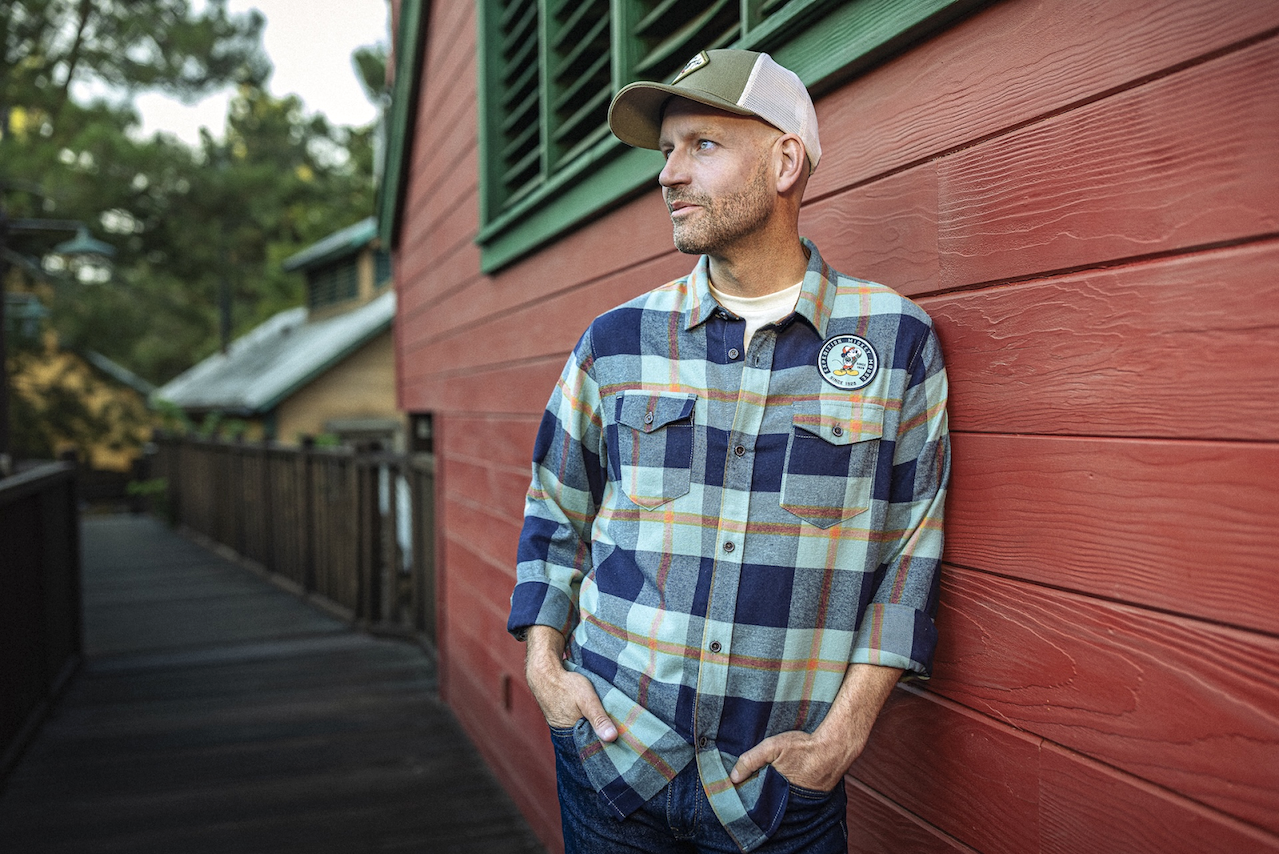
When Iwan discussed Mickey, he returned repeatedly to the idea of legacy. Mickey is occasionally dismissed as the straight man surrounded by more colorful characters, or even labeled boring because Disney’s corporate icon has to carry responsibilities that Donald, Goofy and Pete do not. Iwan strongly rejects that interpretation. “Mickey is Walt, and Walt is Mickey,” he said, arguing that there is no separating Mickey’s personality from the qualities Walt Disney originally placed into the character.
Iwan sees Walt’s curiosity, optimism, free spirit and joy reflected in Mickey, and those qualities have remained relevant even as the character approaches his 100th anniversary. At the same time, he emphasized that Mickey has never been perfect, and removing his flaws would actually make him less recognizable. “Mickey can get frustrated. Mickey can make mistakes,” Iwan said. He can also be mischievous and a bit of a rascal, even if his position as “leader of the club” increasingly requires him to hold everything together while attempting to corral the “yahoos” around him.
That understanding becomes especially important when Disney tries to push its classic characters in new directions. Iwan is not opposed to experimenting with Mickey, but he believes creators have to understand the character’s history before they can successfully stretch his boundaries. “You can’t stretch a character like this, or any of these characters, without knowing who they are and where they come from,” Iwan said. Without that foundation, an experiment may technically feature Mickey Mouse but still feel wrong because audiences instinctively recognize behavior that does not belong to him.
Iwan also recognizes that Mickey does not belong to him. Wayne Allwine once described himself as “Mickey number three,” a statement that acknowledged both the performers who had come before him and the inevitable arrival of another Mickey someday. Allwine even looked into a camera and addressed that unknown future performer directly: “If you’re out there, start practicing.” As it turned out, Iwan was out there, and eventually he did. “I’m Mickey number four,” Iwan said. “There’s going to be Mickeys after me.” Rather than making the role feel less significant, that knowledge seems to make Iwan appreciate it even more, knowing he has been given custody of Mickey for one chapter of a story that began with Walt Disney himself.
Robrock offered similarly thoughtful advice when the conversation turned toward performers trying to establish their own careers. Acting, she pointed out, is a profession in which rejection is not an occasional setback but the normal outcome of an audition. “99.9% of the time you hear a no, because they can only cast one for every role,” Robrock said. Her solution has been to stop making the booking the only part of the process that matters.
When she auditions, Robrock tries to enjoy those few minutes in which the role belongs entirely to her. She can decide what she thinks the production needs, consider what she would want to see as an audience member and deliver the version that makes her proud. “As long as you are loving the journey just as much as the outcome, if not more, then it’s never a waste of your time, your money, your efforts, your passion,” she said. Even an audition that exposes something she cannot yet do becomes useful because it identifies the next challenge she can work toward mastering.
Now that Robrock has achieved one of the biggest goals imaginable for a Disney voice performer, she believes sharing what she has learned is part of the responsibility. “If I can help other actors find that contentment and that happiness, that’s my job,” she said. “Why should I hold it all for myself?”
After spending much of the presentation discussing the importance of keeping these characters authentic, the performers were given an opportunity to prove just how flexible those personalities could be. With Beauty and the Beast celebrating its 35th anniversary alongside Disney Vacation Club, Ferreira and Pelkey decided it was time to greenlight a rather unusual remake: the cast would perform scenes from Beauty and the Beast, but they would do so entirely as their iconic characters.
The experiment began with the film’s famous prologue, divided among Mickey, Minnie, Goofy and Pete. Hearing the familiar narration bounce from character to character immediately demonstrated just how much personality the actors can communicate through voices audiences recognize within seconds.
Things became considerably more chaotic when Minnie Mouse was assigned the role of Belle and Pete became Gaston. Cummings transformed Gaston’s marriage proposal into something perfectly suited to Pete, while Robrock’s Minnie maintained Belle’s exasperation as her unwanted suitor described the rustic future he had planned for them.
The final scene brought all four performers together. Minnie remained Belle, while Mickey became Lumière, Goofy took over as Cogsworth and Pete was promoted from Gaston to the Beast. That combination turned Belle’s exploration of the West Wing into controlled chaos as Farmer’s Goofy tried to guide Minnie through the castle while Iwan’s Mickey offered Lumière’s warnings, eventually promising Belle that the library contained “tons of books, mountains of books, forests of books” and increasingly ridiculous quantities beyond that
Nearly a century after Walt Disney first gave Mickey Mouse a voice, children are still meeting Mickey, Minnie, Goofy and Pete for the first time. Those children do not necessarily know the names of the actors behind the microphone or the performers who preceded them. They simply know the characters, which is perhaps the greatest testament to everyone who has carried them along the way.
Someday, Iwan, Robrock, Farmer and Cummings will pass that responsibility to somebody else. The voices may change, just as they have before, but if each generation of performers does its job, Mickey and his friends will remain unmistakably themselves. Somewhere out there, the people who will carry these characters into their second century may already be listening.
And, as Wayne Allwine suggested, perhaps they should start practicing.