
Bruce Reitherman Brings His Father’s Disney Story to the Screen with "Woolie"


Four of Walt Disney’s Nine Old Men lived into the 1990s and 2000s, giving fans opportunities to hear their stories at events, in bonus features, and at screenings. As a Disney fan growing up in the 1980s and 1990s, I was fortunate enough to meet Marc Davis, Ward Kimball, Frank Thomas, and Ollie Johnston and hear firsthand about their time working for Walt. Those encounters made Disney history feel personal, connecting the films I loved with the people who had helped bring them to life
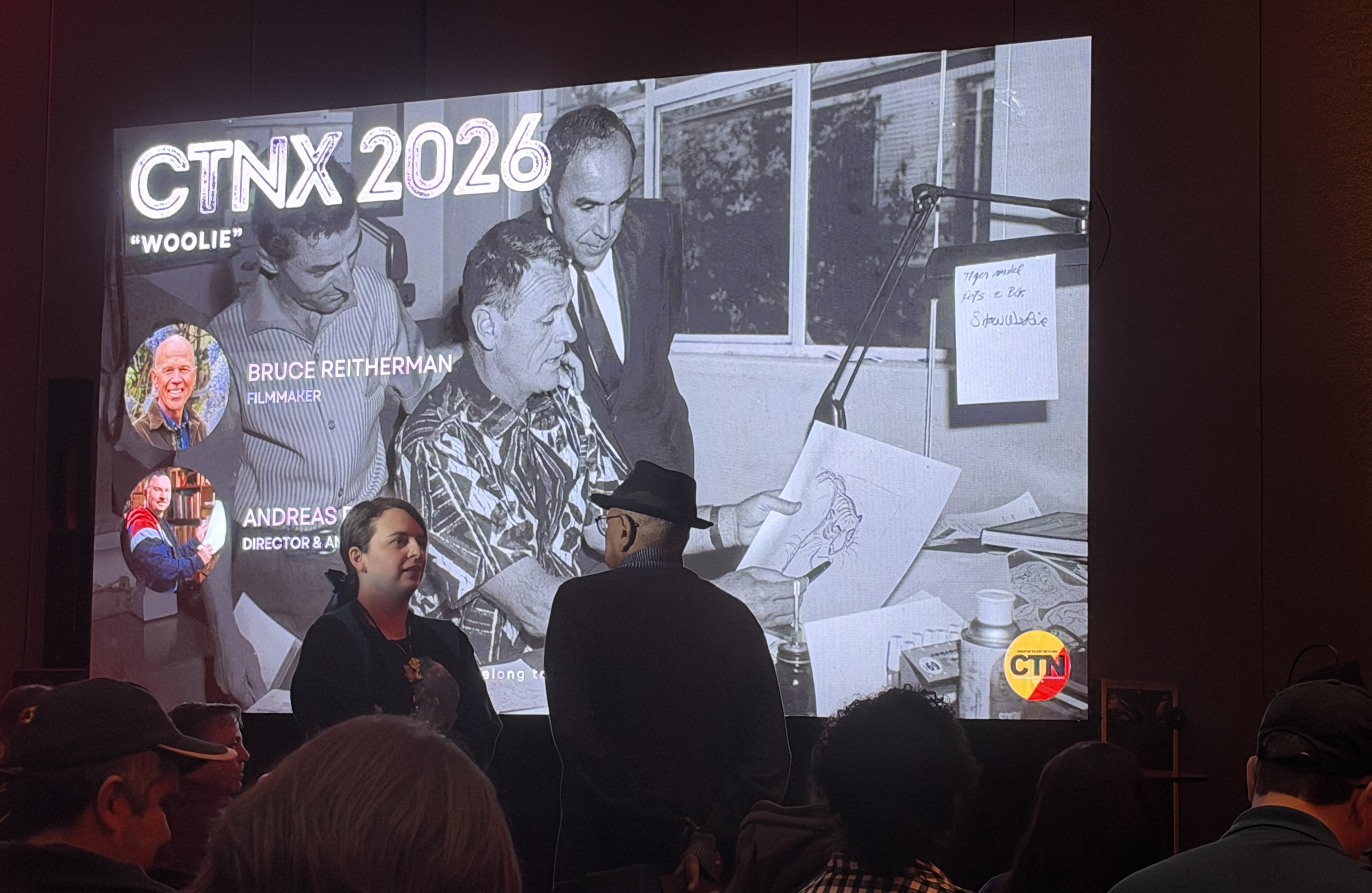
Woolie Reitherman passed away in 1985, so I never had that opportunity with him. His role in leading Disney animation after Walt’s passing, however, has always fascinated me. That is part of what makes Woolie: A Life at the Heart of Disney Animation, a new documentary from his son Bruce Reitherman and Disney Legend Andreas Deja, especially intriguing.
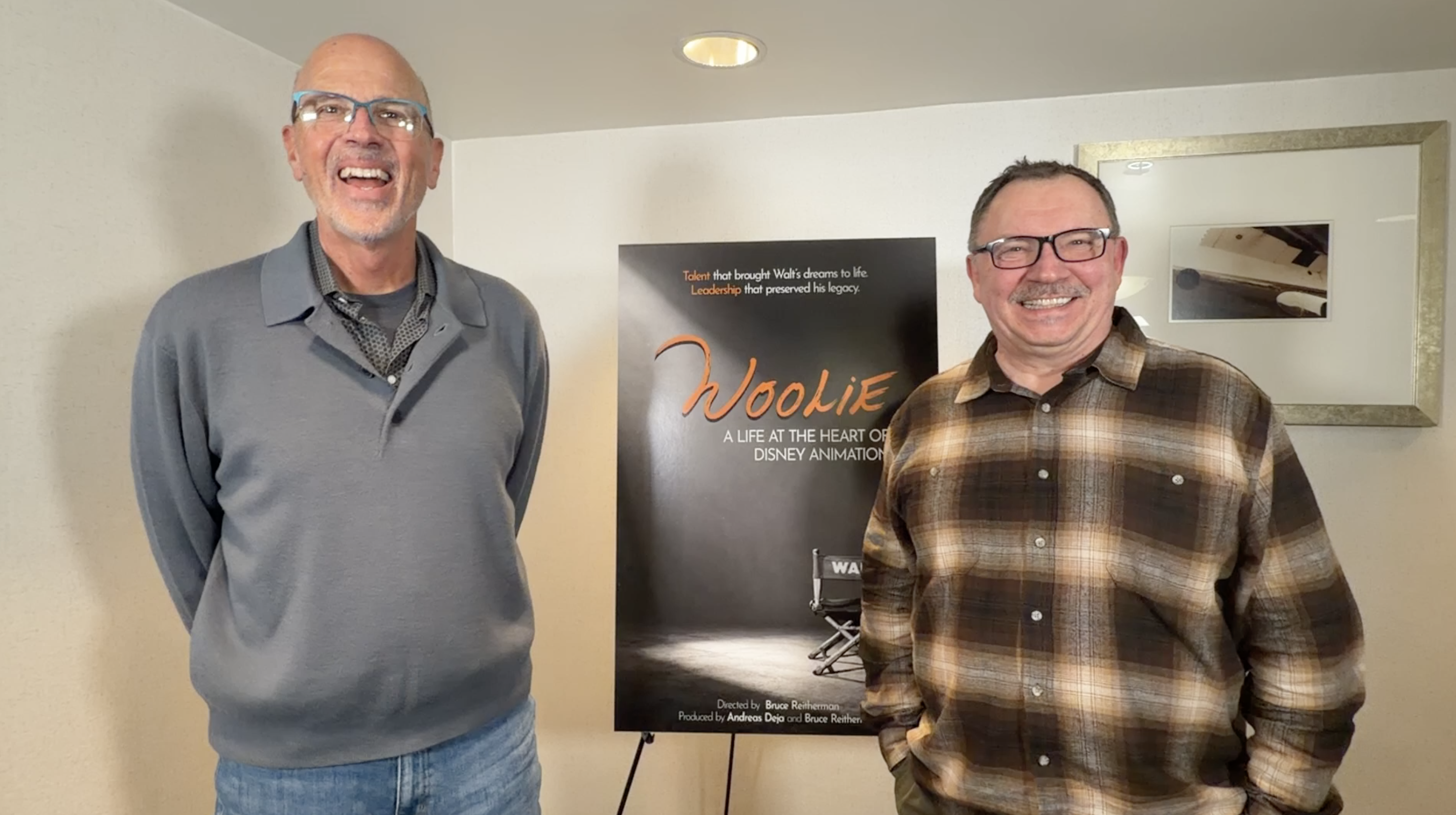
Reitherman is directing the film and producing alongside Deja, and the two gathered at CTN eXpo to share a sneak peek of the project, which is still in production. Their connection through Woolie’s work goes back decades. Reitherman voiced Mowgli in his father’s The Jungle Book, while Deja was an eleven-year-old in Germany when he saw the film and came away more determined than ever to become a Disney animator.
The documentary draws on archival material, memories from Woolie’s three sons, and new interviews with filmmakers including Brad Bird, Ron Clements, Pete Docter, Glen Keane, and Floyd Norman. Bringing those perspectives together offers a way to explore both the father Bruce knew at home and the director whose decisions helped shape the future of Disney animation.
Those personal connections were apparent when we had the chance to speak with Reitherman and Deja about the project. For Deja, an essential part of Woolie’s story is his determination to keep Disney making animated films after Walt died in 1966. “Woolie was fighting tooth and nail to keep it open,” he said, recalling the uncertainty surrounding the animation department’s future. As Deja described it, Woolie couldn’t see sending some of the world’s greatest animators home and doubted Walt would have wanted that either. The significance of those efforts was deeply personal to him. “So I thank him for that, really, because without him, I wouldn’t have had my 30 years at Disney.”
Of course, Woolie’s films have also continued to find audiences long after his death. I asked Reitherman what it felt like to see viewers discovering movies like Robin Hood on Disney+, decades after his father directed them. "I kind of feel like you never know if you’re going to make something that endures," he said. “As an artist, if you’re doing it right, you’re taking chances, and that means that you’ll be producing something that no one’s ever seen.”
The CTN presentation gave Reitherman a new opportunity to experience an audience responding to his father’s story. It was the filmmakers’ first chance to sit with an audience watching the preview, and he spoke about the pleasure of hearing where people laughed. For those of us in the room, part of what made the footage special was hearing Woolie in his own words more than forty years after his death. For Reitherman, the screening also meant hearing an audience applaud a film about his dad.
When I asked what making the documentary had taught him about his father, his answer pointed toward the generations of artists who followed him. “Many of the people in Andreas’ generation are still cranking out amazing pieces of animation,” he said. “And not only that, but they’re passing on that same sense of mentorship to a whole new generation.” He sees that continuing influence in the young adults Andreas works with today, people learning the craft while also “trying to understand what it takes to be both an artist and an employee.” Through that perspective, Woolie’s legacy continues in the guidance artists offer one another as they learn to do the work.
Toward the end of our conversation, Reitherman found a way to describe his father’s contribution that drew on another part of Woolie’s life. Woolie had been a pilot, and Bruce pictured what his dad left those younger artists as a runway, with “a long empty stretch after he was gone” where they could get their bearings, make mistakes, and learn enough to take off under their own power. It is an image that captures why I want to know more about Woolie. Keeping Disney animation moving forward also meant giving the artists who followed him time and room to grow.
For a fan who never got to meet Woolie, the preview offered something I had long hoped to experience: a chance to hear him tell part of his own story. I’m looking forward to seeing how the finished documentary brings that voice together with the memories of his family and colleagues, giving more of us a chance to get to know the man who helped carry Disney animation into its future.