
Book Review: "The Art of Hoppers" Shows the Film's Evolution While Also Highlighting Its Environment


Chronicle Books continues its line of Pixar “Art of” books with The Art of Hoppers. The book, which features a punny foreword by Pete Docter and a heartfelt introduction by director Daniel Chong, not only provides access to gorgeous art but also insight into the interactive process that Pixar is known for.
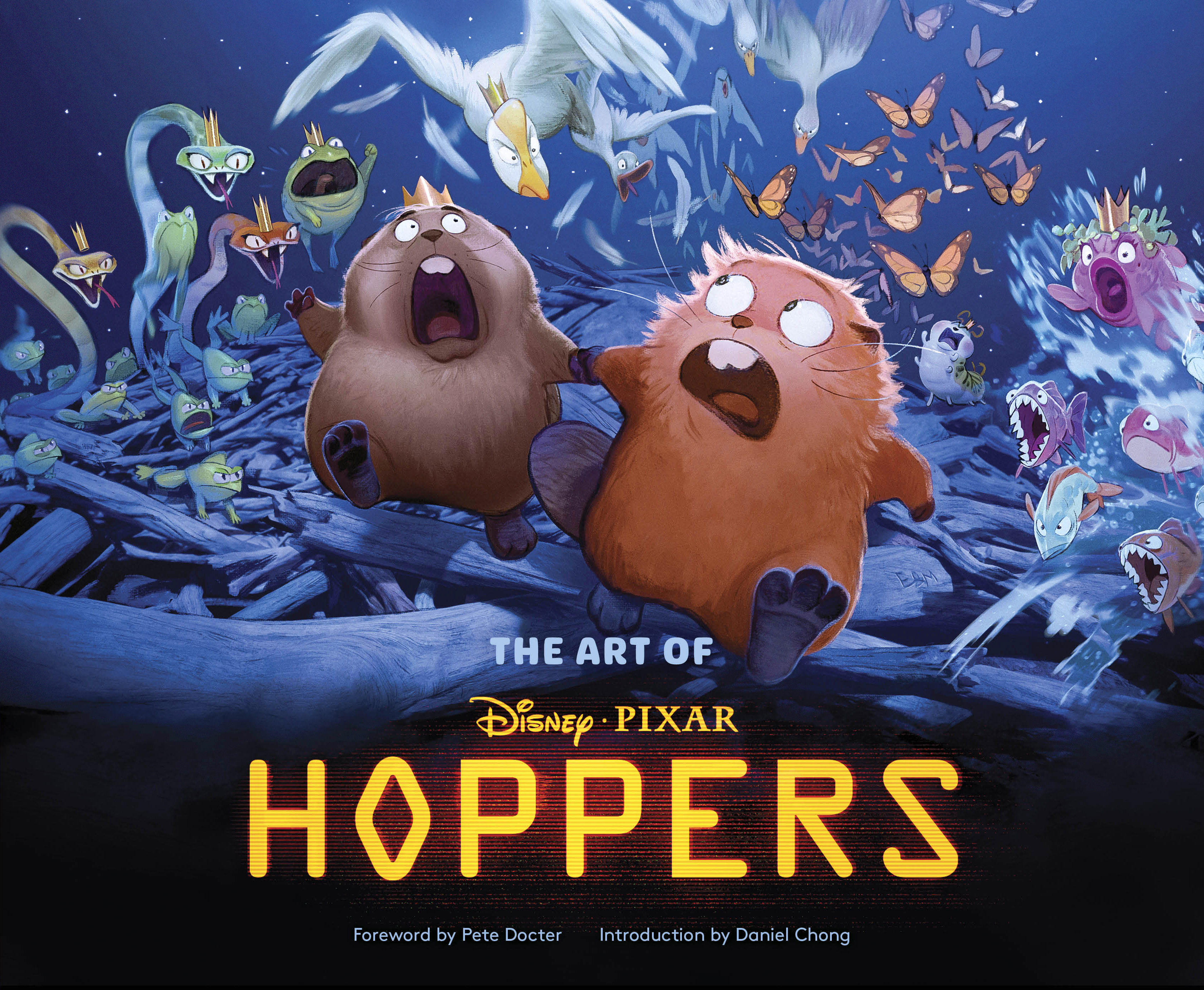
Like other volumes in the Pixar “Art of” series, the book functions partly as a visual showcase. But what makes this entry particularly compelling is how clearly it illustrates the creative evolution of the film. By presenting early sketches, alternate designs, and abandoned ideas alongside commentary from the filmmakers, the book becomes less of a gallery and more of a behind-the-scenes chronicle of Pixar’s creative culture.
One of the biggest takeaways from The Art of Hoppers is how much the film changed during development. Early pages show concepts that look dramatically different from the finished movie, underscoring that Pixar stories are rarely locked in early. In fact, before the film was focused on beavers, it was about penguins until it was brought up that there have been plenty of animated penguin movies.
The creative team experimented with different approaches to tone, character relationships, and even the structure of the story itself. Some of these ideas evolved into the final film, while others were discarded along the way. This willingness to explore and revise is a hallmark of Pixar’s filmmaking philosophy. Rather than protecting early ideas, the studio encourages filmmakers to challenge them repeatedly until something stronger emerges.
For readers familiar with Pixar’s Braintrust process, the artwork and commentary in the book make that philosophy tangible. Each iteration reflects feedback cycles where artists, writers, and directors collectively push the project toward a clearer emotional core.
Character development is one of the areas where the book most clearly demonstrates Pixar’s iterative approach. Early sketches of protagonist Mabel Tanaka reveal how dramatically a character can evolve before reaching the screen. Initial concepts experiment with different proportions, hairstyles, and facial expressions, each subtly shaping how the audience might interpret her personality.
As the design evolves across pages of sketches, the character gradually becomes more defined. What begins as a loose concept ultimately transforms into the confident and expressive figure audiences see in the finished film.
Beyond characters, the book also showcases how Pixar artists built the film’s world through experimentation. Concept art of animals and environments reveals a wide range of visual directions the filmmakers explored. Some early designs exaggerate shapes and textures, leaning into stylization, while later iterations find a balance between realism and animation-friendly forms.
The environmental artwork also highlights how lighting and color play a role in storytelling. Color scripts and atmospheric paintings show how different palettes were tested to support emotional beats within the narrative.
For casual readers, The Art of Hoppers is a beautiful coffee-table book filled with striking artwork. But for those interested in animation and filmmaking, it offers something deeper. The sketches, storyboards, and commentary collectively demonstrate how Pixar’s films are shaped through collaboration and revision. Ideas evolve, designs change, and stories are rewritten until the emotional heart of the film finally emerges.
By documenting that journey, the book does more than showcase artwork. It reveals the creative mindset that has defined Pixar for decades. And in doing so, The Art of Hoppers reminds readers that the magic of Pixar isn’t just the finished film on screen. It’s the long, iterative process that makes that final result possible.
(Please note this article contains affiliate links. Your purchase will support Laughing Place by providing us a small commission, but will not affect your pricing or user experience. Thank you.)