
Event Recap: Kelly Comras Spotlights Landscape Architect Ruth Shellhorn During Walt Disney Family Museum Talk


While every Disneyland fans is familiar with Disney Legend Bill Evans, another landscape designer has not always gotten her due. During a recent virtual presentation hosted by the Walt Disney Family Museum, landscape architect Kelly Comras shed light on the extraordinary contributions of Ruth Shellhorn, the woman who helped transform Walt Disney’s ambitious vision into a cohesive, immersive environment. Drawing from years of research, interviews with Shellhorn herself, and thousands of documents preserved at UCLA, Comras painted a portrait of a designer whose fingerprints remain visible throughout Disneyland, even if some park guests have never heard her name.
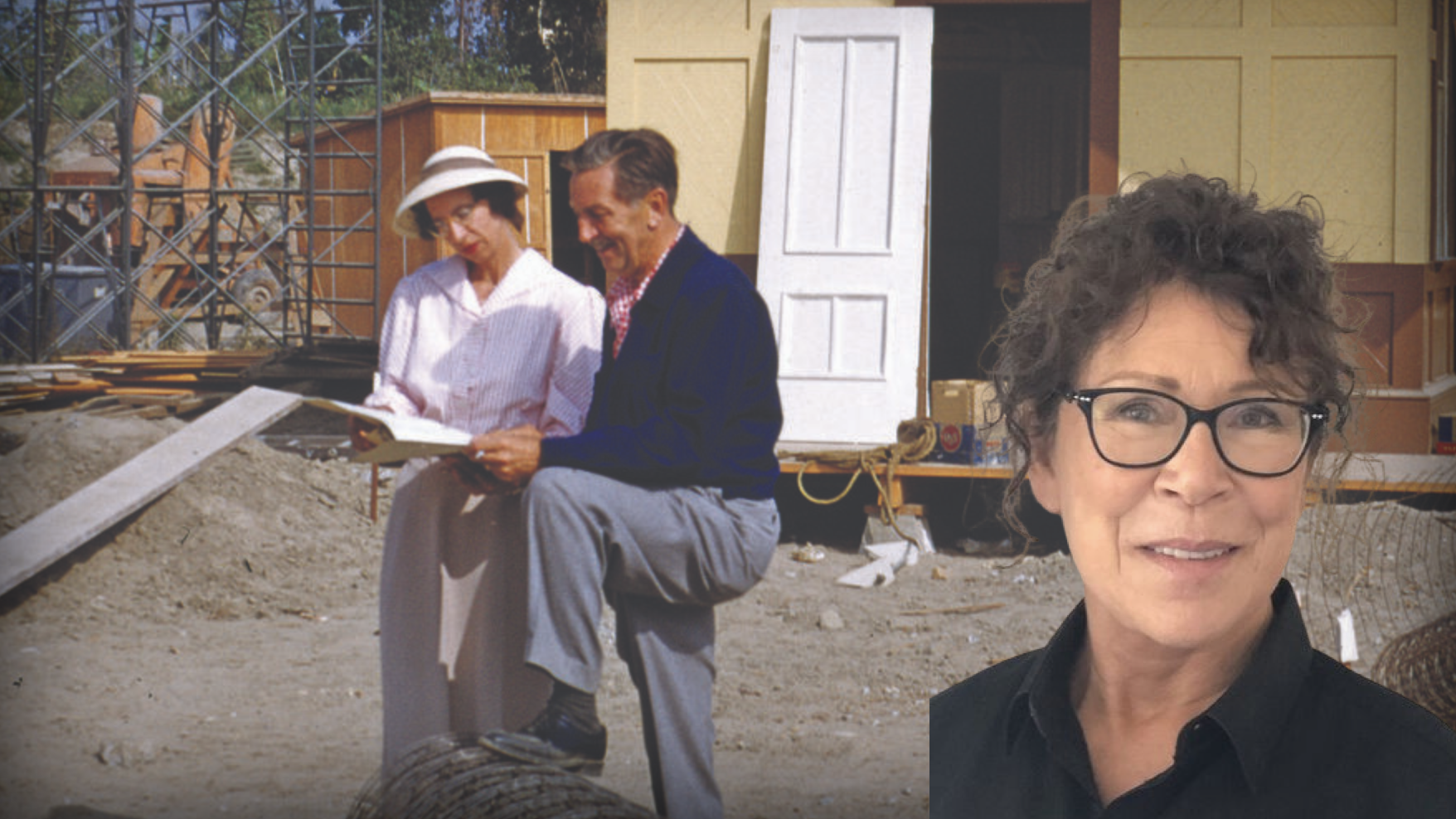
Before Disneyland entered her life, Ruth Shellhorn had already established herself as one of Southern California’s most respected landscape architects. Born near Pasadena in 1909, she studied landscape architecture at both Oregon State College and Cornell University before launching her own practice during the depths of the Great Depression. Despite the challenges faced by women in the profession during that era, Shellhorn built a successful career through determination, technical expertise, and an unwavering commitment to understanding both her clients and the land itself. Comras explained that Shellhorn rejected the notion that designers should impose their will upon a landscape. Instead, she believed great design emerged from balancing client needs with respect for a site’s natural characteristics. That philosophy would later prove invaluable at Disneyland.
Much of Shellhorn’s reputation was built through her collaboration with architect Welton Becket on Southern California commercial projects, particularly the Bullock’s department stores. These projects pioneered what became known as the “Southern California look,” featuring lush plantings, bold textures, tropical foliage, and carefully orchestrated pedestrian experiences. Visitors didn’t simply arrive at a destination. They moved through a sequence of carefully composed views and spaces designed to create anticipation and delight. Those same principles would later find their way into Disneyland.
By March 1955, Disneyland was racing toward its scheduled July opening. Construction crews were working seven days a week, major attractions were already underway, and Walt Disney faced a growing concern that the park’s various lands were not fully coming together as a unified experience. Disney turned to his friend Welton Becket for advice. Becket had only one recommendation: Ruth Shellhorn.
Initially reluctant because she did not design amusement parks, Shellhorn ultimately agreed to meet with Disney. According to Comras, she quickly became captivated by Walt’s enthusiasm and joined the project despite having only four months before opening day. After all, Disneyland is no mere amusement park.
Although other landscape architects, including the legendary Jack and Bill Evans, were already involved with the project, Shellhorn identified a critical missing element. The park lacked a comprehensive pedestrian circulation plan. While attractions and buildings were being constructed, there was no unified strategy for how guests would experience and move through the space. That challenge became her mission.
One of the most fascinating revelations from Comras’ presentation was how much of Disneyland’s guest flow can be traced back to Shellhorn’s work. Rather than simply selecting plants, she carefully shaped the way visitors would experience the park. She narrowed pathways to accelerate movement, widened plazas to encourage gathering, and strategically positioned planting islands to direct traffic while maintaining sightlines. Most importantly, she helped create the principle of “progressive realization,” gradually revealing Sleeping Beauty Castle rather than presenting it all at once.
Guests arriving at Disneyland would catch glimpses of the castle through carefully arranged trees. As they progressed through Town Square and along Main Street, the view would slowly expand until they reached the Plaza Hub, where the castle appeared in full. The experience created anticipation and wonder long before visitors reached Fantasyland.
Shellhorn’s influence extended far beyond sightlines. She worked directly in the field, sometimes designing without formal plans, helping shape the waterways and grading around Sleeping Beauty Castle’s moat. Her engineering background proved equally valuable, as she frequently identified discrepancies in construction plans that others had missed. Comras emphasized that Shellhorn viewed plants as storytelling tools rather than decoration.
Each land received its own botanical identity. Guests entering Adventureland, Frontierland, Fantasyland, or Tomorrowland encountered distinct plant palettes that subtly reinforced the themes of those environments. Yet at the same time, Shellhorn used recurring species throughout the park to maintain visual continuity.
Most guests never realized that specific trees served as wayfinding devices. Evergreen elms guided visitors along Main Street and reappeared at key transition points elsewhere in the park. Olive trees and mock orange trees similarly appeared in multiple locations, creating subtle visual connections between lands. The result was a landscape that felt organic and effortless while actually being highly structured beneath the surface.
Walt Disney’s desire for an “eternal spring” further shaped Shellhorn’s choices. Disney wanted Disneyland to avoid reminders of winter or seasonal dormancy. Shellhorn responded by creating a tapestry of evergreen trees, flowering shrubs, colorful annuals, and carefully selected specimen trees that maintained visual richness year-round.
One of the most memorable stories shared during the presentation involved a disagreement between Shellhorn and Walt Disney himself. As Disneyland neared completion, Disney decided to install a large Victorian gazebo in Town Square. Shellhorn strongly objected, arguing that the structure would block the carefully composed view toward Sleeping Beauty Castle. Disney initially overruled her and construction began. But after seeing the structure rise, he reconsidered. According to Comras, Walt ultimately ordered it removed and told Shellhorn, “I trust you.”
The story highlights the respect Shellhorn earned from Disney despite joining an overwhelmingly male design team and arriving relatively late in the project’s development.
Although Shellhorn’s tenure at Disneyland was brief, her influence endured. Following the park’s opening, she returned to her thriving private practice, embarked on major projects including the expansion of the University of California, Riverside, and was named the Los Angeles Times Woman of the Year. Yet Walt Disney never forgot her contribution.
In the introduction to Bill Evans’ 1965 book Disneyland World of Flowers, Disney offered special recognition to Shellhorn, writing that she deserved “special plaudits” for her design of Main Street, Town Square, and the Plaza. He specifically noted that many of the trees and shrubs she selected in 1955 were still being used a decade later.
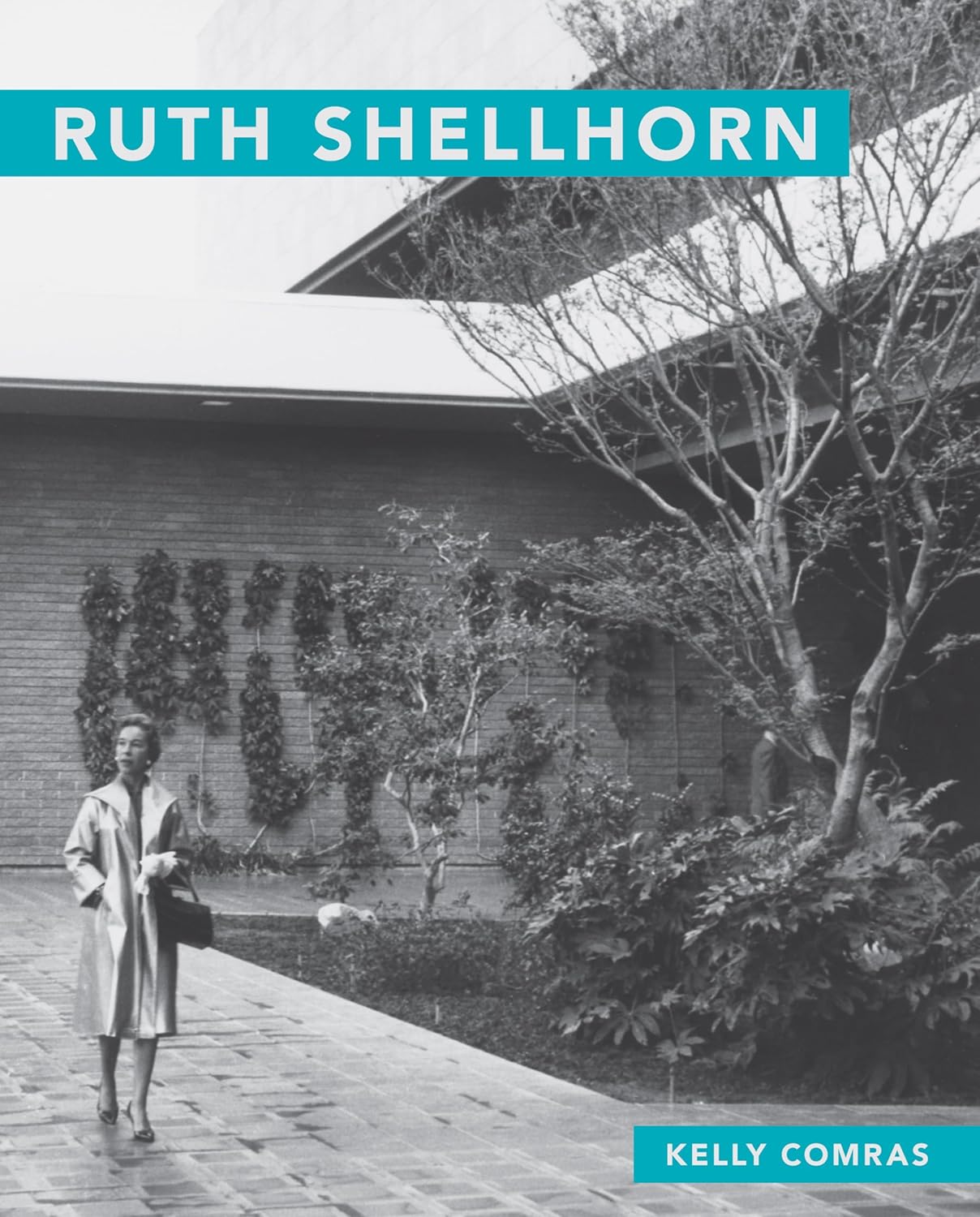
Comras’ own efforts helped ensure that Shellhorn’s legacy would not disappear. Before Shellhorn’s death in 2006, Comras convinced her to donate her professional archives to UCLA. The collection ultimately filled more than 400 boxes and included original Disneyland drawings that had remained rolled up and largely untouched for fifty years. Those materials have since become invaluable resources for researchers seeking a fuller understanding of Disneyland’s creation.
As Disney historians continue to uncover stories of the individuals who built Disneyland, Ruth Shellhorn’s importance becomes increasingly clear. She was not simply selecting trees and flowers. She was helping define how guests would experience Walt Disney’s park.
The pathways we follow, the views we admire, the transitions between lands, and the sense of discovery that unfolds as we move through Disneyland all owe something to Shellhorn’s vision. Her work demonstrates that Disneyland’s magic was never solely about attractions and architecture. It was also about the spaces in between.
More than 70 years after opening day, guests continue to walk through a park shaped by her belief that landscape design should guide, delight, and tell a story. That may be one of the most enduring Disney legacies of all.
To learn more about Ruth Shellhorn, you can read Kelly’s book.