
TV Review: Chris Hemsworth: A Road Trip to Remember — A Personal Journey With a Universal Message


National Geographic’s Chris Hemsworth: A Road Trip to Remember is easily the most intimate project the actor has ever put on screen. Though it stands on its own, the documentary also feels like a thematic companion to Limitless, shifting the focus from Hemsworth’s personal health journey to something even more vulnerable: the evolving bond between a son and his father in the face of an Alzheimer’s diagnosis. What emerges is a deeply felt reminder of how powerful connection, community, and nostalgia can be — not just emotionally, but scientifically.

With more than 57 million people worldwide living with dementia today — and 10 million new cases each year — the question of what families can do to support loved ones facing cognitive decline is more urgent than ever. Hemsworth approaches that question not as an action star or global celebrity, but as a son searching for ways to reconnect with his dad, Craig, after a life-changing diagnosis.
Their solution becomes a road trip back in time, retracing the places, people, and milestones that shaped their family’s life across Australia. Guided by dementia specialist Dr. Suraj Samtani, the film weaves emotional storytelling with evidence-based brain health research, providing meaningful context for concepts such as reminiscence therapy, social bridging, and the measurable impact of consistent human connection.
Among the film’s most powerful moments is the recreation of Chris' teen-era home — a meticulous, memory-rich set that becomes a time machine for Craig. Watching Chris guide his father through familiar hallways, shared stories, and long-forgotten details is both raw and uplifting. It’s the closest the documentary gets to the emotional structure of Limitless, trading spectacle for something gentler and more profound. For viewers who enjoy watching nostalgia come alive in tactile, deeply personal ways, this sequence alone makes the documentary worth watching.
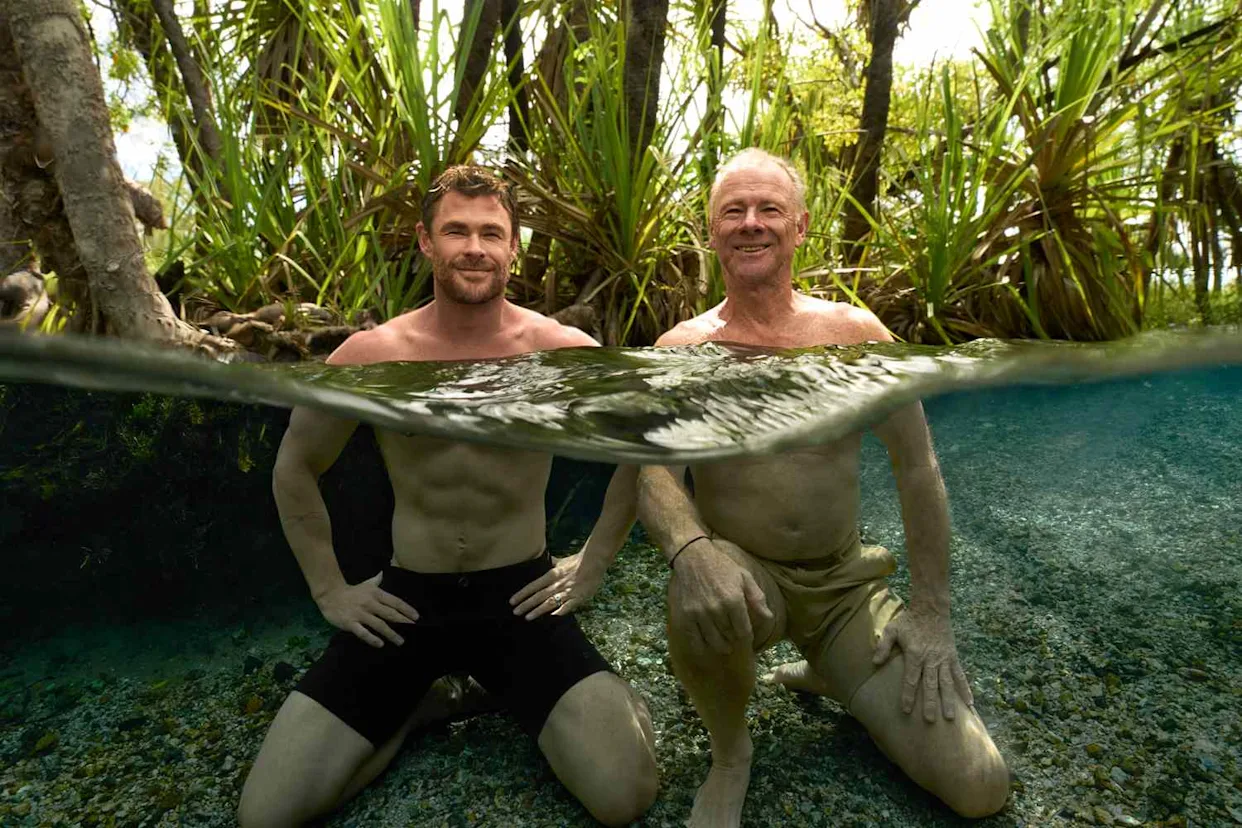
Despite the complex subject matter, A Road Trip to Remember remains surprisingly warm. There’s humor, wide-open Australian landscapes, father-son banter, and an overall lightness that keeps the documentary from ever feeling heavy. What could have been a somber look at a devastating disease instead becomes a celebration of love, presence, and the everyday moments we often overlook.
Hemsworth himself shares moments of emotional vulnerability, acknowledging the fear and uncertainty that come with watching a parent change. But the documentary never lingers in despair. Its message is one of optimism: that connection — whether through memories, conversations, community involvement, or simply spending time together — is protective, healing, and available to us all.
Chris Hemsworth: A Road Trip to Remember succeeds on multiple levels: as a personal family story, as a subtle extension of Limitless, and as an accessible, feel-good documentary for audiences of all ages. While the emotional stakes are undeniably high, the tone remains hopeful, grounded in both science and sincere affection. It’s a film that may leave you reflecting on your own loved ones, the memories that shaped you, and the relationships worth nurturing while you can. And in that way, it becomes exactly what Hemsworth intended — a reminder that sometimes the most powerful tools for brain health aren’t found in a lab, but in the people and places that matter most.

I give Chris Hemsworth: A Road Trip to Remember 5 out of 5 stars.
Chris Hemsworth: A Road Trip to Remember premieres Sunday, November 23rd, at 9/8c on National Geographic, and streams the next day on Disney+ and Hulu.