
Inside Marvel's Midnight Universe: Everything Revealed at SDCC 2026


Marvel's newest line-wide event doesn't just want to scare its heroes, it wants to scare the people reading about them, too. At San Diego Comic-Con's dedicated Midnight Universe panel, editors and writers walked fans through the full scope of the project, the horror-inflected reimagining of Spider-Man, the Fantastic Four, and the X-Men launching this October. VP & Executive Editor Nick Lowe moderated, joined onstage by Executive Editor Dan Buckley, Editor-in-Chief C.B. Cebulski, editor Jordan D. White, and writers Phillip Kennedy Johnson (Midnight Spider-Man), Benjamin Percy (Midnight Fantastic Four), and Jonathan Hickman (Midnight X-Men).
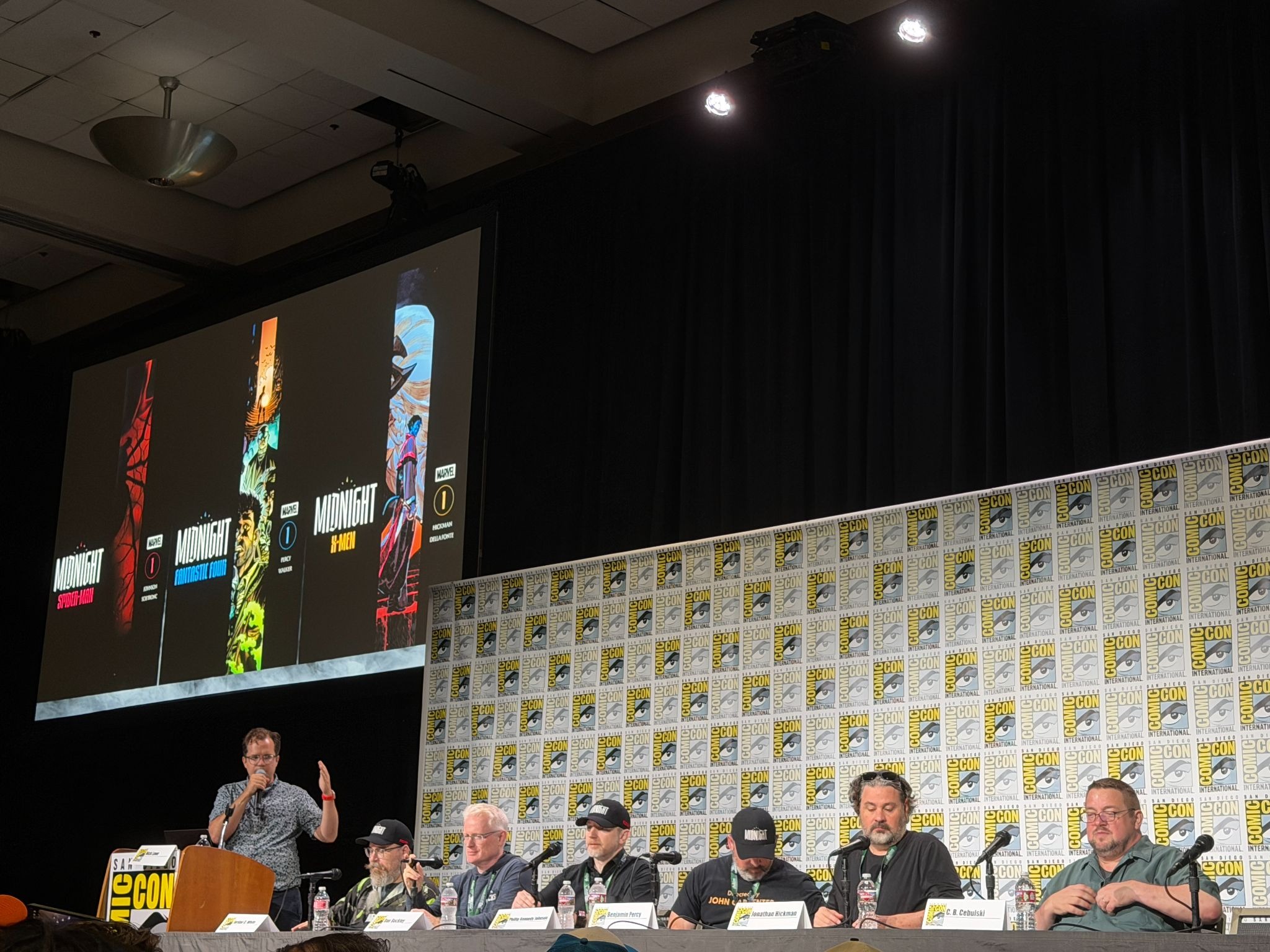
Buckley traced the line's origin back to a conversation when he found himself thinking about horror and picked up the phone to call Hickman directly. The pitch, as Buckley described it onstage, flipped Marvel's usual formula: horror in the driver's seat, superheroics riding shotgun. Hickman's first reaction wasn't enthusiastic, but the idea evolved quickly into an X-Men angle, and Hickman suggested Phillip Kennedy Johnson for Spider-Man, reasoning that Johnson had the right disturbed sensibility for it. Percy remembered getting his own call while at SDCC last year and saying yes on the spot.
The name itself, Marvel Midnight, won out for a simple reason: Marvel likes alliteration. Ahead of launch, the creative team held a retreat at Disney's Glendale offices where in-house designer Jay Bowen and the writers built mood boards for the line, a development step more common in television than in comics. Hickman pushed for it, wanting the tone locked in before any art got made, and White said it helped inform artist casting across all three books.
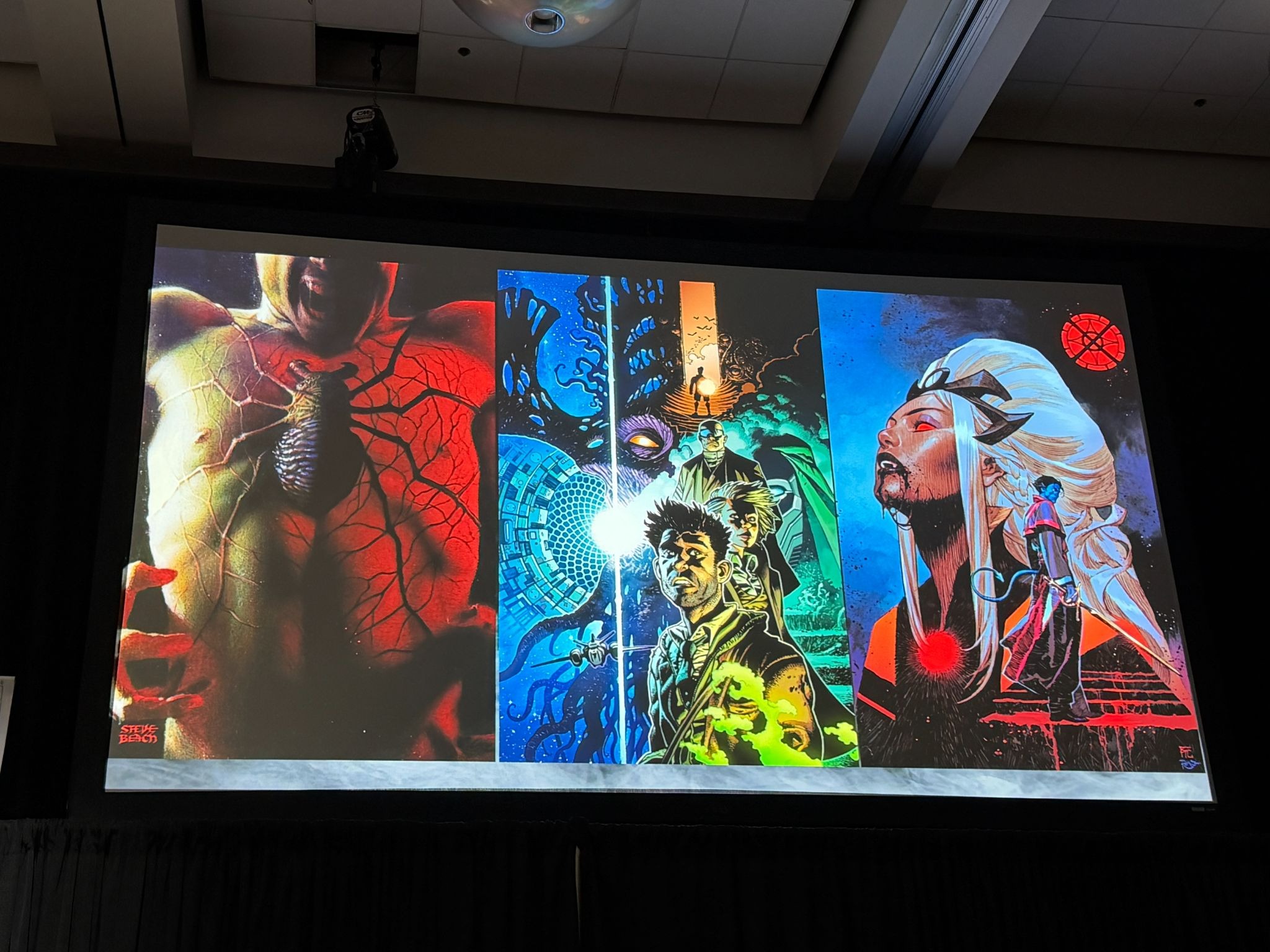
The line's signature gimmick is its "Cloaked Cover" packaging: main covers ship concealing the full artwork, with only a sliver visible on the shelf. Readers only see the whole image once they take the book home and open it. Editor Jordan D. White confirmed the debut issues were the exception (full covers were unveiled at the panel for press purposes), but going forward, the art stays hidden until a reader physically has the book in hand.
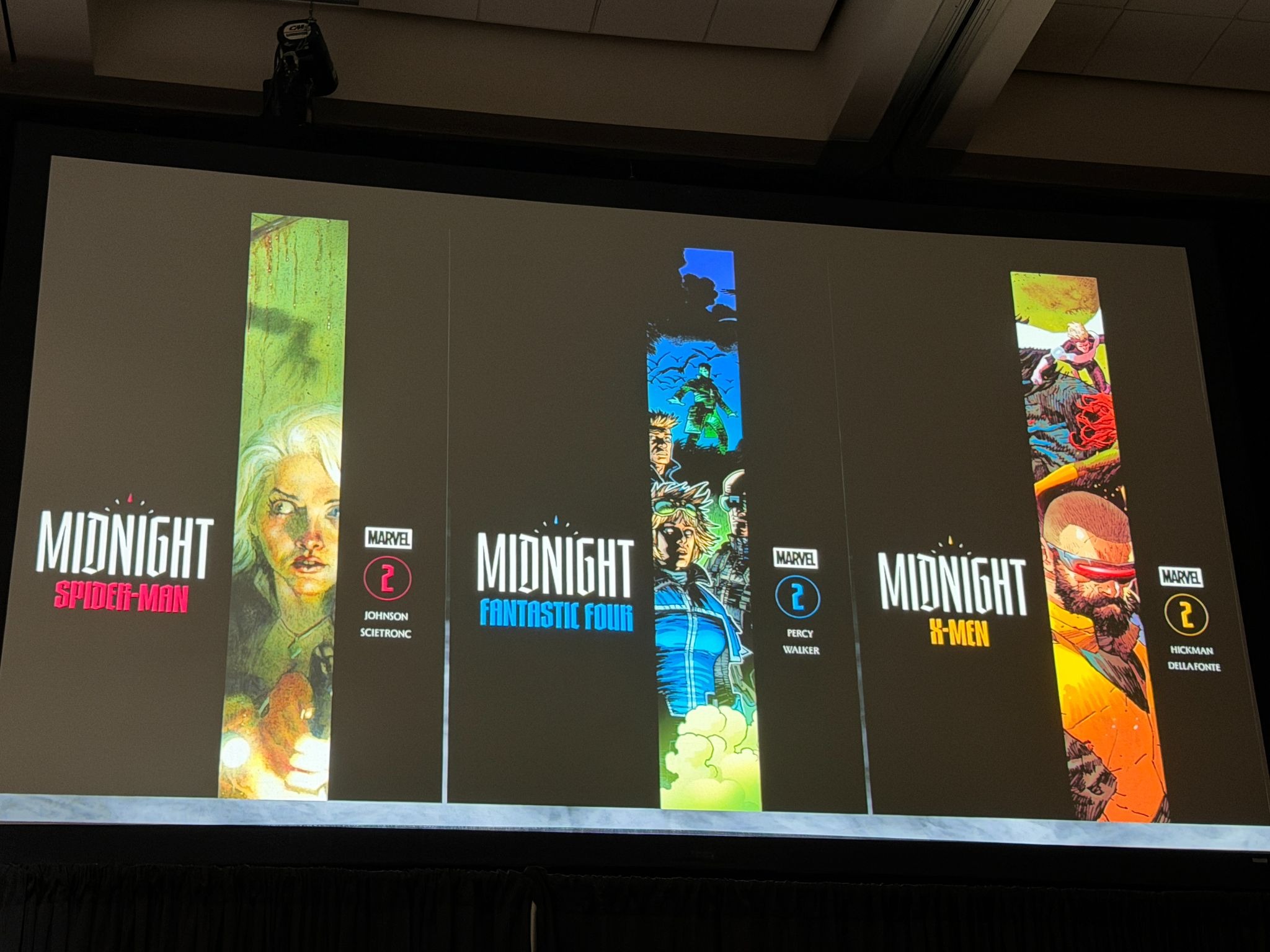
Each Midnight title runs a matching cover program across the line every month:
- Cover B — Midnight Bloodbath: one artist handling a horror-style image across all three titles' same-numbered issues
- Cover C — Midnight Special: a single artist assigned to an entire book's opening run
- Cover D — Midnight Horror Homage: riffs on classic horror movies, video games, and comics
- Cover F — 3-Part Connecting: a triptych spanning all three #1s (not continuing beyond the introductory issue)
- Cover E/H — Midnight Gallery: painted covers from major guest artists, including a first Marvel cover in years from Eric Canete
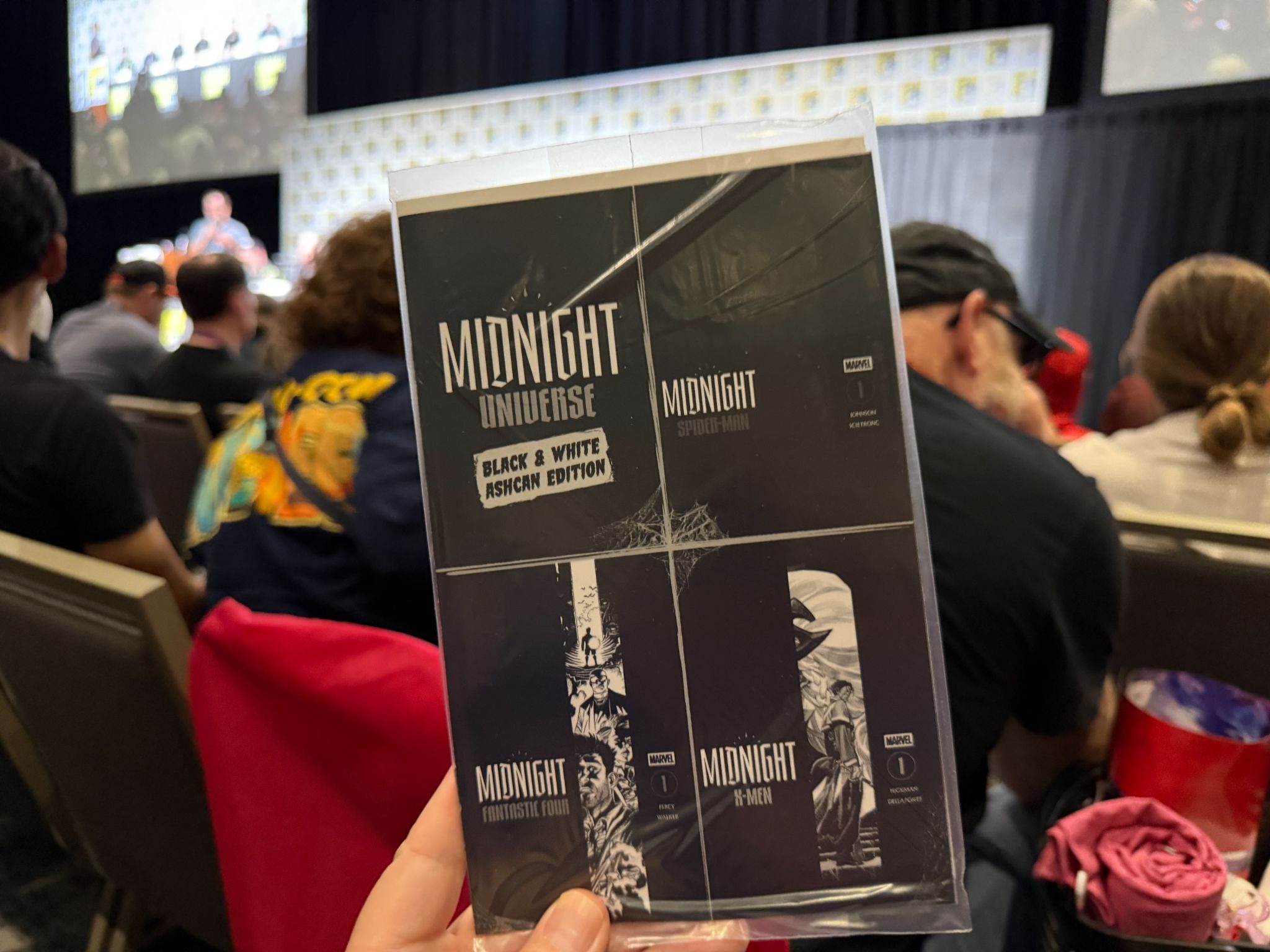
Marvel also handed out a rare black-and-white Midnight Universe ashcan to panel attendees, a kind of giveaway the team said hasn't happened in years, with copies also making their way to comic shops.
White confirmed onstage that all three books share continuity as a single Midnight Universe. All three #1s hit shelves the same day, October 7th, making Midnight one of the only major Marvel releases that week.
Looking ahead, the writers were cagey but not silent: outlines reportedly extend well past issue one, and fan questions floated ideas like a Midnight Avengers or a Daredevil/Punisher-style entry. Nothing was confirmed, and the team was clear that any future writer joining the line would build their own take rather than follow a template.
The Three Books
Midnight Spider-Man
Written by Phillip Kennedy Johnson. Interior art by ScieTronc. Covers and concept art by Steve Beach.
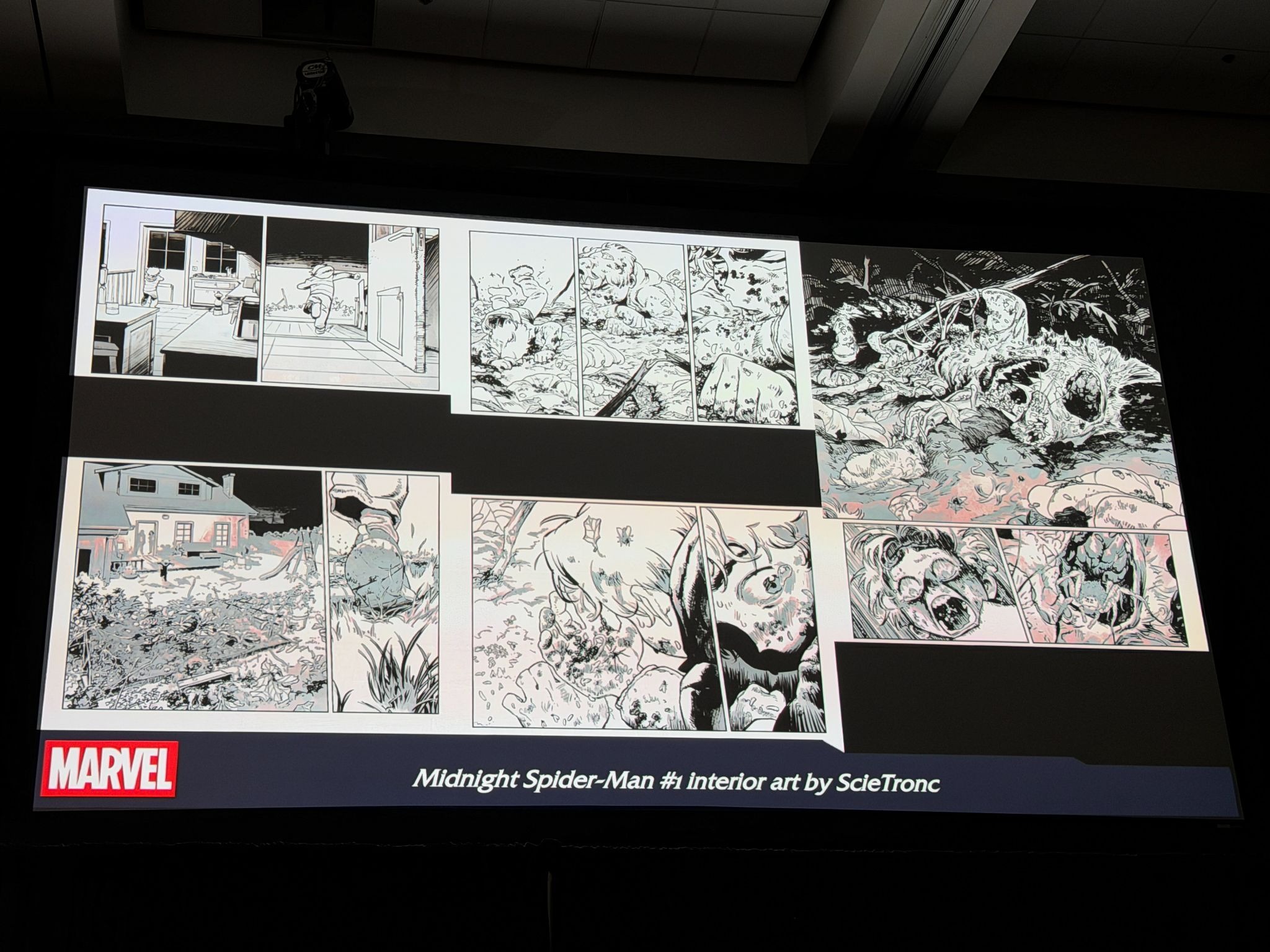
Johnson said ScieTronc came to the book through Jean-David Morvan, a French comics writer and scout who runs studios in France, Japan, and Korea and who's introduced Marvel to a run of international artists over the years. Johnson described ScieTronc's blend of manga, Japanese horror-film influence, and Korean manhwa as a perfect fit for the book, and said the collaboration pushed him to read more manga himself, going so far as to write an in-story manga that Peter Parker reads, which ends up informing the character's choices over the course of the series.
The theme is a dark inversion of Peter Parker's founding principle: a kid who wants power to mean responsibility discovers instead that power turns him into something monstrous, and the story follows his fight to hold onto his humanity as the transformation takes hold.
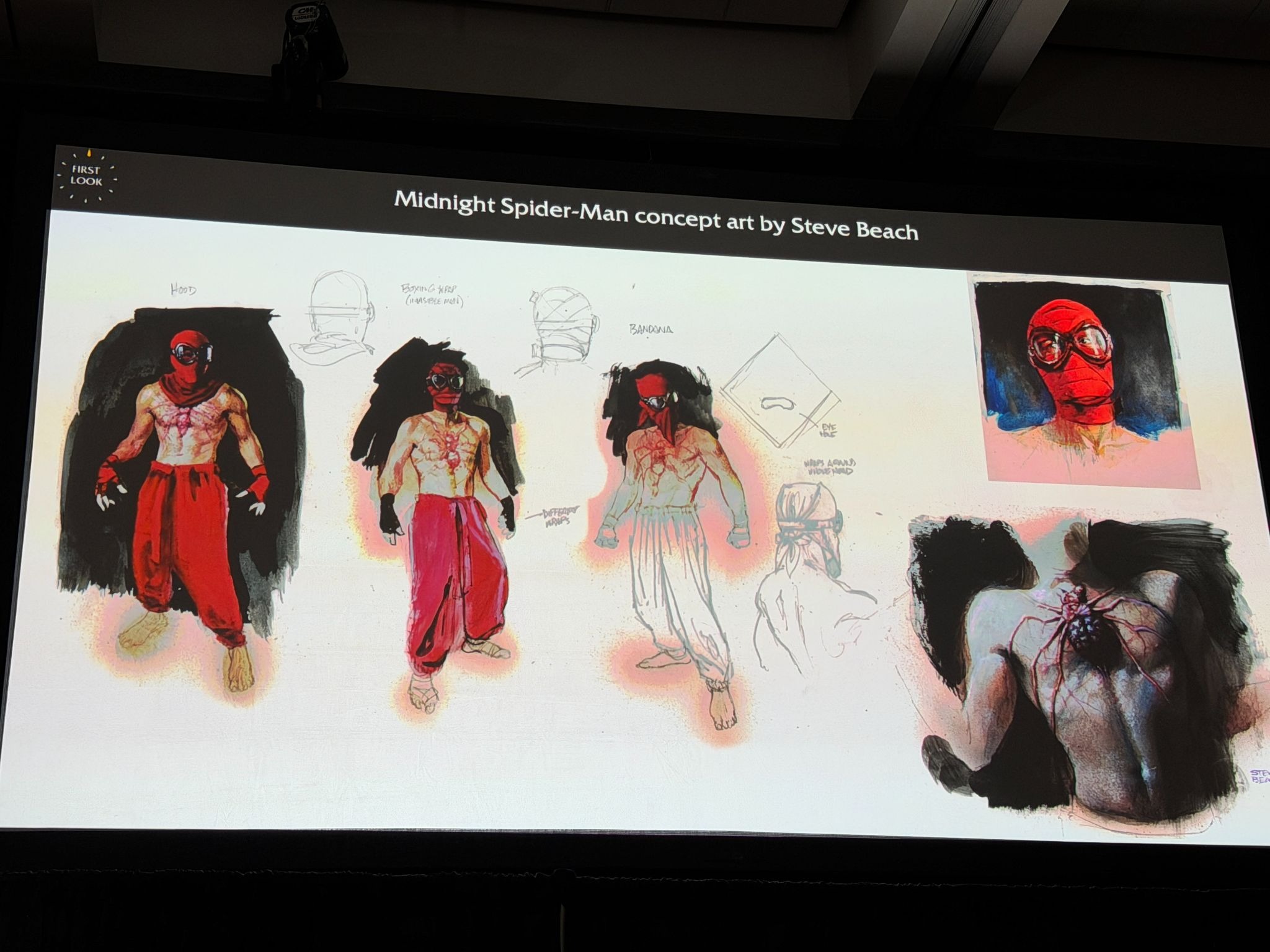
Steve Beach's concept art, shown for the first time at the panel, reworks Spider-Man's silhouette with a WWII aviator-goggle motif and boxer's hand wraps standing in for the traditional mask. Johnson noted the web mechanic is getting a similar overhaul: less clean swing-and-stick, more visibly organic and messier, reflecting a Peter whose body isn't entirely under his control.
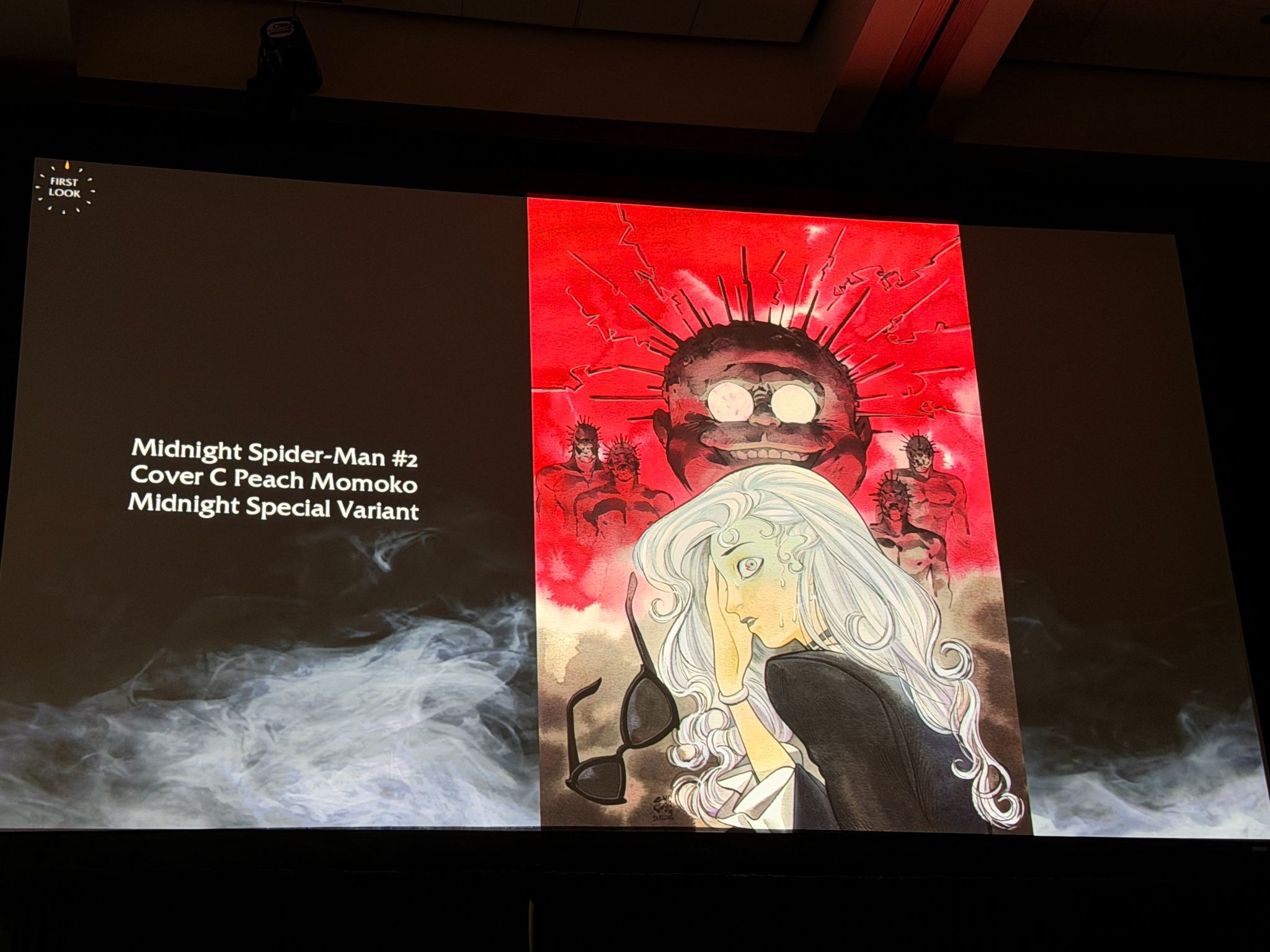
The book's villain got a genuine gasp from the room: this Doctor Octopus isn't one person. Johnson revealed that four separate people, each with two arms of their own, make up the character's eight arms, a composite Otto Octavius the team described as an early, rougher version of the character we'll meet at "the beginning of the journey." Johnson said the redesign takes the classic Doc Ock concept somewhere much darker than any previous version, and that the team wanted to "go off leash" with the villain once they committed to the horror angle. A first look was shown via Peach Momoko’s variant cover for issue #2.
Midnight Fantastic Four
Written by Benjamin Percy. Interior art and covers by Kev Walker.
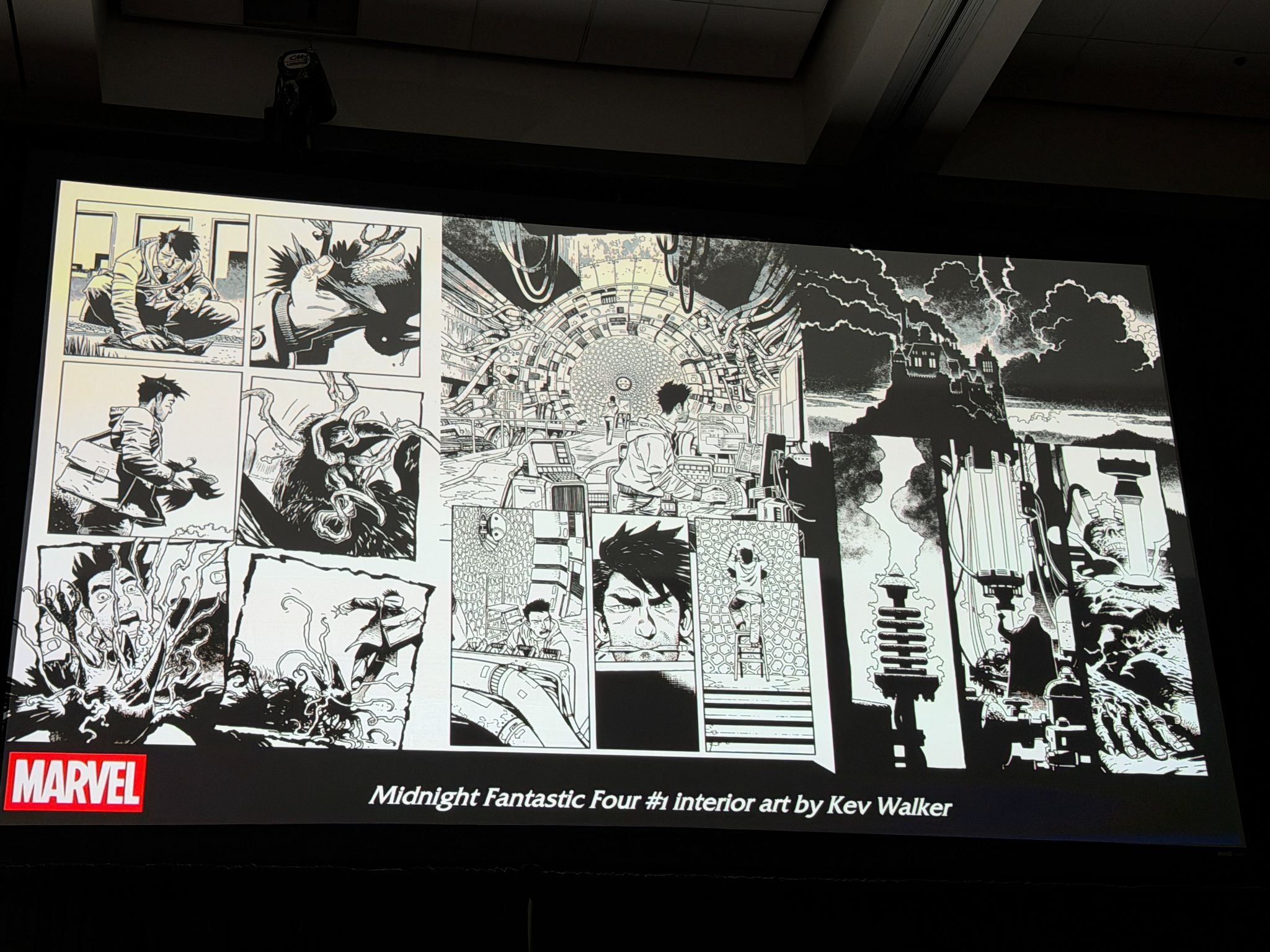
Per Marvel's official solicitation copy, an obsessive scientist, Reed Richards, delves into secrets "perhaps left best unknown," leaving himself and three others warped in strange and horrifying ways. Percy described the book as each member of the Fantastic Four confronting an individual, internal haunting before they can face the external threat bearing down on them.
Percy also shared that part of his inspiration is personal: he grew up around family members who had been involved in a cult, and that history has fed into some of the book's ritual and cult imagery.
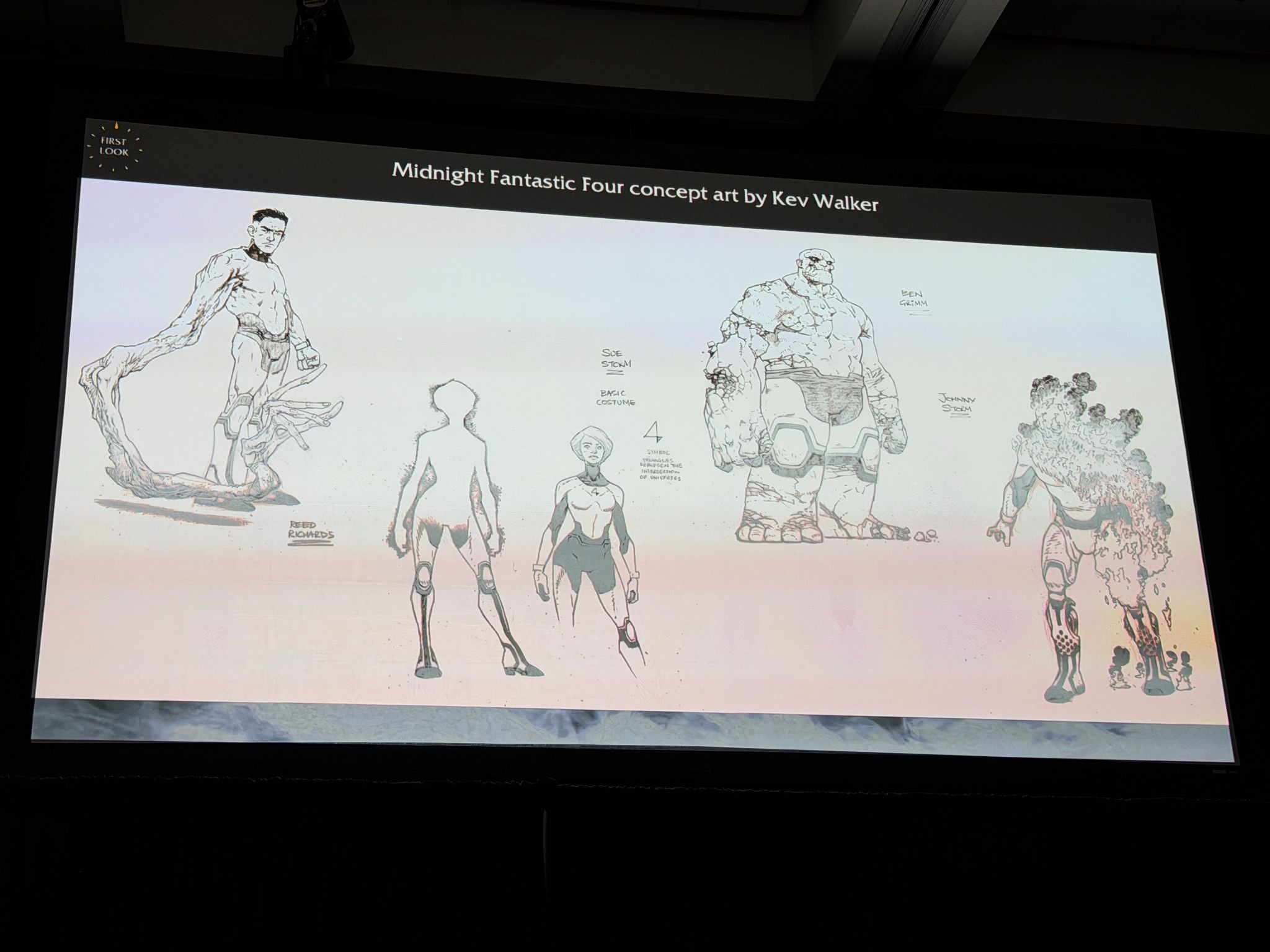
Percy went on to describe exactly how Reed's new power set works: Reed walks up to a locked door and presses his hand against it, and his skin, veins, and muscle start dripping and oozing downward, sliding underneath the door, then tendrilling back up on the other side to unlock it from within before retreating back into his hand. Percy called it a "cracked mirror" version of Reed's classic stretching power. A fan followed up asking whether Sue Storm's invisibility might work the same way, leaving parts of her visible, like organs or a skeleton, if the power doesn't fully take hold. Percy teased that the book will explore "the full spectrum" of that kind of body horror without confirming specifics.
Midnight X-Men
Written by Jonathan Hickman. Interior art by Matteo Della Fonte. Cover by Dike Ruan.
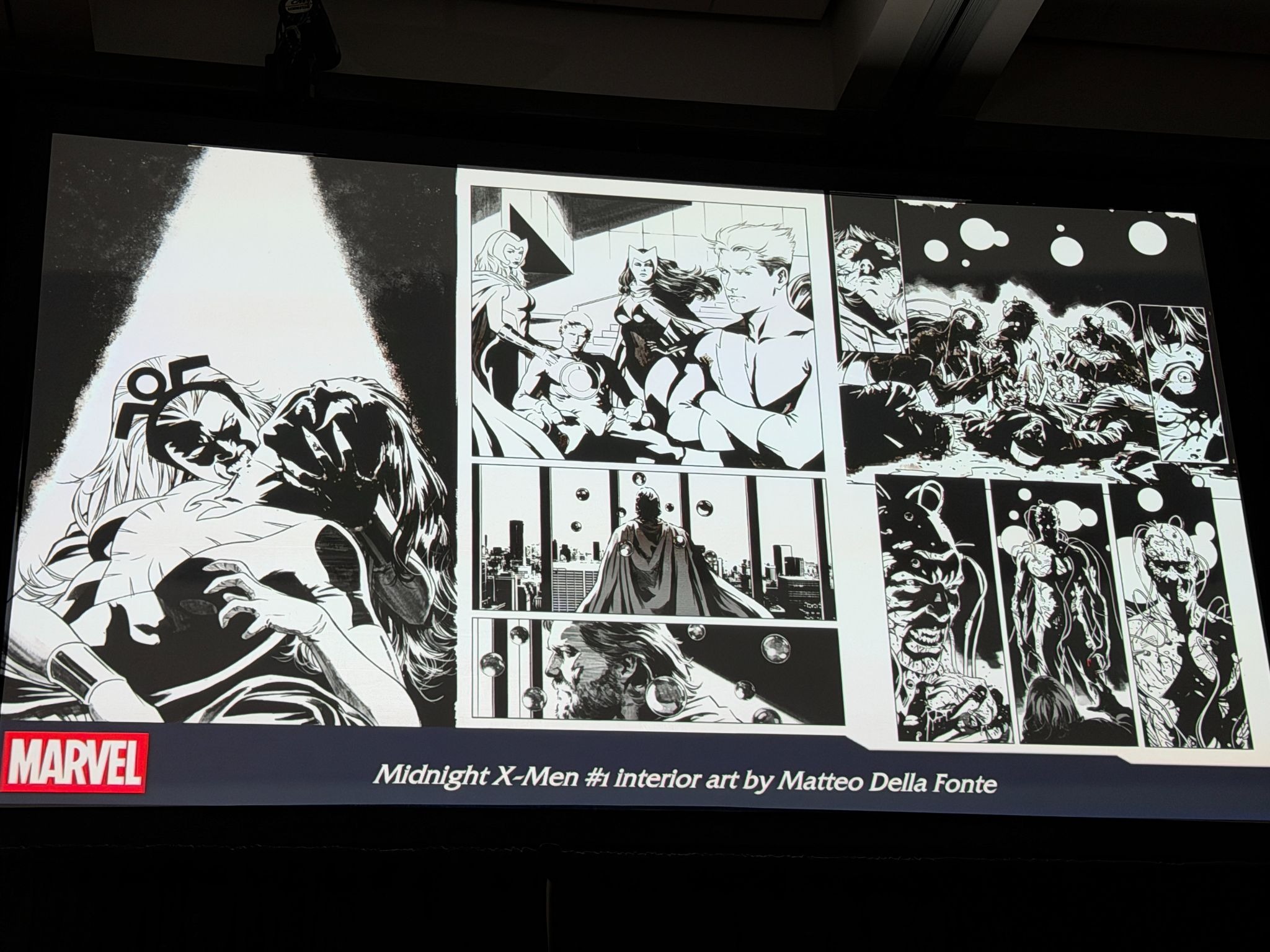
Della Fonte was discovered through Marvel's Art Atelier program, which brings young international artists to Disneyland Paris for an intensive mentorship workshop. Hickman said the team wanted someone young and hungry for this book rather than an established name.
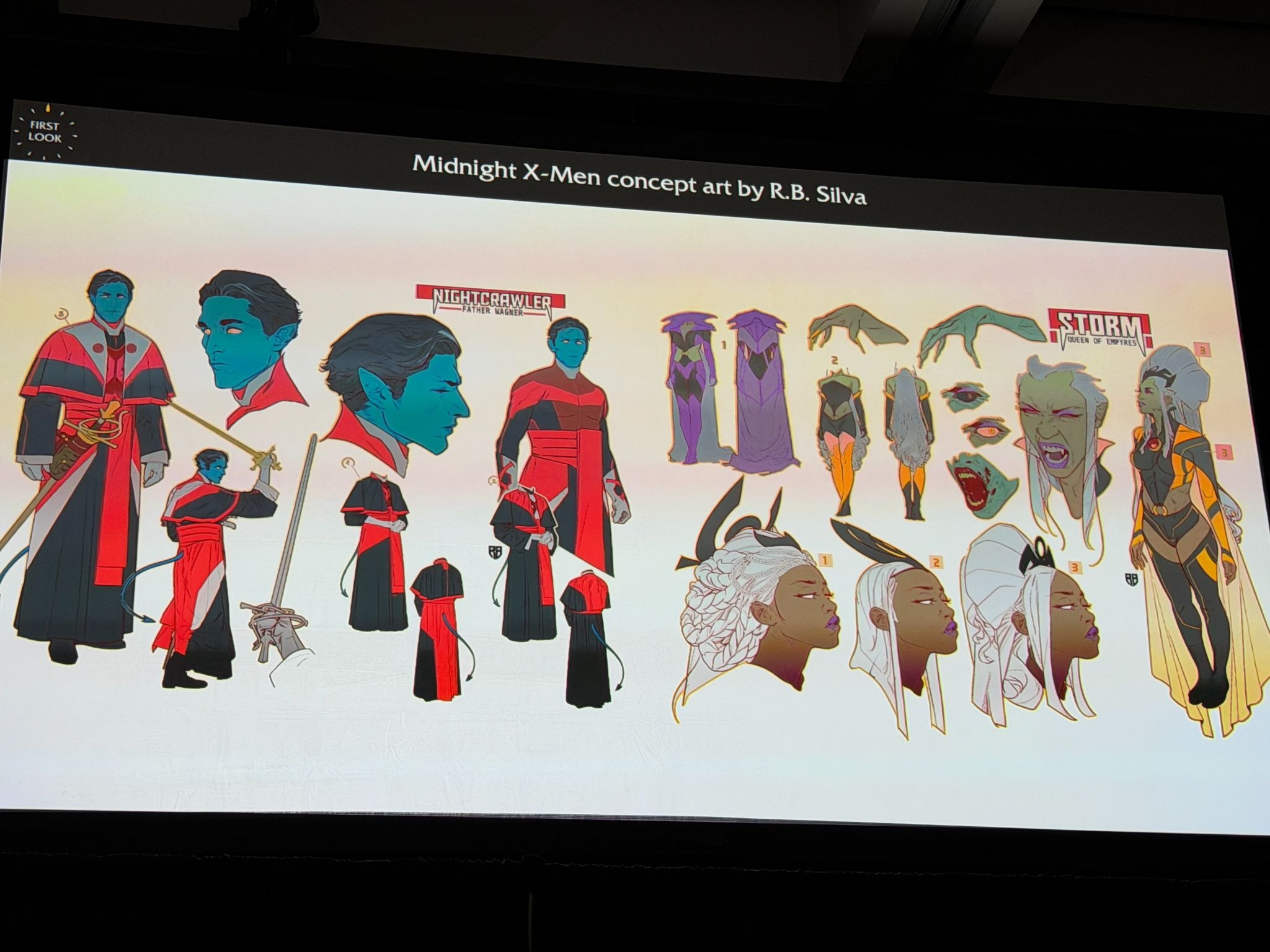
Character redesigns for the book, including new looks for Nightcrawler and Storm, come from R.B. Silva, brought in specifically because Hickman wanted designs that still read as X-Men without leaning on traditional spandex.
Thematically, Hickman was explicit that this isn't a "found family" or "us vs. them" mutant story. He described it instead as being about isolation, where characters feel alone regardless of who surrounds them. Marvel's own tagline for the book, "Eat. Prey. Love.," and early solicitation copy describing a conflict between vampires and a mutant empire suggest that isolation plays out against a larger factional war rather than replacing it.
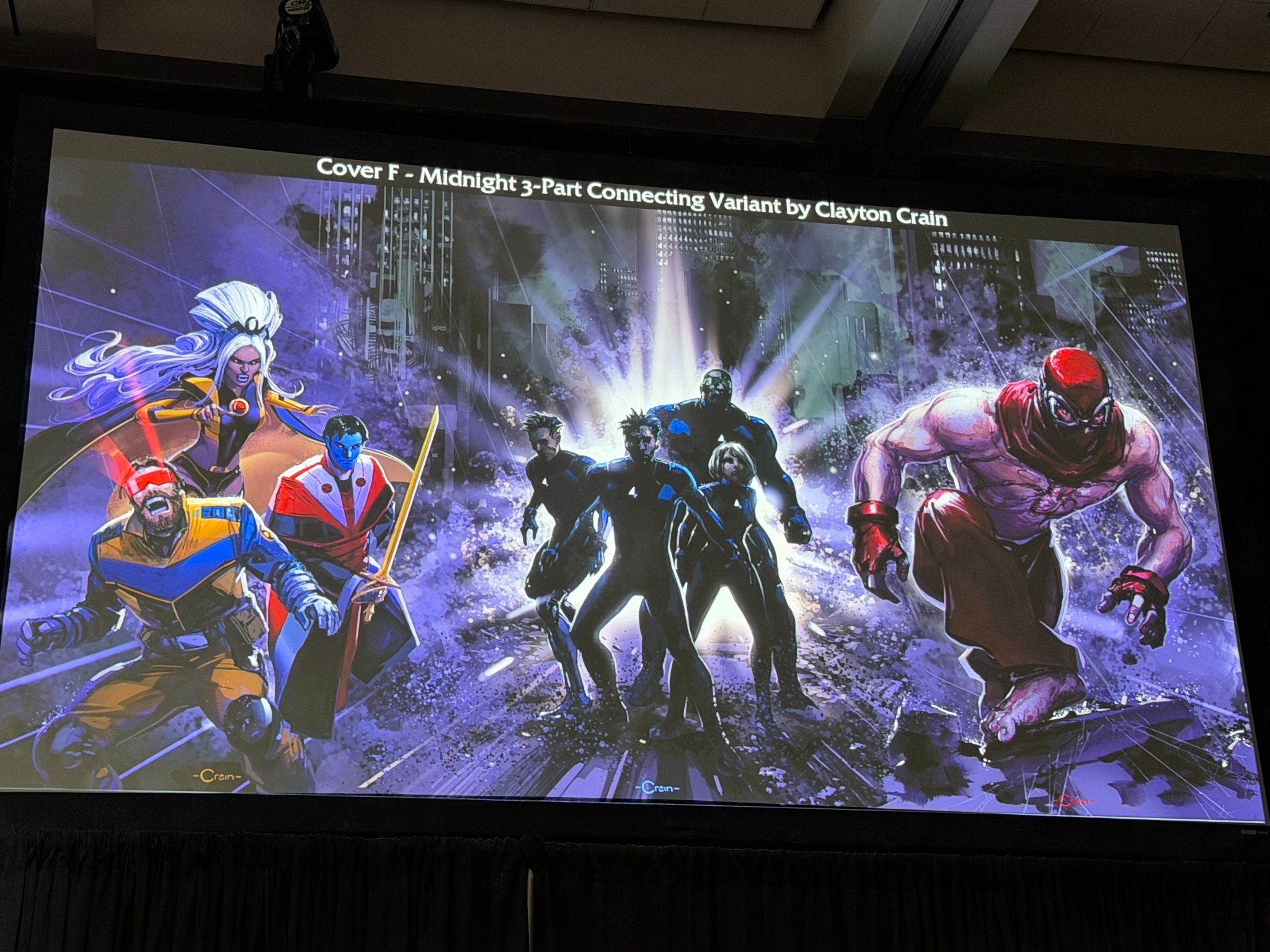
Midnight X-Men #1, Midnight Fantastic Four #1, and Midnight Spider-Man #1 hit comic shops on October 7th.