
Sundance Review: "Leviticus" Is a Terrifying, Tender Triumph of Queer Horror


“Thou shalt not lie with mankind, as with womankind: it is abomination.” Leviticus 18:22 remains one of the most weaponized Bible verses used against LGBTQ+ people. With Leviticus, completed only days before its Sundance premiere, writer/director Adrian Chiarella transforms that scripture into a nerve-shredding, emotionally resonant piece of queer horror. In his introduction, Chiarella noted how the genre has long been shaped by queer artists, with LGBTQ+ audiences finding themselves in its shadows and subtext. Here, he brings that subtext roaring into the light, reclaiming horror as an overtly queer space, and the result is electrifying.
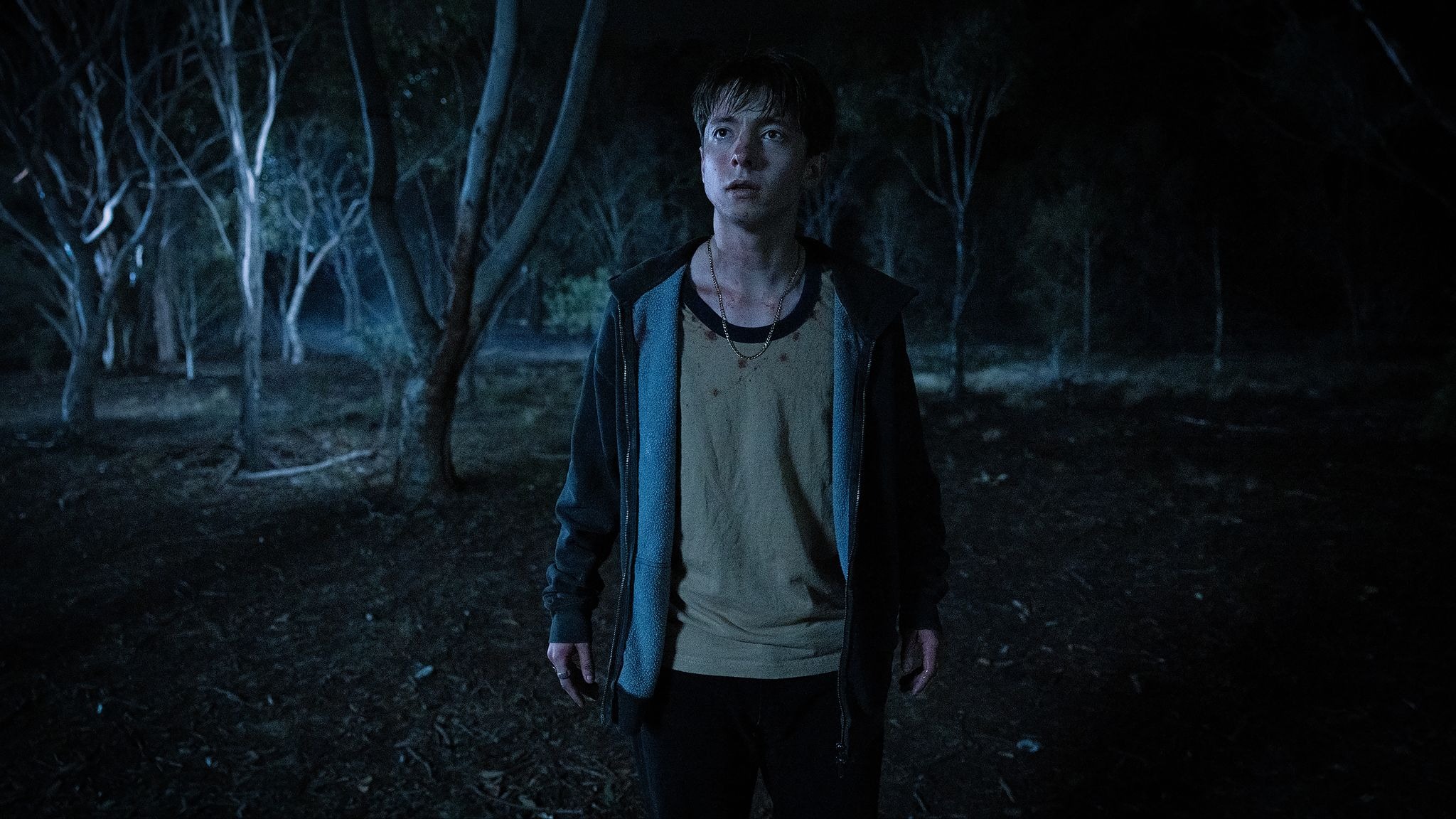
Following the death of his father, Naim (Joe Bird) and his mother (Mia Wasikowska) relocate to a remote, devoutly religious Australian town. There, the quiet and withdrawn Naim sparks a tentative connection with Ryan (Stacy Clausen), a rough-edged classmate whose own inner life is tightly guarded. When Ryan and another boy, Hunter (Jeremy Blewitt), are outed, the community turns to a self-appointed “Deliverance Healer,” whose so-called purification ritual secretly summons an entity that hunts queer teens by taking the form of the person they desire most.
Chiarella keeps the supernatural rules both simple and terrifying: the demon is invisible, unnamed, and appears only as the victim’s object of affection. That ambiguity becomes literal torment. When Ryan encounters the creature disguised as Naim, stopping the attack only confuses the real Naim, who can’t fathom why Ryan believes he tried to assault him. By the time the ritual is performed on Naim as well, he can no longer tell where Ryan ends and the monster begins, sending both boys into a spiraling nightmare of mistrust and longing.
At its core, Leviticus is a tender, aching story of first love slowly crushed under spiritual violence. The film’s allegory for conversion therapy is unmistakable, yet Chiarella avoids heavy-handedness; instead, he roots the horror in emotional truth that queer viewers will recognize instantly. While the film is accessible to any horror audience, its sting is especially sharp for those who’ve had religion wielded against their very existence.
Joe Bird and Stacy Clausen are extraordinary as two teens orbiting each other with equal parts yearning and fear. Bird brings a trembling vulnerability to Naim, grounding the film’s emotional perspective. Clausen, meanwhile, carries its most demanding burden: embodying both a frightened boy and the shape-shifting entity weaponized against him. His physical precision in the creature’s bait-and-switch moments is genuinely chilling, delivering several of the film’s most gasp-inducing scares. Their chemistry is delicate, palpable, and crucial — without it, the film’s emotional devastation wouldn’t land nearly as powerfully.
On a craft level, Chiarella’s team amplifies the story’s claustrophobic dread without overwhelming it. Tyson Perkins’ shadow-soaked cinematography isolates characters in oppressive pockets of darkness, while Jed Kurzel’s unsettling score hums beneath the film like a warning you can’t quite shake. The rural Australian landscape becomes a crucible: beautiful, barren, and merciless.
Leviticus feels destined for queer cult-classic status, but its clever conceit, riveting performances, and sustained emotional tension give it the potential to break far beyond the midnight crowd. If The Conjuring, The Exorcist, and The Omen can anchor major horror franchises, there’s no reason a terrifying, explicitly queer horror film can’t do the same.
I give Leviticus 5 out of 5 stars.