
Film Review: Brad Bird's "Ray Gunn" Fires Off More Promise Than Payoff


Some films become legends for having never been made. For more than a quarter century, Ray Gunn was Brad Bird's white whale. The retro-futurist noir he discussed with collaborators long before The Incredibles turned him into one of animation's most bankable names. Now that the Netflix and Skydance Animation production has premiered at the London Film Festival, the mystery around it has been solved in the least satisfying way possible. Ray Gunn is good, sometimes even charming, but it is not great, and it lands as the most disappointing entry in Bird's filmography.
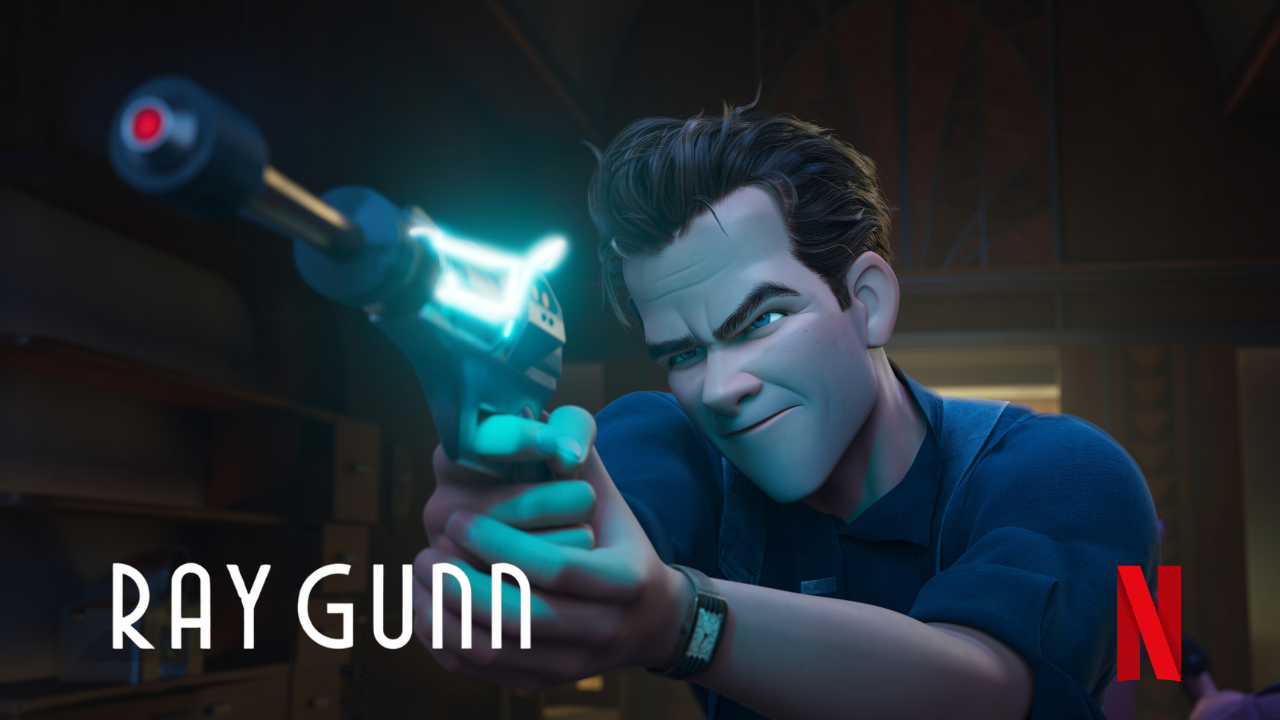
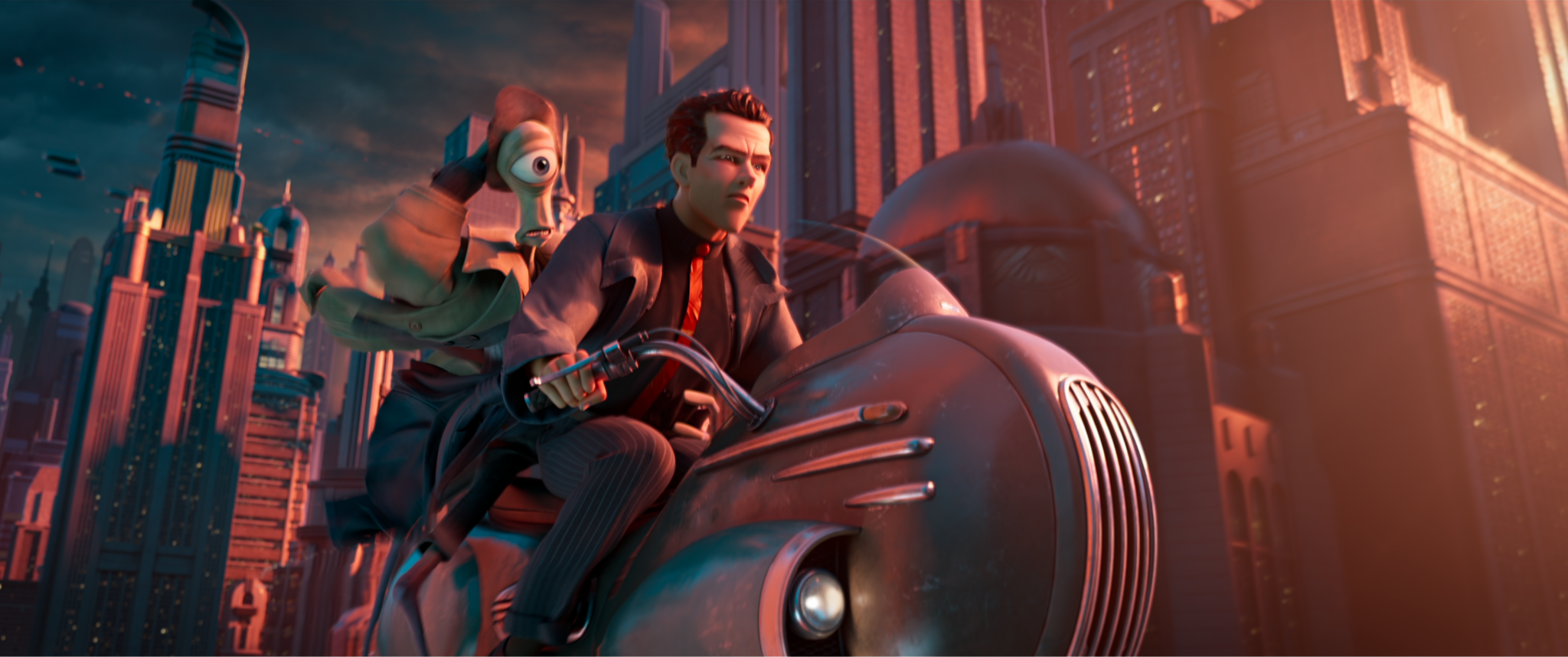
Raymond Gunn (Sam Rockwell) is a down-on-his-luck discreet investigator in Metropia, a futuristic city as imagined from the vantage point of 1939. Alongside his one-eyed alien partner Eye-Ra (Tom Waits), he's hired by Arnold Dom (Bobby Cannavale), the husband of the city's biggest pop star, Venus Nova (Scarlett Johansson), to catch her in an extramarital affair. Naturally, the case opens a door to a conspiracy that could change life in Metropia as everyone knows it.
Ray Gunn was intended to be Bird's second feature after The Iron Giant (1999). Instead, the project sat in a file cabinet at Warner Bros. for years before Skydance Animation wrestled it away so Bird could finally finish it. By Bird's own account, the idea predates Toy Story, back when computer animation wasn't really on anyone's radar, and that history shows on screen. Ray Gunn very much feels like a film from the era that gave us Titan A.E., Osmosis Jones, and The Iron Giant, with a heavy dose of the quieter pulp-comic spirit of Dick Tracy and The Rocketeer. That sincerity is appealing, but it also feels like the movie was preserved in amber rather than reconsidered for the audience it would eventually meet.
The film features a literal ray gun, a temperamental, banned device that can absorb a person's particles and store them until they're released. It's set up to inevitably go wrong, and it does. That's emblematic of the larger problem; nearly everything in Ray Gunn is foreshadowed so heavily that nothing comes as a surprise, despite several moments clearly built as shocking reveals.
The hidden-identity twist has become something of a Bird signature, from Syndrome's true origins in The Incredibles to Linguini's parentage in Ratatouille. Here, the trope feels less like a storyteller's sleight of hand and more like an M. Night Shyamalan habit that has worn thin.
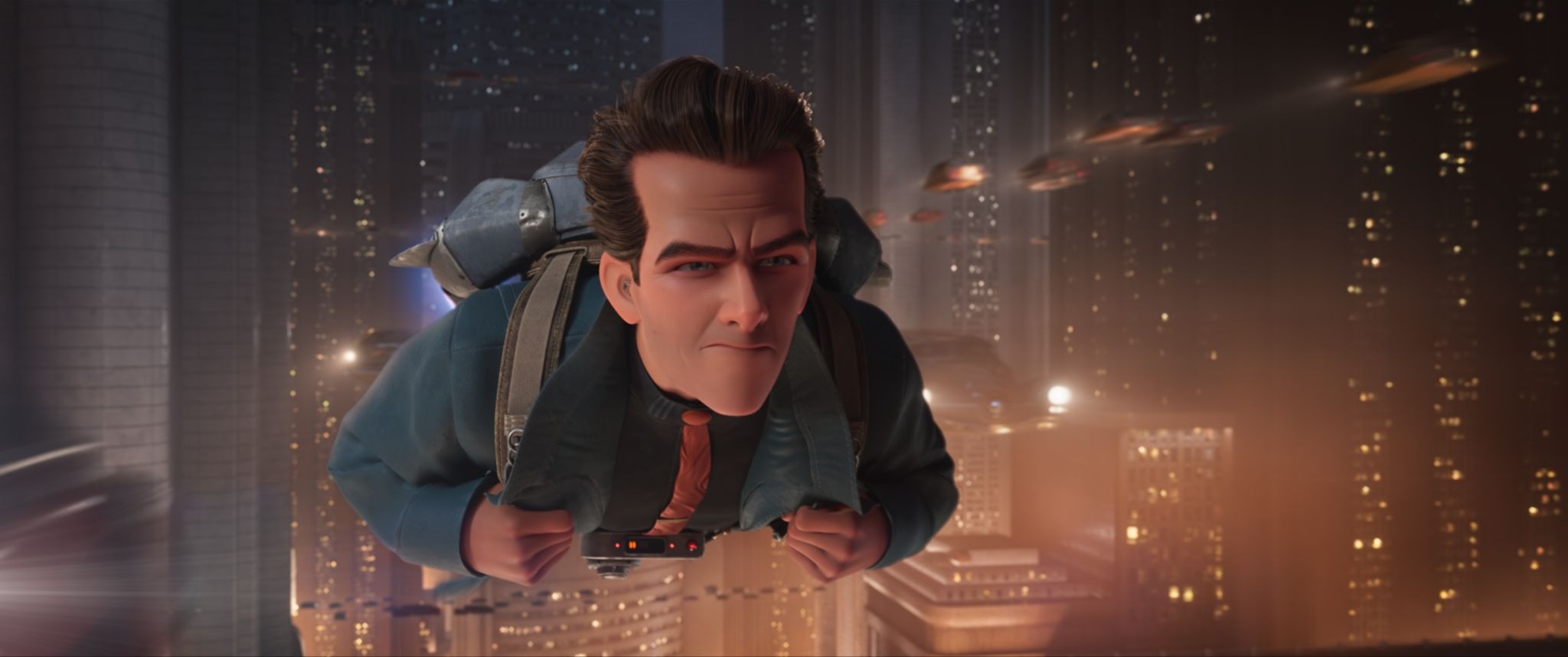
Metropia itself is the film's strongest asset. The mile-high Streamline Moderne skyline, black-and-white holograms, and neon-drenched entertainment districts make it a world worth getting lost in, and the character designs, especially the broad, colorful aliens, are consistently appealing.
The animation inside that world is another story. Production spanned multiple animation studios in several countries, and the results are uneven. Walk cycles in particular often feel untethered from the ground, and many moments land awkwardly where they should flow. Because Bird's most acclaimed work came out of Pixar, the step down in animation quality is hard to miss.
Kids will likely be most invigorated by the colorful alien characters and a handful of fast-paced chase sequences, which are where Ray Gunn feels most alive. The more mature romantic material, on the other hand, moves at a snail's pace and overstuffs a roughly two-hour runtime. That might be worth it if the romance between Ray and Venus earned the viewer's real affection. There's a fun meet-cute and some genuinely flirtatious moments early on, but by the end the relationship plays hollow, leaving the slower stretches feeling like time spent rather than invested.
Bird helped bring Michael Giacchino to prominence with The Incredibles, so it stings that Giacchino’s score here feels uninspired. It blends noir jazz, horns, and retro sci-fi textures as expected, but mostly goes through the motions of Giacchino's own musical tropes without delivering anything new or memorable.
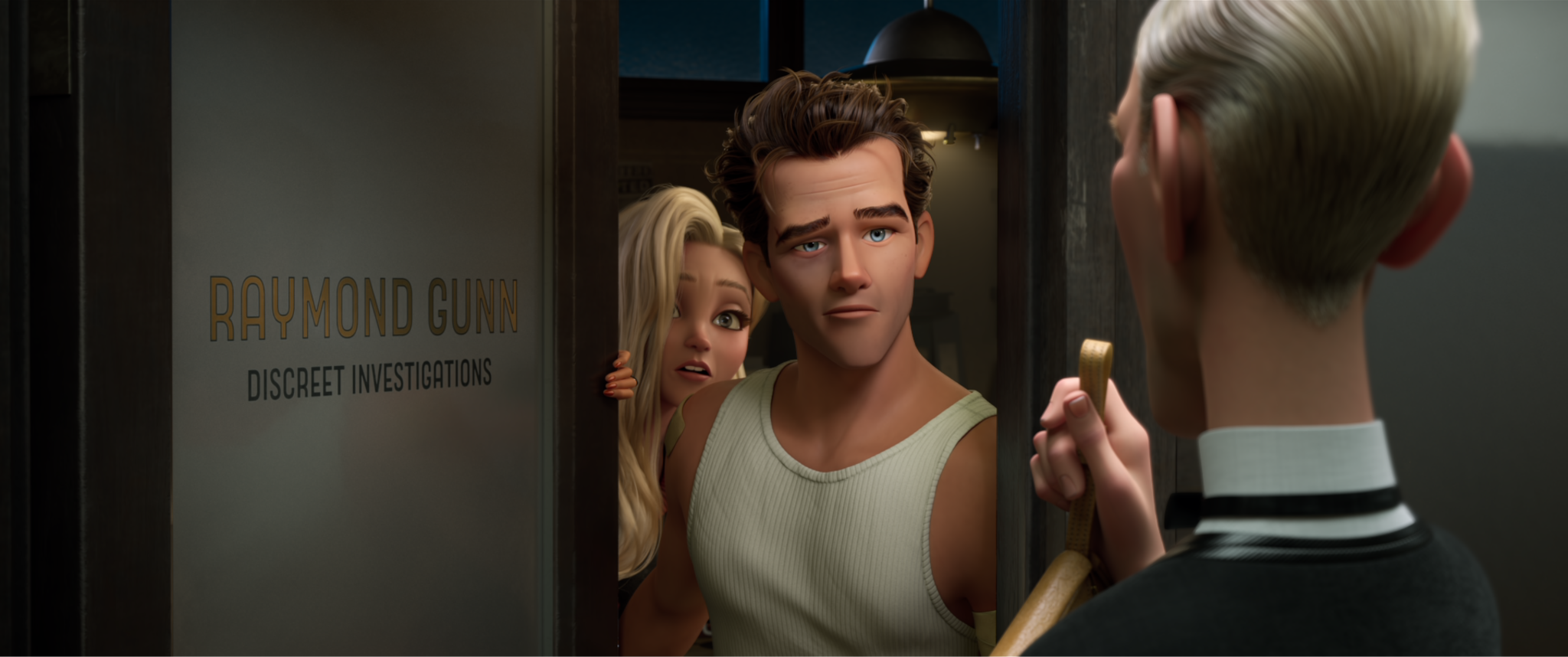
The songs Venus Nova performs, written and produced by Kimbra, fare worse. Their badness is partly a plot point, but even accounting for that, most of them feel disconnected from Metropia's retro-futurist world rather than an organic part of it. When the songs are decidedly modern in a setting like this, the result is jarring.
One of the film's worst sins is a casting choice. A very recognizable voice is given to a character who spends much of the movie in disguise as several others. That character may fool Ray Gunn, but not the audience. Without spoiling who it is, anyone surprised by the ruse simply wasn't paying attention, because the voice immediately gives the game away.
The most disappointing thing about Ray Gunn is all the promise attached to it. Brad Bird's long-lost project, revisited decades later, carries the kind of buzz only an elusive, mythologized passion project can generate. The finished film doesn't match that hype, nor does it seem especially interested in trying. The effort, it seems, went solely into the world-building.
What's left is a handsome, occasionally fun noir adventure with a fantastic world and a story that never quite catches up. Bird fans will want to see it simply to close the book on one of animation's great what-ifs, but they may find the legend was more exciting than the movie.
I give Ray Gunn 3 out of 5 stars.
Ray Gunn opens in select theaters on December 4th and debuts globally on Netflix on December 18th.