
Sundance Review: "Carousel" Spins in Circles Despite Strong Performances from Chris Pine and Jenny Slate


In Carousel, an entry in this year’s Sundance Film Festival, divorced doctor Noah (Chris Pine) is quietly managing a lonely but functional life in Cleveland, juggling a struggling family clinic and a tense relationship with his teenage daughter. His routine is disrupted when Rebecca (Jenny Slate), his high school sweetheart, unexpectedly returns to town. What begins as a seemingly spontaneous reconnection quickly becomes a second chance at a relationship neither of them ever fully resolved. As new uncertainties collide with old emotional wounds, Noah must confront choices he has long avoided, including those tied to his late father, whose absence continues to haunt both him and the family practice.
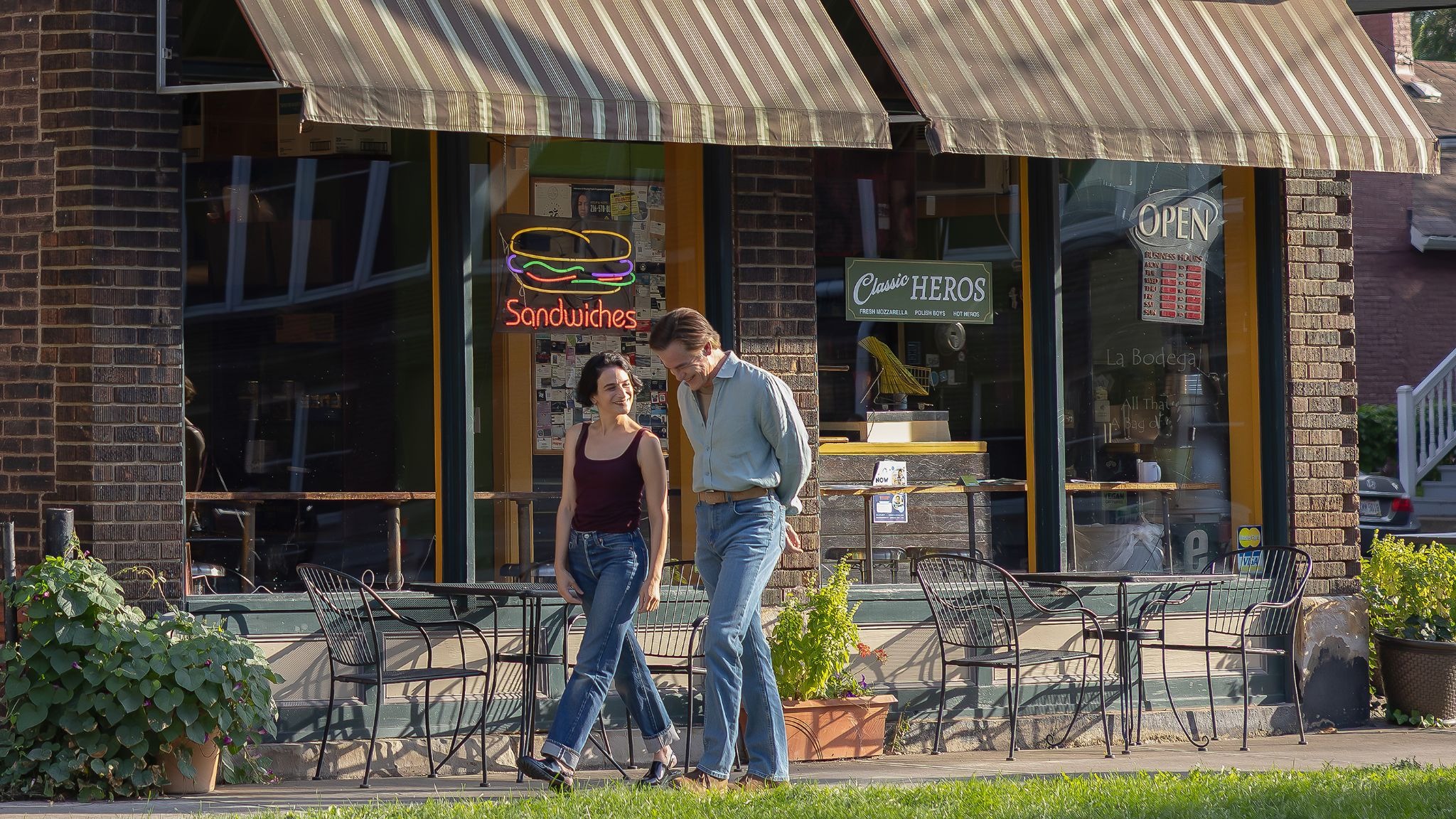
Rachel Lambert’s film is undeniably beautiful to look at. Working in 35mm, cinematographer Dustin Lane fills the frame with warm sunrises, cool dusks, and soft, natural light that gently echoes the film’s themes about the cyclical patterns of life. There’s a lyrical quality to the visual design, and when Carousel pauses for these quieter moments, it becomes easy to see the film Lambert hoped to shape.
Dabney Morris’ score also aims for thematic intention, swirling with a light, circular quality that mirrors the film’s title and Noah’s emotional orbit. At its best, it feels like characters spinning in place, unable to escape their own patterns. And while Chris Pine brings his usual charm and comedic timing, Jenny Slate emerges as the film’s most grounded presence. She manages to elevate Rebecca beyond the page, offering flashes of wit and emotional clarity even when the script doesn’t support her fully. Her performance is effective, but ultimately underserved by the arc she’s given.
Despite the film’s poetic aspirations, Carousel frequently undermines its own emotional weight. For all the narrative attention placed on Noah’s late father — including repeated conversations with his stepdad urging him to open up — the film never explores what that loss actually meant. It’s built up as a central pillar of Noah’s emotional landscape, only to be abandoned without payoff. That lack of follow-through extends to several threads, from Noah’s own depression to his daughter’s unaddressed mental health struggles. Each setup promises a character-defining revelation, but the film simply moves on.
Similarly, the revelation that Rebecca encouraged Noah’s daughter to join the debate team before their rekindling is treated as a narrative detail rather than the potential red flag it is. Rather than complicating their dynamic in any meaningful way, the film quickly sidesteps it. What could have added rich emotional tension instead becomes an oversight, a clue pointing toward a script that is more focused on quiet melancholy than clarity.
Noah himself is a difficult protagonist to connect with, but not for one singular reason. As written, he’s closed-off and emotionally unavailable. In performance, Pine leans into that guarded quality, offering vulnerability in flashes but also an abrasiveness that isn’t always tempered by the film’s edit. The result is a character who becomes increasingly hard to invest in — not because any one creative decision failed, but because all the pieces never quite assemble into a compelling whole.
The choice to shoot in a 3:4 aspect ratio — a decision Lambert explained was meant to maximize 35mm’s native frame — ends up constraining the film more than enhancing it. With televisions no longer built in that shape, the presentation feels less like an artistic imperative and more like a stylistic flourish. Characters drift off-center, are partially obscured, or remain awkwardly framed, creating a claustrophobic effect that distracts from the story rather than elevating it.
Carousel is a film full of intentions — thematic, cinematic, emotional — but too many remain unfulfilled. Its visual beauty is undeniable, and Slate offers a rare spark in a story that often feels stuck in place. But by the time the film reaches its abrupt ending, the central romance feels less like destiny and more like two people settling for familiarity. The final moments don’t uplift, nor do they devastate; they simply arrive, leaving the audience with a bittersweet sense of missed opportunity.
I give Carousel 2 out of 5 stars.