
Sundance Review: "TheyDream" Finds Healing in the Spaces Art Can Reach


Introducing the world premiere of TheyDream at the Sundance Film Festival on behalf of Latino Public Broadcasting, Edward James Olmos (Chairman) promised a film that would “make you laugh, make you cry, make you understand who you are.” What followed was exactly that — an aching, inventive, and deeply human act of remembrance from director William David Caballero, who transforms two decades of family stories into something that feels at once handcrafted and spiritually expansive.
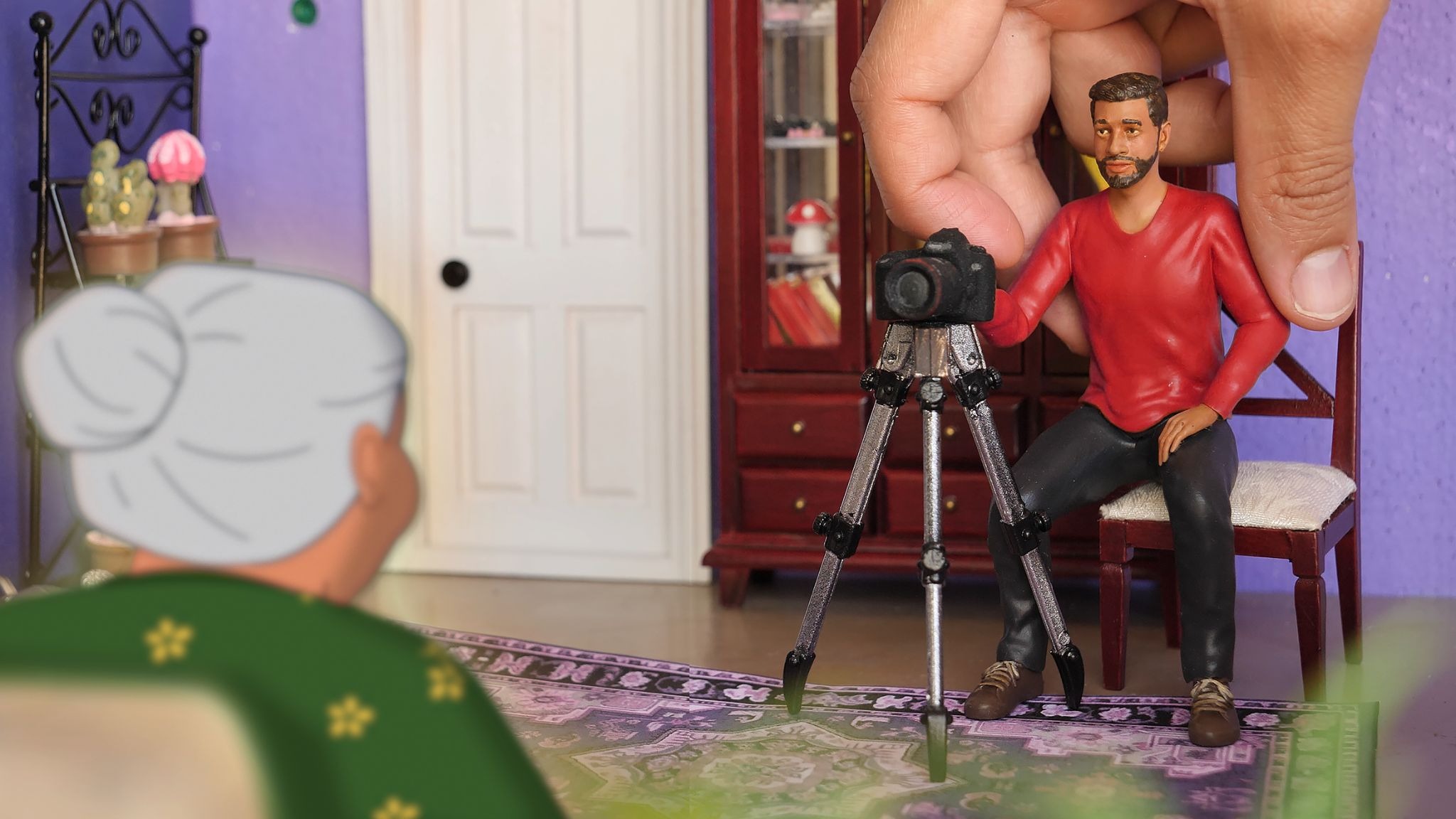
At its core, TheyDream is an exploration of grief as a creative force. The film begins with Caballero’s mother, Milly, who spent years caring for her parents and her husband as their health declined. When her mother died — an event described in the film’s official materials as a source of profound guilt and self-blame — Caballero didn’t retreat from that pain. Instead, he handed her a camera and invited her into the artistic process that had shaped his own life.
Together, they revisit home-video archives, decades-old audio interviews, and cherished family lore. The result isn’t a linear retelling but a layered, emotional mosaic that captures the messy, contradictory ways families remember themselves. Through tears and laughter, as the Sundance description puts it, they “bring their loved ones back to life” and find their way toward letting go.
Longtime followers of Caballero’s work will recognize the building blocks. He has spent years animating his family in cartoons, shorts, and Webby-winning miniatures — most famously the humorous HBO series Gran'pa Knows Best centered on his grandfather Victor. Those projects play like standalone vignettes, little capsules of personality and philosophy.
TheyDream gathers those pieces and finally gives them space to breathe. Each family member receives a chapter that feels shaped from its own emotional clay: his father Guillermo’s memories of dialysis patients, his grandmother Isolina’s journey from Puerto Rico to New York to North Carolina, his mother Milly’s superhero-like endurance. These sections echo Caballero’s shorts in tone and scale, accumulating meaning as a package feature. What begins as a set of character portraits gradually becomes a generational tapestry.
Caballero mentioned during the Q&A that a documentary professor once told him, “No one would ever want to see a film about your family.” The standing ovation that followed the premiere proved how profoundly wrong she was.
Even with its segmented approach, TheyDream lands with surprising cohesion. Caballero saves his own story for last, allowing the film’s themes to ripple outward before circling back to him. Without lingering on specifics, it’s clear his chapter carries some of the hardest truths — unresolved conversations, inherited wounds, and the emotional debris that children of immigrant and working-class families often carry into adulthood.
The film’s treatment of identity, including a delicate thread involving Caballero’s queerness and how it intersected with his father’s beliefs, is understated but essential. It’s presented less as revelation and more as the final piece of understanding in a much larger reckoning with family trauma.
Visually, TheyDream is a remarkable fusion of techniques. Caballero and his team animate with hand-built miniatures, including a scale model of his childhood home and a rotating hospital set that feels like an homage to Walt Disney’s Carousel of Progress. Within these handmade worlds, the story unfolds through stop-motion sequences, 2D animation, 3D motion-capture performances, paper cut-outs, and glittered craft materials. Styles shift frequently — sometimes mid-sequence — without much explanation. What could read as disjointed becomes a natural extension of the film’s emotional language. These changes feel like the physical embodiment of memory itself: tactile, inconsistent, stitched together from whatever scraps a family keeps. Occasionally, the transitions hint at budget limitations, but even that contributes to the film’s charm. TheyDream wears its handmade spirit proudly; it feels less like a polished studio piece and more like something born directly from someone’s hands, heart, and kitchen table.
As Olmos emphasized in his introduction, TheyDream represents a major cultural milestone for Latino Public Broadcasting. Caballero’s story — personal, queer, Puerto Rican, Southern, immigrant, working class — exists in a cinematic space that rarely makes room for all those identities at once. That the film is produced by LPB and ITVS only deepens its power. It’s not simply a documentary; it’s a reclamation of who gets to define their own story on screen.
TheyDream captures something few documentaries attempt: the emotional labor behind turning pain into art. It’s about a mother and son who learn to navigate grief by rebuilding the people they’ve lost — one figurine, one frame, one trembling attempt at animation at a time.
By the time the film reaches its final, hopeful epilogue, the cumulative effect is overwhelming. The standing ovation wasn’t just admiration for artistry; it was recognition of a family inviting an entire audience into their healing.
I give TheyDream 5 out of 5 stars.