
"Whalefall" Team Takes New York Comic Con Inside the Belly of the Beast


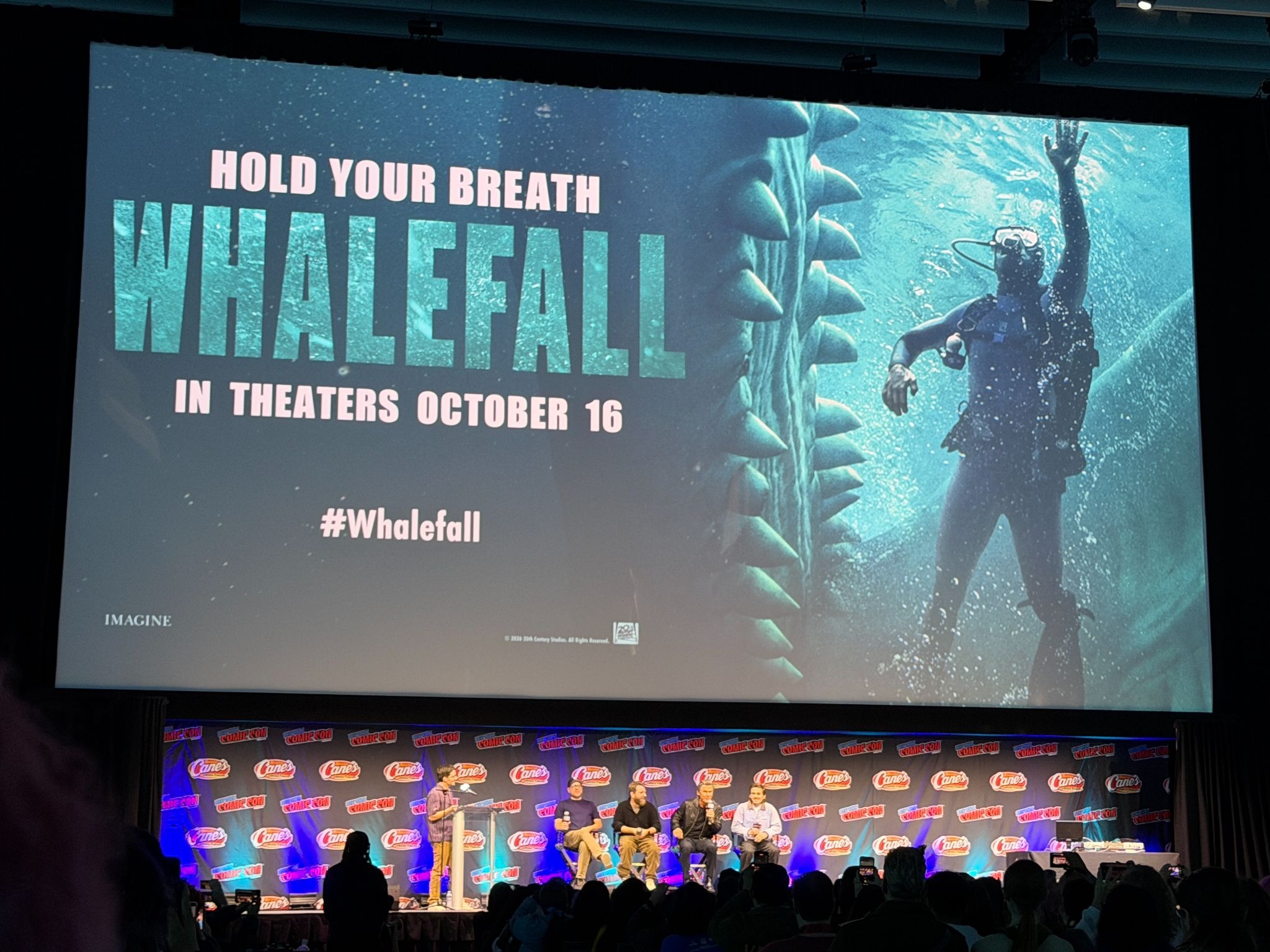
Twentieth Century Studios brought a sneak peek of Whalefall to New York Comic Con today, one week before the survival thriller swims into theaters on October 16th. Moderated by Josh Horowitz of the Happy Sad Confused podcast, the panel featured author and co-writer Daniel Kraus, director and co-writer Brian Duffield, and stars Josh Brolin and Austin Abrams, who discussed the science behind the story, the film's father-son heart, and the elaborate practical effects used to put an actor inside the belly of a sperm whale.

Based on Kraus's novel, Whalefall follows Jay Gardiner (Abrams), who goes diving off California's Central Coast in search of the remains of his late father (Brolin), only to be swallowed by a massive sperm whale. Trapped in its belly with just an hour of oxygen, Jay realizes the hard-earned lessons his father taught him may be the key to his escape. Elisabeth Shue, John Ortiz, Jane Levy and Emily Rudd also star.
Kraus explained that the idea came from viral videos of divers and kayakers briefly ending up in the mouths of humpback whales. Curious whether any whale could actually swallow a person, and whether that person could survive, he started calling whale scientists. They told him only a sperm whale has a throat large enough, which kicked off roughly three months of intensive whale research. Kraus stressed he had no interest in a fantastical tale in the vein of Jonah or Pinocchio, and the book and film aim to be scientifically and biologically accurate.
The title also comes from nature. A whalefall occurs when a whale dies and sinks to the deepest part of the ocean, where its decomposing body sustains generations of sea life and sometimes even gives rise to new species. For Kraus, it became a powerful metaphor for losing a loved one, whose life keeps radiating outward long after they’re gone. Of the roughly 30 books he has written, Kraus considered this the least likely to become a movie, believing it unfilmable.
Duffield and Kraus had never spoken but followed each other online, and when Kraus tweeted about the book, Duffield slid into his DMs asking to read it as soon as possible. Kraus sent it a couple of months later once it was finished, and it changed Duffield’s life. He assumed the rights would be fiercely competitive, only to discover he was the lone lunatic chasing it.
The pair co-wrote the screenplay, a fitting arrangement for Duffield, who usually writes alone, since the film itself is about not being a lone wolf. Having the author as a partner meant that whenever questions came up, Kraus could field them.
One of Kraus's more hands-on contributions came early in pre-production, when the art department's stomach designs kept coming out too big. He rolled up a yoga mat in his office, slid a Barbie doll inside, and photographed it to show the contours he had in mind, which helped kickstart the design.
Brolin read the book while filming Ridley Scott's The Dog Stars in Italy. He purposely slowed down as he neared the end because he didn't want it to finish, and when he closed it, he held it to his chest and sobbed. Knowing Abrams was attached sealed it for him. The two previously worked together on Gangster Squad and Weapons, and Brolin joked he anticipated a party of discomfort, so long as Abrams was more uncomfortable than he was.
Abrams auditioned for the role, and the process stood out because the filmmakers wanted actors to come in person, a rarity since the pandemic made self-tapes the norm. The process stretched across months, with one late audition taking place inside a tent meant to evoke the whale’s stomach. He also had to prove he could swim laps. The project drew him in because it was something he had never seen before and felt like an extreme challenge, paired with a deeply moving personal story at its center.
Abrams described Jay and his father, Mitt, as two people who love each other deeply but keep missing each other. He compared it to having a family member you know you could connect with, which makes the disconnect all the more painful. Complicating things, Jay is more sensitive than Mitt fully accounts for.
Brolin recalled a pivotal boat scene shot at 3 a.m., when everyone was tense and irritable, in which Mitt tries to share a final meaningful moment with his son while drinking, and the harder he tries to get closer, the further away he pushes Jay. The scene turned out beautifully, but living in it was its own kind of hell. The role prompted Brolin to reflect on his relationships with his own son and father. He once asked his son, now 38, about the worst moment he ever had with him, and the answer was being hugged in front of his friends at school. Watching the film changed how he sees his father and reminded him that time is precious.
Duffield singled out that boat sequence, which follows Jay being swallowed, as the scene he’s most excited for audiences to see. It begins pleasantly before quickly turning sour, and watching the relationship fall apart, then slowly come back together over the rest of the film, is deeply emotional. Duffield first read Kraus’s book while holding his newborn son and finished it believing it would make him a better father.
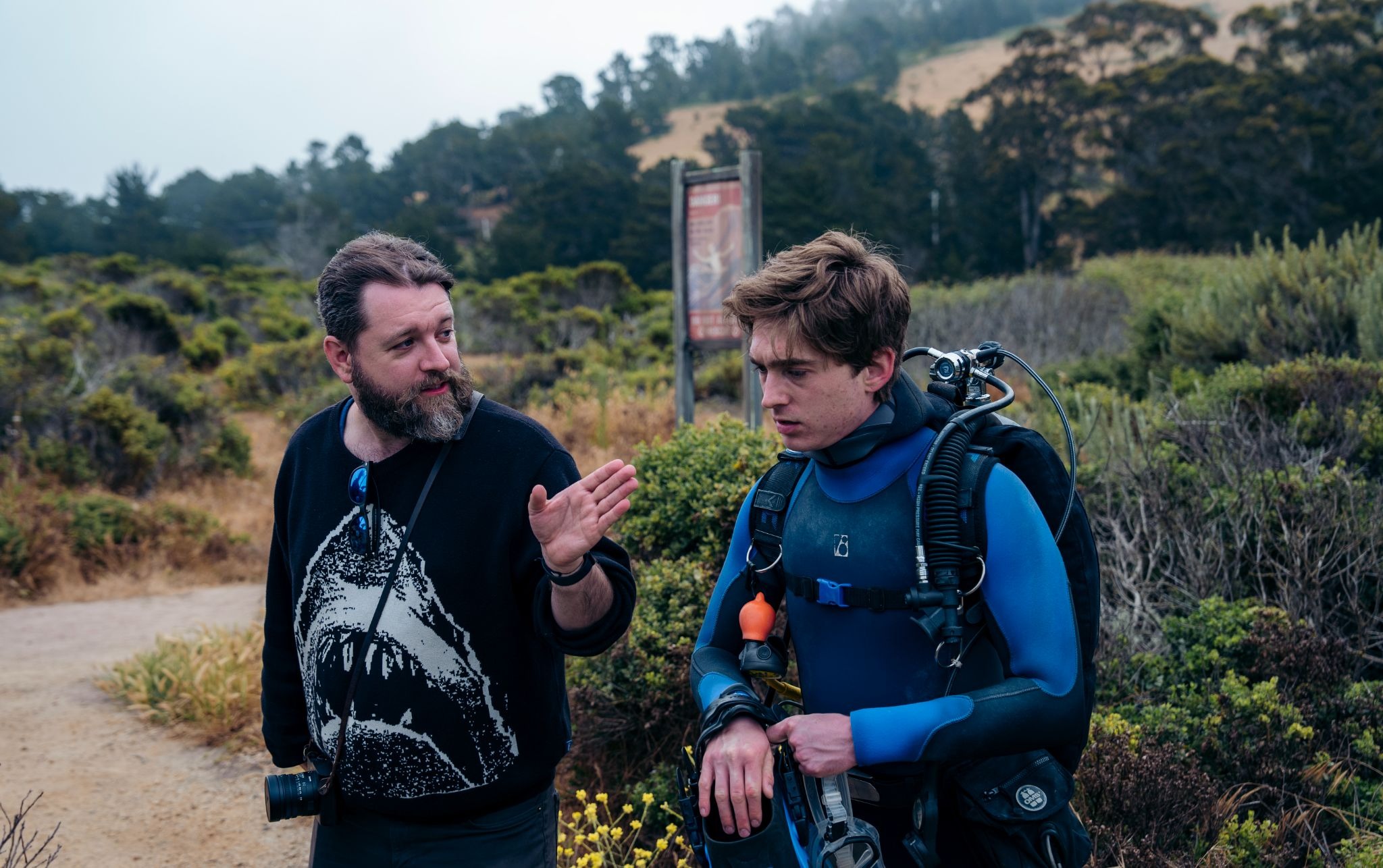
To figure out how to bring the whale’s interior to life, Duffield and production designer Ramsey Avery watched endoscopies and autopsies with Wētā Workshop in New Zealand. Wētā Workshop’s Richard Taylor was giddy precisely because he had never done anything like it before, an energy Duffield tried to carry through the whole production.
The stomach became a full 360-degree set that could roll, and everything a film normally keeps on the outside, including the camera and lighting systems, had to fit inside alongside Abrams. The crew solved the puzzle one piece at a time and kept refining it during shooting, while Abrams spent roughly two months inside screaming, crying, and throwing up on camera. Seeing how hard Abrams was working pushed the entire crew to raise their own game.
Kraus remembered visiting the studio and seeing what looked like giant black trash bags, only to learn they were the backside of artificial stomach sections. Inside, they looked incredible, operated by crew members who worked cables and pulleys to make them constrict, chew, roll, and tilt.
Abrams expected the schedule to bounce between land scenes and whale scenes. Instead, the production shot all of the land material first, including Brolin’s scenes, then filmed the whale scenes chronologically with no breaks. Shooting the many memory scenes with Brolin first gave Abrams a backbone before literally diving in, and shooting in order helped him modulate Jay’s distress so the performance had ups and downs rather than constant panic.
Duffield favored practical solutions wherever possible, which included recorded audio played on set. He even recorded Brolin’s heartbeat and played it inside the stomach without telling Abrams, and Brolin chimed in that Abrams assumed it was the whale’s heart, only to learn it was the sound of his father Mitt’s.
Nothing in Duffield’s career prepared him for this film, and his cinematographer joked that nothing they learned on past projects applied here, and nothing learned on this one will apply going forward. What did carry over was trusting his actors from previous collaborations, because without Abrams’s and Brolin’s performances, all the visual effects would just be screensavers.
Abrams had never gone scuba diving before Whalefall, and came away with a love of whales, describing the film as a love letter to them. For Brolin, the setting was personal. The story takes place in Monterey, and he grew up about an hour south in Paso Robles. He has long been involved with the Steinbeck Center, and his character reads Cannery Row like a Bible. Brolin also grew up around fishermen and filleted fish at a Santa Barbara fish market when he was 15.
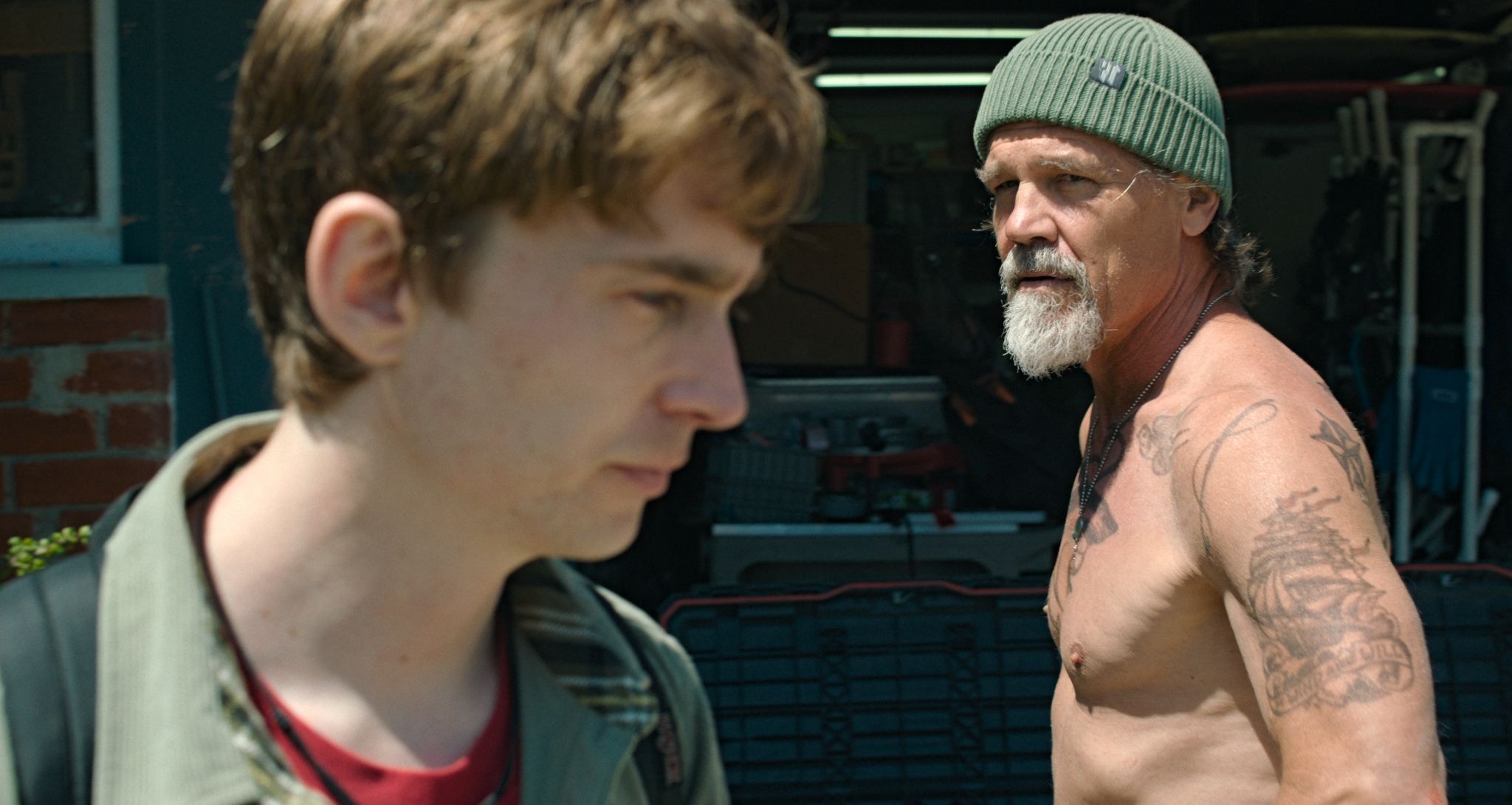
Mitt’s tattoos were designed in close collaboration with artist Joel Harlow, with Brolin visiting Harlow’s home to make tiny adjustments to size and placement. Kraus showed off the whale tattoo on his left forearm, and Brolin said he got a nautical tattoo across his back after the experience.
Kraus hadn’t cried in roughly 30 years, but he teared up watching even a very rough first cut, which left him grateful to be alive and for the found family he gained through the project. He added that meeting the cast and crew has been the best part of the experience. Abrams called seeing the finished film surreal, describing it as the movie he set out to make, one unlike anything he had seen before.
As for souvenirs, Duffield revealed he has an entire storage unit in North Hollywood filled with pieces of the whale, plus squid tentacles, a beak, and the loose chunks of whale meat crew members would press against Abrams when the camera needed to get closer.
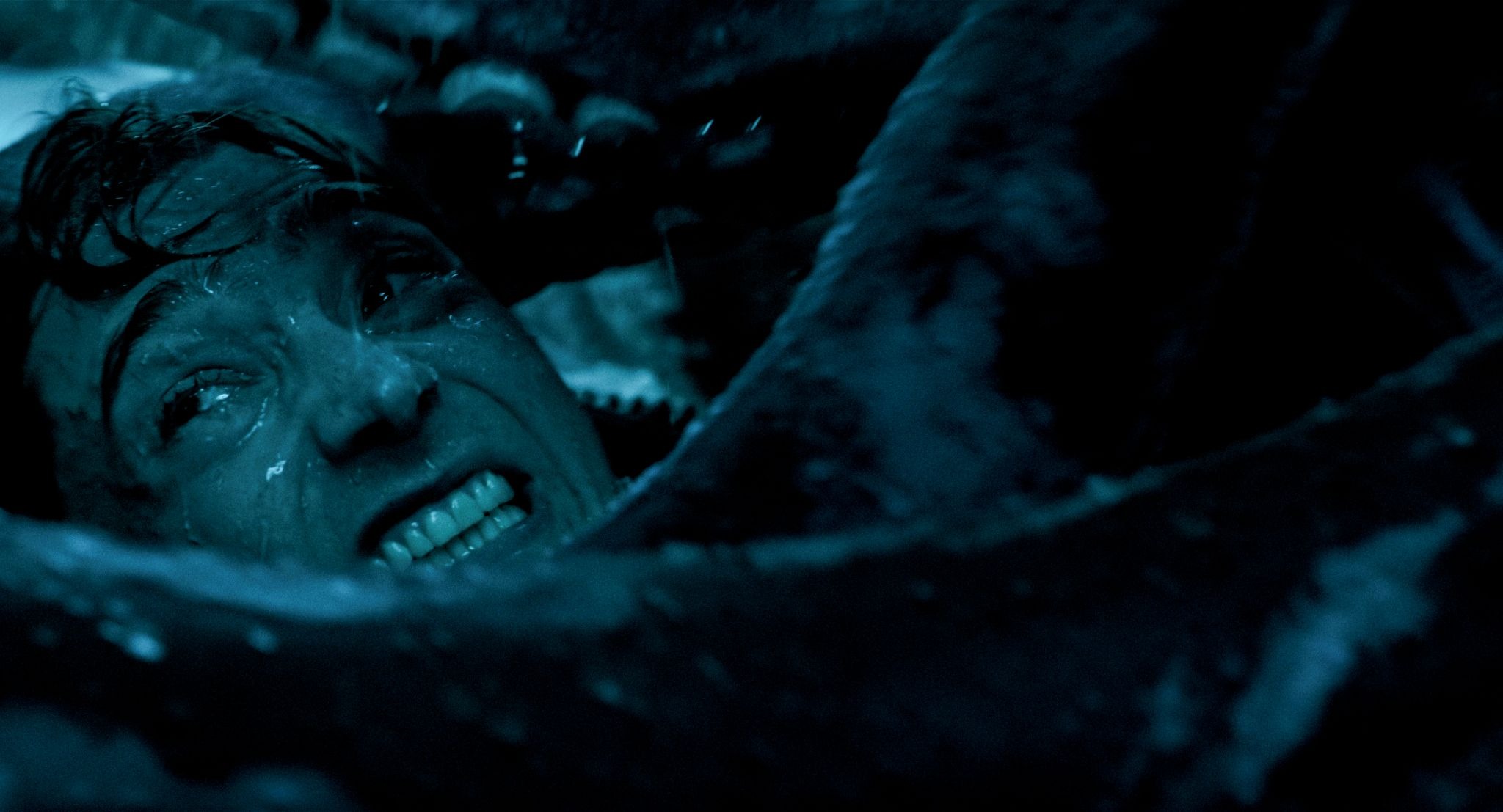
The panel closed with roughly five minutes of footage. It opened like a trailer, showing Jay being swallowed, before he wakes inside the whale’s belly and pieces together where he is. He grabs his emergency oxygen hose, only to discover that the giant squid swallowed alongside him is still alive and still hunting him. Wrapped in its tentacles, Jay is slashed across the neck by its beak until the whale’s stomach begins to contract, crushing them both and halting the attack. As he fights for his life, Jay hears his father’s voice asking whether he’s going to just accept his fate, an internal monologue driving Jay to survive.
Whalefall opens in theaters on Friday, October 16th.